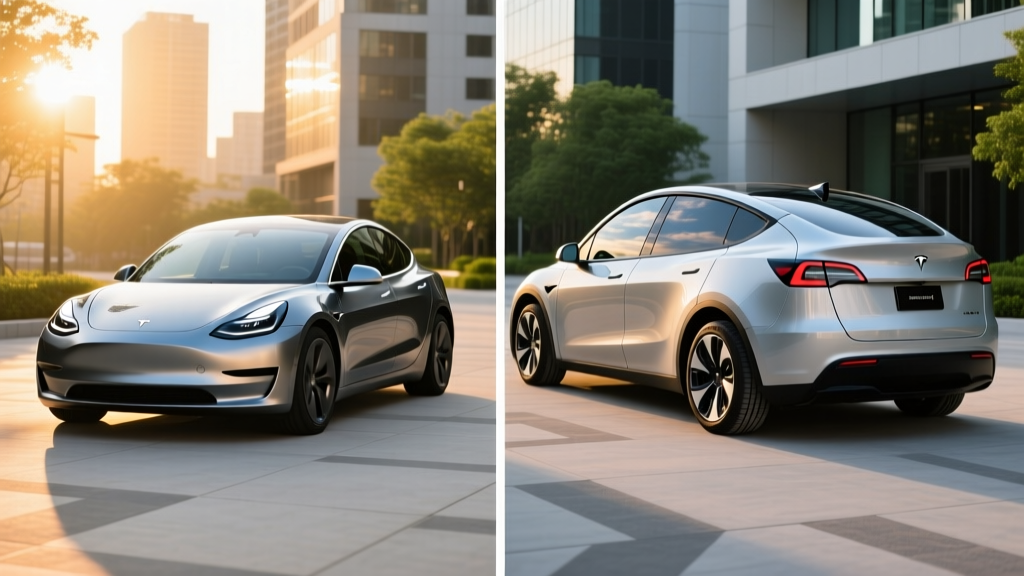
Choosing between the Tesla Model 3 and Model Y is one of the most common dilemmas for EV shoppers. Both share Tesla's core architecture, software stack, and Supercharger access, but they serve distinctly different use cases. The Model 3 is a sleek, efficient sedan optimized for commuting and range. The Model Y is a compact crossover with the cargo space and ride height that families and road-trippers demand. This guide breaks down the 2026 lineup with real-world data to help you decide which one earns a spot in your driveway.
Quick Verdict: Model 3 or Model Y?
If maximum range and driving efficiency are your priorities, the Model 3 Long Range AWD is the more compelling pick, delivering up to 363 miles of EPA range and class-leading MPGe. If you need cargo versatility, easier child-seat installation, and a taller seating position, the Model Y justifies its slight price premium. Neither is a bad choice — the right answer depends entirely on your daily driving profile and household needs.
- You commute 40+ miles daily and want maximum range per kWh
- You rarely carry more than two passengers or bulky cargo
- You want the lowest cost-per-mile of any Tesla
- You need 76 cu ft of cargo space for strollers, gear, or groceries
- You want an optional third row for occasional 7-passenger use
- You prefer a higher seating position and easier ingress/egress
Side-by-Side Specifications: 2026 Tesla Model 3 vs Model Y
| Spec | Model 3 Long Range AWD | Model Y Long Range AWD |
|---|---|---|
| EPA Range | 363 mi | 320 mi |
| Battery (usable) | ~75 kWh (NMC) | ~75 kWh (NMC) |
| Efficiency | 132 MPGe / 25 kWh/100mi | 119 MPGe / 28 kWh/100mi |
| Peak DC Charge Rate | 250 kW | 250 kW |
| 10–80% DC Time | ~25 min | ~27 min |
| Level 2 (11.5 kW) | ~44 mi/hr | ~40 mi/hr |
| 0–60 mph | 4.2 sec | 4.8 sec |
| Horsepower | ~346 hp | ~384 hp |
| Drivetrain | Dual-Motor AWD | Dual-Motor AWD |
| Cargo Volume | 23 cu ft (trunk + frunk) | 76 cu ft (rear seats folded + frunk) |
| Rear Legroom | 35.3 in | 41.6 in |
| Base MSRP | $47,740 | $49,990 |
| Battery Warranty | 8 yr / 120,000 mi | 8 yr / 120,000 mi |
Sources: fueleconomy.gov, Tesla Tax Credit Page. Specs reflect 2026 model year Long Range AWD trims.
Real-World Range: What the EPA Sticker Doesn't Tell You
Model Y Long Range AWD: EPA 320 mi → Expect ~255–275 mi highway at 75 mph; ~210–230 mi in sub-32°F conditions.
The Model 3's aerodynamic advantage (0.219 Cd vs. the Model Y's ~0.23 Cd) is the primary reason it extracts more miles from a nearly identical battery pack. On the EPA test cycle, which blends city and highway driving, both vehicles perform admirably. But real-world highway driving at sustained speeds above 70 mph disproportionately penalizes the taller, less aero-efficient Model Y.
Cold weather is the great equalizer. Lithium-ion batteries lose efficiency below freezing, and cabin heating draws heavily from the pack. Both Teslas use a heat pump — standard since the 2021 refresh — which significantly reduces the energy penalty compared to resistive heating. Even so, plan for a 20–30% range reduction in sustained sub-freezing conditions. If you live in the northern tier and commute over 100 miles round-trip in winter, the Model 3's extra EPA buffer matters.
Charging Speed: Supercharger Network Advantage
| Charging Level | Power | Model 3 Rate | Model Y Rate |
|---|---|---|---|
| Level 1 (120V) | ~1.4 kW | ~5 mi/hr | ~4 mi/hr |
| Level 2 (240V, 48A) | 11.5 kW | ~44 mi/hr | ~40 mi/hr |
| DC Fast Charge | Peak 250 kW | 10–80% in ~25 min | 10–80% in ~27 min |
Both vehicles peak at 250 kW on V3 Superchargers, but — as with all EVs — that peak rate is sustained only briefly, typically between 10–30% state of charge. Above 50%, the charge curve tapers noticeably, and above 80%, charging slows dramatically to protect battery longevity. A typical Supercharger session from 10% to 80% takes 25–27 minutes, which is competitive but no longer class-leading; vehicles on 800V architectures (like the Hyundai Ioniq 5 and Kia EV6) can achieve 10–80% in roughly 18 minutes.
Where Tesla retains a decisive edge is the Supercharger network itself. With over 25,000 V3/V4 stalls across North America and native NACS plug integration (no adapter needed on 2026 models), long-distance travel in a Tesla remains the least-friction EV road-trip experience available. Non-Tesla EVs can now access many Superchargers via the Magic Dock adapter, but availability is not universal and the experience is less seamless.
For home charging, both vehicles accept up to 11.5 kW on a 240V/48A Level 2 circuit. A full overnight charge from 20% to 100% takes roughly 6.5 hours for the Model 3 and 7 hours for the Model Y. Most owners charging daily from 30–80% will see a full replenishment in under 3 hours.
Performance and Driving Dynamics
The Model 3 Long Range AWD hits 0–60 mph in 4.2 seconds with approximately 346 hp from its dual-motor setup. The Model Y Long Range AWD, despite having more horsepower (~384 hp), is slightly slower to 60 at 4.8 seconds due to its additional ~400 lbs of curb weight and higher center of gravity.
On the road, the difference is more pronounced than the spec sheet suggests. The refreshed Model 3 (internally called "Highland") received a significantly improved suspension tuning, new acoustic glass, and a redesigned interior that collectively elevated its refinement. It corners flatter, rides more compliantly over rough pavement, and is noticeably quieter at highway speeds than the pre-refresh car.
The Model Y received its own "Juniper" refresh for the 2025 model year, bringing similar improvements: a ventilated front seat option, ambient lighting, a rear touchscreen for passengers, and improved ride quality. The gap between the two has narrowed, but the Model 3 still drives with a tighter, more athletic character that enthusiasts prefer.
Cargo, Interior Space, and Practicality
This is where the Model Y's crossover form factor commands a clear advantage. With rear seats folded, the Model Y offers up to 76 cubic feet of cargo volume — enough for a full sheet of plywood, multiple large suitcases, or a week's worth of camping gear. The Model 3's trunk and frunk combine for roughly 23 cubic feet, which handles everyday groceries and luggage but can't match the Y's versatility.
Rear-seat passengers also benefit from the Model Y's packaging. With 41.6 inches of rear legroom compared to the Model 3's 35.3 inches, the Y is significantly more comfortable for adults on longer trips. Installing rear-facing child seats in the Model 3 can feel cramped for the front passenger; the Model Y handles this scenario without compromise.
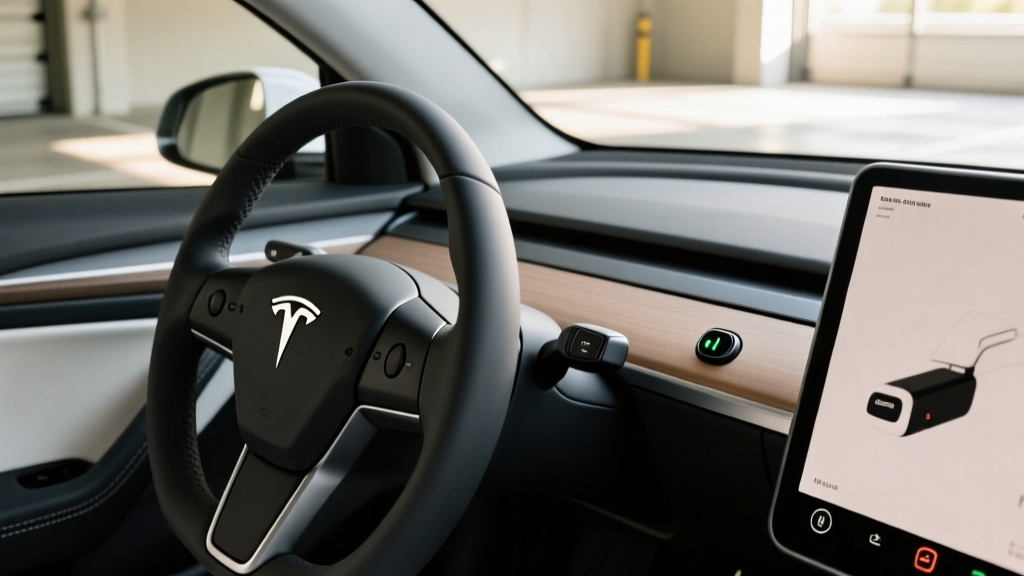
Both vehicles share Tesla's minimalist interior: a 15.4-inch center touchscreen controls virtually all vehicle functions, including climate and mirror adjustments. The 2026 Model 3 Highland and Model Y Juniper both feature a rear passenger screen, ventilated front seats, power-folding mirrors, and improved sound insulation over earlier builds. Neither offers Apple CarPlay or Android Auto — Tesla's proprietary infotainment is the only option, though it includes Spotify, Netflix, YouTube, and arcade games while parked.
Pricing, Trims, and Federal Tax Credit Eligibility
| Trim | MSRP | Est. After §30D Credit | Federal Credit Eligible? |
|---|---|---|---|
| Model 3 RWD | $38,990 | ~$31,490 | Yes (if buyer qualifies) |
| Model 3 Long Range AWD | $47,740 | ~$40,240 | Yes (if buyer qualifies) |
| Model 3 Performance | $54,990 | ~$47,490 | Yes (if buyer qualifies) |
| Model Y RWD | $44,990 | ~$37,490 | Yes (if buyer qualifies) |
| Model Y Long Range AWD | $49,990 | ~$42,490 | Yes (if buyer qualifies) |
| Model Y Performance | $53,990 | ~$46,490 | Yes (if buyer qualifies) |
Prices reflect 2026 MSRP before destination fees. Tax credit amounts are estimates assuming full §30D eligibility.
- MSRP Cap: Vans, SUVs, and pickups ≤ $80,000; sedans ≤ $55,000 (all Tesla trims qualify)
- Buyer Income Cap: AGI ≤ $150,000 (single), $225,000 (head of household), $300,000 (married filing jointly)
- Battery Sourcing: Critical minerals and battery components must meet escalating domestic-content thresholds — check IRS eligible vehicle list before purchasing
- Point-of-Sale Transfer: Eligible buyers can transfer the credit to the dealer at purchase, reducing the upfront price rather than waiting for a tax refund
- Tax Liability: The credit is non-refundable — you must have sufficient federal tax liability to claim it (unless transferred at point of sale)
Battery sourcing requirements tighten annually. Always verify current eligibility on irs.gov or consult a tax professional before relying on credit amounts.
Battery, Warranty, and Long-Term Ownership
Both the Model 3 and Model Y Long Range AWD use a ~75 kWh (usable) NMC (nickel-manganese-cobalt) battery pack. Tesla's battery management system is among the most sophisticated in the industry, with active liquid thermal management that keeps cells in their optimal temperature window during charging, discharging, and preconditioning.
The RWD trims of both vehicles use LFP (lithium iron phosphate) chemistry, which trades slightly lower energy density for longer cycle life and the ability to charge to 100% daily without accelerating degradation. If you plan to charge to 100% regularly or live in a hot climate, the LFP pack in the RWD trims may age more gracefully — though you sacrifice roughly 40–50 miles of range versus the Long Range NMC pack.
Tesla's battery warranty covers 8 years or 120,000 miles (whichever comes first) with a minimum 70% capacity retention threshold for the Long Range trims. Real-world data from high-mileage Teslas suggests that NMC packs typically degrade 10–15% over the first 100,000 miles, with the rate of degradation slowing significantly after the initial break-in period. Most owners report well over 200,000 miles before any pack replacement would be necessary — and a replacement pack currently costs between $12,000 and $16,000 out of warranty.
Pros and Cons at a Glance
- Best-in-class efficiency (132 MPGe)
- Longest EPA range of any Tesla sedan (363 mi)
- Superior handling and ride refinement post-Highland
- Lowest cost-per-mile in the Tesla lineup
- Full Supercharger network access with native NACS
- Limited cargo space (23 cu ft total)
- Tight rear legroom for adults on long trips
- No Apple CarPlay or Android Auto
- Low ride height can challenge steep driveways
- FSD (Supervised) requires $99/mo subscription or $8,000 purchase with no Level 4 capability
- Massive cargo versatility (76 cu ft seats-down)
- Generous rear legroom (41.6 in)
- Optional 7-seat configuration
- Higher seating position and easy ingress
- Juniper refresh brings improved refinement
- Shorter real-world highway range vs. Model 3
- Higher energy consumption (28 kWh/100mi)
- More body roll in spirited driving
- Premium over Model 3 for similar powertrain
- Same infotainment limitations as Model 3
How Do They Compare to Key Competitors?
The Hyundai Ioniq 5 and Kia EV6 challenge both Teslas with 800V architectures enabling faster DC charging (~18 min 10–80%), Apple CarPlay/Android Auto, and more conventional control layouts. However, neither matches Tesla's Supercharger network convenience, and their EPA ranges (up to 305 and 310 miles, respectively) fall short of the Model 3 Long Range.
The Ford Mustang Mach-E competes most directly with the Model Y in the crossover segment. It offers competitive range (up to 320 mi EPA), BlueCruise hands-free driving on mapped highways, and a more traditional interior. But the Mach-E's charging speeds (peak 150 kW on most trims) and Tesla's infrastructure advantage keep the Model Y ahead for frequent road-trippers.
The Chevrolet Equinox EV undercuts both on price (starting under $35,000 after credits) with over 300 miles of range, making it a strong value play — but it lacks the performance, tech depth, and charging speed of either Tesla.
Frequently Asked Questions
What is the real-world range of the Tesla Model 3 and Model Y?
The Model 3 Long Range AWD delivers roughly 290–310 miles in real-world highway driving and 240–260 miles in freezing weather. The Model Y Long Range AWD achieves approximately 255–275 miles highway and 210–230 miles in sub-freezing conditions. Both benefit from Tesla's heat pump, which reduces cold-weather losses compared to resistive heating systems.
How fast do the Model 3 and Model Y charge?
Both peak at 250 kW on V3 Superchargers, achieving 10–80% in approximately 25–27 minutes. On a home Level 2 charger at 11.5 kW, expect roughly 44 miles of range per hour for the Model 3 and 40 miles per hour for the Model Y. A full overnight charge from 20–100% takes 6.5 to 7 hours.
Do the Model 3 and Model Y qualify for the $7,500 federal tax credit?
As of 2026, both models appear on the IRS eligible vehicle list for the full $7,500 §30D credit — provided the buyer meets income caps ($150K single / $300K joint), the vehicle MSRP is under the cap ($55K for sedans, $80K for SUVs), and battery sourcing requirements are met. The credit can be transferred to the dealer at point of sale. Always verify eligibility at the time of purchase, as sourcing rules tighten annually.
Is the Model 3 or Model Y better for families?
The Model Y is the clear family choice. Its 76 cu ft of cargo space handles strollers, sports equipment, and weekly groceries with room to spare. The 41.6 inches of rear legroom accommodates rear-facing car seats without pushing the front passenger into the dashboard. The optional third row adds flexibility for carpools, though it's best suited for small children.
Which Tesla has lower long-term ownership costs?
The Model 3 Long Range AWD has a slight edge in total cost of ownership due to its superior efficiency (25 kWh/100mi vs. 28 kWh/100mi). Over 5 years and 75,000 miles at the national average electricity rate of $0.16/kWh, the Model 3 would cost approximately $3,000 in electricity versus $3,360 for the Model Y. Combined with its lower starting MSRP, the Model 3 saves roughly $2,600 over five years before accounting for insurance, which tends to be similar for both vehicles.
Is Tesla's Full Self-Driving worth buying?
FSD (Supervised) is a Level 2 driver-assistance system — it does not make the car autonomous. It adds features like automatic lane changes, traffic light and stop sign recognition, and autosteer on city streets. At $99/month or $8,000 as a one-time purchase, its value depends on your tolerance for subscription costs and your interest in beta-level driving features. For most buyers, the included Basic Autopilot (adaptive cruise + lane centering) is sufficient for highway commuting.
Safety ratings: Both the Model 3 and Model Y have earned 5-star overall ratings from NHTSA and Top Safety Pick+ awards from IIHS. Always check the latest test results for the specific model year.