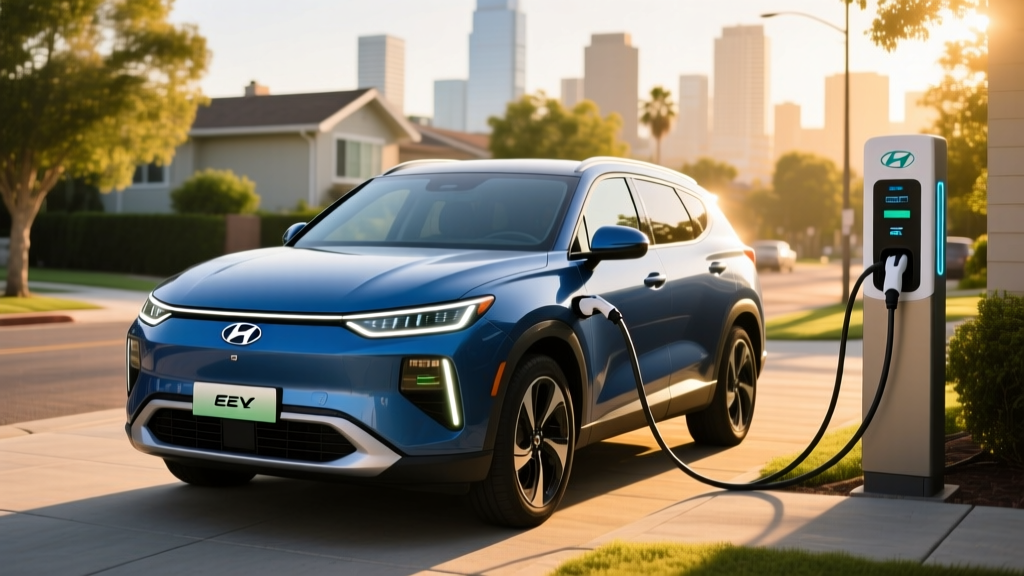
The extended-range electric vehicle (EREV) segment is heating up, and the 2026 Hyundai Santa Fe EREV is Hyundai's answer to buyers who want EV-like daily driving without range anxiety on long hauls. Unlike a pure battery-electric vehicle (BEV) or a traditional plug-in hybrid (PHEV), an EREV uses a gasoline engine exclusively as a generator — the wheels are always driven by the electric motor. This gives you the smooth, instant-torque feel of an EV with the fallback of a fuel tank when the battery depletes.
In this review, we break down everything you need to know about the Santa Fe EREV: real-world range expectations, DC fast-charging curves, battery chemistry, federal tax credit eligibility under IRS §30D, and whether this three-row electrified SUV earns a spot in your driveway over rivals like the Mazda CX-70 PHEV or the Chrysler Pacifica PHEV.
2026 Hyundai Santa Fe EREV: Quick Verdict
The Santa Fe EREV targets families who want to commute on electricity Monday through Friday but need the flexibility for 500+ mile weekend road trips without route-planning around chargers. With an EPA-estimated electric-only range that handles most daily commutes and a combined range exceeding 500 miles when the range-extender engine kicks in, it occupies a compelling middle ground. The trade-off is added mechanical complexity — you're maintaining both an electric powertrain and a small internal-combustion generator — and a higher starting price than the conventional hybrid Santa Fe.
| Spec | Value |
|---|---|
| Powertrain | EREV (series hybrid — electric motor drives wheels, ICE generator) |
| Battery Capacity (Usable) | ~30 kWh (estimated, NMC chemistry) |
| EPA Electric-Only Range | ~60–70 miles (estimated, pending EPA certification) |
| Combined Range (Electric + Gas) | ~550+ miles (estimated) |
| Electric Motor Output | ~250 hp combined (estimated) |
| 0–60 mph | ~7.0 seconds (estimated) |
| Drivetrain | AWD (dual-motor expected) |
| Max DC Fast Charge | ~100 kW (estimated) |
| 10–80% DC Charge Time | ~30 minutes (estimated) |
| Level 2 Home Charge Rate | ~7.2 kW (~20 mi/hr electric range added) |
| Fuel Tank | ~15 gallons (estimated) |
| MPG (Charge-Sustaining, Gas Generator) | ~30–34 MPG combined (estimated) |
| MPGe (Electric Mode) | ~90 MPGe (estimated) |
| Base MSRP | ~$46,000 (estimated, SEL Premium trim) |
| Battery/Powertrain Warranty | 10 years / 100,000 miles |
The EPA-estimated electric-only range of ~60–70 miles assumes moderate temperatures and mixed driving. In real-world conditions:
- Highway driving (70+ mph): Expect ~45–55 electric-only miles due to higher aerodynamic drag and sustained power demand.
- Cold weather (below 32°F): Battery efficiency drops 20–30%, reducing electric-only range to ~40–50 miles. Cabin heating also draws from the battery unless the range-extender activates.
- City/stop-and-go: Regenerative braking recovers energy, often allowing you to meet or slightly exceed the EPA estimate.
Once the battery is depleted, the gasoline generator maintains charge and you drive on the combined ~550+ mile range. The transition is seamless — most drivers won't notice the engine starting.
Range, Battery Chemistry & Efficiency
The Santa Fe EREV is expected to use an NMC (nickel manganese cobalt) lithium-ion battery pack in the ~30 kWh usable range. Hyundai has favored NMC chemistry in its larger electrified vehicles for its higher energy density compared to LFP (lithium iron phosphate), which matters when you're packaging a battery alongside a generator engine and a three-row cabin.
NMC vs. LFP — what it means for you: NMC offers more range per kilogram of battery weight, which helps in a heavier three-row SUV. However, NMC batteries are generally more sensitive to sustained high state-of-charge (above 90%) and extreme heat. Hyundai's thermal management system and battery buffer (the car never uses 100% of the pack) mitigate degradation, and the 10-year/100,000-mile warranty provides long-term peace of mind.
Efficiency in electric mode is estimated at ~90 MPGe, translating to roughly 35 kWh per 100 miles. When the gasoline generator takes over (charge-sustaining mode), expect ~30–34 MPG combined — respectable for a three-row AWD SUV, though lower than the standard Santa Fe Hybrid's ~36 MPG combined because the EREV carries additional battery weight.
Charging Speed: DC Fast & Home Level 2
Charging is where EREVs typically differ from full BEVs, and the Santa Fe EREV is no exception. Because the battery is smaller (~30 kWh vs. 77+ kWh in a BEV like the Ioniq 5), peak charge rates are lower, but the smaller pack also means you fill it faster in absolute time.
| Charging Level | Power (kW) | Time (10–80%) | Miles of Electric Range Added per Hour |
|---|---|---|---|
| Level 1 (120V household) | ~1.4 kW | ~15+ hours | ~4–5 mi/hr |
| Level 2 (240V home/workplace) | ~7.2 kW | ~3.5 hours | ~20 mi/hr |
| DC Fast Charge | ~100 kW peak | ~30 minutes | N/A (session-based) |
Charging curve reality: The ~100 kW peak DC rate will likely sustain from roughly 10% to 50% state-of-charge before tapering. Expect the rate to drop to ~50–60 kW above 70% SoC, which is why the 10–80% time stretches to ~30 minutes. For daily use, Level 2 home charging is the sweet spot — plug in when you get home, and the ~30 kWh pack is full by morning, giving you a full electric commute the next day.
One practical note: EREVs don't benefit from the fastest 350 kW DC chargers any more than they do from a 150 kW unit, since the battery's acceptance rate caps around 100 kW. Don't pay a premium for ultra-fast charger access if this is your primary vehicle.
Performance & Drivetrain
The electric-drive nature of the EREV gives the Santa Fe a responsiveness that the conventional hybrid can't match off the line. With an estimated ~250 hp from the dual-motor AWD setup, 0–60 mph is projected at around 7.0 seconds — brisk for a three-row family SUV and noticeably quicker than the standard Santa Fe Hybrid's ~7.8-second run.
Because the electric motor provides all wheel torque from 0 RPM, city and suburban acceleration feels effortless. The range-extender engine (likely a 1.5L or 2.0L turbo four-cylinder) operates at its most efficient RPM range to generate electricity, so you won't hear the typical CVT-like drone associated with some hybrids under hard acceleration.
The AWD system is expected to use a front and rear electric motor, providing torque vectoring and confident traction in rain and light snow. Towing capacity is estimated at ~2,000–3,500 lbs — adequate for a small trailer or bike rack but not a match for body-on-frame SUVs.
Interior, Cargo & Technology
The 2026 Santa Fe EREV shares its interior with the redesigned Santa Fe family, meaning a boxy, rugged design with a strong emphasis on cargo utility and family practicality.
Cargo volume (estimated):
- Behind third row: ~14 cu ft
- Behind second row (third row folded): ~41 cu ft
- Max (all rear seats folded): ~79 cu ft
Passenger space: Second-row legroom is generous at ~41 inches, while the third row is best suited for children or occasional adult use (~30 inches of legroom). The EREV's battery pack is mounted under the floor, preserving cabin space — a key advantage of Hyundai's platform engineering.
Standout tech features:
- Dual 12.3-inch displays: Combined digital cluster and infotainment screen with Hyundai's latest UI, including wireless Apple CarPlay and Android Auto.
- Hyundai SmartSense: Standard suite includes forward collision-avoidance assist, blind-spot monitoring, lane-keeping assist, rear cross-traffic collision-avoidance, and highway driving assist (SAE Level 2 — driver must remain engaged at all times).
- Digital key: Use your smartphone to unlock and start the vehicle.
- V2L (Vehicle-to-Load): Power small appliances or devices from the vehicle's battery — useful for camping or tailgating.
- EREV-specific displays: Real-time energy flow visualization showing when you're on battery, when the generator is active, and regenerative braking levels.
Notable drawbacks: The third row remains tight for adults on longer trips. The infotainment system, while feature-rich, relies heavily on touchscreen controls — physical climate knobs would be preferable. And like all EREVs, you're carrying the weight and maintenance burden of two powertrains.
Pricing, Trims & Federal Tax Credit Eligibility
The 2026 Santa Fe EREV is expected to slot above the Santa Fe Hybrid and below the all-electric Ioniq 7 in Hyundai's electrified lineup. Pricing is estimated as follows:
| Trim | Estimated MSRP | Potential §30D Credit | Estimated Net Price |
|---|---|---|---|
| SEL Premium | $46,000 | Up to $7,500 | $38,500 |
| Limited | $51,000 | Up to $7,500 | $43,500 |
| Calligraphy | $55,000 | Up to $7,500 | $47,500 |
The IRS §30D clean vehicle credit offers up to $7,500, but eligibility is not automatic. You must meet all of the following:
- MSRP cap: SUVs must have an MSRP at or below $80,000 (the Santa Fe EREV clears this easily).
- Buyer income cap: Modified adjusted gross income (MAGI) must not exceed $150,000 (single), $225,000 (head of household), or $300,000 (joint filers).
- Battery sourcing: The battery's critical minerals and components must meet phased-in domestic-sourcing thresholds that tighten annually. Hyundai's battery supply chain for US-market EREVs will determine the exact credit amount — it could be $3,750, $7,500, or $0 depending on sourcing compliance for the 2026 model year.
- Point-of-sale transfer: As of 2024, you can transfer the credit to the dealer at purchase for an immediate price reduction rather than waiting to claim it on your tax return.
Always verify current eligibility on fueleconomy.gov and consult a tax professional before relying on the credit in your purchase decision.
Ownership Costs, Warranty & Long-Term Outlook
Hyundai backs the Santa Fe EREV with one of the strongest warranties in the industry:
- Battery warranty: 10 years / 100,000 miles (capacity retention threshold typically 70%)
- Powertrain warranty: 10 years / 100,000 miles (covers electric motors, generator engine, transmission)
- New vehicle warranty: 5 years / 60,000 miles
- Roadside assistance: 5 years / unlimited miles
Total cost of ownership considerations:
- Fuel savings: If your commute is under 60 miles round-trip and you charge at home, you may use almost no gasoline on weekdays. At $0.14/kWh (national average), a full ~30 kWh charge costs roughly $4.20 — versus ~$12–15 in gasoline for the same distance in the conventional Santa Fe Hybrid.
- Maintenance: You'll still need periodic oil changes for the range-extender engine (though less frequent than a conventional car since the engine runs fewer hours). Brake wear is reduced thanks to regenerative braking.
- Insurance: Expect premiums 10–15% higher than the conventional Santa Fe Hybrid due to the higher MSRP and dual-powertrain complexity.
- Depreciation: EREVs are a newer category in the US market, so long-term residual values are less established than BEVs or traditional hybrids.
How It Compares: Santa Fe EREV vs. Key Competitors
The Santa Fe EREV doesn't have a direct apples-to-apples rival, but several vehicles compete for the same buyer:
- Mazda CX-70 PHEV: A parallel PHEV (engine can drive wheels directly), ~26 miles electric-only range, sportier driving dynamics, but shorter electric range and only two rows. Better for driving enthusiasts who don't need a third row.
- Chrysler Pacifica PHEV: ~32 miles electric range, minivan practicality with sliding doors and more cargo room. Better for families prioritizing maximum interior space over SUV styling.
- Toyota Grand Highlander Hybrid: Not a plug-in — no electric-only mode, but excellent fuel economy (~35 MPG combined), proven reliability, and three-row comfort. Better for buyers who want simplicity without plugging in.
- Hyundai Ioniq 7 (BEV, upcoming): If you have reliable home charging and don't need 500+ mile range, a pure BEV eliminates engine maintenance entirely and offers lower per-mile energy costs.
✅ Pros
- 60–70 miles of electric-only range covers most daily commutes
- 550+ mile combined range eliminates road-trip range anxiety
- Smooth, EV-like acceleration with instant electric torque
- Three-row seating for families
- Industry-leading 10-year/100,000-mile battery & powertrain warranty
- V2L capability for outdoor and emergency power use
- AWD standard for all-weather confidence
❌ Cons
- Higher MSRP than the Santa Fe Hybrid (~$8,000–10,000 premium)
- Two powertrains to maintain (engine + electric motors)
- Third row is tight for adults on longer trips
- Tax credit eligibility depends on battery sourcing — not guaranteed at full $7,500
- DC fast charge capped at ~100 kW (slower than BEV rivals on long trips)
- Heavy touchscreen reliance for climate and vehicle controls
Who Should Buy the 2026 Hyundai Santa Fe EREV?
Buy it if:
- Your daily commute is under 60 miles round-trip and you can charge at home (Level 2).
- You take road trips of 300+ miles several times a year and don't want to plan around DC chargers.
- You need three-row seating but want to reduce fuel consumption on weekdays.
- You value Hyundai's warranty coverage and want long-term powertrain protection.
Look elsewhere if:
- You have reliable access to fast charging and could go full BEV (consider the Ioniq 5 or upcoming Ioniq 7).
- Your budget is tighter — the Santa Fe Hybrid delivers excellent MPG at a significantly lower price.
- You rarely drive more than 30 miles a day and don't need the extended range — a shorter-range PHEV may suffice.
Frequently Asked Questions
What is the real-world electric-only range of the Hyundai Santa Fe EREV?
The EPA-estimated electric-only range is expected at ~60–70 miles. In real-world conditions, plan for ~45–55 miles on the highway and ~40–50 miles in cold weather (below freezing). City driving with regenerative braking can match or slightly exceed the EPA estimate.
How fast does the Santa Fe EREV charge at home and on DC fast chargers?
On a Level 2 home charger (240V, ~7.2 kW), the ~30 kWh battery fills in roughly 3.5 hours — easily overnight. On a DC fast charger, the peak rate is ~100 kW, taking approximately 30 minutes from 10% to 80% state-of-charge. Charging tapers significantly above 80%, so it's not worth waiting for a full charge on DC.
Does the 2026 Hyundai Santa Fe EREV qualify for the $7,500 federal EV tax credit?
It may qualify for up to $7,500 under IRS §30D, but eligibility depends on your income (MAGI caps apply), the vehicle's MSRP (must be ≤$80,000 for SUVs — the Santa Fe clears this), and battery component/critical-mineral sourcing requirements that tighten each year. Check fueleconomy.gov for the latest eligible vehicle list and consult a tax professional.
Is the Santa Fe EREV worth buying over the Santa Fe Hybrid or a full BEV?
If your daily driving fits within the electric-only range and you take occasional long trips, the EREV gives you the best of both worlds — low daily fuel costs and no range anxiety. If you can charge at home reliably and rarely exceed 300 miles in a day, a BEV like the Ioniq 5 is simpler and cheaper to maintain. If you never want to plug in, the Santa Fe Hybrid is the most affordable and straightforward option.
What happens when the Santa Fe EREV battery runs out on the road?
Nothing dramatic — the gasoline range-extender engine automatically starts and generates electricity to power the electric motors. You simply keep driving. The transition is designed to be seamless, and you can refuel at any gas station. You'll never be stranded waiting for a charger.
What is the difference between an EREV and a PHEV?
In a PHEV (parallel plug-in hybrid), both the engine and electric motor can drive the wheels directly. In an EREV (series hybrid), only the electric motor drives the wheels — the engine acts solely as a generator to produce electricity. This gives the EREV a more consistent EV-like driving feel, but the trade-off is slightly lower efficiency at highway speeds where a direct engine-to-wheel connection (as in a PHEV) can be more efficient.
Note: As of this writing, the 2026 Hyundai Santa Fe EREV has been announced by Hyundai with preliminary specifications. Final EPA certification, pricing, and tax credit eligibility will be confirmed closer to the on-sale date. Always verify specifications with Hyundai News and the EPA before purchasing.