The Tesla Model 3 has long been the default electric sedan for tech-savvy commuters, but a growing number of owners are asking a decidedly utilitarian question: can you actually install a Tesla Model 3 towing hitch and put it to work? With the 2026 refresh (the 'Highland' generation that debuted for the 2024 model year and carries forward), Tesla officially rates the Model 3 for light towing — a first for the nameplate in North America. But light towing in an EV comes with unique trade-offs that gas-car owners rarely consider, from range depletion to charge-curve logistics on trailer-laden road trips.
This review examines the 2026 Tesla Model 3 through the lens of a potential tower: its official tow rating, hitch options, real-world range penalties, charging realities, and whether the math works versus a small crossover like the Model Y or a conventional hybrid. If you're eyeing a bike rack, small utility trailer, or pop-up camper, here's what the data actually says.
Official Tow Rating and Hitch Availability
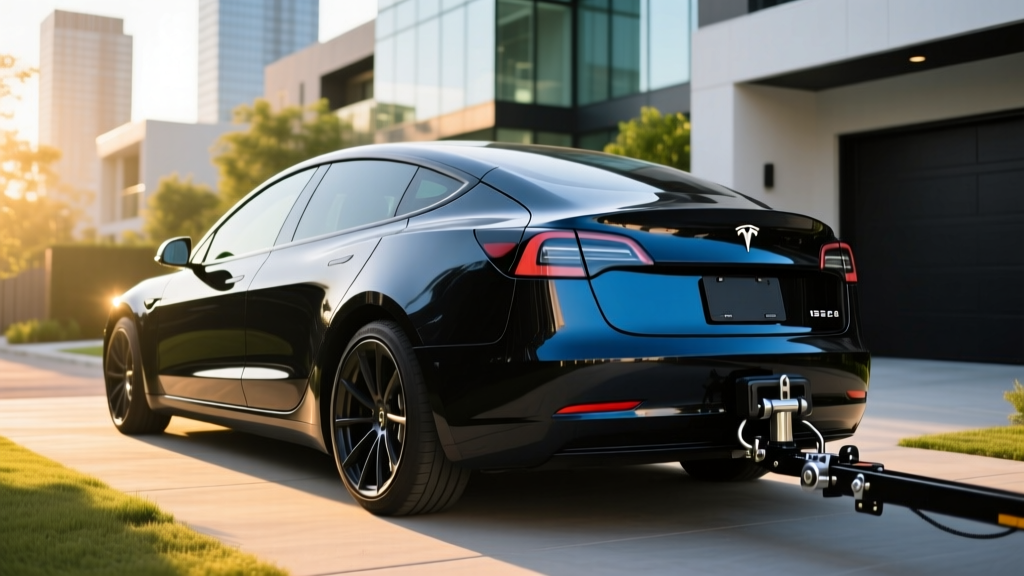
For the 2026 model year, Tesla offers a factory-installed tow hitch on the Model 3 Long Range AWD. The official rating is 2,000 pounds (907 kg) with a maximum tongue weight of 200 pounds. This is a modest figure — roughly half what a Model Y can manage (3,500 lbs) — but it opens the door to bike racks, cargo carriers, and lightweight trailers like a small boat or jet-ski rig.
The hitch is a 1.25-inch receiver, which is narrower than the 2-inch receivers common on crossovers and trucks. This limits accessory compatibility; many heavy-duty bike racks and cargo carriers require a 2-inch receiver or an adapter. Tesla's hitch integrates with the vehicle's software to enable a Tow Mode that adjusts regen behavior and stability control, and it includes a 4-pin wiring harness for trailer lights.
- Max tow capacity: 2,000 lbs
- Max tongue weight: 200 lbs
- Receiver size: 1.25-inch
- Wiring: 4-pin flat (trailer lights)
- Tow Mode: software-enabled, adjusts regen & stability
- Availability: Long Range AWD only (not RWD or Performance)
The Standard Range RWD and Performance trims do not support towing from the factory. Aftermarket hitches exist (from brands like EcoHitch and Curt), but installing one on a non-tow-rated trim voids relevant warranty coverage and leaves you without Tow Mode calibration. For any serious consideration of a Tesla Model 3 towing hitch, the Long Range AWD is the required starting point.
Range, Battery, and the Towing Penalty
The 2026 Model 3 Long Range AWD carries a 79 kWh usable battery pack using NMC (nickel manganese cobalt) chemistry — chosen for its higher energy density, which is critical in a sedan form factor. The EPA rates it at 341 miles of combined range.
EPA estimate: 341 miles (combined). In real-world driving, expect roughly 290–310 miles on the highway at 70 mph in mild weather. Cold weather (below 30°F) can reduce range by 20–30%, dropping effective highway range to 240–260 miles. The heat pump helps, but physics wins in deep cold.
Now, add a trailer. Towing is the single biggest range killer for any EV — far more than cold weather or aggressive acceleration. Based on owner data and testing with small trailers (1,200–1,800 lbs loaded), expect a 40–55% range reduction at highway speeds. That 341-mile EPA figure collapses to roughly 150–190 miles with a trailer in tow. City-speed towing (around town with a bike rack or cargo carrier) is less punishing, with a 15–25% penalty.
| Scenario | Estimated Range (mi) |
|---|---|
| EPA combined (no trailer) | 341 |
| Highway 70 mph, 75°F | 290–310 |
| Highway 70 mph, 20°F (cold) | 240–260 |
| Towing 1,500 lbs, 65 mph | 150–190 |
| City towing (bike rack, 35 mph) | 255–290 |
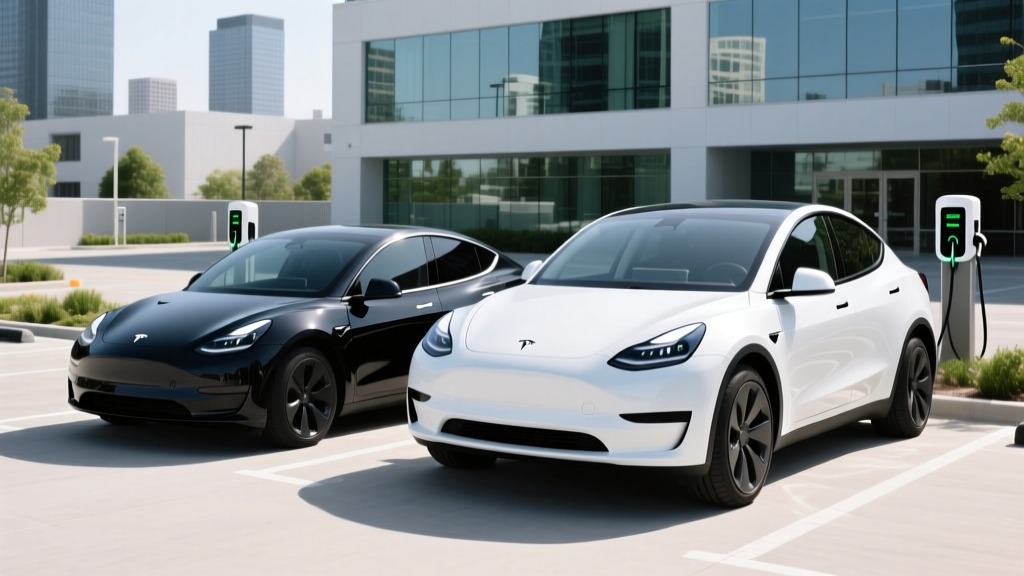
This is the core limitation of the Tesla Model 3 towing hitch proposition: the sedan's aerodynamic efficiency, which delivers excellent range unladen, is devastated by the blunt wall of a trailer. The Model Y, with its taller stance and optional 3,500-lb rating, handles trailers with somewhat less relative range loss because its baseline efficiency is already lower.
Charging Speeds: Fast Enough for Trailer Road Trips?
The 2026 Model 3 Long Range AWD supports a peak DC fast-charge rate of 250 kW on Tesla's V3 and V4 Superchargers. Tesla quotes a 10–80% charge time of approximately 25 minutes under optimal conditions (battery preconditioned, warm ambient temperature). In practice, sustained rates average closer to 150–175 kW across the full 10–80% window because the charge curve tapers significantly above 55% state of charge.
| Level | Power / Rate | Time / Miles Added |
|---|---|---|
| Level 1 (120V household) | ~1.4 kW | ~3–5 miles/hr |
| Level 2 (240V, 48A Wall Connector) | 11.5 kW | ~44 miles/hr |
| DC Fast Charge (peak) | 250 kW | 10–80% in ~25 min |
| DC Fast Charge (real sustained avg) | ~160 kW | 10–80% in ~32 min |
For home Level 2 charging, Tesla's Wall Connector at 48 amps (11.5 kW) adds roughly 44 miles of range per hour — enough to fully replenish the 79 kWh pack in about 7–8 hours on a dedicated 60A circuit. A NACS (North American Charging Standard) port is native, and with Tesla's Supercharger network now open to other brands, the Model 3's charging advantage is less exclusive than it was in 2022, but it remains the most reliable public network by uptime metrics.
The towing complication: when you're hauling a trailer on a road trip, you can't easily pull into a Supercharger stall without disconnecting the trailer or finding a pull-through site. Tesla has been adding pull-through Supercharger stalls at select locations, but they're still a minority. Plan routes around RV-friendly charging stations or be prepared to unhitch.
Performance, Efficiency, and Drivetrain Details
The 2026 Model 3 Long Range AWD uses a dual-motor all-wheel-drive setup producing 384 horsepower and an estimated 360 lb-ft of torque. The 0–60 mph time is 4.2 seconds — brisk by any sedan standard and more than adequate for merging with a trailer. The Performance trim (not tow-rated) hits 60 in 2.9 seconds with 510 hp, but its stiffer suspension and lack of a factory tow option make it the wrong choice for hauling.
Efficiency, per fueleconomy.gov, is rated at 132 MPGe combined (126 city / 138 highway) for the Long Range AWD, translating to roughly 25 kWh per 100 miles. This is among the best in the EV sedan segment, though the Hyundai Ioniq 6 and Lucid Air edge it out slightly on the highway cycle.
| Trim | Drivetrain | HP | 0–60 (sec) | EPA Range | Tow Rated? |
|---|---|---|---|---|---|
| Standard Range RWD | RWD | 271 | 5.8 | 272 mi | No |
| Long Range AWD | AWD (Dual Motor) | 384 | 4.2 | 341 mi | Yes (2,000 lbs) |
| Performance | AWD (Dual Motor) | 510 | 2.9 | 315 mi | No |
Pricing, Tax Credits, and Total Cost
The 2026 Model 3 Long Range AWD starts at an MSRP of $47,740 (including destination), before the optional tow hitch package, which adds approximately $1,000 when factory-installed. A well-equipped example with Full Self-Driving (Supervised), premium paint, and the tow hitch can push past $56,000.
The Model 3 Long Range AWD may qualify for up to $7,500 under IRS §30D, but eligibility hinges on three filters that change periodically:
- MSRP cap: Sedans must be priced at or below $55,000 (the Long Range AWD base qualifies; loaded examples may not).
- Buyer income cap: Modified AGI must not exceed $150,000 (single) / $300,000 (joint). Check current IRS guidelines for updates.
- Battery sourcing: Critical minerals and battery components must meet phased-in domestic/free-trade-agreement thresholds. Tesla's supply chain has shifted significantly; verify current-year compliance on the manufacturer's site or IRS qualified vehicle list.
The credit can now be transferred to the dealer at point of sale, reducing your purchase price directly rather than waiting for a tax refund. Consult a tax professional for your specific situation.
| Item | Cost |
|---|---|
| Base MSRP (incl. destination) | $47,740 |
| Factory Tow Hitch Package | ~$1,000 |
| FSD (Supervised) Add-On | $8,000 |
| Premium Paint (e.g., Ultra Red) | $2,000 |
| As-Tested (with hitch, no FSD) | ~$48,740 |
| Est. Federal Credit (if eligible) | −$7,500 |
| Effective Price (after credit) | ~$41,240 |
Interior, Cargo, and Tech
The Highland refresh brought meaningful interior improvements: ventilated front seats, ambient lighting, rear-seat ventilation, a rear touchscreen for passengers, and significantly improved NVH (noise, vibration, harshness) levels. The cabin materials now compete with entry-level luxury sedans rather than the spartan 2018–2023 Model 3.
Cargo space remains a sedan limitation versus crossovers. The trunk offers 21 cubic feet (including the rear under-floor area), and the front trunk (frunk) adds 3.1 cubic feet — enough for a charging cable kit and a small bag. Total cargo volume is ~24 cubic feet, compared to the Model Y's 76 cubic feet with seats folded. For anyone towing because they need to haul gear, the Model 3's trunk is a genuine bottleneck; a roof box or trailer becomes necessary for bulky items.
Legroom is adequate: 42.0 inches front / 35.3 inches rear. The rear seat is tighter than a Camry or Ioniq 6, and the sloping roofline compromises headroom for taller passengers.
Tech highlights include a 15.4-inch center touchscreen running Tesla's proprietary OS, wireless phone charging, over-the-air updates, Sentry Mode dashcam recording, and the Autopilot suite (adaptive cruise, lane centering, auto emergency braking). Full Self-Driving (Supervised) remains SAE Level 2 — the driver must remain fully engaged at all times. It is not autonomous driving, despite the name.
Warranty, Safety, and Ownership Costs
Tesla's warranty structure for the 2026 Model 3 Long Range AWD:
- Basic Vehicle: 4 years / 50,000 miles
- Battery & Drive Unit: 8 years / 120,000 miles (minimum 70% capacity retention)
- Restraint System: 5 years / 60,000 miles
The battery warranty's 70% retention threshold is standard for the industry, though some competitors (Hyundai/Kia) offer 10-year/100,000-mile coverage. NMC chemistry in the Long Range pack has shown degradation averaging roughly 12% over 100,000 miles based on Tesla's fleet data — well within warranty tolerance.
Safety ratings remain strong: the Model 3 earned a 5-star overall rating from NHTSA and IIHS Top Safety Pick+ (when equipped with specific headlights). Insurance costs are above average for the segment; expect quotes 15–30% higher than a comparable Toyota Camry Hybrid, driven by repair-cost data on Tesla's aluminum-intensive structure.
Is the Tesla Model 3 Towing Hitch Worth It vs. Alternatives?
The honest answer depends entirely on what you're towing and how far.
Choose the Model 3 with tow hitch if:
- You need a bike rack or cargo carrier (under 200 lbs tongue weight) for weekend trips.
- Your towing is local — under 100 miles round trip — where range loss is manageable.
- You already own or plan to own a Model 3 for daily commuting and want occasional light utility.
Choose the Model Y (or a hybrid SUV) instead if:
- You regularly tow a trailer over 1,500 lbs or plan road trips with a trailer attached.
- You need more than 24 cu ft of cargo space behind the rear seats.
- You want a 2-inch hitch receiver for broader accessory compatibility.
- You need 3,500+ lbs of tow capacity (Model Y) or 5,000+ lbs (hybrid trucks like the F-150 PowerBoost).
Compared to a gas or hybrid competitor like the Toyota Camry (which is not rated for towing at all in most trims) or the Subaru Outback (2,700-lb rating, 26 MPG combined), the Model 3's tow capacity is modest but its operating cost per mile is dramatically lower when running on home solar or cheap utility rates. The trade-off is range flexibility — a Subaru can refuel in 5 minutes anywhere; a towing Model 3 requires careful route planning around Superchargers with pull-through access.
Pros, Cons, and the Bottom Line
- 2,000-lb tow rating enables bike racks, small trailers
- 341-mile EPA range (unladen) is excellent for an AWD sedan
- 250 kW peak DC charging with vast Supercharger network
- Highland interior is a major quality leap over prior Model 3
- 132 MPGe efficiency keeps running costs low
- Strong safety ratings (NHTSA 5-star, IIHS TSP+)
- Towing cuts range by 40–55% — real-world trailer range ~150–190 mi
- 1.25-inch hitch receiver limits accessory options
- Only Long Range AWD trim is tow-rated ($47,740+ starting)
- 24 cu ft total cargo space is tight vs. crossovers
- Pull-through Supercharger stalls are still rare
- Insurance premiums run 15–30% above segment average
The Tesla Model 3 towing hitch is a niche feature for a niche use case. It transforms the sedan from a pure commuter into a capable weekend adventurer for lightweight loads — two e-bikes, a kayak trailer, or a small cargo hauler. But it does not turn the Model 3 into a tow vehicle in the traditional sense. The physics of towing with a 79 kWh battery and a sedan's aerodynamic profile impose hard limits that no software update can overcome. For the right buyer — someone who commutes electrically 95% of the time and needs a hitch 5% of the time — it's a compelling option. For anyone with serious towing needs, the Model Y, a PHEV SUV, or a hybrid truck remains the pragmatic choice.
Frequently Asked Questions
Can I add a tow hitch to a Tesla Model 3 Standard Range RWD?
Not from the factory. Tesla only offers the tow hitch on the Long Range AWD trim. Aftermarket hitches exist, but using them on a non-tow-rated trim may void warranty coverage and leaves you without Tow Mode calibration. The RWD model also has less torque and range, making towing less practical.
Does towing with the Model 3 void the battery warranty?
No. Towing within the rated 2,000-lb limit using the factory hitch and Tow Mode does not void the 8-year/120,000-mile battery warranty. However, damage caused by overloading or improper towing is not covered.
What's the real-world range when towing a small trailer?
Expect approximately 150–190 miles at highway speeds (65 mph) with a 1,200–1,800 lb loaded trailer. At city speeds with a bike rack, the penalty is smaller — roughly 255–290 miles.
Does the 2026 Model 3 qualify for the $7,500 federal tax credit?
It may, depending on current-year IRS §30D battery-sourcing rules, your income (capped at $150K single / $300K joint), and the vehicle's MSRP (sedan cap is $55K). The base Long Range AWD at $47,740 fits the MSRP cap, but loaded configurations or changed sourcing rules could affect eligibility. Always verify on IRS.gov and with a tax professional.
How does the Model 3 tow rating compare to the Model Y?
The Model Y is rated for 3,500 lbs — 75% more than the Model 3. The Model Y also uses a 2-inch hitch receiver (vs. 1.25-inch on the Model 3), offers 76 cu ft of cargo space, and handles trailer-induced range loss somewhat better due to its higher baseline weight and available pull-through Supercharger access.
Can I use a weight-distribution hitch with the Model 3?
Tesla does not recommend or support weight-distribution hitches on the Model 3. The 200-lb tongue weight limit and unibody structure are designed for light, flat towing only.