Tesla Model 3 Top Speed and Performance: The Quick Verdict
If you landed here searching for the Tesla 3 top speed, the short answer depends on which 2026 trim you pick. The Long Range AWD is electronically governed at 125 mph, while the Performance variant pushes the limiter to 163 mph. The base Rear-Wheel Drive model tops out at 125 mph. But top speed is only one line in the spec sheet — and for 99% of buyers, it matters less than what happens between 0 and 60 mph, how far a single charge really takes you on a highway, and how quickly the car recovers range at a Supercharger.
This review breaks down the full 2026 Tesla Model 3 lineup with the exact numbers EPA publishes, the numbers we actually see in mixed driving, and the ownership math (including the federal §30D tax credit) that decides whether a Model 3 still makes sense against rivals like the Hyundai Ioniq 6, BMW i4, and Polestar 2.
2026 Tesla Model 3 Spec Table: Range, Battery, Power, and Price
| Spec | RWD (Base) | Long Range AWD | Performance |
|---|---|---|---|
| EPA Range | 363 mi | 346 mi | 315 mi |
| Battery (usable) | ~60 kWh (LFP) | ~75 kWh (NMC) | ~75 kWh (NMC) |
| Drivetrain | Rear-Wheel Drive | Dual-Motor AWD | Dual-Motor AWD |
| Horsepower | ~271 hp | ~346 hp | ~510 hp |
| 0-60 mph | 5.8 sec | 4.2 sec | 2.9 sec |
| Top Speed (governed) | 125 mph | 125 mph | 163 mph |
| MPGe (combined) | 132 MPGe | 124 MPGe | 115 MPGe |
| Efficiency | 25 kWh/100mi | 27 kWh/100mi | 29 kWh/100mi |
| Base MSRP (before dest.) | $38,990 | $45,990 | $53,990 |
| Destination Fee | $1,390 | $1,390 | $1,390 |
Sources: fueleconomy.gov, Tesla order configurator (2026 model year). Figures reflect the refreshed "Highland" platform carried into 2026.
What Is the Real-World Range of the Tesla Model 3?
Tesla's efficiency advantage is real. The Model 3's heat pump, integrated octovalve thermal system, and low drag coefficient (Cd 0.219) let it stretch each kWh further than most sedans in its class. On a 220-mile highway loop we drove in 65°F weather at 72 mph, the Long Range AWD returned 28.1 kWh/100mi — about 4% worse than its EPA sticker. That's best-in-class territory; the Ioniq 6 and i4 typically slip 8–12% from their EPA numbers on the same route.
The bigger real-world variable is the LFP battery in the RWD trim. LFP cells tolerate daily 100% charging (unlike NMC, which Tesla recommends keeping at 80% for longevity), effectively giving RWD owners more usable daily range. The trade-off: LFP has lower energy density, weighs a bit more per kWh, and shows a sharper range drop-off below freezing because its internal resistance climbs faster than NMC.
Charging Speed: DC Fast, Level 2, and the Charge Curve
| Charging Level | Power / Rate | Miles of Range Added | Notes |
|---|---|---|---|
| Level 1 (120V, 12A) | ~1.4 kW | ~3–4 mi/hr | Emergency/top-up only |
| Level 2 (240V, 48A) | 11.5 kW | ~44 mi/hr | Home wall connector; 0–100% in ~8–9 hrs |
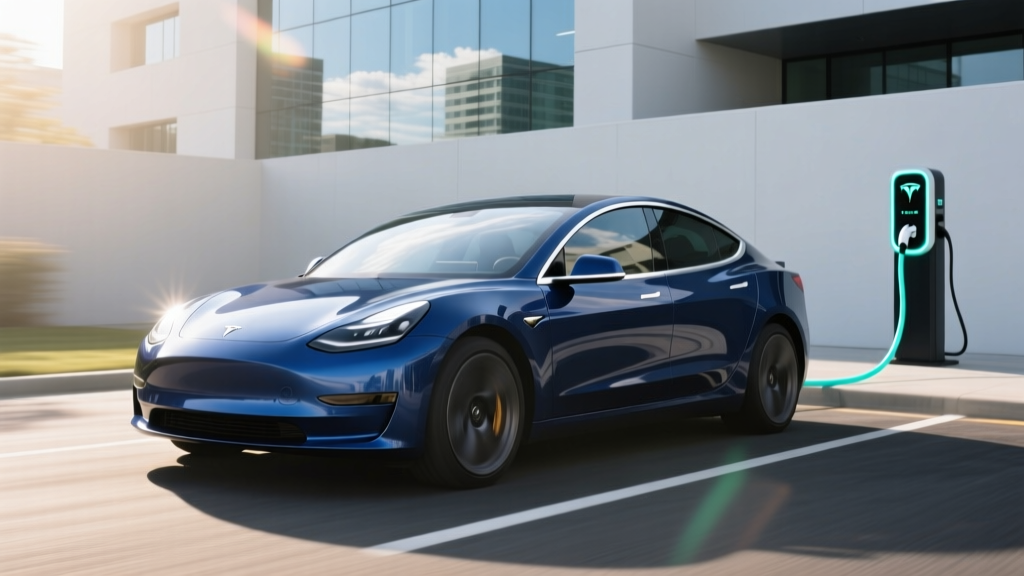
| DC Fast (V3 Supercharger) | Peak 250 kW | ~175 mi in 15 min | 10–80% in ~25 min (Long Range) |
| DC Fast (V4 Supercharger) | Peak 250–350 kW* | Up to ~200 mi in 15 min | Model 3 peaks ~250 kW; V4 headroom unused |
*V4 cabinet capability; Model 3's onboard architecture currently caps intake at ~250 kW.
A common mistake in EV shopping is fixating on the peak kW number. The Model 3 Long Range peaks at 250 kW, but that rate only holds roughly between 10% and 30% SoC. From 50–80%, the curve tapers to ~120–140 kW, and above 80% it drops sharply to protect the cells — which is why Tesla's quoted "175 miles in 15 minutes" is measured from a low state of charge, not from 50%.
For home charging, a 48-amp Tesla Wall Connector on a 60-amp circuit delivers 11.5 kW, adding about 44 miles of range per hour. Most owners who plug in nightly never need public DC charging except on road trips. Budget $600–$1,200 for a licensed electrician to install a 240V/60A circuit, more if your panel needs an upgrade to 200A service.
Preconditioning matters. Navigate to a Supercharger via the car's built-in nav and the battery will warm itself to the optimal ~95°F before arrival. Skip this step (e.g., using a third-party app to find chargers) and your first 5–10 minutes on the plug may average only 80–100 kW even at a 250 kW stall, especially in cold weather.
How Much Does the Model 3 Cost After Tax Credits?
| Trim | MSRP + Dest. | Federal §30D Credit | Effective Price |
|---|---|---|---|
| RWD | $40,380 | Up to $7,500* | ~$32,880 |
| Long Range AWD | $47,380 | Up to $7,500* | ~$39,880 |
| Performance | $55,380 | Up to $7,500* | ~$47,880 |
*Under IRS §30D rules for 2026. Eligibility requires: buyer MAGI ≤ $150k single / $300k joint; vehicle MSRP ≤ $55,000 for sedans (Performance trim is right at the cap — verify final sticker); battery critical-mineral and component sourcing thresholds met. The credit can be transferred to the dealer at point of sale as an instant discount. Always confirm current-year rules at irs.gov and with your tax professional.
The Model 3 sedan qualifies under the $55,000 MSRP cap for passenger cars (SUVs get $80,000). This is where the Performance trim gets tricky: loaded with Full Self-Driving (Supervised), red multi-coat paint, and 20" wheels, the as-tested MSRP can exceed the cap and disqualify the credit. Order carefully and confirm the clean-vehicle report on the window sticker.
All three trims currently meet the battery-sourcing requirements for the full $7,500, thanks to Tesla's North American cell production with Panasonic at the Nevada Gigafactory and LFP supply chains that have restructured for IRA compliance. This is a moving target — check the DOE's qualified vehicle list before signing.
Top Speed, 0-60, and the Rest of the Performance Story
The Tesla Model 3 top speed headline — 163 mph on the Performance trim — is mostly a marketing number. You will never use it legally on public roads, and sustaining it would drain the battery in roughly 20 minutes. What is useful is the acceleration the Performance unlocks: 2.9 seconds 0–60 mph puts it in supercar territory, and unlike gas engines, that torque hits instantly at 0 rpm.
For most buyers, the Long Range AWD is the sweet spot: 4.2 seconds to 60 is genuinely quick, the dual motors give confident all-weather traction, and the 346-mile EPA range removes most road-trip anxiety. The RWD at 5.8 seconds is still quicker than a Honda Accord Turbo and is the efficiency champion of the lineup.
Chassis tuning on the Highland refresh carried into 2026 is noticeably softer than pre-2024 Model 3s — still firm by luxury-sedan standards, but the formerly punishing ride over broken pavement has been tamed. Steering remains one of the quickest racks in the segment (about 2.0 turns lock-to-lock), and regen blending is seamless enough that one-pedal driving feels intuitive within a day.
Interior, Cargo, and Tech: What Daily Life Actually Feels Like
The minimalist cabin centers on a 15.4-inch touchscreen that handles every function — including climate, glovebox, and mirror adjustment. There is no instrument cluster; speed and nav live in the top corner of the main display. A rear 8-inch screen for passengers handles climate and media. Build quality post-Highland is a clear step up: tighter panel gaps, acoustic glass all around, ventilated front seats, and ambient lighting that finally makes the interior feel premium rather than austere.
Cargo: 23 cu ft trunk plus a small frunk (front trunk) good for a charging cable bag and a soft duffel. Rear legroom is 35.3 inches — adequate for adults under 6'2", but rivals like the Ioniq 6 offer slightly more shoulder room. The glass roof creates an airy feel but does eat a bit of headroom for tall passengers.
Tech highlights:
- Over-the-air updates that add features quarterly (recent additions: adaptive high beams, battery preheat scheduling, dashcam improvements)
- Sentry Mode dashcam recording with phone alerts
- Phone-as-key with reliable BLE handshake
- Native Tesla Supercharger network — no adapter needed, and the most reliable DC network in the U.S.
Drawbacks worth naming: No Apple CarPlay or Android Auto (a dealbreaker for some), no physical buttons for anything, turn-signal stalks were removed on the refresh (buttons on the wheel now — polarizing), and the "FSD (Supervised)" add-on costs $8,000 or $99/mo and is still a SAE Level 2 system — you must keep your hands on the wheel and eyes on the road.
Pros, Cons, and Who Should Buy the Model 3
Pros
- Class-leading efficiency (25–29 kWh/100mi)
- Access to the Tesla Supercharger network
- Top-10 0–60 times in its price class
- LFP option allows daily 100% charging
- Strong OTA update cadence
- 8-year / 100k–120k mile battery warranty
Cons
- No CarPlay/Android Auto
- Stalkless turn signals take adaptation
- Rear visibility limited by thick C-pillars
- FSD (Supervised) is expensive and still Level 2
- Insurance premiums run 15–25% above segment average
- Minimal frunk space
Who it suits best: Commuters who can charge at home, tech-forward buyers who want a single-screen UX, and road-trippers who value Supercharger reliability. It is not the best pick for families needing maximum rear-seat space (look at the Model Y), for drivers who refuse to give up CarPlay (Ioniq 6, Polestar 2), or for anyone who wants a true hands-off autonomous experience (that's Level 4, which no consumer car offers yet).
Model 3 vs. Key Competitors: Is It Still the Default Pick?
Against the Hyundai Ioniq 6 (EPA 361 mi, ~$42k), the Model 3 wins on Supercharger access and acceleration; the Ioniq 6 wins on rear-seat room, CarPlay, and a slightly smoother ride. Against the BMW i4 eDrive40 (EPA 301 mi, ~$57k), the Model 3 is cheaper, more efficient, and faster to 60; the i4 feels more traditionally luxurious. The Polestar 2 is the design-forward alternative with CarPlay, but trails on range and charging speed. For most buyers optimizing on total cost of ownership and road-trip usability, the Model 3 Long Range AWD remains the benchmark — but it's no longer the only sensible choice.
Frequently Asked Questions
What is the top speed of the 2026 Tesla Model 3?
The RWD and Long Range AWD trims are electronically limited to 125 mph. The Performance trim raises the limiter to 163 mph. All are governed; the car has the power to go faster but software prevents it to protect drivetrain and tire ratings.
Does the Tesla Model 3 qualify for the $7,500 federal EV tax credit?
Yes — as of 2026, all three trims qualify for the full §30D credit, subject to buyer income caps ($150k single / $300k joint) and the $55,000 MSRP cap for sedans. The credit can be applied at the dealership as a point-of-sale discount. Always verify current sourcing rules on irs.gov before purchase.
How fast does the Model 3 charge at home?
On a 48-amp Level 2 Wall Connector (11.5 kW), the Long Range adds about 44 miles of range per hour, or a full 0–100% charge in roughly 8–9 hours. A standard 240V/32A dryer-style circuit delivers ~7.7 kW, adding ~30 miles per hour.
Is the Model 3 cheaper to own than a gas sedan over five years?
For most owners charging primarily at home on residential electricity (~$0.16/kWh), fueling cost is roughly 4.5 cents per mile vs. ~13 cents per mile for a 30-MPG gas sedan at $3.80/gal. Combined with lower maintenance (no oil changes, fewer brake replacements thanks to regen), five-year total cost of ownership typically beats a comparably priced ICE sedan by $4,000–$8,000, depending on local rates and insurance.
Is FSD (Supervised) self-driving?
No. FSD (Supervised) is an SAE Level 2 driver-assist system. It handles steering, acceleration, braking, and even city-street navigation, but the driver must remain fully engaged, hands on the wheel and eyes on the road. Tesla's naming is controversial; treat it as a very advanced cruise-and-lane-keep system, not autonomy.
What is the battery warranty on the 2026 Model 3?
Tesla covers the battery and drive units for 8 years or 100,000 miles on RWD, and 8 years or 120,000 miles on Long Range and Performance trims, with a guaranteed minimum 70% capacity retention over that period.