Quick Verdict: The Benchmark EV Sedan Still Sets the Pace
The 2026 Tesla Model 3 remains the default electric sedan against which every competitor measures itself. With EPA range stretching from 272 miles (Performance AWD) to 363 miles (Long Range RWD), a mature Supercharger network, and starting pricing at $38,990, it occupies a position that rivals like the Hyundai Ioniq 6 and BMW i4 are still chasing. But ownership isn't just about the sticker — tire selection, real-world range, and charging logistics define the daily experience.
This review covers the full ownership picture: exact range and efficiency numbers, charging speeds across all three levels, the tire specifications that affect your range and ride, federal tax credit mechanics, and whether the refreshed Model 3 still earns its reputation in 2026.
Range, Efficiency, and the Real-World Reality
| Trim | EPA Range | Real-World Highway (70 mph) | Cold Weather (20°F) |
|---|---|---|---|
| Long Range RWD | 363 mi | ~305-320 mi | ~255-280 mi |
| Long Range AWD | 341 mi | ~285-300 mi | ~240-265 mi |
| Performance AWD | 315 mi (est.) | ~260-280 mi | ~220-245 mi |
| RWD (Base) | 272 mi | ~230-245 mi | ~190-210 mi |
Source: fueleconomy.gov. Real-world estimates based on highway driving at 70+ mph, moderate HVAC use. Cold-weather figures assume no preconditioning and sub-freezing temps.
The Long Range RWD variant achieves an outstanding 132 MPGe combined (roughly 25 kWh/100 mi), making it one of the most efficient EVs sold in the U.S. The base RWD model returns about 125 MPGe combined. These numbers translate directly to lower charging costs and more miles per minute at a DC fast charger.
Why the gap between EPA and real-world? Highway speeds above 65 mph increase aerodynamic drag exponentially — an EV at 80 mph uses roughly 30% more energy than at 55 mph. Cold weather compounds this: battery internal resistance increases, cabin heating draws 2-5 kW continuously, and regenerative braking is limited until the pack warms. Tesla's heat pump (standard on all 2026 Model 3 trims) mitigates but doesn't eliminate winter losses. Preconditioning the battery while plugged in recovers some of this penalty.
Battery Chemistry, Capacity, and Longevity
| Spec | RWD (Base) | Long Range RWD | Long Range AWD | Performance AWD |
|---|---|---|---|---|
| Battery Capacity (usable) | ~57.5 kWh | ~75 kWh | ~75 kWh | ~75 kWh |
| Chemistry | LFP (CATL) | NMC | NMC | NMC |
| Drivetrain | RWD, single motor | RWD, single motor | Dual motor AWD | Dual motor AWD |
| Horsepower | 271 hp | 271 hp | 346 hp | ~510 hp |
| 0-60 mph | 5.8 sec | 5.8 sec | 4.2 sec | 2.9 sec |
| Top Speed | 125 mph | 125 mph | 125 mph | 163 mph |
The base RWD Model 3 uses a lithium iron phosphate (LFP) battery supplied by CATL. LFP chemistry trades energy density for longevity and thermal stability — Tesla recommends charging LFP packs to 100% regularly, which helps with cell balancing and actually extends calendar life. Expect less than 10% degradation over 200,000 miles based on fleet data.
Long Range and Performance trims use nickel manganese cobalt (NMC) chemistry for higher energy density. Tesla recommends daily charging to 80-90% for NMC packs, reserving 100% for road trips. NMC degradation typically runs 8-12% over the first 100,000 miles, then flattens. Both chemistries are covered under Tesla's battery warranty: 8 years / 100,000 miles (RWD) or 8 years / 120,000 miles (Long Range/Performance) with a 70% minimum capacity retention guarantee.
Charging Speed: DC Fast, Level 2, and Level 1
| Charging Level | Power (kW) | Speed (miles of range/hr) | Notes |
|---|---|---|---|
| Level 1 (120V household) | ~1.2 kW | ~3-5 mi/hr | Emergency/trickle only |
| Level 2 (240V home, 48A) | 11.5 kW | ~44 mi/hr | Full charge overnight (~7-9 hrs) |
| Level 2 (240V, 32A Mobile Connector) | 7.7 kW | ~30 mi/hr | Included Mobile Connector w/ NEMA 14-50 |
| DC Fast Charge (Peak) | 250 kW (LR/Perf) 170 kW (RWD) | ~1,000 mi/hr (peak) | Peak rate, sustained briefly |
| DC Fast 10-80% (Long Range) | Avg ~130 kW | — | ~25-30 minutes |
| DC Fast 10-80% (RWD LFP) | Avg ~95 kW | — | ~28-35 minutes |
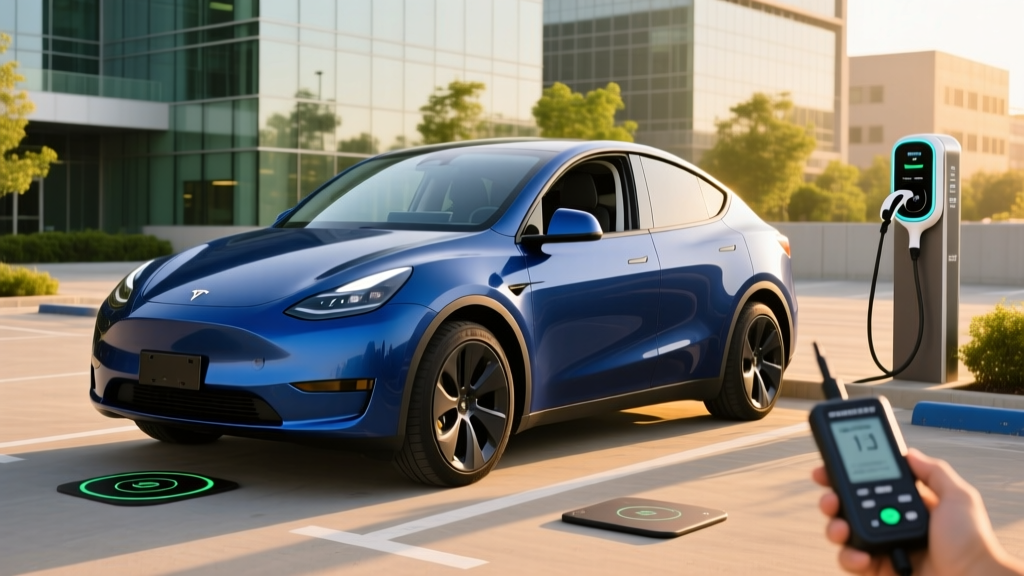
Tesla's V3 and V4 Superchargers deliver up to 250 kW to Long Range and Performance trims. However, peak rate is not sustained rate — the charge curve tapers significantly above 50% State of Charge (SoC). A typical 10-80% session averages around 130 kW, meaning you add roughly 200 miles in 25 minutes. Above 80%, charging slows dramatically to protect the battery — plan to unplug at 80% on road trips unless you need the final stretch.
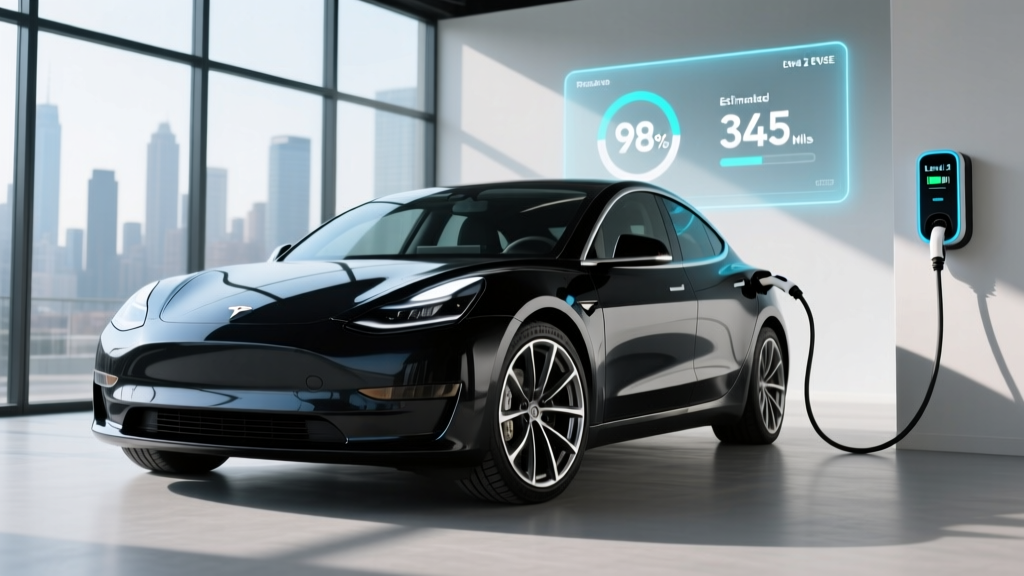
The LFP RWD model peaks at roughly 170 kW with a flatter charge curve, meaning it sustains a more consistent rate but takes slightly longer for 10-80% because the battery is smaller. Home charging on a 48-amp Level 2 wall connector (hardwired, 60A circuit) adds about 44 miles of range per hour — more than enough to fully replenish overnight.
Connector note: All 2026 Model 3 vehicles use the NACS (North American Charging Standard) connector natively. This is now the dominant standard, with Ford, GM, Rivian, and others adopting it. You'll find NACS at every Tesla Supercharger and a growing number of third-party stations.
Tesla Model 3 Tires: Sizes, Range Impact, and Replacement Costs
The keyword on every new Model 3 owner's mind after their first tire rotation: what tires does the Tesla Model 3 use, and how much do replacements cost? Tire choice directly affects range, noise, grip, and your wallet.
| Trim | Wheel Size | Tire Size | OEM Tire | Est. Replacement Cost (set of 4) |
|---|---|---|---|---|
| RWD / Long Range (18" Aero) | 18 × 8.5" | 235/45R18 | Michelin e.Primacy / Hankook iON evo | $800 – $1,100 |
| Long Range (19" Sport) | 19 × 8.5" | 235/40R19 | Hankook Ventus S1 evo3 EV | $1,000 – $1,400 |
| Performance (20" Warp) | 20 × 9" | 235/35R20 | Pirelli P Zero (TES) | $1,200 – $1,700 |
Range impact of wheel/tire choice: The 18" Aero wheels with low-rolling-resistance tires deliver the full EPA-rated range. Upgrading to 19" Sport wheels typically costs you 10-15 miles of EPA range. The 20" Performance wheels sacrifice roughly 20-30 miles versus the 18" setup. This is a combination of increased unsprung weight, wider contact patches, and stickier rubber compounds.
EV-specific tire features: Tesla fits tires marked with an acoustic foam liner (visible as "TES" or "PNCS" on the sidewall). This foam reduces road noise transmitted into the cabin — important because EVs lack engine noise to mask tire roar. When replacing tires, you can choose standard tires at lower cost, but expect a noticeable increase in cabin noise at highway speeds.
Tire wear on EVs: Model 3 owners typically see 25,000-35,000 miles from the OEM set. EVs wear tires faster than gas cars due to instant torque delivery and greater vehicle weight (the Long Range AWD weighs ~4,034 lbs). Regular rotation every 6,250 miles and proper alignment are critical. Some owners switch to all-season EV-rated tires like the Michelin Pilot Sport All-Season 4 or Hankook iON evo AS for year-round use in moderate climates.
Pricing, Trims, and Federal Tax Credit Eligibility
| Trim | Base MSRP | Federal Credit (§30D) | Effective Price (if eligible) |
|---|---|---|---|
| RWD (Base, LFP) | $38,990 | Up to $7,500 | ~$31,490 |
| Long Range RWD | $42,490 | Up to $7,500 | ~$34,990 |
| Long Range AWD | $47,490 | Up to $7,500 | ~$39,990 |
| Performance AWD | $54,990 | Up to $7,500 | ~$47,490 |
Federal tax credit rules (§30D): As of 2026, the IRS clean vehicle credit offers up to $7,500, but eligibility depends on multiple factors:
- MSRP cap: Sedans must be priced at or below $55,000. The RWD, Long Range RWD, and Long Range AWD all qualify. The Performance AWD at $54,990 clears the cap but options can push it over.
- Buyer income limits: Modified AGI must not exceed $150,000 (single), $225,000 (head of household), or $300,000 (married filing jointly).
- Battery sourcing requirements: A percentage of critical minerals and battery components must be sourced from the U.S. or FTA partners. The LFP RWD model (CATL battery, China) has faced partial credit eligibility — typically $3,750 rather than the full $7,500 in recent years, depending on annual sourcing thresholds. NMC Long Range models with North American-sourced components have generally qualified for the full amount.
- Point-of-sale transfer: Since 2024, buyers can transfer the credit to the dealer at purchase, reducing the upfront cost rather than waiting for tax filing. Tesla supports this at checkout.
Critical caveat: Battery sourcing requirements tighten annually. Always verify current eligibility on fueleconomy.gov before purchasing. Consult a tax professional for your specific situation.
Interior, Cargo, Technology, and Driver Assistance
The 2026 Model 3 "Highland" refresh addressed many complaints about the pre-2024 cabin. Ventilated front seats, ambient lighting, rear-seat touchscreen, improved sound insulation, and a redesigned center console with wireless charging pads are now standard across trims.
| Measurement | Specification |
|---|---|
| Front legroom | 42.7 in |
| Rear legroom | 35.2 in |
| Front headroom | 40.3 in |
| Rear headroom | 37.2 in |
| Trunk (rear) | 21.0 cu ft |
| Frunk (front trunk) | 3.1 cu ft |
| Total cargo | 24.1 cu ft |
The 15.4" center touchscreen handles all vehicle controls — there are no physical buttons for climate, mirrors, or glovebox. This minimalism divides opinion, but the interface is responsive and logically organized. A rear 8" screen lets passengers control climate and media.
Driver assistance: Basic Autopilot (traffic-aware cruise control and lane centering) is standard. Enhanced Autopilot ($6,000) adds auto lane change, navigate on Autopilot, and Smart Summon. Full Self-Driving (Supervised) at $8,000 adds traffic light/stop sign recognition and city street routing.
All Tesla driver-assistance features — including FSD (Supervised) — are SAE Level 2. The driver must remain fully engaged, hands on or near the wheel, and eyes on the road at all times. This is not autonomous driving. Level 4 robotaxi services (Waymo, Zoox) operate without a driver in geofenced areas; Tesla's system requires constant human supervision.
Standout tech: Tesla's software ecosystem remains unmatched — over-the-air updates regularly add features, the mobile app enables remote preconditioning and Sentry Mode monitoring, and the built-in navigation with real-time Supercharger routing is the most seamless road-trip planner in the industry. The 2026 Model 3 also supports cabin camera monitoring for Sentry Mode clips sent to your phone.
Who Should Buy the 2026 Tesla Model 3?
- You commute under 60 miles round-trip and charge at home
- You want the lowest entry price (~$31,490 after credit)
- You prefer LFP battery longevity and 100% daily charging
- You live in a mild climate where 272 miles of range suffices
- You take regular road trips over 200 miles
- You need AWD for snow/ice traction
- You want the best range-per-charge (341 mi EPA) with dual-motor capability
- You value the 4.2-second 0-60 without the Performance premium
- You need more than 24 cu ft of cargo space (consider Model Y or Ioniq 5)
- You prefer physical buttons and traditional interfaces
- You cannot install home charging and rely entirely on public infrastructure
- Rear-seat passenger space is a priority (the Hyundai Ioniq 6 offers comparable rear room; the BMW i4 is tighter)
Pros and Cons
- Class-leading efficiency (132 MPGe, 25 kWh/100mi on Long Range RWD)
- Access to Tesla Supercharger network — the most reliable DC fast-charging system in North America
- LFP battery option for worry-free 100% daily charging
- Best-in-class software, OTA updates, and mobile app integration
- Strong safety ratings (IIHS Top Safety Pick+, 5-star NHTSA)
- Competitive pricing after federal tax credit
- No physical controls — everything through the touchscreen
- Firm ride quality, especially on 19"/20" wheels
- Tire replacement costs are above average for the segment
- LFP RWD may only qualify for partial ($3,750) federal credit depending on sourcing
- Rear-seat headroom tight for passengers over 6'2"
- Insurance premiums run 15-25% higher than comparable gas sedans
Frequently Asked Questions
What is the real-world range of the 2026 Tesla Model 3?
The EPA rates the Long Range RWD at 363 miles, but expect roughly 305-320 miles at sustained highway speeds (70+ mph). In cold weather (below 32°F), plan for 255-280 miles unless you precondition the battery while plugged in. The base RWD delivers about 230-245 real-world highway miles.
How fast does the Model 3 charge at home and on the road?
On a 48-amp Level 2 home charger (240V), the Model 3 adds approximately 44 miles of range per hour — a full charge takes 7-9 hours overnight. At a Tesla Supercharger (250 kW peak), the Long Range model charges from 10-80% in about 25-30 minutes. The LFP RWD model peaks at ~170 kW and takes 28-35 minutes for the same session.
How much does the Tesla Model 3 cost after the federal tax credit?
The base RWD starts at $38,990 and drops to approximately $31,490 if you qualify for the full $7,500 §30D credit. However, the LFP battery's Chinese sourcing may limit the credit to $3,750 (effective price ~$35,240). Long Range NMC models with North American battery components typically qualify for the full $7,500. Always verify on fueleconomy.gov before ordering.
What tires does the Tesla Model 3 use and how much do they cost?
The 18" Aero wheels use 235/45R18 tires (Michelin e.Primacy or Hankook iON evo), costing $800-$1,100 for a set of four. The 19" Sport wheels use 235/40R19 ($1,000-$1,400), and the 20" Performance wheels use 235/35R20 Pirelli P Zeros ($1,200-$1,700). OEM tires include acoustic foam liners to reduce cabin noise. Expect 25,000-35,000 miles of tire life due to EV weight and instant torque.
Is the 2026 Model 3 worth buying over the Hyundai Ioniq 6 or BMW i4?
The Model 3 wins on charging infrastructure (Supercharger network), software integration, and efficiency. The Ioniq 6 offers comparable range (361 mi SE) with 800V ultra-fast charging (10-80% in ~18 min) but relies on the less mature Electrify America/IONNA network. The BMW i4 is a premium alternative with a more traditional interior but shorter range (307 mi eDrive40) and higher pricing. For most buyers, the Model 3's combination of range, charging access, and price remains the strongest package.
Does the Tesla Model 3 qualify for the federal EV tax credit?
Yes, but with caveats. All Model 3 trims fall under the $55,000 MSRP cap for sedans. Buyer income must not exceed $150K/$225K/$300K (single/HOH/MFJ). The NMC Long Range models generally qualify for the full $7,500. The LFP RWD model's credit depends on annual battery-sourcing thresholds — check the latest IRS guidance at irs.gov.
How long will the Model 3 battery last?
Tesla warranties the battery for 8 years / 100,000 miles (RWD) or 8 years / 120,000 miles (Long Range/Performance), guaranteeing at least 70% capacity retention. Fleet data shows LFP packs degrading less than 10% over 200,000 miles. NMC packs typically lose 8-12% in the first 100,000 miles, then stabilize. A full battery replacement outside warranty currently costs between $12,000-$16,000 depending on trim.
Sources: fueleconomy.gov — 2026 Tesla Model 3, IRS §30D Clean Vehicle Credits, NHTSA Safety Ratings, Tesla.com specifications.