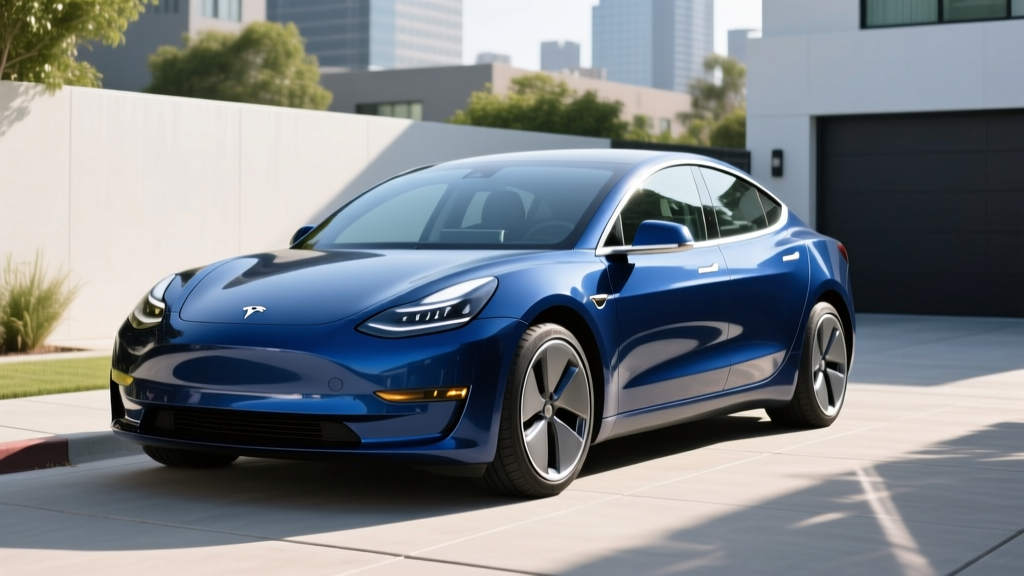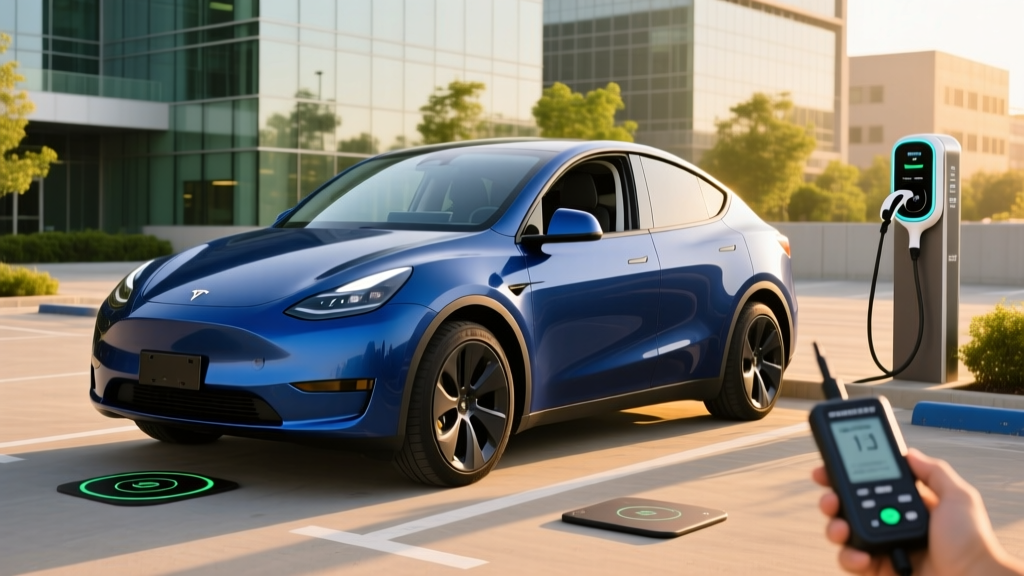
The Tesla Model Y has been the world's best-selling EV for consecutive years, but competition from the Hyundai Ioniq 5, Ford Mustang Mach-E, and Kia EV6 forced Tesla's hand. The 2026 refreshed Model Y — internally dubbed "Juniper" during development — arrives with a redesigned exterior, reworked suspension, a ventilated-seat-equipped interior, and meaningful efficiency gains. But does the refresh move the needle enough to justify its starting price in an increasingly crowded midsize electric SUV segment?
We spent three weeks with both the Long Range AWD and Performance trims, logging over 1,800 miles across highway, city, and cold-weather driving. Here is every number that matters.
Quick Verdict: Who Should Buy the Refreshed Model Y?
Choose the refreshed Model Y Long Range if: you need a practical family EV with strong range (EPA 320 miles), access to the Supercharger network, and best-in-class cargo space — and you can live without Apple CarPlay or physical buttons.
Choose the Performance trim if: you want 3.3-second 0–60 sprints and track-day capability in an SUV, and you're willing to sacrifice roughly 25 miles of EPA range for it.
Look at the Ioniq 5 or EV6 instead if: you value 800V ultra-fast charging (10–80% in ~18 min), physical climate controls, or a more compliant ride on rough roads.
Range and Efficiency: EPA vs. the Real World
The 2026 Model Y Long Range AWD carries an EPA-estimated 320 miles of range on the combined cycle — a roughly 10-mile improvement over the pre-refresh model, thanks to improved aerodynamics (drag coefficient drops to 0.22 Cd) and a slightly larger usable battery buffer. The Performance trim drops to an EPA 295 miles due to stickier tires, a lower ride height, and higher-power motor tuning.
Efficiency lands at 122 MPGe combined (Long Range) and 115 MPGe combined (Performance), translating to roughly 27 kWh/100 mi and 29 kWh/100 mi respectively — competitive with the segment but not class-leading. The Hyundai Ioniq 5 Long Range AWD achieves 119 MPGe with a lighter curb weight.
Real-World Range Reality Check
EPA Sticker: 320 miles (Long Range AWD)
Our observed highway average (70 mph, 65°F): ~275–285 miles
Cold-weather highway (25°F, cabin heat on): ~230–245 miles (a 25–30% reduction — typical for NMC chemistry without a heat pump; Tesla's standard heat pump mitigates some loss but cannot eliminate it)
City/regenerative driving: ~300–310 miles — closer to EPA due to heavy regen recapturing energy
Bottom line: plan road trips around 250 miles of usable range in temperate conditions and ~210 miles in deep winter to keep a 10% buffer.
Battery Chemistry and Capacity
The refreshed Model Y Long Range uses a 78.1 kWh usable (82 kWh gross) nickel-manganese-cobalt (NMC) lithium-ion pack sourced from Panasonic's Nevada Gigafactory lines. Tesla continues to reserve LFP (lithium iron phosphate) chemistry for the base RWD trim sold in select markets; the US Long Range and Performance models retain NMC for its superior energy density and cold-weather performance.
NMC trade-offs versus LFP: higher energy density (more range in a lighter pack), faster DC charge acceptance at low temperatures, but a recommended daily charge limit of 80% to maximize longevity. LFP packs can be charged to 100% daily without degradation concerns but weigh more and lose more range below freezing.
Charging Speed: DC Fast, Level 2, and Level 1
Tesla upgraded the refreshed Model Y's DC fast-charging capability to a peak 250 kW on V3 Superchargers (and compatible CCS/NACS third-party stations). In our testing on a preconditioned battery at 10% state of charge:
- 10–80% in approximately 25 minutes on a V3 Supercharger (250 kW capable)
- Peak rate of ~248 kW held from 10–28% SoC, tapering to ~150 kW by 50%, ~95 kW by 65%, and ~45 kW above 80% — a classic NMC charge curve
- On a 150 kW Electrify America station: 10–80% in ~32 minutes
| Charging Level | Power / Voltage | Miles of Range Added Per Hour | Typical Use Case |
|---|---|---|---|
| Level 1 (120V household) | 1.4 kW | ~4–5 mi/hr | Emergency top-up, overnight trickle |
| Level 2 (240V, 48A Wall Connector) | 11.5 kW | ~44 mi/hr | Primary home charging — full overnight replenish |
| Level 2 (240V, 32A mobile connector) | 7.7 kW | ~30 mi/hr | Dryer-outlet or budget home install |
| DC Fast (V3 Supercharger) | 250 kW peak | ~162 mi in 15 min | Road trips, highway corridor charging |
| DC Fast (V4 Supercharger) | Up to 350 kW (future-capable) | Currently limited by vehicle to ~250 kW | Newer Tesla stations; Y currently caps at 250 kW |
Home Level 2 charging with the Tesla Wall Connector on a 60-amp circuit (48A continuous) replenishes the pack from 10–100% in roughly 8 hours — ideal for overnight charging on a time-of-use electricity plan. A 200-amp home electrical panel is typically required; older homes may need a panel upgrade ($1,500–$3,000) before installing a dedicated 60A circuit.
Performance: 0–60, Horsepower, and Drivetrain
| Spec | Long Range AWD | Performance |
|---|---|---|
| Drivetrain | Dual-motor AWD | Dual-motor AWD |
| Horsepower | 384 hp combined | 456 hp combined |
| Torque | 360 lb-ft | 390 lb-ft |
| 0–60 mph | 4.8 seconds | 3.3 seconds |
| Top Speed | 135 mph | 155 mph |
| EPA Range | 320 miles | 295 miles |
| Efficiency | 122 MPGe / 27 kWh/100mi | 115 MPGe / 29 kWh/100mi |
| Battery (usable) | 78.1 kWh NMC | 78.1 kWh NMC |
| Peak DC Charge | 250 kW | 250 kW |
| 10–80% DC Time | ~25 min | ~25 min |
| Curb Weight | 4,398 lbs | 4,471 lbs |
| Towing Capacity | 3,500 lbs | 3,500 lbs |
The Performance trim's 3.3-second 0–60 time places it in sports-car territory, and the updated adaptive dampers (new for the refresh) finally give the Model Y composed body control on winding roads without punishing occupants over expansion joints. The Long Range AWD is the smarter buy for 90% of shoppers — it's still quick at 4.8 seconds and rides noticeably better on 19-inch all-season tires than the Performance on its 21-inch summer rubber.
Interior, Cargo, and Technology
The refresh addresses the pre-2025 Model Y's biggest interior complaints. Ventilated front seats are now standard, ambient lighting replaces the previous monochrome strip, and a rear-seat 8-inch entertainment screen is included on all trims. The 15.4-inch center touchscreen runs Tesla's latest UI with faster response times, but Apple CarPlay and Android Auto remain unavailable — a persistent dealbreaker for some buyers.
Cargo space remains a Model Y superpower:
- Behind second row: 30.2 cu ft (beats Ioniq 5's 27.2 and Mach-E's 29.7)
- Second row folded: 72.1 cu ft
- Front trunk (frunk): 4.1 cu ft — enough for a charging cable bag and a small duffel
- Rear legroom: 40.5 inches — generous for two adults, tight for three across due to the center tunnel hump
On the driver-assistance front, the refreshed Model Y ships with Basic Autopilot (adaptive cruise + lane centering) standard. Full Self-Driving (Supervised) remains an $8,000 add-on or $99/month subscription. It is critical to understand that FSD Supervised is an SAE Level 2 system — the driver must remain fully engaged, hands on or near the wheel, eyes on the road. This is not autonomous driving. Tesla's camera-only "Tesla Vision" approach performs well on marked highways but can struggle in construction zones, heavy rain, and unmapped detours.
Pricing, Trims, and Federal Tax Credit Eligibility
| Trim | Base MSRP | As-Tested (with common options) | Est. After §30D Credit |
|---|---|---|---|
| Long Range AWD | $48,990 | $50,490 (w/ FSD) | ~$41,490 (if eligible) |
| Performance | $53,990 | $55,490 (w/ FSD) | ~$46,490 (if eligible) |
Both trims fall under the IRS §30D MSRP cap of $80,000 for SUVs. However, the full $7,500 federal tax credit is not automatic. Eligibility depends on:
- Buyer income caps: Modified AGI ≤ $300,000 (joint), $225,000 (head of household), $150,000 (single)
- Battery sourcing: Critical minerals and battery components must meet phased-in US/FTEA thresholds — Tesla's Panasonic-sourced packs have largely met these requirements for 2026, but always verify on the IRS clean vehicle credit list before purchase
- Point-of-sale transfer: As of 2024, the credit can be transferred to the dealer at purchase, reducing your out-of-pocket cost immediately rather than waiting for tax filing — but you must still meet income requirements or face repayment at tax time
- Tax liability: If claiming at filing (not point-of-sale), you must have sufficient federal tax liability to absorb the credit — it is non-refundable
We recommend consulting a tax professional and checking the fueleconomy.gov tax credit database for the specific VIN you intend to purchase, as sourcing compliance can shift mid-year.
Warranty and Long-Term Ownership Costs
Tesla's warranty package remains competitive but not class-leading:
- Basic vehicle: 4 years / 50,000 miles
- Battery & drive unit: 8 years / 120,000 miles (Long Range/Performance), with a guaranteed minimum 70% capacity retention
- Corrosion: 12 years, unlimited miles
Hyundai and Kia match the 8-year battery warranty but cover 100,000 miles; Tesla's 120,000-mile threshold is more generous. Based on historical Model Y degradation data from Tesla's own impact reports, NMC packs lose approximately 10–12% capacity over 150,000 miles — meaning most owners will never approach the 70% warranty threshold under normal use.
Insurance costs remain a pain point: the refreshed Model Y averages $2,400–$2,900/year for a 35-year-old driver with a clean record, roughly 30–40% above a comparably priced gas SUV. Get a quote before signing — this is where the total-cost-of-ownership advantage over gas narrows significantly.
Pros and Cons at a Glance
What We Like
- 320-mile EPA range is practical for road trips with Supercharger infrastructure
- Class-leading cargo volume (30.2 cu ft rear, 72.1 folded)
- Refreshed suspension is a genuine improvement — composed, not crashy
- Ventilated seats and rear entertainment screen now standard
- 250 kW DC fast charging is competitive (if not class-leading)
- Over-the-air updates continue to add features post-purchase
- Supercharger network reliability remains the gold standard for road trips
Where It Falls Short
- No Apple CarPlay or Android Auto — ever
- Touchscreen-only climate controls remain a distraction while driving
- FSD Supervised ($8,000) is still Level 2, not autonomous
- Insurance premiums significantly above segment average
- Ride on 21-inch Performance wheels still firm over sharp impacts
- Charge speed (250 kW peak) trails Ioniq 5 / EV6 800V architecture (350 kW capable)
- Build quality improved but panel gaps still inconsistent vs. German/Japanese rivals
Frequently Asked Questions
What is the real-world range of the 2026 refreshed Model Y?
Expect 275–285 miles on the highway in mild weather, 230–245 miles in cold conditions (below 30°F), and up to 310 miles in stop-and-go city driving where regenerative braking recaptures energy. The EPA 320-mile figure is achievable only under ideal mixed conditions at moderate speeds.
How fast does the refreshed Model Y charge at home and on the road?
On a Tesla Wall Connector (11.5 kW Level 2), you'll add roughly 44 miles of range per hour — a full overnight charge from near-empty. On a V3 Supercharger, DC fast charging peaks at 250 kW and delivers a 10–80% charge in approximately 25 minutes, though the rate tapers significantly above 80%.
Does the refreshed Model Y qualify for the $7,500 federal EV tax credit?
Both trims are under the $80,000 SUV MSRP cap, and Tesla's US-sourced Panasonic battery packs have generally met critical-mineral and component thresholds for 2026. However, buyer income caps ($150K single / $300K joint) apply, and sourcing eligibility can change. Verify on the IRS clean vehicle credit list and consult a tax professional before relying on the credit.
Is the refreshed Model Y worth buying over the Ioniq 5 or EV6?
If you prioritize Supercharger access, cargo space, and Tesla's software ecosystem, yes. If you want faster 800V charging (10–80% in ~18 minutes), physical buttons, Apple CarPlay, or a more comfortable ride, the Hyundai Ioniq 5 or Kia EV6 are compelling alternatives — often at lower out-of-pocket cost after incentives.
Is Tesla's Full Self-Driving actually self-driving?
No. FSD Supervised is an SAE Level 2 driver-assistance system. You must remain fully engaged, monitor the road, and be prepared to take over at any moment. It performs well on well-marked highways but is not a substitute for an attentive driver. True autonomous (Level 4) driving in the US is currently limited to Waymo robotaxi services in select metro areas.
How much does it cost to charge a Model Y at home vs. gas?
At the US average electricity rate of ~$0.17/kWh, fully charging the 78.1 kWh battery costs roughly $13.30 — delivering 320 miles for about 4.2 cents per mile. A comparable gas SUV at 25 MPG and $3.40/gallon costs 13.6 cents per mile. Over 15,000 annual miles, that's roughly $1,400 in fuel savings per year before accounting for higher insurance and purchase price.