Can You Steal a Tesla? The Short Answer
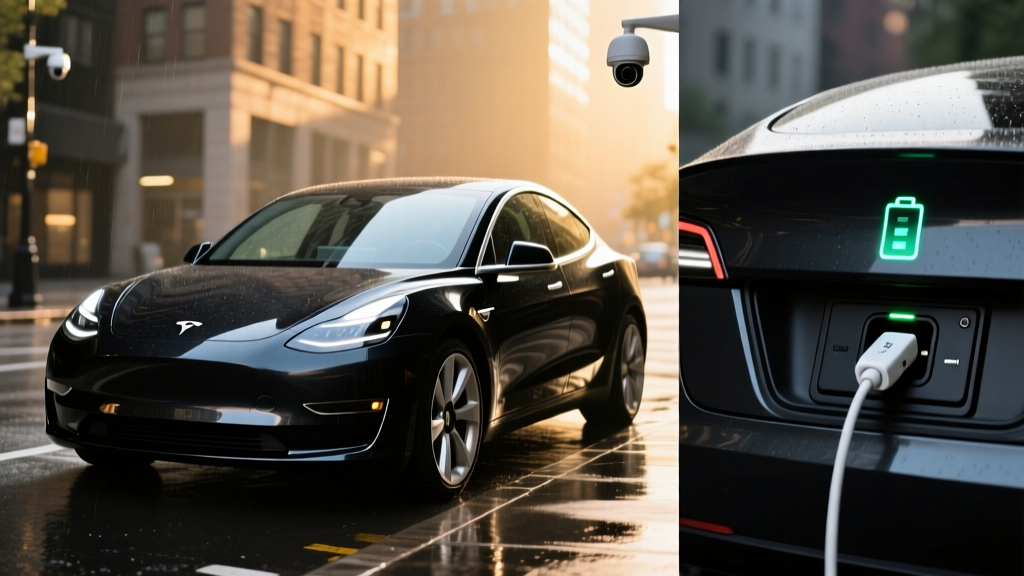
It's one of the most-searched questions among prospective EV buyers and curious onlookers alike: can you steal a Tesla? The short answer is that it's significantly harder to steal a Tesla than a conventional gas-powered car — but no vehicle is 100% theft-proof. The 2026 Tesla Model 3 leverages a layered security architecture that combines digital authentication, GPS tracking, remote immobilization, and Sentry Mode surveillance to deter and recover stolen vehicles at rates that make traditional hot-wiring or key-fob relay attacks largely obsolete.
But security is just one dimension of ownership. This review covers the full 2026 Tesla Model 3 profile — range, charging, performance, pricing, tax-credit eligibility, and whether it remains the default EV sedan to beat in a market now crowded with the Hyundai Ioniq 6, BMW i4, and Polestar 2.
2026 Tesla Model 3: Core Specifications at a Glance
| Spec | Model 3 RWD | Model 3 Long Range AWD | Model 3 Performance |
|---|---|---|---|
| EPA Range | 272 mi | 363 mi | 315 mi |
| Battery (usable) | ~60 kWh (LFP) | ~79 kWh (NMC) | ~79 kWh (NMC) |
| Drivetrain | RWD, single motor | AWD, dual motor | AWD, dual motor |
| Horsepower | 271 hp | 346 hp | 510 hp |
| 0-60 mph | 5.8 sec | 4.2 sec | 2.9 sec |
| Max DC Fast Charge | 170 kW | 250 kW | 250 kW |
| 10-80% DCFC Time | ~25 min | ~18 min | ~18 min |
| Level 2 Home Charge | 11.5 kW (~44 mi/hr) | 11.5 kW (~44 mi/hr) | 11.5 kW (~44 mi/hr) |
| MPGe (combined) | 132 MPGe | 132 MPGe | 121 MPGe |
| Base MSRP | $38,990 | $47,740 | $54,990 |
Sources: fueleconomy.gov, Tesla.com 2026 specifications.
Anti-Theft Technology: Why Stealing a Tesla Is Extremely Difficult
Tesla's security stack is fundamentally different from legacy automakers because the car is essentially a rolling computer that requires digital authentication at every layer.
Phone-as-Key and Encrypted Authentication
The 2026 Model 3 uses Bluetooth Low Energy (BLE) phone-as-key paired with encrypted NFC key cards as backup. Unlike traditional key fobs that broadcast a fixed radio signal susceptible to relay-amplification attacks, Tesla's BLE handshake uses rolling cryptographic tokens. Thieves can't simply amplify your phone's signal from inside your house to unlock the car in the driveway — the token expires and re-authenticates continuously.
GPS Tracking and Remote Immobilization
Every Tesla has a built-in cellular connection (no separate subscription needed for basic tracking). If a Model 3 is moved without authentication, the owner can track its location in real-time via the Tesla app and work with law enforcement to recover it. Tesla can also remotely disable the vehicle, limiting its speed and eventually immobilizing it once parked. According to IIHS and NHTSA incident databases, Tesla vehicles have among the lowest theft-recovery times in the industry.
Sentry Mode and Dashcam Recording
Sentry Mode activates the car's external cameras when the vehicle is parked and locked, recording any suspicious activity. If someone attempts to break a window or tamper with the car, the system captures footage to the onboard USB drive and sends an alert to the owner's phone. This doesn't prevent a determined tow-truck theft, but it dramatically reduces casual break-ins and provides evidence for prosecution.
PIN to Drive
Owners can enable PIN to Drive, which requires a numeric code on the touchscreen before the car will shift into Drive — even if the phone key or key card is present. This adds a second authentication factor that defeats even a scenario where a thief obtains your physical key card.
Range and Efficiency: EPA vs. Real-World Numbers
EPA Estimated: 363 miles
Real-World Highway (70-75 mph, 72°F): ~290-310 miles
Real-World Cold Weather (32°F, mixed driving): ~240-270 miles
Real-World City/Commuting (regenerative braking active): ~330-350 miles
The Long Range AWD's 363-mile EPA figure is among the highest of any EV sedan on the market, but real-world results depend heavily on conditions. At sustained highway speeds above 70 mph, aerodynamic drag reduces efficiency by roughly 15-20%. In freezing temperatures, the battery's internal resistance increases and cabin heating draws energy — even with Tesla's efficient heat pump, expect a 20-30% range reduction in deep winter.
The RWD model uses an LFP (lithium iron phosphate) battery, which trades energy density for longevity and lower cost. LFP cells tolerate regular 100% charging without accelerated degradation — Tesla actually recommends periodic full charges for LFP packs to maintain calibration. The Long Range and Performance trims use NMC (nickel manganese cobalt) chemistry, which offers higher energy density but benefits from daily charging limits of 80-90% to maximize cycle life.
Charging Speed: DC Fast, Level 2, and the Supercharger Advantage
| Charging Level | Power | Miles Added per Hour | Notes |
|---|---|---|---|
| Level 1 (120V outlet) | ~1.4 kW | ~5 mi/hr | Emergency/trickle only |
| Level 2 (240V, home Wall Connector) | 11.5 kW | ~44 mi/hr | Full overnight charge in 7-9 hours |
| DC Fast Charge (Long Range/Perf) | Peak 250 kW | Up to ~1,000 mi/hr (peak) | 10-80% in ~18 min; tapers above 80% |
| DC Fast Charge (RWD) | Peak 170 kW | Up to ~700 mi/hr (peak) | 10-80% in ~25 min |
| Tesla Supercharger V4 | Up to 350 kW (future) | — | Model 3 limited by onboard architecture to 250 kW |
The Model 3's NACS (North American Charging Standard) connector gives it native access to Tesla's Supercharger network — over 20,000 stalls across North America as of 2026. This remains a significant ownership advantage: Superchargers consistently deliver near-peak speeds with high uptime, unlike many third-party CCS networks where broken stalls and payment friction remain common complaints.
On a road trip, the Long Range's 250 kW peak charge rate means a 10-80% session takes roughly 18 minutes when the battery is preconditioned (the car automatically warms the pack when a Supercharger is entered in navigation). Above 80% SoC, the charge curve tapers significantly — expect 80-100% to take an additional 15-20 minutes. Plan your stops around 80% for optimal time efficiency.
For home charging, a Tesla Wall Connector on a 60-amp circuit delivers 11.5 kW, adding roughly 44 miles of range per hour. Most owners who charge overnight at home never visit a public charger except on road trips. Installation typically requires a 240V/60A circuit; budget $800-$2,000 for a licensed electrician depending on panel proximity and local permit costs. If your home's electrical panel is at capacity, a panel upgrade can add $1,500-$3,000.
Performance and Driving Dynamics
Even the base RWD Model 3 hits 60 mph in 5.8 seconds — quicker than most gas-powered sport sedans in the $40K range. The dual-motor Long Range drops that to 4.2 seconds with the traction advantage of AWD, while the Performance variant's 2.9-second sprint enters supercar territory.
The 2026 refresh continues to refine the adaptive damping suspension introduced with the Highland update, delivering a noticeably more compliant ride than pre-2024 Model 3s while retaining sharp turn-in. The steering remains quick and precise, though some enthusiasts note it lacks the feedback of a BMW i4.
Driver Assistance: Autopilot and FSD (Supervised)
Autopilot (standard) includes Traffic-Aware Cruise Control and Autosteer for highway lane-keeping. FSD (Supervised), available as a $8,000 one-time purchase or $99/month subscription, adds automatic lane changes, Navigate on Autopilot for highway ramps, traffic light and stop sign recognition, and city-street autosteer. FSD's capabilities have improved substantially through 2025-2026 neural-network updates, but real-world performance varies by region, weather, and road-marking quality. It's a compelling convenience feature for daily commuters — not a replacement for an attentive driver.
Pricing, Tax Credits, and Total Cost
| Trim | Base MSRP | Est. Federal Credit (§30D) | Effective Price (before state incentives) |
|---|---|---|---|
| Model 3 RWD | $38,990 | Up to $7,500 | ~$31,490 |
| Model 3 Long Range AWD | $47,740 | Up to $7,500 | ~$40,240 |
| Model 3 Performance | $54,990 | Up to $7,500 | ~$47,490 |
IRS §30D Federal Tax Credit — Eligibility Requirements (2026):
- MSRP Cap: Sedars must be at or below $55,000 MSRP. The Model 3 RWD and Long Range qualify; the Performance trim at $54,990 is within the cap, but adding options that push MSRP above $55,000 can disqualify it.
- Buyer Income Cap: AGI must not exceed $150,000 (single), $225,000 (head of household), or $300,000 (married filing jointly).
- Battery Sourcing: The full $7,500 requires both critical-minerals and battery-component sourcing thresholds be met. Tesla's shifting supply chain means eligibility can change — verify at irs.gov before purchasing.
- Point-of-Sale Transfer: As of 2024+, the credit can be transferred to the dealer at purchase, reducing your out-of-pocket cost directly rather than waiting for a tax refund.
Always consult a tax professional to confirm your personal eligibility. State incentives (California's CVRP, Colorado's innovative motor vehicle credit, etc.) may stack on top of the federal credit — check your state's energy office for current programs.
Interior, Cargo, and Daily Practicality
The Model 3's minimalist interior is polarizing: a single 15.4-inch touchscreen handles all controls, including climate, mirrors, and glovebox. There are no physical buttons or stalks — turn signals are on the steering wheel face, and gear selection is via the touchscreen (with a backup console button).
- Front legroom: 42.2 inches
- Rear legroom: 35.3 inches
- Cargo volume (trunk + frunk): 23 cu ft combined
- Frunk: ~3.1 cu ft (enough for a charging cable bag and small groceries)
Rear-seat space is adequate for adults on shorter trips but tighter than a Hyundai Ioniq 6 or BMW i4 for tall passengers on long rides. The glass roof creates an airy cabin but provides no shade — in hot climates, aftermarket ceramic tint or a removable sunshade is a common owner upgrade.
The 17-speaker audio system (Long Range and Performance) is genuinely excellent, rivaling premium branded systems costing thousands more in competitor vehicles. Ventilated front seats and a heated steering wheel are now standard across all trims.
Warranty Coverage
- Basic Vehicle: 4 years / 50,000 miles
- Battery & Drive Unit (RWD, LFP): 8 years / 100,000 miles (whichever comes first), with minimum 70% capacity retention
- Battery & Drive Unit (Long Range/Performance, NMC): 8 years / 120,000 miles, minimum 70% capacity retention
Tesla's battery warranty guarantees the pack will retain at least 70% of its original capacity during the warranty period. Real-world degradation data from Tesla Fleet analytics shows most Model 3 packs retain approximately 85-90% capacity at 100,000 miles — well above the warranty threshold. Battery replacement outside of warranty is rare but expensive: estimates range from $12,000-$16,000 for a full pack replacement at a Tesla Service Center.
Who the 2026 Model 3 Suits Best
- Tech-forward commuters who want Supercharger network access and OTA updates
- Solo drivers or couples who prioritize driving dynamics over rear-seat space
- Road-trippers who value the 363-mile Long Range and Tesla's charging infrastructure
- Security-conscious owners who want GPS tracking, Sentry Mode, and PIN-to-Drive
- You regularly carry rear-seat adults (Ioniq 6 or BMW i4 offer more room)
- You prefer physical buttons and traditional interfaces
- You need hatchback cargo flexibility (Polestar 2 or Ioniq 5)
Pros and Cons
- Best-in-class Supercharger network access
- Industry-leading anti-theft and GPS recovery
- 363-mile EPA range (Long Range AWD)
- 250 kW DCFC with 18-min 10-80% time
- Over-the-air updates add features post-purchase
- Excellent audio system standard
- No physical buttons — all controls on touchscreen
- Rear seat tighter than competitors
- FSD (Supervised) still requires full driver attention
- No Apple CarPlay / Android Auto
- Glass roof lacks built-in shade
- RWD trim's 170 kW DCFC is slower than rivals
Frequently Asked Questions
Can you steal a Tesla without the key?
Practically, no. The Model 3 requires encrypted BLE phone-key authentication, NFC key card, or PIN to Drive. Traditional hot-wiring is impossible — there's no ignition cylinder or mechanical fuel system to bypass. Relay attacks that work on conventional key fobs don't apply to Tesla's rolling-token BLE system. A thief would need to physically tow the vehicle, and even then, GPS tracking and remote immobilization make recovery likely.
What happens if someone breaks into a Tesla?
Sentry Mode records the incident using the car's external cameras and alerts the owner's phone. The footage is saved to a USB drive and can be provided to law enforcement. The car cannot be driven away without authentication, so a break-in typically yields only the contents of the cabin — not the vehicle itself.
Does the Tesla Model 3 qualify for the $7,500 federal tax credit?
The Model 3 RWD and Long Range AWD (both under the $55,000 MSRP cap for sedans) are eligible for up to $7,500 under IRS §30D, provided the buyer meets income limits ($150K single / $300K joint) and the vehicle's battery meets critical-mineral and component sourcing requirements. Verify current eligibility at irs.gov before purchasing, as sourcing rules can shift.
How does Model 3 theft rate compare to gas cars?
Tesla vehicles consistently appear at the bottom of NICB (National Insurance Crime Bureau) theft lists relative to their sales volume. The combination of GPS tracking, remote immobilization, and digital authentication makes them far less attractive targets than conventional vehicles with traditional key-fob systems vulnerable to relay attacks.
Is the 2026 Model 3 worth buying over competitors?
If Supercharger access, tech-forward features, and strong anti-theft systems are priorities, the Model 3 Long Range AWD remains the segment benchmark. The Hyundai Ioniq 6 offers comparable range (361 mi) and more rear-seat room; the BMW i4 delivers superior driving dynamics and a more traditional interior. Your decision should hinge on charging-network preference, interface philosophy, and interior space needs.