Quick Answer: Is the 2019 Honda Clarity Electric Worth Buying Used?
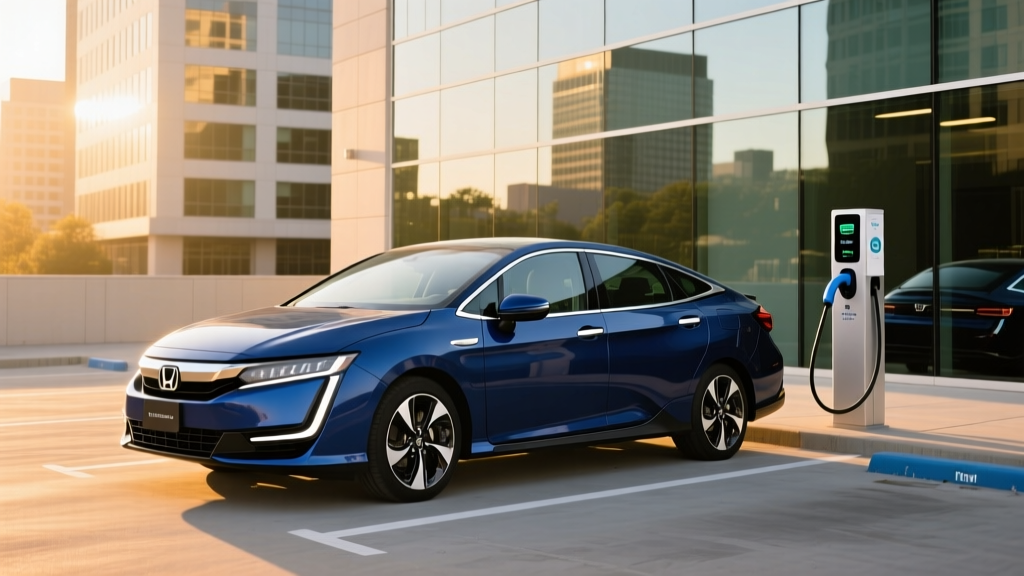
The 2019 Honda Clarity Electric delivers an EPA-estimated 89 miles of range from its 25.5 kWh battery pack, making it a viable commuter car for short daily drives but a poor fit for road trips or single-car households. In 2026, used examples typically sell for $11,000–$15,000 depending on mileage and battery condition. It charges at a maximum of 50 kW on DC fast charging (10–80% in roughly 30 minutes) and 6.6 kW on Level 2 (full charge in about 3.5 hours). The Clarity Electric was only sold in California and Oregon, so availability is limited. If your round-trip commute is under 70 miles and you can charge at home, it's a solid low-cost entry into EV ownership. If you need highway range or live in a cold climate, look elsewhere.
2019 Honda Clarity Electric: Key Specs at a Glance
| Specification | Value |
|---|---|
| EPA Range | 89 miles |
| Battery Capacity | 25.5 kWh (usable) |
| Battery Chemistry | NMC (Nickel Manganese Cobalt) |
| Motor Output | 161 hp / 221 lb-ft torque |
| 0–60 mph | ~8.1 seconds |
| EPA Efficiency | 110 MPGe combined |
| DC Fast Charge (Max) | 50 kW (CCS1) |
| Level 2 Charge Rate | 6.6 kW (J1772) |
| 10–80% DC Fast Charge | ~30 minutes |
| Level 2 Full Charge Time | ~3.5 hours |
| Original MSRP | $36,620 (before incentives) |
| Used Price Range (2026) | $11,000–$15,000 |
| Battery Warranty (Original) | 8 years / 100,000 miles |
| EPA Cargo Volume | 15.5 cu ft |
Honda only offered the Clarity Electric in a single well-equipped trim. Standard features included Honda Sensing (adaptive cruise control, lane-keeping assist, forward collision warning), Apple CarPlay and Android Auto, heated front seats, and an 8-inch infotainment display. The EPA's official fuel economy page confirms the 110 MPGe combined rating and 89-mile range figure.
Real-World Range: What the EPA Sticker Doesn't Tell You
EPA Estimate: 89 miles
Real-World Expectation (Moderate Climate, Mixed Driving): 75–85 miles
Highway Driving at 70+ mph: ~65–72 miles
Cold Weather (Below 32°F): ~55–65 miles
The Clarity Electric's 25.5 kWh battery is small by modern standards — the 2026 Chevrolet Equinox EV carries over 85 kWh usable. With only 89 miles on the sticker, the real-world margin for error is thin. Highway speeds above 65 mph cause energy consumption to climb sharply in any EV, but the penalty hits harder when your total battery is this small. Expect to lose roughly 20–25% of range at sustained interstate speeds.
Cold weather is the bigger concern. NMC lithium-ion batteries experience increased internal resistance at low temperatures, and the Clarity Electric uses a resistive heater rather than a more efficient heat pump system. In testing and owner reports, winter range loss of 25–35% is common when cabin heating is active. If you live in a region with harsh winters, your practical range could drop to 55–65 miles — barely enough for a 50-mile round-trip commute with a safety buffer.
One practical advantage: the Clarity Electric supports preconditioning while plugged in. You can warm the cabin and battery using grid power before departure, which preserves range for the actual drive. If you charge at home and set a departure timer, this mitigates some cold-weather loss.
Charging Speeds and Infrastructure Reality
| Charging Level | Power (kW) | Connector | Time / Miles Added |
|---|---|---|---|
| Level 1 (120V household) | ~1.2 kW | J1772 | ~5 miles per hour; full charge in ~20 hours |
| Level 2 (240V home/public) | 6.6 kW | J1772 | ~26 miles per hour; full charge in ~3.5 hours |
| DC Fast Charge | 50 kW (peak) | CCS1 | 10–80% in ~30 min; adds ~70 miles |
The 50 kW DC fast-charging peak is the Clarity Electric's most significant limitation for road trips. Modern EVs from Hyundai, Kia, and Tesla charge at 150–350 kW, meaning a 10–80% session takes 18 minutes or less. The Clarity Electric's 50 kW rate means you'll spend at least 30 minutes at a charger for a partial fill — and because the battery is small, you'll need to stop more often. On a hypothetical 200-mile trip, you'd need two charging stops totaling roughly an hour of downtime.
For daily use, Level 2 home charging is where this car makes sense. A 6.6 kW onboard charger replenishes the 25.5 kWh battery in about 3.5 hours. Most owners will plug in overnight and wake up to a full charge every morning. If you only have access to a standard 120V outlet (Level 1), expect to gain roughly 5 miles of range per hour of charging — enough for light daily use but impractical if you drive more than 30 miles per day.
The CCS1 connector is still supported at most public DC fast-charging networks including Electrify America and EVgo, though the industry is rapidly transitioning to NACS (Tesla's connector). CCS1 adapters for Tesla Superchargers are available but add cost and complexity.
Cost Breakdown: Buying, Charging, and Owning the Clarity Electric
The used-EV market has brought the Clarity Electric into genuinely affordable territory. Here's what ownership actually costs compared to a comparable used gas sedan (a 2019 Honda Accord 1.5T as a baseline).
| Cost Category | 2019 Clarity Electric | 2019 Honda Accord 1.5T (Gas) |
|---|---|---|
| Purchase Price (Used, 2026) | $11,000–$15,000 | $16,000–$20,000 |
| Federal Used EV Tax Credit (§25E) | Up to $4,000 (if eligible) | $0 |
| Effective Purchase Price | $7,000–$11,000 | $16,000–$20,000 |
| Fuel/Energy Cost (Annual, 12,000 mi) | $400–$600 (home charging at $0.14/kWh) | $1,500–$1,800 (gas at $3.50/gal, 30 MPG) |
| Annual Maintenance | $200–$400 (no oil changes, fewer brake replacements) | $600–$900 |
| Insurance (Annual Average) | $1,200–$1,600 | $1,100–$1,400 |
| 5-Year Total Operating Cost | $11,000–$16,000 (purchase + energy + maintenance) | $26,500–$33,500 (purchase + fuel + maintenance) |
The IRS §25E used clean vehicle credit can knock up to $4,000 off the purchase price, but eligibility has strict requirements: the vehicle must sell for $25,000 or less (the Clarity Electric qualifies), the buyer's modified adjusted gross income must fall below $75,000 (single), $112,500 (head of household), or $150,000 (joint), and the credit can only be claimed once per buyer every three years. Always verify current rules with a tax professional before relying on this credit.
On the energy side, the Clarity Electric's small battery is actually an advantage for cost. Charging 25.5 kWh at the national average residential rate of $0.14/kWh costs about $3.57 for a full charge — good for roughly 80 real-world miles. That works out to about $0.045 per mile on electricity versus roughly $0.12–$0.15 per mile on gasoline in the Accord. Over 12,000 miles annually, you'll save $900–$1,300 in fuel costs alone.
Clarity Electric vs. Clarity Plug-In Hybrid: Which One Makes Sense?
Honda sold three Clarity variants for the 2019 model year: the all-electric version, a plug-in hybrid (PHEV), and a hydrogen fuel cell model. The PHEV is far more common on the used market and solves the range limitation entirely.
| Attribute | 2019 Clarity Electric | 2019 Clarity Plug-In Hybrid |
|---|---|---|
| Electric-Only Range | 89 miles (EPA) | 47 miles (EPA) |
| Total Range | 89 miles | ~340 miles (electric + gas) |
| Battery Size | 25.5 kWh | 17.0 kWh |
| Gas Tank | None | 7.0 gallons |
| Combined MPGe (Electric) | 110 MPGe | 110 MPGe |
| Gas-Only Fuel Economy | N/A | 42 MPG combined |
| DC Fast Charging | 50 kW (CCS1) | None (Level 2 only) |
| Level 2 Charge Time (Full) | ~3.5 hours | ~2.5 hours |
| Used Price (2026) | $11,000–$15,000 | $13,000–$17,000 |
| Availability | CA and OR only | Nationwide (all 50 states) |
The PHEV version gives you 47 miles of electric driving for daily commuting, then seamlessly switches to hybrid mode for longer trips — no range anxiety, no charging-station hunting. It was sold nationwide, making it much easier to find. The trade-off: no DC fast charging, and you'll still need to maintain a gasoline engine (oil changes, spark plugs eventually). For buyers who can't charge at home or who take regular road trips, the PHEV is the more rational choice.
Common Misconceptions About the Clarity Electric
| Myth | Fact |
|---|---|
| "The battery will need replacing soon and cost a fortune." | Honda's 8-year/100,000-mile battery warranty still applies to 2019 models through 2027. NMC batteries at this capacity typically retain 85–92% of original capacity after 7 years with normal use. A replacement, if needed out of warranty, runs $5,000–$8,000 — but most batteries outlast the car. |
| "89 miles of range is useless." | The average American drives ~37 miles per day (FHWA data). For a second car used for commuting and errands, 89 miles is adequate for the majority of daily trips. |
| "It can't use modern charging networks." | The CCS1 connector is still supported at Electrify America, EVgo, and most non-Tesla networks. CCS-to-NACS adapters are available for Supercharger access, though at the car's 50 kW max rate, the speed advantage is minimal. |
| "Used EVs are a bad deal because of degradation." | A 2019 Clarity Electric with moderate mileage (60,000–80,000 miles) will likely still deliver 75–82 miles of range — a 10–15% loss that's still practical for commuting. Always request a battery health report or have a dealer check State of Health (SoH) before purchase. |
| "It qualifies for the $7,500 new EV tax credit." | The §30D new vehicle credit no longer applies to used purchases. However, the §25E used clean vehicle credit offers up to $4,000 (30% of sale price, capped) for eligible buyers purchasing from a dealer. |
Decision Framework: Should You Buy the 2019 Clarity Electric?
Buy the 2019 Clarity Electric if:
- Your round-trip commute is under 70 miles and you work from home some days
- You have reliable Level 2 home charging (garage or driveway with 240V access)
- This will be a second vehicle in a multi-car household
- You live in a mild climate (California, Oregon, Pacific Northwest — where it was sold anyway)
- You want the lowest possible cost of entry into EV ownership ($7,000–$11,000 after the used-EV credit)
- You value Honda Sensing safety tech and a comfortable, spacious cabin
Look at other options if:
- You need more than 100 miles of real-world range regularly
- You live in a region with harsh winters (Upper Midwest, Northeast)
- You can only access Level 1 (120V) charging at home — the slow refill will frustrate you
- This will be your only car and you take road trips more than a few times per year
- You want access to the Tesla Supercharger network without adapter hassle — consider a used Tesla Model 3 or a NACS-equipped vehicle instead
- You need more than 15.5 cu ft of cargo space (the battery packaging reduces trunk volume compared to the Accord)
If the Clarity Electric's range is too limiting but you want a used EV with more capability, the 2019 Hyundai Kona Electric (258 miles EPA, ~$14,000–$18,000 used) or 2019 Chevrolet Bolt EV (238 miles EPA, ~$11,000–$15,000 used) offer three times the range at modest price premiums. Both support faster DC charging as well (the Kona at 50 kW, the Bolt at 55 kW — similar to the Clarity, but with far more range between stops).
What First-Time EV Buyers Should Know Before Purchasing
If the 2019 Clarity Electric is your first EV, here's what matters beyond the spec sheet:
Home charging is non-negotiable for satisfaction. The Clarity Electric's small battery means public-charging dependency will be painful. Budget $500–$1,500 for a Level 2 home charger installation (equipment plus electrician). If your home's electrical panel needs an upgrade to support a 240V/40A circuit, add $1,000–$3,000. Confirm with a licensed electrician before purchasing the car.
Check the battery State of Health (SoH) before buying. Ask the seller or dealer for a battery diagnostic report. A healthy 2019 Clarity Electric should show 85% or higher capacity retention. Below 80%, you're looking at roughly 70 miles of real-world range — still usable, but negotiate the price down accordingly.
Insurance may cost slightly more. EV insurance premiums run 5–15% higher than equivalent gas cars due to higher repair costs for battery and powertrain components. Get a quote before committing to the purchase.
Maintenance is genuinely cheaper. No oil changes, no transmission fluid, no spark plugs, no exhaust system. Regenerative braking extends brake pad life significantly — many EV owners go 80,000+ miles on original brake pads. Your main recurring costs are cabin air filters, tire rotations, and wiper fluid.
Frequently Asked Questions
Can I take a road trip in the 2019 Honda Clarity Electric?
Technically yes, but it's not enjoyable. With 89 miles of EPA range and 50 kW DC fast charging, a 200-mile trip requires two charging stops of about 30 minutes each. That's roughly an hour of charging downtime for a drive that takes about three hours in a gas car. For road trips more than once or twice a year, a longer-range EV or the Clarity PHEV is a better fit.
Does the 2019 Clarity Electric qualify for any tax credits in 2026?
It does not qualify for the §30D new vehicle credit (that applies only to new purchases). However, it may qualify for the §25E used clean vehicle credit — up to $4,000 or 30% of the sale price, whichever is less. Eligibility depends on your income, the sale price (must be under $25,000), and purchasing from a licensed dealer. Consult a tax professional to confirm your eligibility.
How long will the battery last?
NMC batteries in vehicles of this era typically lose 1–2% of capacity per year under normal use. A 2019 Clarity Electric in 2026 (7 years old) should retain roughly 85–92% of its original capacity, translating to about 75–82 miles of real range. Honda's 8-year/100,000-mile battery warranty covers defects and excessive degradation (typically below 70% capacity) through 2027. Beyond the warranty period, battery replacement costs approximately $5,000–$8,000, but complete failures are rare — gradual capacity loss is the norm.
Is the Clarity Electric front-wheel drive or all-wheel drive?
Front-wheel drive only. The single electric motor drives the front wheels, producing 161 horsepower and 221 lb-ft of torque. There is no AWD option. This is typical for commuter-oriented EVs in this price range.
Can I charge the Clarity Electric at Tesla Superchargers?
Not natively. The Clarity Electric uses a CCS1 connector, while Tesla Superchargers use NACS. Third-party CCS-to-NACS adapters exist (approximately $150–$250), but you'll still be limited to the car's 50 kW maximum charge rate, so the Supercharger speed advantage won't benefit you much. Most Clarity Electric owners rely on Electrify America, EVgo, and ChargePoint networks for public DC charging.
What should I look for when inspecting a used 2019 Clarity Electric?
Prioritize three things: (1) Battery State of Health — request a diagnostic report showing capacity retention percentage. (2) Charging port condition — inspect the CCS1 and J1772 ports for corrosion, bent pins, or loose connections. (3) Service history — confirm that Honda Sensing calibration was performed if the windshield was ever replaced, and check for any outstanding recalls via the NHTSA recall lookup. Also verify the original 8-year battery warranty hasn't been voided by accident damage or unauthorized modifications.