Quick Verdict: The Entry-Level Tesla Still Sets the Bar
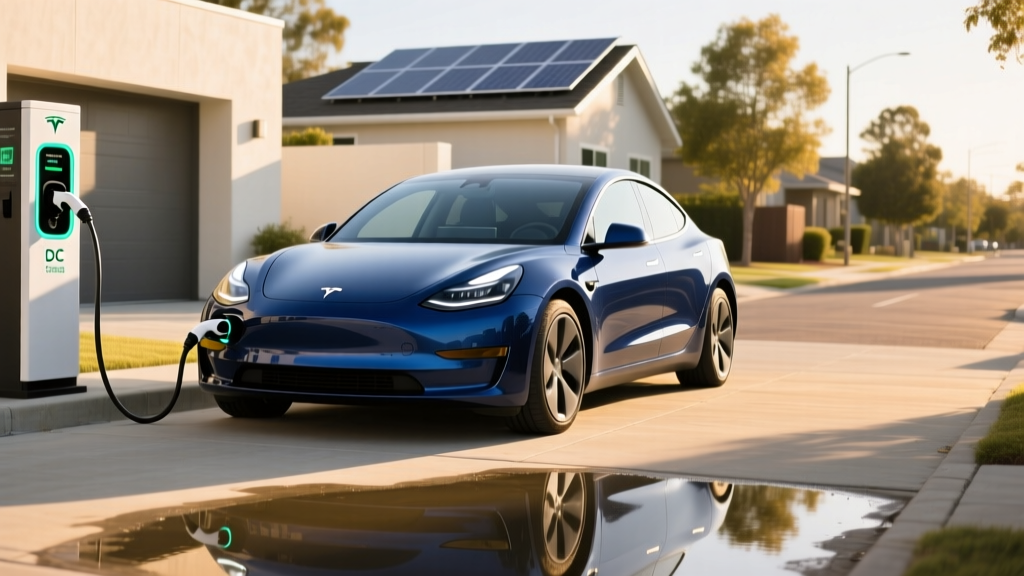
When buyers search for the "short Tesla," they're almost always looking for the most compact, affordable, and approachable vehicle in Tesla's lineup. In 2026, that's the Tesla Model 3 Rear-Wheel Drive — the sedan that started the mass-market EV revolution and remains the smallest new Tesla you can buy. With a refreshed design, improved cabin materials, and a starting MSRP that undercuts most electric rivals, the Model 3 RWD is the gateway drug to Tesla ownership. But "affordable Tesla" doesn't mean compromised: it still delivers class-leading efficiency, access to the Supercharger network, and a software experience years ahead of legacy automakers. The question isn't whether it's a good EV — it's whether its real-world range and charging speed match your daily life.
2026 Tesla Model 3 RWD: Core Specifications
| Spec | Value |
|---|---|
| EPA Estimated Range | 272 miles |
| Battery Capacity (usable) | ~57.5 kWh |
| Battery Chemistry | LFP (Lithium Iron Phosphate) |
| Drivetrain | Rear-Wheel Drive (single motor) |
| Horsepower | 271 hp |
| 0–60 mph | 5.8 seconds |
| Top Speed | 125 mph |
| EPA Efficiency | 132 MPGe combined / 25 kWh/100 mi |
| Max DC Fast-Charge Rate | 170 kW peak |
| 10–80% DC Charge Time | ~25 minutes |
| Level 2 Home Charge Rate | 11.5 kW (~44 mi/hr) |
| Charging Port | NACS (native Tesla) |
| Cargo Volume | 23 cu ft (trunk + frunk) |
| Rear Legroom | 35.2 inches |
| Battery & Drive Unit Warranty | 8 years / 100,000 miles |
| Base MSRP | $38,990 (before incentives) |
Range & Efficiency: EPA vs. Real World
The EPA rates the 2026 Model 3 RWD at 272 miles of combined range. That figure is derived from a mix of city and highway test cycles, but your actual mileage depends heavily on speed, temperature, and terrain. The Model 3's efficiency — 25 kWh per 100 miles — is among the best in the entire EV market, meaning it extracts more miles per kilowatt-hour than heavier, less aerodynamic rivals.
EPA sticker: 272 miles
Highway (70–75 mph, moderate climate): Expect ~230–245 miles
City / stop-and-go: Often meets or exceeds EPA, ~270–285 miles (regen braking recovers energy)
Cold weather (below 32°F): Range drops 20–30%; plan for ~190–215 miles
The LFP battery is more resistant to cold-induced degradation over time than NMC chemistries, but you'll still see meaningful range reduction in winter. Preconditioning the battery before driving helps.
Tesla's trip planner and in-car energy app are among the most accurate in the industry, typically predicting arrival State of Charge (SoC) within 1–2%. For a 200-mile round-trip commute, the RWD model has comfortable margin in three-season weather. For 300+ mile road trips, you'll be stopping at Superchargers — which is where the Tesla ecosystem earns its keep.
Charging Speed: DC Fast, Level 2, and Level 1
Charging speed is where budget EVs often disappoint. The Model 3 RWD's LFP battery charges at a peak of 170 kW on DC fast chargers — slower than the Long Range AWD variant (which peaks around 250 kW) but still competitive for the price class. Here's what that translates to in practice:
| Charging Level | Power | Miles Added Per Hour | Notes |
|---|---|---|---|
| Level 1 (120V outlet) | ~1.2 kW | ~3–5 mi/hr | Emergency/trickle only |
| Level 2 (240V home, 48A) | 11.5 kW | ~44 mi/hr | Full charge in ~6 hours |
| DC Fast Charge (Supercharger) | Up to 170 kW peak | ~750+ mi/hr (peak) | 10–80% in ~25 min |
Charging curve reality check: The 170 kW peak only holds between roughly 10–40% SoC. Above 60%, the rate tapers significantly — by 80% you're down to ~40 kW, and the final 80–100% can take as long as the 10–80% session. This is standard for LFP chemistry but worth knowing for road-trip planning: charge to 80% and go, unless you need the full battery for your destination.
One major LFP advantage: Tesla recommends charging the Model 3 RWD to 100% regularly, unlike NMC batteries where daily charging to 80% is preferred for longevity. This effectively gives you more usable daily range from a smaller battery. According to Tesla's owner's manual, periodic 100% charges also help the battery management system recalibrate for accurate range estimation.
Performance & Driving Dynamics
The single-motor RWD Model 3 makes 271 horsepower and hits 60 mph in 5.8 seconds. That's not the neck-snapping acceleration of a Performance variant, but it's genuinely quick for daily driving — faster than most gas-powered midsize sedans and more than adequate for highway merging. Instant torque delivery from standstill makes it feel quicker than the number suggests.
The refreshed "Highland" chassis tuning (introduced for the 2024 model year and carried into 2026) dramatically improved ride quality over the pre-refresh Model 3. Road noise is lower, suspension compliance is better, and the overall feel is closer to a premium compact sedan than the raw, firm ride of earlier years. The steering remains quick and precise, if somewhat detached — Tesla's steer-by-wire-ready architecture provides good feedback through the wheel, even without a physical connection to the road in the traditional sense.
Regenerative braking is aggressive and largely one-pedal-capable, though Tesla removed the user-adjustable regen setting in recent software updates. You'll adapt within a day. The heat pump (standard on all Model 3 variants since 2021) significantly improves cold-weather efficiency by scavenging waste heat from the drivetrain to warm the cabin, reducing the range penalty of winter heating.
Interior, Tech & Driver Assistance
The 2026 Model 3 interior carries over the minimalist refresh: ventilated front seats, ambient lighting, a rear-seat touchscreen for climate and media, acoustic glass all around, and premium materials that finally close the gap with BMW 3 Series and Audi A4 cabins. The 15.4-inch center touchscreen handles everything — there are no physical stalks (turn signals are on the steering wheel, gear selection is on the screen or via the overhead console).
Infotainment highlights: Netflix/YouTube streaming while parked, a robust navigation system with real-time Supercharger availability and preconditioning, over-the-air software updates that add features monthly, and a phone-as-key system that works reliably. No Apple CarPlay or Android Auto — Tesla's native system is the only option, and most owners find it sufficient.
Driver assistance — Autopilot and FSD:
Tesla Autopilot (standard) and Full Self-Driving Supervised (optional, ~$8,000 or $99/month) are SAE Level 2 driver-assist systems. Despite the "FSD" name, the car does not drive itself. You must keep your hands on the wheel and eyes on the road at all times. The system handles highway lane-keeping, adaptive cruise, and some city-street navigation, but it can make errors, miss construction zones, and misread complex intersections. NHTSA requires the driver to remain fully engaged. This is not Level 4 autonomy like Waymo's driverless robotaxis.
Standard Autopilot includes Traffic-Aware Cruise Control and Autosteer (lane centering on marked highways). FSD Supervised adds automatic lane changes, navigate-on-autopilot for highway interchanges, traffic light and stop sign recognition, and city-street autosteer. It's impressive but imperfect — treat it as a fatigue-reducer on long trips, not a replacement for attention.
Pricing, Tax Credits & Ownership Cost
The 2026 Model 3 RWD starts at $38,990 (including destination). The Long Range AWD variant starts around $45,990, and the Performance model sits above $52,000. Most buyers considering the "short Tesla" are looking at the RWD, and it's well-equipped at base: you're not stripped out of features to hit the price.
| Trim | MSRP | Est. After §30D Credit |
|---|---|---|
| RWD (base) | $38,990 | ~$31,490* |
| Long Range AWD | $45,990 | ~$38,490* |
| Performance AWD | $52,990 | ~$45,490* |
*Assumes full $7,500 federal tax credit eligibility. Actual credit depends on IRS §30D rules.
Federal tax credit eligibility (§30D): The Model 3 has historically qualified for the full $7,500 credit, but eligibility depends on several factors that change periodically. Per IRS guidelines, you must meet:
- Buyer income caps: AGI ≤ $150,000 (single), $225,000 (head of household), $300,000 (joint)
- MSRP cap: Vehicle must be ≤ $55,000 (sedans like Model 3 qualify across all trims)
- Battery sourcing requirements: Critical minerals and battery components must meet phased-in domestic/free-trade-partner thresholds — Tesla's US-built battery packs have generally satisfied these rules, but verify current-year compliance at fueleconomy.gov
- Point-of-sale transfer: As of 2024+, you can transfer the credit to the dealer at purchase for an immediate price reduction, rather than waiting to claim it on your tax return
Always confirm eligibility with a tax professional and check the latest IRS guidance before purchasing — sourcing rules tighten annually.
Who Should Buy the Model 3 RWD — And Who Shouldn't
✅ Best For
- Commuters: 272-mile range covers virtually any round-trip commute with margin
- First-time EV buyers: Lowest entry price into the Supercharger network
- Tech-forward buyers: Best-in-class software, OTA updates, app integration
- Urban/suburban drivers: Compact sedan footprint, easy to park, tight turning radius
- Solo drivers or couples: Rear seat is adequate but not spacious for adults on long trips
❌ Look Elsewhere If
- Family hauling: Rear legroom (35.2") is tight; Model Y or Ioniq 5 offer more space
- Frequent 400+ mile road trips: RWD range means more charging stops vs. Long Range
- Cold-climate drivers without home charging: Winter range loss + public-charging dependency is stressful
- Towing needs: Model 3 is not rated for towing — consider Model Y or Rivian
- Physical-button preference: Everything is screen-based, including turn signals and gear selection
How the Model 3 RWD Stacks Up Against Competitors
| Tesla Model 3 RWD | Hyundai Ioniq 6 SE | BMW i4 eDrive35 | |
|---|---|---|---|
| EPA Range | 272 mi | 361 mi | 256 mi |
| Base MSRP | $38,990 | $39,950 | $52,200 |
| Max DC Charge | 170 kW | 233 kW | 180 kW |
| 0–60 mph | 5.8 sec | 7.0 sec | 5.5 sec |
| Charging Network | Supercharger (native) | NACS adapter needed | NACS adapter needed |
| Federal Credit | Up to $7,500 | Up to $7,500 | Up to $7,500 |
The Ioniq 6 offers more range and faster DC charging but lacks Supercharger access (though Hyundai's NACS adapter helps). The BMW i4 is a premium alternative with superior build quality but costs $13,000 more at base. The Model 3's combination of price, efficiency, and charging infrastructure remains the strongest overall value proposition in this segment.
Warranty & Long-Term Ownership
Tesla covers the Model 3's battery and drive unit for 8 years or 100,000 miles (whichever comes first), with a minimum 70% capacity retention guarantee during that period. The LFP chemistry in the RWD variant has shown excellent long-term degradation characteristics in fleet data — typically losing only 5–8% capacity over the first 100,000 miles, which is better than comparable NMC packs.
The basic vehicle warranty is 4 years / 50,000 miles, which is average. Tesla's service model relies heavily on mobile service rangers and remote diagnostics, which is convenient for minor issues but can mean longer wait times for body work or major repairs depending on your metro area.
Frequently Asked Questions
What is the real-world range of the Tesla Model 3 RWD?
The EPA rates it at 272 miles combined. In real-world highway driving at 70–75 mph, expect 230–245 miles. In city driving with regenerative braking, you may match or exceed the EPA number. In cold weather below freezing, plan for 190–215 miles of usable range.
How fast does it charge at home and on road trips?
At home on a 240V Level 2 charger (48 amps), the Model 3 RWD adds roughly 44 miles of range per hour, fully charging in about 6 hours. On DC fast chargers (Tesla Superchargers), it peaks at 170 kW and charges from 10% to 80% in approximately 25 minutes. Expect longer times if the battery is cold — always precondition via the Tesla app before arriving at a charger.
How much does the Model 3 cost after tax credits?
The base RWD model starts at $38,990. If you qualify for the full $7,500 federal §30D credit (based on income, battery sourcing, and MSRP rules), the effective price drops to approximately $31,490. Many states offer additional rebates (California's CVRP, Colorado's state credit, etc.) that can push the price even lower. Confirm eligibility with a tax professional.
Does it qualify for the $7,500 federal EV tax credit?
The Model 3 has consistently qualified, but eligibility depends on current-year IRS rules regarding battery component sourcing, critical mineral origin, buyer income, and vehicle MSRP. As of the latest guidance on irs.gov, US-built Model 3 variants with domestic battery packs generally meet requirements. Always verify before purchase, as rules tighten annually.
Is the Model 3 RWD worth buying vs. the Long Range or competitors?
If your daily driving is under 150 miles round-trip and you have reliable home charging, the RWD is the best value in the Tesla lineup. The Long Range AWD makes sense if you regularly drive 250+ miles between charges, need all-wheel drive for snow, or want fewer road-trip charging stops. Against competitors, the Model 3 RWD wins on software, Supercharger access, and price — but loses on interior space (vs. Ioniq 5), range (vs. Ioniq 6), and luxury feel (vs. BMW i4).
What are the biggest drawbacks?
The no-stalk steering wheel (touch-capacitive turn signals) takes weeks to adjust to and frustrates some drivers. Rear-seat space is tight for tall adults. The RWD model's 170 kW DC charging is slower than rivals like the Ioniq 6 (233 kW) and Hyundai/Kia's E-GMP platform vehicles. And Tesla's panel-gap consistency and service-center wait times remain common owner complaints, though the Highland refresh improved build quality noticeably.