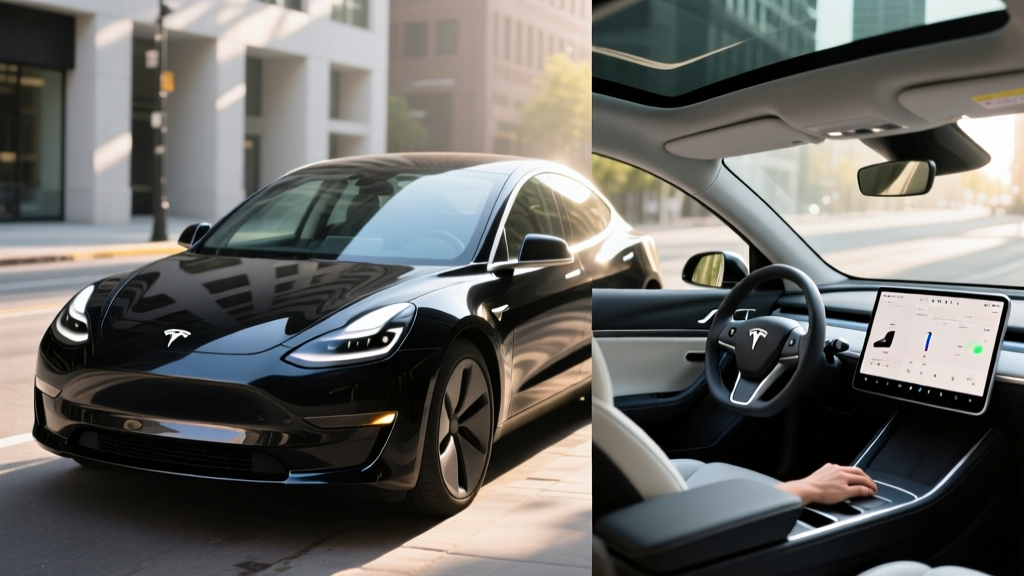
The Tesla Model 3 remains one of the most data-scrutinized electric vehicles on the road, and for good reason. As the entry point into Tesla's ecosystem, it carries the weight of buyer expectations around range, charging speed, software sophistication, and—critically—crash safety. This review covers the current 2026 Model 3 lineup (RWD, Long Range AWD, and Performance) with exact EPA figures, real-world range reconciliation, charging-curve realities, and a detailed look at what its top-tier safety ratings actually mean for buyers.
2026 Tesla Model 3 at a Glance: Key Specifications
| Spec | RWD | Long Range AWD | Performance |
|---|---|---|---|
| EPA Range | 341 mi | 363 mi | 330 mi |
| Battery (usable) | ~57.5 kWh (LFP) | ~75 kWh (NMC) | ~75 kWh (NMC) |
| Drivetrain | Rear-Wheel Drive | Dual-Motor AWD | Dual-Motor AWD |
| Horsepower | 271 hp | 346 hp | 510 hp |
| 0–60 mph | 5.8 sec | 4.2 sec | 2.9 sec |
| Peak DC Charge | 170 kW | 250 kW | 250 kW |
| 10–80% DC Time | ~25 min | ~22 min | ~22 min |
| Level 2 Rate | 11.5 kW (~44 mi/hr) | 11.5 kW (~44 mi/hr) | 11.5 kW (~44 mi/hr) |
| MPGe (combined) | 132 MPGe | 130 MPGe | 119 MPGe |
| Efficiency | 25 kWh/100mi | 26 kWh/100mi | 28 kWh/100mi |
| Base MSRP | $38,990 | $45,990 | $53,990 |
| Battery Warranty | 8 yr / 100,000 mi | 8 yr / 120,000 mi | 8 yr / 120,000 mi |
Source: fueleconomy.gov and Tesla specification sheets. Prices exclude destination fee ($1,390).
Crash Safety Ratings: What the 5 Stars Actually Mean
The keyword on many buyers' minds is Tesla 3 safety, and the data backs the concern with strong results. The Model 3 has earned a 5-Star Overall Safety Rating from NHTSA across every subcategory—frontal crash, side crash, and rollover. The IIHS has named the Model 3 a Top Safety Pick+ when equipped with acceptable headlights, citing "Good" ratings in all crashworthiness tests.
Structurally, the Model 3 benefits from a low center of gravity (battery pack mounted under the floor), which contributes to its excellent rollover resistance. The aluminum-and-steel body structure uses large front and rear crumple zones. Standard active safety includes automatic emergency braking (AEB), lane departure warning, blind-spot monitoring, and rear cross-traffic alert.
Tesla's standard Autopilot and optional Full Self-Driving (Supervised) are SAE Level 2 driver-assistance systems. That means the driver must remain fully engaged—eyes on the road, hands available to steer—at all times. Tesla's camera-based Tesla Vision system does not include lidar or radar redundancy. FSD (Supervised) costs $8,000 upfront or $99/month and enables features like traffic-light recognition and city-street navigation assistance, but it does not make the car autonomous. Only Level 4 services like Waymo operate without a driver.
Real-World Range vs. EPA Estimates
- RWD (341 mi EPA): Expect ~290–310 mi on mixed highway driving at 70 mph. In freezing temperatures (below 32°F), plan for 230–260 mi due to battery heating demand and cabin HVAC load.
- Long Range AWD (363 mi EPA): Real-world highway: ~310–330 mi. Cold weather: ~250–280 mi.
- Performance (330 mi EPA): Aggressive driving drops this to ~250–270 mi. Highway cruising: ~280–300 mi.
The LFP battery in the RWD model has a flatter discharge curve, meaning range prediction is more linear, but cold-weather impact is slightly more pronounced than NMC chemistry without active preconditioning.
Efficiency is where the Model 3 shines. At 25–28 kWh per 100 miles across trims, it is one of the most energy-efficient EVs in its class. That efficiency translates directly into lower charging costs and longer range from a smaller battery pack. The heat pump (standard on all trims since the 2022 refresh) significantly reduces cold-weather range loss compared to resistance-based heating.
Charging Speed: DC Fast, Level 2, and the Curve Reality
| Charging Method | Max Power | Miles Added per Hour | 10–80% Time |
|---|---|---|---|
| Level 1 (120V household) | ~1.4 kW | ~4–5 mi/hr | ~40+ hours (full) |
| Level 2 (240V home/wall connector) | 11.5 kW | ~44 mi/hr | ~6–8 hours (full) |
| DC Fast (RWD) | 170 kW peak | ~680 mi/hr (peak) | ~25 min |
| DC Fast (LR / Performance) | 250 kW peak | ~1,000 mi/hr (peak) | ~22 min |
Charging-curve reality check: The 250 kW peak on Long Range and Performance trims is a ceiling, not a sustained rate. In practice, the Model 3 charges at or near peak rate only between roughly 10–35% State of Charge (SoC). From 35–60%, expect ~150–180 kW. From 60–80%, the rate tapers to ~60–90 kW. The 10–80% time of ~22 minutes reflects this taper. If you arrive at a Supercharger with a warm battery (using navigation-based preconditioning), you'll hit peak rates faster. Without preconditioning—common when using third-party chargers—peak rates may be 20–30% lower initially.
The RWD model's LFP battery actually tolerates regular 100% charging better than NMC, and Tesla recommends charging to 100% at least weekly for LFP packs to recalibrate the battery management system. This is a meaningful ownership advantage for daily commuters who want maximum available range every morning.
Pricing, Trims, and Federal Tax Credit Eligibility
| Trim | Base MSRP | With Destination | Est. After §30D Credit |
|---|---|---|---|
| RWD | $38,990 | $40,380 | ~$32,880* |
| Long Range AWD | $45,990 | $47,380 | ~$39,880* |
| Performance | $53,990 | $55,380 | ~$47,880* |
*Estimated after $7,500 federal tax credit, subject to eligibility. See caveats below.
- MSRP Cap: Sedans must be under $55,000 MSRP. The RWD and Long Range qualify; the Performance trim at $53,990 also qualifies (barely).
- Buyer Income Cap: Modified AGI must not exceed $150,000 (single), $225,000 (head of household), or $300,000 (joint).
- Battery Sourcing: Critical minerals and battery components must meet phased-in domestic/free-trade-partner sourcing thresholds. Tesla's evolving supply chain means eligibility can shift—always confirm via the dealer at point of sale.
- Point-of-Sale Transfer: As of 2024+, you can transfer the credit to the dealer for an immediate price reduction, or claim it on your tax return.
- Verify current rules: IRS §30D guidance updates frequently. Consult a tax professional.
Interior Space, Cargo, and Daily Usability
The Model 3 cabin is minimalist by design—some say stark, others say clean. The 15.4-inch center touchscreen handles virtually all controls, including climate, mirrors, and glovebox. There is no instrument cluster; speed and navigation information appear on the upper-left corner of the main display.
- Front legroom: 42.7 inches
- Rear legroom: 35.2 inches (tight for tall passengers on long trips)
- Cargo (trunk): 23 cu ft (including under-floor storage)
- Frunk (front trunk): 3.1 cu ft (enough for a charging cable bag or small backpack)
- 60/40 split rear seats: Fold nearly flat for longer cargo
The rear glass roof provides an airy feel but reduces rear headroom slightly compared to competitors like the Hyundai Ioniq 6. Rear visibility is adequate but the lack of a rear wiper (a common complaint) is a real issue in rain and snow.
Tech, Software, and Standout Features
Tesla's software ecosystem remains a key differentiator. Over-the-air (OTA) updates regularly add features, improve efficiency, and refine the driving experience. Standout tech includes:
- Tesla Vision: Camera-only ADAS (no lidar/radar) powering Autopilot and FSD Supervised
- Sentry Mode: 360° camera recording when parked, with phone alerts
- Dog Mode: Maintains cabin temperature for pets with external display message
- Tesla app: Remote preconditioning, charge monitoring, location tracking, and summon
- Supercharger network: 60,000+ global connectors, now with NACS adapter access for non-Tesla EVs (but Tesla owners get native plug-and-charge reliability)
- Entertainment: Netflix, YouTube, arcade games on the center display while parked
Notable drawbacks: No Apple CarPlay or Android Auto (a dealbreaker for some). Turn-signal stalks were removed in the latest refresh—signals are now on the steering wheel, which takes adaptation. The lack of physical buttons for climate and wipers frustrates some drivers. Panel gap quality has improved but still lags legacy automakers at this price point.
Who Should Buy the Model 3?
- Choose the RWD if: You commute under 50 miles daily, have home Level 2 charging, want the lowest entry price, and don't need AWD. The LFP battery handles daily 100% charges well.
- Choose the Long Range AWD if: You take regular road trips (300+ mi), live in a cold-weather state, want AWD traction, and need the longest possible range buffer. This is the sweet-spot trim for most buyers.
- Choose the Performance if: You want sports-car acceleration (2.9 sec 0–60), track mode, and don't mind sacrificing ~30 miles of range for the privilege. Best for enthusiasts.
- Look elsewhere if: You need rear-seat space for tall adults (consider Model Y or Ioniq 5), require CarPlay/Android Auto, or want a traditional instrument cluster and physical controls.
- Best-in-class efficiency (25 kWh/100mi)
- 5-star NHTSA safety across all categories
- 250 kW DC fast charging (LR/Perf)
- Supercharger network reliability
- OTA updates add ongoing value
- LFP battery allows daily 100% charging (RWD)
- No Apple CarPlay or Android Auto
- Rear seat space tight for tall adults
- Steering-wheel turn signals take adaptation
- No rear wiper
- FSD ($8K) is Level 2, not autonomous
- Insurance premiums above segment average
Model 3 vs. Key Competitors
The Model 3 competes directly with the Hyundai Ioniq 6, BMW i4, Polestar 2, and the refreshed Chevrolet Equinox EV. Against the Ioniq 6 (361 mi range, 800V architecture for faster charging), the Model 3 wins on Supercharger network access and software but loses on rear-seat space and CarPlay support. The BMW i4 offers a more traditional luxury interior and physical controls but at a $10,000+ premium. The Model 3's efficiency, safety record, and pricing (especially after the §30D credit) keep it at the top of the segment for value-conscious EV buyers.
Frequently Asked Questions
What is the real-world range of the Tesla Model 3?
The Long Range AWD achieves 363 miles EPA, but expect ~310–330 miles in real-world highway driving and ~250–280 miles in freezing cold weather. The RWD (341 mi EPA) delivers ~290–310 miles on the highway.
How fast does the Model 3 charge at home and on the road?
At home on a Level 2 Tesla Wall Connector (240V, 48A), the Model 3 charges at 11.5 kW, adding roughly 44 miles of range per hour—a full charge takes 6–8 hours. On DC fast chargers, the Long Range and Performance peak at 250 kW (10–80% in ~22 minutes), while the RWD peaks at 170 kW (~25 minutes).
Does the Tesla Model 3 qualify for the $7,500 federal tax credit?
All three trims fall under the $55,000 MSRP cap for sedans. However, eligibility also depends on buyer income (≤$150K single / ≤$300K joint), battery component sourcing requirements, and point-of-sale transfer availability. Always verify current-year rules on IRS.gov and confirm with your Tesla advisor before purchase.
Is the Model 3 worth buying over the Hyundai Ioniq 6 or BMW i4?
If Supercharger reliability, software updates, and efficiency are your priorities, the Model 3 is hard to beat at its price point. If you prioritize rear-seat comfort, CarPlay, or a more traditional interior, the Ioniq 6 or i4 may suit you better. Safety ratings are excellent across all three.
How safe is the Tesla Model 3 in a crash?
The Model 3 holds a 5-Star Overall Rating from NHTSA (all subcategories) and is an IIHS Top Safety Pick+ with acceptable headlights. Its low center of gravity, rigid battery-pack structure, and large crumple zones contribute to strong crash performance. Standard active safety includes AEB, blind-spot monitoring, and lane-keeping assist.
What is the battery warranty on the Model 3?
The RWD carries an 8-year/100,000-mile battery and drive unit warranty. The Long Range and Performance extend that to 8 years/120,000 miles. Tesla guarantees at least 70% battery capacity retention over the warranty period.