Quick Answer: Is an Electric Rickshaw Bike Worth It?
An electric rickshaw bike (also called an e-rickshaw, pedicab, or electric cargo trike) is a low-speed, three-wheeled electric vehicle designed for short-range passenger transport or last-mile cargo delivery. In 2026, most consumer-grade electric rickshaw bikes sold in the U.S. market feature 48V–72V battery systems (typically 1.5–5 kWh of usable energy), deliver 25–50 miles of real-world range, and top out at 15–25 mph. Purchase prices range from $1,800 to $8,500 depending on build quality and battery capacity.
Bottom line: If your daily route is under 30 miles, you can charge at home from a standard 120V outlet, and you need to carry passengers or cargo at neighborhood speeds, an electric rickshaw bike can cost 70–85% less per mile to operate than a gas-powered alternative. If you need highway speeds, long range, or all-weather capability, a conventional EV or PHEV is the better tool.
What Exactly Is an Electric Rickshaw Bike?
The term "electric rickshaw bike" covers a spectrum of three-wheeled electric vehicles that share DNA with the pedal-powered rickshaws common in South and Southeast Asia. In the U.S. market, these vehicles fall into a few distinct categories:
- Pedal-assist cargo trikes: Human-powered with an electric motor assist (250W–750W hub motor). Classified as low-speed electric bicycles under CPSC rules if they top out at 20 mph on motor alone. Examples include the RadTrike and Lectric Xpedition-style trikes.
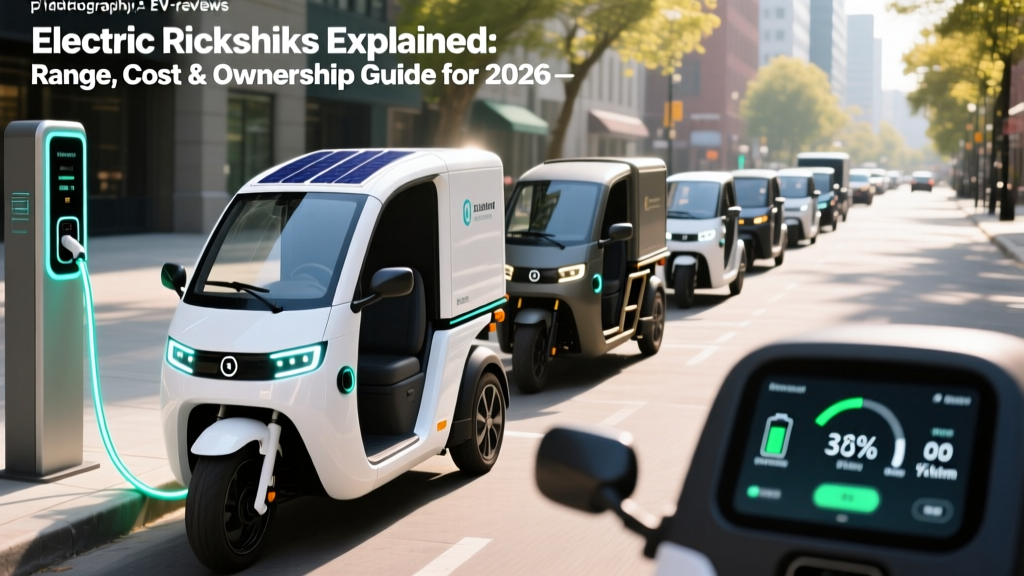
- Throttle-operated e-rickshaws: Fully motor-driven (500W–3,000W), no pedaling required. Often feature a bench seat for 2–4 passengers or an enclosed cargo box. These are the closest analog to traditional Asian-market rickshaws.
- Neighborhood Electric Vehicles (NEVs): Three-wheeled, fully enclosed, street-legal at speeds up to 25 mph. Must meet FMVSS 500 standards and carry a VIN. Think of the Arcimoto FUV or similar platforms.
For this guide, we focus primarily on the throttle-operated e-rickshaw segment — the vehicles most commonly searched under this keyword — while noting where pedal-assist trikes and NEVs overlap.
Electric Rickshaw Bike vs. Gas Scooter vs. Full EV: By the Numbers
The most common question buyers ask: how does an electric rickshaw bike stack up against a gas scooter or a full-size electric car? Here's a data-driven comparison using 2026 figures:
| Metric | E-Rickshaw Bike (Mid-Range) | Gas Scooter (150cc) | Compact EV (e.g., Chevy Equinox EV) |
|---|---|---|---|
| Purchase Price | $3,000–$5,500 | $2,800–$4,200 | $33,000–$43,000 |
| Top Speed | 15–25 mph | 55–65 mph | 100+ mph |
| Real-World Range | 25–50 miles | 120–160 miles | 260–315 miles (EPA) |
| Energy/Fuel Cost per Mile | $0.01–$0.03 | $0.08–$0.12 | $0.03–$0.05 |
| Annual Maintenance | $50–$150 | $200–$400 | $300–$500 |
| Charging/Refuel Time | 4–8 hours (120V) | 5 minutes | 30 min (DC fast) / 8 hr (L2) |
| Highway Legal? | No (local roads only) | Yes (most states) | Yes |
| Insurance Required? | Varies by state | Yes, most states | Yes |
The e-rickshaw wins decisively on operating cost — at roughly $0.02 per mile in electricity (based on the U.S. average of $0.16/kWh and ~80 Wh/mile consumption), it's cheaper to run than virtually any motorized vehicle. But it loses on speed, range, and road access. This is a neighborhood and last-mile vehicle, not a commuter-replacement for highway routes.
Real-World Range: What the Sticker Doesn't Tell You
Most e-rickshaw sellers advertise range based on ideal conditions: flat terrain, single rider, 15 mph, 70°F, new battery. Real-world range is almost always lower. Here's what to expect:
Range Reality Check
Advertised range: 40–60 miles (typical mid-tier model with 3–4 kWh battery)
Real-world range (mixed use): 25–45 miles
With full passenger load (3–4 people): 18–30 miles
Cold weather (below 40°F): Expect 20–35% range reduction — a 40-mile advertised range drops to roughly 26–32 miles
Hilly terrain: 15–25% reduction depending on grade
Battery chemistry matters here. Most budget e-rickshaws use sealed lead-acid (SLA) batteries — heavy, slow to charge, and prone to capacity loss within 300–500 cycles (roughly 1–2 years of daily use). Mid-range and premium models increasingly use lithium iron phosphate (LFP) packs, which offer 2,000+ cycles, faster charging, and lighter weight. The upfront cost is $400–$800 higher, but the total cost of ownership is lower because you won't need a $600–$1,200 battery replacement within 18 months.
Total Cost of Ownership: 3-Year Breakdown
Let's model a realistic 3-year ownership scenario for a mid-range electric rickshaw bike used for daily local trips (15 miles/day, 300 days/year = 4,500 miles/year).
| Cost Category | E-Rickshaw (LFP Battery) | Gas Scooter (150cc) |
|---|---|---|
| Purchase Price | $4,200 | $3,500 |
| Registration/Titling (3 yr) | $0–$150 (varies by state) | $150–$300 |
| Insurance (3 yr) | $0–$600 (optional in many states) | $900–$1,500 |
| Fuel/Electricity (13,500 mi) | $270 (at $0.02/mi) | $1,350 (at $0.10/mi) |
| Maintenance (3 yr) | $200–$400 (tires, brakes) | $800–$1,200 (oil, belt, plugs, tires) |
| Battery Replacement | $0 (LFP lasts 5+ years) | N/A |
| 3-Year Total | $4,670–$5,620 | $6,700–$7,850 |
| Cost per Mile | $0.10–$0.12 | $0.20–$0.26 |
The e-rickshaw's higher purchase price is offset by dramatically lower fuel and maintenance costs. Over three years, the typical owner saves $1,500–$2,500 compared to a gas scooter — and the gap widens as gas prices rise. If you're replacing car trips rather than scooter trips, the savings versus a gas car (roughly $0.15–$0.20/mile in fuel alone) are even larger.
Charging: What You Need at Home
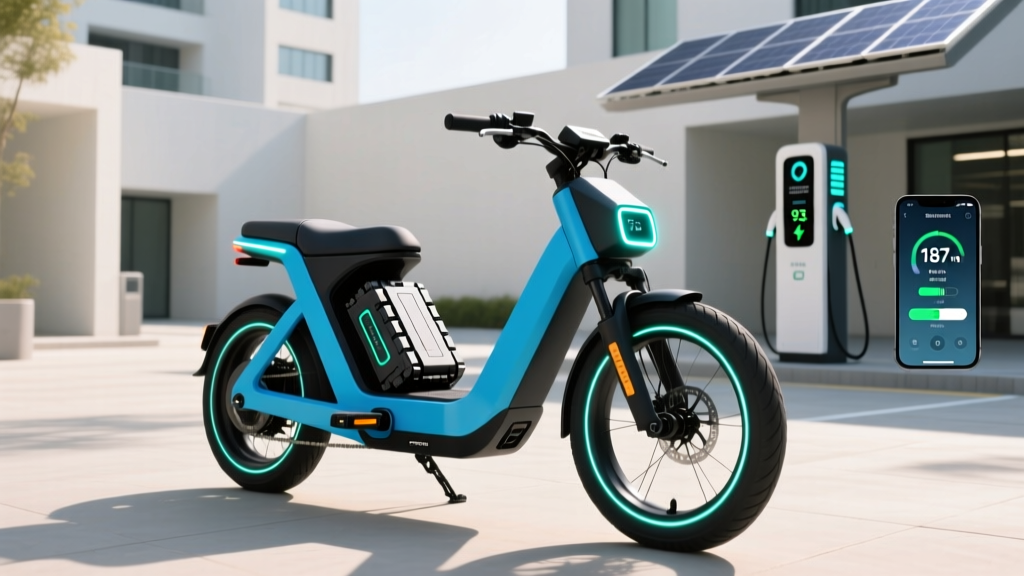
One advantage of the e-rickshaw over a full-size EV: you almost certainly don't need a dedicated 240V circuit. Most models charge from a standard 120V household outlet using an included charger.
- Charger output: Typically 100W–400W (compare to a Level 2 EV charger at 7,200W–11,500W)
- Charge time (0–100%): 4–8 hours for a 2–4 kWh battery; 6–10 hours for larger 5+ kWh packs
- Electrical draw: 1–3 amps on a 120V circuit — no panel upgrade needed
- Cost per full charge: $0.30–$0.70 depending on battery size and local electricity rates
If you live in an apartment without ground-floor outlet access, charging becomes a real constraint. Some owners use removable battery packs that can be carried indoors to charge — confirm this feature before purchasing if you lack garage or driveway access.
Federal and State Incentives: What Applies?
Here's where e-rickshaw buyers often encounter confusion. The federal §30D clean vehicle credit (up to $7,500) applies only to four-wheeled vehicles with a gross vehicle weight rating (GVWR) under 14,000 lbs that meet specific battery-sourcing and MSRP requirements. Most three-wheeled electric rickshaw bikes do not qualify for the §30D credit because they are not classified as "motor vehicles" under the relevant IRS definitions.
However, some options may apply:
- §25D residential energy credit: If you install solar panels that offset your e-rickshaw charging, the solar installation qualifies — but the vehicle itself does not.
- State and local e-bike incentives: Several states and cities (Colorado, California, Denver, Boulder, and others) offer rebates of $300–$1,500 for electric bicycles and cargo trikes. Check your local programs — eligibility often depends on the vehicle meeting the CPSC definition of a low-speed electric bicycle.
- Employer commuter benefits: Some employers allow pre-tax commuter benefit funds to be used for bicycle commuting expenses, which may cover e-rickshaw costs in certain cases.
Always verify current incentive eligibility with your state energy office or a tax professional before assuming a credit applies.
Decision Framework: Should You Buy an Electric Rickshaw Bike?
Choose an Electric Rickshaw Bike If:
- Your daily trips are under 25 miles round-trip
- You travel on local roads with speed limits of 25–35 mph
- You need to carry 2–3 passengers or 100–300 lbs of cargo
- You have access to a standard 120V outlet for overnight charging
- You want the lowest possible per-mile operating cost
- You're replacing car trips for school runs, grocery runs, or neighborhood errands
Choose a Conventional EV or PHEV Instead If:
- Your commute involves highways or roads with speed limits above 40 mph
- You regularly drive more than 40 miles per day
- You need climate control, airbags, and crash-tested safety
- You live in a region with harsh winters and need enclosed, heated transport
- You want to qualify for the federal §30D tax credit (up to $7,500 for eligible four-wheeled EVs)
Common Misconceptions — Myth vs. Fact
| Myth | Fact |
|---|---|
| "E-rickshaws are street-legal everywhere" | Legality varies by state and municipality. Many states classify them as low-speed vehicles (LSVs) or off-road vehicles. Check your local DMV before purchasing. |
| "The battery will last the life of the vehicle" | Lead-acid batteries typically need replacement every 1–2 years. LFP batteries last 5–8 years with proper care. Budget accordingly. |
| "You need a special electrical setup to charge" | Most e-rickshaws charge from a standard 120V outlet drawing 1–3 amps — the same as a laptop charger. |
| "E-rickshaws qualify for the $7,500 federal EV tax credit" | The §30D credit applies to four-wheeled clean vehicles meeting specific criteria. Most three-wheeled e-rickshaws are not eligible. |
| "They can't handle hills" | Models with 1,000W+ motors and LFP batteries handle moderate grades (8–12%) adequately. Steep hills with a full load will significantly reduce range. |
| "They're unsafe compared to cars" | They lack airbags, crumple zones, and electronic stability control. They are appropriate for low-speed local roads only — not a replacement for highway-capable vehicles. |
What First-Time Buyers Need to Know Before Purchasing
If you've never owned an electric vehicle of any kind, an e-rickshaw is a low-stakes entry point — but there are still pitfalls to avoid:
- Prioritize LFP over lead-acid. The $400–$800 premium pays for itself within 2 years through avoided battery replacements and better range retention.
- Verify the motor wattage. 500W is adequate for flat terrain with one rider. For passengers, cargo, or hills, look for 1,000W–3,000W.
- Check parts availability. Many e-rickshaws are imported with limited U.S. dealer networks. Confirm that replacement tires, brake pads, controllers, and batteries are available domestically before buying.
- Understand the legal classification in your state. Some states require registration, a driver's license, and insurance. Others treat e-rickshaws as bicycles with no registration required. The NHTSA's low-speed vehicle guidelines provide a starting point, but state rules vary.
- Test the charge time, not just the range. If you need to make multiple trips per day, a 6-hour charge time means you can't top up quickly between runs. Look for models with removable/swappable batteries if multi-trip use is your plan.
Frequently Asked Questions
How fast can an electric rickshaw bike go?
Most models top out between 15 and 25 mph. A few high-performance variants reach 30–35 mph, but these may require registration as a low-speed vehicle (LSV) or motorcycle depending on your state. For comparison, a typical gas scooter hits 55–65 mph.
Do I need a driver's license to operate an e-rickshaw?
It depends on your state and how the vehicle is classified. If it meets the federal definition of a low-speed electric bicycle (motor under 750W, top speed under 20 mph), no license is typically required. Higher-powered models classified as LSVs or mopeds may require a license, registration, and insurance.
Can I ride an electric rickshaw bike in the rain?
Most models have basic water resistance (IP54–IP65 rated controllers and motors), but they are not waterproof. Light rain is generally fine; heavy downpours and flooded roads can damage the electrical system. Store the vehicle in a covered area when not in use.
How long does the battery last before needing replacement?
Lead-acid (SLA) batteries: 300–500 full cycles, or roughly 1–2 years of daily use. Lithium iron phosphate (LFP): 2,000–3,000 cycles, or roughly 5–8 years of daily use. Replacement costs range from $300–$600 (SLA) to $800–$1,500 (LFP).
Is an electric rickshaw bike cheaper to own than a car?
For the trips it can replace — yes, dramatically. Operating cost is roughly $0.02/mile versus $0.10–$0.15/mile for a gas car. But an e-rickshaw cannot replace a car for highway travel, long distances, or severe weather. Think of it as a supplemental vehicle that can absorb 30–60% of short local trips, not a primary vehicle.
Where can I buy an electric rickshaw bike in the U.S.?
Most are sold direct-to-consumer online or through specialty importers. A few cargo-trike models are available through established e-bike retailers. Before purchasing, verify that the seller provides U.S.-based warranty support, parts availability, and documentation for registration if your state requires it.