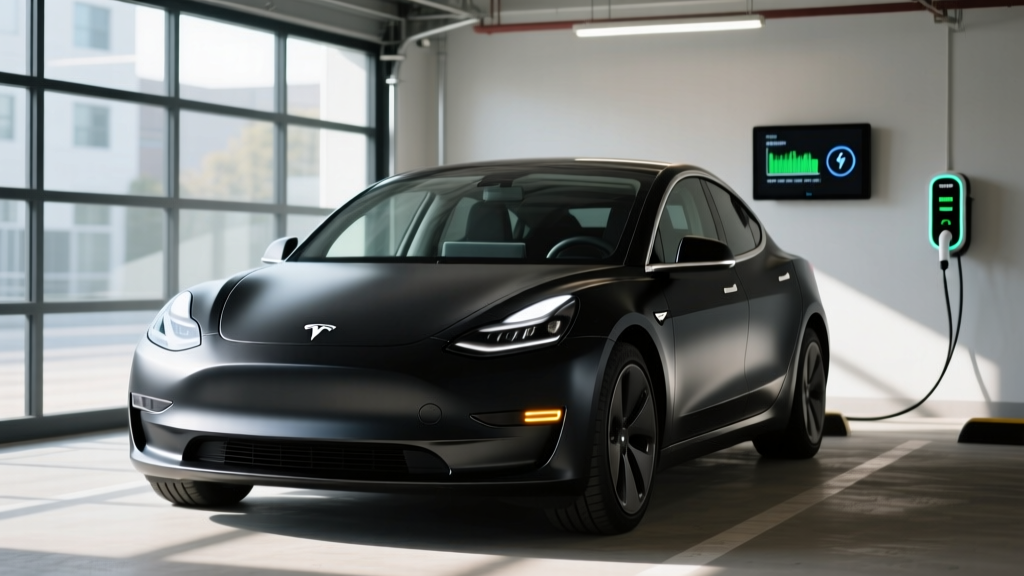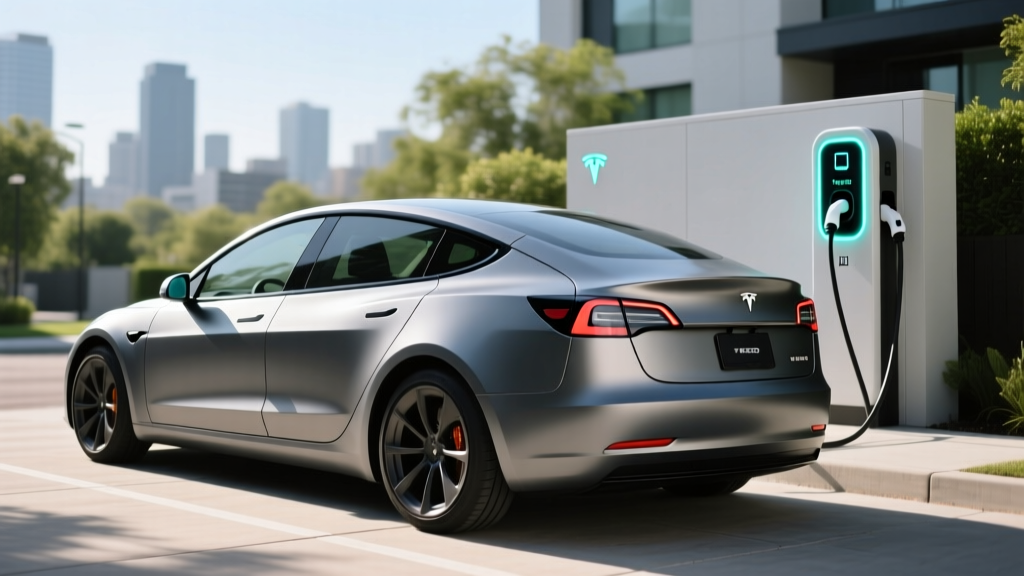
The search for the most affordable Tesla begins and ends with the Model 3 Rear-Wheel Drive. At a base MSRP of $38,990 (before destination), it undercuts every other vehicle in Tesla's lineup by a wide margin while delivering the brand's signature software, Supercharger access, and efficiency. But "affordable" in the EV world is relative — and buyers need to know exactly what they get, what they give up, and whether the math works after federal tax credits.
This review covers the 2026 Tesla Model 3 RWD with real-world range data, charging benchmarks, ownership economics, and a direct comparison to the EVs nipping at its heels. If you're cross-shopping the cheapest Tesla against the Hyundai Ioniq 6, Chevrolet Equinox EV, or BMW i4, this is the data-driven breakdown you need.
2026 Tesla Model 3 RWD: Full Specifications at a Glance
| Specification | 2026 Tesla Model 3 RWD |
|---|---|
| Base MSRP | $38,990 (+$1,390 destination) |
| EPA Estimated Range | 272 miles |
| Battery Capacity (Usable) | ~57.5 kWh (LFP chemistry) |
| Drivetrain | Rear-Wheel Drive (single motor) |
| Horsepower | 271 hp |
| 0–60 mph | 5.8 seconds |
| EPA Efficiency | 132 MPGe combined (25 kWh/100 mi) |
| Max DC Fast Charge Rate | 170 kW peak |
| 10–80% DC Fast Charge Time | ~25 minutes |
| Level 2 Home Charging Rate | 11.5 kW (~44 mi/hr) |
| Cargo Volume | 23 cu ft (rear trunk + frunk) |
| Rear Legroom | 35.3 inches |
| Battery & Drive Unit Warranty | 8 years / 100,000 miles |
| Federal Tax Credit (§30D) | Up to $7,500 (eligibility varies) |
Real-World Range: What 272 EPA Miles Actually Means
Real-World Highway (70 mph, mild weather): ~240–255 miles
Real-World City / Mixed Commute: ~260–275 miles
Cold Weather (below 32°F, highway): ~195–220 miles
Hot Weather (above 95°F, A/C heavy): ~245–260 miles
The Model 3 RWD uses a lithium iron phosphate (LFP) battery pack, which trades energy density for longevity and thermal stability. That ~57.5 kWh usable capacity is smaller than the Long Range AWD's ~75 kWh NMC pack, which is why the range tops out at 272 miles versus 341.
In real-world highway testing at sustained 70–75 mph speeds, expect to see roughly 240–255 miles before hitting a comfortable 10% state of charge. Tesla's trip planner and in-car energy graph are reasonably accurate, but they assume moderate conditions. On a 300-mile road trip through the Mountain West in January, preconditioning helps, but you'll need one Supercharger stop — plan for it.
City driving and regenerative braking recover energy that highway driving wastes, so commuters who average under 45 mph will regularly meet or exceed the EPA sticker. This is typical EV behavior: the city is your friend, the interstate at 80 mph is your enemy.
Charging Speed: DC Fast, Level 2, and the LFP Advantage
| Charging Level | Power / Rate | Speed | Best For |
|---|---|---|---|
| Level 1 (120V household) | ~1.4 kW | ~3–4 mi/hr | Overnight trickle / emergencies |
| Level 2 (240V home) | 11.5 kW max | ~44 mi/hr | Daily home charging |
| DC Fast Charge (Supercharger V3) | 170 kW peak | 10–80% in ~25 min | Road trips |
| DC Fast Charge (V4 / newer stalls) | Up to 170 kW | Same as V3 for this model | Future-proofing |
The Model 3 RWD peaks at 170 kW on DC fast chargers. That's lower than the Long Range AWD's ~250 kW peak, and it shows on long road trips — you'll spend about 25 minutes at a Supercharger going from 10% to 80%, versus roughly 18 minutes in the Long Range.
Here's the critical charging-curve reality: the 170 kW peak holds from roughly 10% to 30% state of charge, then tapers progressively. By 60% SoC, you're pulling about 90–100 kW. Above 80%, it drops below 50 kW. This is why Tesla (and every other automaker) quotes 10–80% times — charging the final 20% can take as long as the first 70%.
The LFP advantage for daily charging: Unlike NMC batteries, Tesla recommends charging LFP packs to 100% regularly — at least once per week. This means your daily usable range is the full 272 miles, not a derated 80% buffer. For a commuter who charges at home nightly, the RWD's smaller battery isn't the penalty it appears on paper.
For home Level 2 charging, the onboard charger accepts up to 11.5 kW (48 amps on a 60-amp circuit). A full 10–100% charge takes roughly 6 hours. Installation of a Tesla Wall Connector on a dedicated 60-amp circuit typically costs $800–$2,000 including equipment and electrician labor, depending on your panel's proximity to the garage. If your home has a 100-amp main panel already near capacity, a panel upgrade to 200 amps can add $1,500–$3,000 — get a quote from a licensed electrician before committing.
Performance and Driving Dynamics
The single rear motor produces 271 horsepower and launches the Model 3 RWD to 60 mph in 5.8 seconds. That's quick by any sedan standard — roughly on par with a Volkswagen GTI — and the instant torque delivery makes it feel faster in city driving than the number suggests.
Rear-wheel drive means the RWD is lighter and more efficient than the dual-motor AWD variants, but it sacrifices traction in snow and ice. If you live in a region with harsh winters and don't want to invest in dedicated winter tires, the Long Range AWD ($47,990) is the safer bet. For dry and wet pavement, the RWD handles confidently with a low center of gravity from the floor-mounted battery pack.
Ride quality improved substantially with the 2024 "Highland" refresh and carries forward into 2026 — softer suspension tuning, better sound insulation, and ventilated front seats are now standard. The Model 3 RWD no longer feels like a punishment for choosing the cheap Tesla.
Pricing, Tax Credits, and Total Cost of Ownership
| Cost Item | Amount |
|---|---|
| Base MSRP | $38,990 |
| Destination Fee | $1,390 |
| Paint Upgrade (e.g., Pearl White) | $1,000–$2,500 |
| FSD (Supervised) Add-On | $8,000 (one-time) or $99/mo |
| Typical As-Tested Price (no FSD) | ~$40,380–$42,880 |
| Federal Tax Credit (§30D, max) | Up to $7,500 |
| Effective Price After Max Credit | ~$32,880–$35,380 |
The federal EV tax credit under IRS §30D can reduce the effective cost by up to $7,500, but eligibility is not automatic. Per IRS guidelines, you must meet all of the following:
- Income caps: Modified AGI ≤ $150,000 (single), ≤ $300,000 (joint), ≤ $225,000 (head of household)
- MSRP cap: The Model 3 qualifies — it's a sedan with an MSRP cap of $55,000, and even a fully loaded RWD stays under that
- Battery sourcing: The critical minerals and battery component requirements phase in more strictly each year. Tesla has shifted some Model 3 battery production to US-based LFP sourcing, but the exact credit amount ($3,750 or $7,500) depends on current-year mineral/component compliance. Check fueleconomy.gov for the latest certification status
- Point-of-sale transfer: Since 2024, you can transfer the credit to the dealer at purchase, reducing your out-of-pocket cost immediately rather than waiting for tax filing
Important: Tax credit rules change annually and depend on your specific tax situation. Consult a tax professional and verify current eligibility on irs.gov before relying on the credit in your purchase budget.
On total cost of ownership, the Model 3 RWD excels. At 25 kWh per 100 miles and a national average electricity rate of ~$0.16/kWh, fueling costs roughly $4.00 per 100 miles — compared to $10–$13 per 100 miles in a comparable 30-MPG gas sedan at $3.20/gallon. Over 5 years and 75,000 miles, that's $3,000–$6,750 in fuel savings alone, partially offset by slightly higher EV insurance premiums (typically 10–20% above equivalent gas sedans).
Interior, Tech, and Driver Assistance
The Model 3 interior remains minimalist by design — a 15.4-inch center touchscreen handles navigation, climate, media, and vehicle settings. There is no instrument cluster; speed and range display on the left edge of the main screen. The 2024+ Highland refresh added ambient lighting, rear-seat ventilation controls on a small rear display, and significantly improved acoustic glass.
Cargo space: 23 cubic feet total (19.8 cu ft trunk + 3.1 cu ft frunk). That's competitive with compact luxury sedans but less than hatchback rivals like the Hyundai Ioniq 5 (27 cu ft behind rear seats). Rear seats fold 60/40 for longer items.
Rear legroom at 35.3 inches is adequate for adults under 6 feet but tight for taller passengers on long trips. The BMW i4 offers slightly more at 34.7 inches but with a transmission tunnel hump; the Model 3's flat floor helps.
Tesla Autopilot comes standard and includes Traffic-Aware Cruise Control and Autosteer (lane centering). This is an SAE Level 2 driver-assistance system — you must keep your hands on the wheel and eyes on the road at all times. Full Self-Driving (Supervised) adds automatic lane changes, Navigate on Autopilot, and traffic light/stop sign recognition for $8,000 or $99/month, but it remains Level 2. It does not make the car self-driving, despite the branding.
How It Compares: Model 3 RWD vs. Key Competitors
The most affordable Tesla doesn't exist in a vacuum. Here's how the Model 3 RWD stacks up against three rivals in the $35,000–$45,000 electric sedan space:
| Spec | Tesla Model 3 RWD | Hyundai Ioniq 6 SE Std Range | BMW i4 eDrive35 | Chevy Equinox EV 2LT |
|---|---|---|---|---|
| Base MSRP | $38,990 | $37,500 | $52,200 | $33,000 |
| EPA Range | 272 mi | 240 mi | 301 mi | 315 mi |
| Max DC Charge | 170 kW | 150 kW | 205 kW | 150 kW |
| 0–60 mph | 5.8 sec | 6.8 sec | 5.7 sec | 7.8 sec |
| Supercharger Access | Native | NACS adapter needed | NACS adapter needed | NACS adapter needed |
| Tax Credit (§30D) | Up to $7,500 | Up to $7,500 | Likely ineligible (MSRP) | Up to $7,500 |
Key takeaway: The Model 3 RWD is the only one with native NACS (Tesla's charging connector) and seamless Supercharger network access. Every other EV sold in North America is transitioning to NACS but currently ships with CCS, requiring an adapter for Tesla Superchargers. If public charging reliability is a top priority, Tesla's network remains the most dependable — NHTSA and third-party studies consistently rank Supercharger uptime above Electrify America and other CCS networks.
Biggest Pros and Cons
Pros
- Lowest price of entry into the Tesla ecosystem and Supercharger network
- Class-leading efficiency at 132 MPGe / 25 kWh per 100 miles
- LFP battery can be charged to 100% daily without degradation concerns
- Over-the-air updates continuously add features and refinements
- Strong resale value relative to most EV competitors
- Improved ride comfort and cabin quietness post-Highland refresh
Cons
- 272-mile range is limiting for road trips in cold weather or high-speed driving
- 170 kW peak DC charge rate is slower than Long Range and many rivals
- Rear seat space is tight for tall adults on longer journeys
- No physical buttons or instrument cluster — steep adjustment for some drivers
- Single motor RWD struggles in snow without winter tires
- FSD (Supervised) costs $8,000 and remains Level 2 — not autonomous
Who Should Buy the Most Affordable Tesla?
Choose the Model 3 RWD if:
- You commute under 80 miles round-trip and can charge at home nightly
- You want access to the Supercharger network without adapter hassles
- You prioritize efficiency and low running costs over maximum range
- You live in a mild-winter climate or are willing to buy winter tires
- You want a premium-tech sedan under $40K before incentives
Look elsewhere if:
- You regularly drive 300+ miles in a single day (get the Long Range AWD or a larger-battery EV)
- You need spacious rear seating for adults (consider the Model Y or Ioniq 5)
- You live in heavy snow country and don't want a second set of tires (get AWD)
- You want a traditional dashboard and physical climate controls (consider the BMW i4 or Ioniq 6)
Frequently Asked Questions
What is the real-world range of the Tesla Model 3 RWD?
The EPA rates it at 272 miles. In real-world highway driving at 70 mph in mild weather, expect 240–255 miles. In cold weather below freezing, that drops to roughly 195–220 miles. City commuters with regenerative braking can meet or exceed the EPA estimate.
How fast does the Model 3 RWD charge at home and on road trips?
At home on a 240V Level 2 charger, it accepts up to 11.5 kW, adding about 44 miles of range per hour — a full charge takes roughly 6 hours. On a DC fast charger (Tesla Supercharger V3/V4), it peaks at 170 kW and charges from 10% to 80% in about 25 minutes. Above 80%, charging slows significantly due to the charge curve taper.
How much does the Model 3 RWD cost after the federal tax credit?
The base MSRP is $38,990 plus $1,390 destination. If you qualify for the full $7,500 federal tax credit under §30D (meeting income, MSRP, and battery sourcing requirements), the effective price drops to approximately $32,880. Actual credit amount depends on current-year IRS rules and your individual tax situation. The credit can be transferred at point of sale to reduce your purchase price immediately.
Does the Tesla Model 3 RWD qualify for the federal EV tax credit?
The Model 3 RWD is eligible for up to $7,500 under IRS §30D, but the exact amount depends on battery component and critical mineral sourcing requirements that tighten annually. Your personal eligibility also depends on income caps ($150K single / $300K joint). Verify current status on fueleconomy.gov and consult a tax professional.
Is the Model 3 RWD worth buying over cheaper EVs like the Equinox EV?
It depends on your priorities. The Equinox EV starts lower (~$33,000) and offers more range (315 miles), but it charges slower (150 kW), has less refined driving dynamics, and lacks native Supercharger access. The Model 3 RWD wins on efficiency, charging network reliability, software experience, and resale value. If your budget is firm at $33K and you mostly drive locally, the Equinox is compelling. If you road-trip and value the Supercharger ecosystem, the Model 3 RWD justifies the premium.
How long will the LFP battery last?
LFP batteries are known for exceptional cycle life — typically 3,000+ full charge cycles before significant degradation. Tesla warranties the Model 3 RWD battery for 8 years or 100,000 miles, whichever comes first, guaranteeing at least 70% capacity retention. Real-world data from high-mileage Teslas suggests LFP packs degrade slowly and predictably, often retaining 85–90% capacity at 100,000 miles.