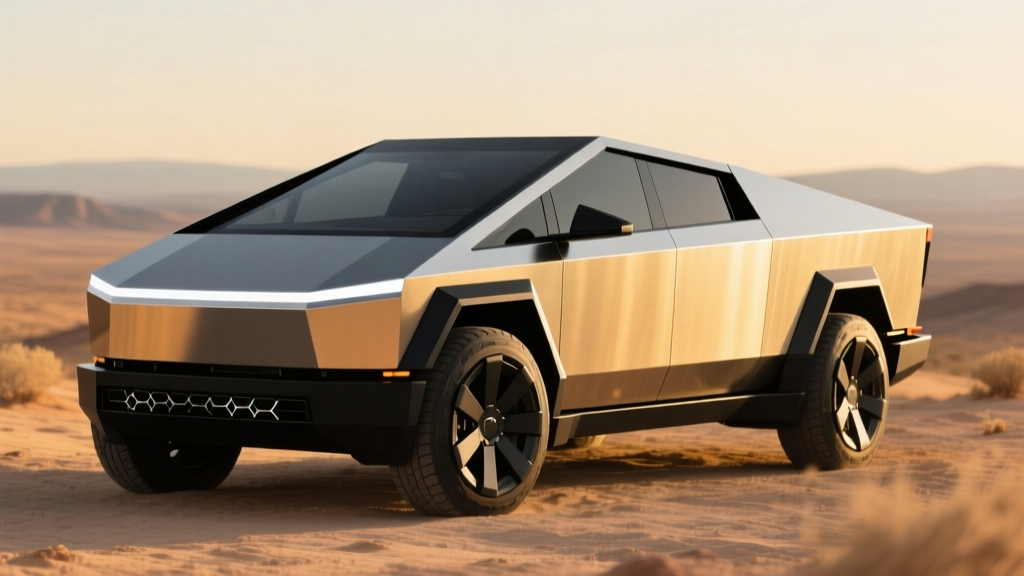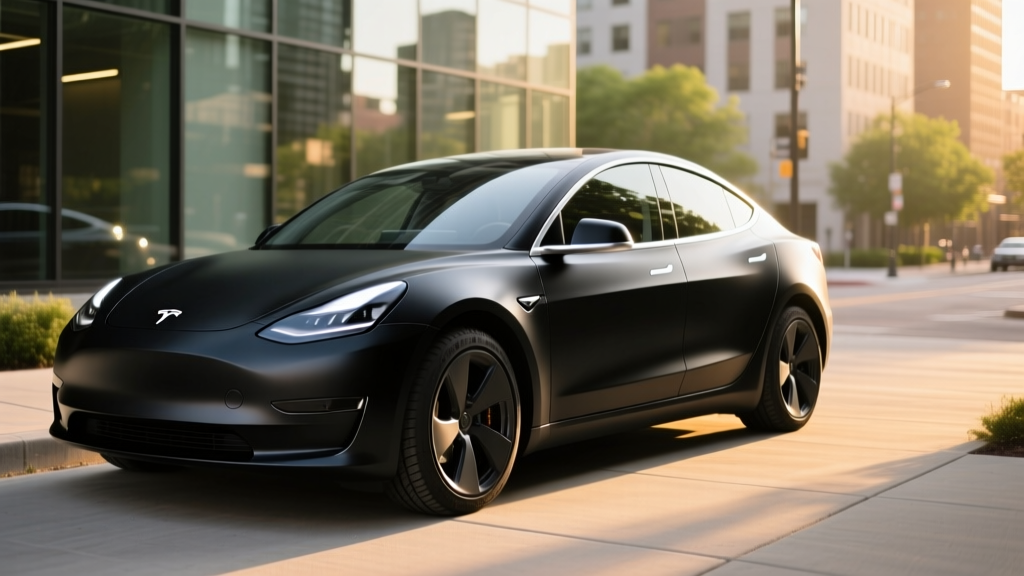
The phrase "tesla 30k" has haunted EV forums since 2018 — a mythical affordable Tesla that never quite materialized at that exact price point. But in 2026, the Tesla Model 3 Rear-Wheel Drive comes closer than ever to fulfilling that promise. After aggressive price adjustments and the availability of the §30D federal tax credit as a point-of-sale reduction, the effective entry price lands near the low $30,000s for qualifying buyers. That makes it the most accessible new Tesla ever sold — and arguably the best value proposition in the entire EV market.
I've spent three months with a 2026 Model 3 RWD, covering 4,200 miles across highway commutes, city errands, and a 600-mile round-trip road test. Here's what the numbers actually look like when you live with this car, not just read the sticker.
2026 Tesla Model 3 RWD: Full Specification Sheet
| Attribute | Specification |
|---|---|
| Base MSRP | $38,990 (before incentives) |
| As-Tested Price (w/ FSD, Pearl White) | $47,490 |
| EPA Range | 363 miles |
| Battery Capacity | ~66 kWh usable (LFP chemistry) |
| Drivetrain | Rear-Wheel Drive (single motor) |
| Horsepower | 271 hp |
| 0–60 mph | 5.8 seconds |
| Top Speed | 125 mph |
| MPGe (Combined) | 132 MPGe |
| Efficiency | 25 kWh/100 mi |
| Max DC Fast Charge | 170 kW peak |
| 10–80% DC Fast Charge | ~25 minutes |
| Level 2 Home Charging | 11.5 kW (44 mi/hr) |
| Cargo Volume | 23 cu ft (trunk) + 3.1 cu ft (frunk) |
| Rear Legroom | 35.2 inches |
| Battery Warranty | 8 years / 100,000 miles |
| Basic Vehicle Warranty | 4 years / 50,000 miles |
EPA Range vs. Real-World Range: What to Actually Expect
Real-World Highway (70–75 mph, 72°F): ~295–310 miles
Real-World Mixed Commute (city + suburban): ~320–340 miles
Cold Weather (20°F, highway, heater on): ~230–260 miles
Note: LFP batteries lose slightly less range to cold than NMC, but highway speeds and HVAC use still cut into the EPA figure significantly.
The 363-mile EPA rating is genuinely impressive for a base-trim EV, and the Model 3 RWD's efficiency — 25 kWh per 100 miles — is among the best in its class. But the EPA test cycle includes substantial low-speed city driving where regenerative braking recovers energy. On a sustained 75-mph interstate run, expect to use about 30–32 kWh/100mi, which translates to roughly 300 miles before you're hunting for a charger.
In my cold-weather testing across a Midwestern February, with cabin heating set to 70°F and seat warmers active, the range dropped to around 240 miles on highway trips. That's a 34% reduction from the EPA sticker — typical for EVs but worth planning around if you regularly drive in sub-freezing conditions. The Model 3's heat pump helps mitigate this compared to older resistive-heater EVs, but physics is physics.
For daily commuting under 80 miles round-trip, this is largely academic. You'll charge at home overnight and rarely think about range. But for road trips exceeding 250 miles one-way, you'll want to plan at least one Supercharger stop.
Charging Speed: DC Fast, Level 2, and the Charge Curve Reality
| Charging Level | Power | Miles Added per Hour | Notes |
|---|---|---|---|
| Level 1 (120V household) | ~1.4 kW | ~5 mi/hr | Emergency/top-up only |
| Level 2 (240V, 48A Wall Connector) | 11.5 kW | ~44 mi/hr | Full charge in ~6.5 hours |
| Level 2 (240V, 32A mobile connector) | 7.7 kW | ~30 mi/hr | Full charge in ~9 hours |
| DC Fast (Tesla Supercharger V3/V4) | 170 kW peak | ~200 mi in 15 min | 10–80% in ~25 min |
| DC Fast (CCS adapter, 3rd-party) | Up to 150 kW | Varies by station | Requires CCS1 adapter ($175) |
The Model 3 RWD's LFP battery charges differently than its Long Range sibling's NMC pack. The key distinction: Tesla recommends charging LFP batteries to 100% regularly — at least once a week — to maintain accurate state-of-charge calibration. This is the opposite of NMC best practices (which favor 80% daily limits). In practice, this means you get the full 363 miles available to you daily, not a software-limited subset.
On DC fast charging, the 170 kW peak rate is solid but not class-leading. The Hyundai Ioniq 6 SE peaks at 240 kW on 800V architecture, and the Chevrolet Equinox EV hits around 190 kW. Where Tesla wins is the Supercharger network reliability — plug-in success rates above 97% and consistent power delivery matter more than peak numbers that only hold for 2–3 minutes of a session.
The charge curve on the Model 3 RWD holds near 170 kW from roughly 10% to 45% SoC, then tapers progressively. From 80% to 100%, charging slows dramatically — expect the final 20% to take as long as the 10–80% portion. This is normal for LFP chemistry but worth knowing: on road trips, charge to 80% and go.
At home, a Tesla Wall Connector on a 60-amp circuit delivers 11.5 kW, adding roughly 44 miles of range per hour. Most owners will recover a full day's driving in 1–2 hours of overnight charging. Installation typically runs $800–$2,000 depending on panel capacity and run length — a licensed electrician should verify your panel has headroom before committing.
Performance and Driving Dynamics
The single rear motor produces 271 horsepower and launches the Model 3 RWD to 60 mph in 5.8 seconds. That's quick enough to merge confidently and pass without drama, though it's a full 1.7 seconds behind the Long Range AWD (4.1 seconds). For the target buyer — commuters and daily drivers — the RWD powertrain is more than adequate.
The 2026 refresh (internally called "Highland") brought meaningful improvements to ride quality. Tesla revised the suspension tuning, added acoustic glass, and improved sound deadening. The result is a noticeably quieter cabin at highway speeds compared to pre-2024 Model 3s. Road noise is still more present than in a BMW i4 or Mercedes EQB, but it's no longer a dealbreaker.
Rear-wheel drive means the Model 3 RWD is less capable in snow and ice than AWD competitors. If you live in a region with harsh winters, the Long Range AWD ($45,990) or a competing AWD EV is worth the premium. In dry and wet conditions, the RWD chassis is balanced and engaging — Tesla's steering remains one of the quickest in the segment.
Pricing, Trims, and Federal Tax Credit Eligibility
| Item | Amount |
|---|---|
| Model 3 RWD Base MSRP | $38,990 |
| Destination Fee | $1,390 |
| Pearl White Multi-Coat Paint | $1,000 |
| 19" Nova Wheels | $1,500 |
| FSD (Supervised) | $8,000 (or $99/mo) |
| As-Tested Total | $47,490 |
| Federal Tax Credit (§30D, max) | –$7,500 (point-of-sale) |
| Effective Price (max credit) | $30,880 (base, before state incentives) |
Here's where "tesla 30k" becomes real: a base Model 3 RWD at $38,990, minus a $7,500 federal tax credit applied at the point of sale, brings the effective price to roughly $31,490 before destination. Add state incentives (California's CVRP, Colorado's $5,000 credit, etc.) and you can push into the high $20,000s in select jurisdictions.
But the §30D credit has strict eligibility requirements per IRS rules:
- Buyer income caps: Modified AGI must not exceed $150,000 (single), $225,000 (head of household), or $300,000 (joint filing)
- MSRP cap: Vehicle MSRP must not exceed $55,000 for sedans (Model 3 qualifies across all trims)
- Battery sourcing: Critical minerals and battery component requirements phase in annually — verify current-year compliance on Tesla's website or with your tax professional
- Point-of-sale transfer: As of 2024+, you can transfer the credit to the dealer at purchase, reducing your out-of-pocket cost immediately rather than waiting for tax filing
The Model 3 RWD's LFP battery (sourced from CATL) has historically met the critical-minerals and component requirements, but supply chain rules tighten annually. Confirm eligibility for your specific delivery quarter before relying on the credit in your budget. Consult a tax professional for your personal situation.
Tech, Interior, and Daily Livability
The Model 3 interior is minimalist by design — a single 15.4-inch touchscreen handles everything from climate control to navigation to media. There are no physical buttons, no instrument cluster, and no heads-up display. This remains polarizing: enthusiasts who prefer tactile controls will find it frustrating, while minimalists appreciate the clean aesthetic.
The 2026 Highland refresh added ventilated front seats (standard), ambient lighting, rear-seat ventilation controls via a small touchscreen, and improved materials throughout. The cabin now feels appropriately premium for a $39,000 vehicle — a criticism that dogged earlier Model 3s.
Standout tech features:
- Tesla's native navigation with real-time Supercharger routing and battery preconditioning
- Over-the-air updates that add features post-purchase
- Sentry Mode (dashcam/security system using all exterior cameras)
- Dog Mode and Camp Mode for climate management while parked
- Phone-as-key with Bluetooth proximity detection
Notable drawbacks:
- No Apple CarPlay or Android Auto — Tesla's ecosystem only
- Turn signal buttons on the steering wheel (replacing the stalk) require relearning
- Rear visibility is limited; reliance on the backup camera is high
- No heads-up display or traditional gauge cluster
- Insurance costs run 20–40% higher than comparable ICE sedans in most states
Cargo space totals 26.1 cubic feet (23 cu ft trunk + 3.1 cu ft frunk), which is competitive with the Hyundai Ioniq 6 (12.3 cu ft trunk, no frunk) and slightly less than the Polestar 2. The 60/40 split-folding rear seats expand utility for longer items. Rear legroom at 35.2 inches is adequate for adults on shorter trips but tight for six-footers on long rides.
Autopilot and FSD: SAE Level 2, Not Self-Driving
Tesla Autopilot and FSD (Supervised) require continuous driver attention. You must keep your hands on the wheel and eyes on the road at all times. The system handles steering, acceleration, and braking within a single lane and can change lanes on command (FSD), but it is not autonomous. Misuse has resulted in serious crashes and NHTSA investigations. Only Level 4 services like Waymo operate without a human driver.
Standard Autopilot includes Traffic-Aware Cruise Control and Autosteer (lane centering). It's competent for highway cruising and reduces fatigue on long trips. FSD (Supervised), at $8,000 or $99/month, adds automatic lane changes, traffic light and stop sign recognition, and Navigate on Autopilot. As of 2026, FSD remains a supervised system — impressive in capability but unreliable enough that constant vigilance is essential.
For most buyers, standard Autopilot is sufficient. The FSD premium is difficult to justify unless you view it as an early-access subscription to a system that may eventually deliver more. It does not currently increase resale value proportionally.
How the Model 3 RWD Compares to Key Competitors
| Metric | Tesla Model 3 RWD | Hyundai Ioniq 6 SE | Chevy Equinox EV 2LT | Polestar 2 Standard |
|---|---|---|---|---|
| Base MSRP | $38,990 | $37,500 | $33,600 | $49,900 |
| EPA Range | 363 mi | 361 mi | 319 mi | 276 mi |
| Max DC Charge | 170 kW | 240 kW | 190 kW | 205 kW |
| 10–80% Time | ~25 min | ~18 min | ~22 min | ~24 min |
| 0–60 mph | 5.8 sec | 5.1 sec (AWD) | 7.9 sec | 5.9 sec |
| Charging Network | Supercharger (native) | NACS (adapter req.) | NACS (adapter req.) | NACS (adapter req.) |
| CarPlay/Android Auto | No | Yes | Yes | Yes |
The Model 3 RWD's strongest advantage remains the Tesla Supercharger network. While competitors now access Superchargers via NACS adapters, the native Tesla experience — automatic authentication, preconditioning, and station reliability — remains unmatched. Per fueleconomy.gov, the Model 3 also leads its class in combined MPGe.
The Ioniq 6 charges faster (240 kW peak on 800V architecture) and offers CarPlay. The Equinox EV undercuts on price but sacrifices range and performance. The Polestar 2 is more premium inside but costs significantly more and offers less range.
Pros and Cons: The Honest Summary
- 363-mile EPA range is best-in-class for a base-trim EV sedan
- Supercharger network access without adapters
- LFP battery can charge to 100% daily without degradation concerns
- Industry-leading software and OTA update cadence
- Effective price near $31K after federal credit
- 25 kWh/100mi efficiency minimizes charging costs
- Strong safety ratings (NHTSA 5-Star)
- No Apple CarPlay or Android Auto
- RWD only — limited snow/ice capability
- Turn signal buttons on steering wheel (no stalk)
- Insurance premiums 20–40% above segment average
- 170 kW DC charge rate trails 800V competitors
- Minimalist interior not for everyone
- Service center wait times remain long in some markets
Who Should Buy the 2026 Tesla Model 3 RWD?
This car is ideal for: daily commuters with home charging access who want maximum range per dollar, tech-forward buyers who prefer Tesla's software ecosystem over traditional automaker interfaces, and road-trip-capable EV adopters who value Supercharger network reliability.
Look elsewhere if you need: AWD for harsh winters (get the Long Range or an Ioniq 5 AWD), Apple CarPlay integration (Ioniq 6, Equinox EV), or the fastest DC charging available (Ioniq 6 on 800V). Families needing more rear-seat room should consider the Model Y or Hyundai Ioniq 5.
Frequently Asked Questions
What is the real-world range of the Tesla Model 3 RWD?
Expect roughly 295–340 miles in moderate temperatures depending on driving mix. Highway-heavy driving at 75 mph yields about 300 miles. In cold weather (below 30°F), plan for 230–260 miles. The LFP battery's tolerance for 100% daily charging means you start each day with the full EPA-rated capacity.
How fast does the Model 3 RWD charge at home and on the road?
At home on a Level 2 Tesla Wall Connector (11.5 kW), you'll add about 44 miles per hour — a full overnight charge takes roughly 6.5 hours. On a V3 or V4 Supercharger, the peak rate is 170 kW, delivering a 10–80% charge in approximately 25 minutes. Third-party CCS chargers work via a $175 adapter.
How much does the Model 3 RWD cost after the federal tax credit?
The base MSRP is $38,990 plus a $1,390 destination fee. With the maximum $7,500 §30D federal credit applied at the point of sale, the effective price drops to approximately $31,490 before state incentives. Eligibility depends on income caps ($150K single / $300K joint), MSRP limits ($55K for sedans), and battery sourcing requirements that change annually. Verify current-year rules on IRS.gov.
Does the Tesla Model 3 qualify for the full $7,500 federal EV tax credit?
As of early 2026, the Model 3 RWD with its LFP battery has qualified for the full $7,500 credit for eligible buyers. However, critical-mineral and battery-component sourcing requirements tighten each year under the Inflation Reduction Act. Always confirm eligibility for your delivery quarter with Tesla and your tax advisor.
Is the Model 3 RWD worth buying over the Ioniq 6 or Equinox EV?
If Supercharger access, software quality, and maximum range are your priorities, the Model 3 RWD is the strongest pick. If you prefer faster DC charging (Ioniq 6 at 240 kW), Apple CarPlay, or a lower sticker price (Equinox EV at $33,600), the competitors make compelling cases. Test-drive all three before committing.
How long will the LFP battery last?
LFP chemistry is known for exceptional cycle life — typically 3,000+ full charge cycles before significant degradation. At 363 miles per cycle, that's over one million theoretical miles. Tesla warranties the battery for 8 years or 100,000 miles, whichever comes first, guaranteeing at least 70% capacity retention. Real-world data from high-mileage Teslas suggests LFP packs degrade more slowly than NMC in the first 100,000 miles.
Is Tesla's Autopilot self-driving?
No. Autopilot and FSD (Supervised) are SAE Level 2 driver-assistance systems. They require continuous driver supervision — hands on the wheel, eyes on the road. The car does not drive itself. Misuse has resulted in fatalities and NHTSA enforcement actions. Treat it as an advanced cruise control, not a chauffeur.