Quick Verdict: The Tesla Model 3 in 2026
The 2026 Tesla Model 3 remains the benchmark midsize electric sedan. With an EPA-estimated range up to 363 miles, access to the Supercharger network (now universally NACS), and a starting price that undercuts many rivals, it's the EV most buyers cross-shop first. But one thing Tesla's factory paint lineup has never offered is variety — which is exactly why Tesla wrap colors have become one of the most-searched customization topics among owners and prospective buyers alike.
This review covers the 2026 Model 3's real-world range, charging performance, pricing after federal tax credits, and a practical guide to choosing Tesla wrap colors that protect your investment and make your car stand out in a sea of factory white and gray.
Range, Efficiency, and Battery Chemistry
| Spec | Model 3 RWD | Model 3 Long Range AWD | Model 3 Performance |
|---|---|---|---|
| EPA Range | 272 mi | 363 mi | 315 mi |
| Battery (usable) | 57.5 kWh (LFP) | 75 kWh (NMC) | 75 kWh (NMC) |
| Efficiency | 142 MPGe / 24 kWh/100mi | 132 MPGe / 26 kWh/100mi | 121 MPGe / 28 kWh/100mi |
| Drivetrain | Rear-Wheel Drive | Dual-Motor AWD | Dual-Motor AWD |
| 0-60 mph | 5.8 sec | 4.2 sec | 2.9 sec |
| Horsepower | 271 hp | 384 hp | 510 hp |
The LFP (lithium iron phosphate) battery in the RWD trim is a significant ownership advantage: Tesla recommends charging LFP packs to 100% regularly for optimal cell balancing, meaning you get full use of the pack's capacity daily. NMC packs in the Long Range and Performance trims benefit from an 80% daily charge limit to maximize longevity, reserving 100% for road trips.
Charging Speed: DC Fast Charging and Home Level 2
| Charging Method | Max Power | 10-80% Time | Miles Added per Hour |
|---|---|---|---|
| DC Fast Charge (Supercharger V4) | 250 kW (Long Range/Perf) 170 kW (RWD LFP) | ~25 min (LR) ~30 min (RWD) | N/A (DC session) |
| Level 2 Home (48A / 11.5 kW) | 11.5 kW | ~7.5 hr (full) | ~44 mi/hr |
| Level 2 Home (32A / 7.7 kW) | 7.7 kW | ~11 hr (full) | ~30 mi/hr |
| Level 1 (120V / 12A) | 1.4 kW | N/A | ~3-4 mi/hr |
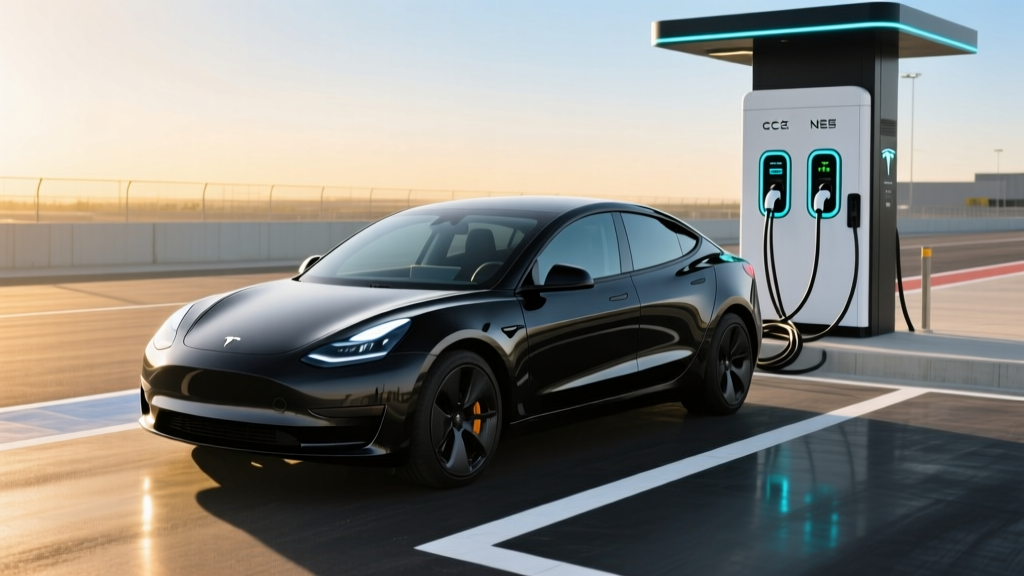
The Model 3's DC fast-charging curve is one of the best in its class. On a V3 or V4 Supercharger, the Long Range AWD peaks near 250 kW between 10–20% State of Charge, then tapers progressively: ~175 kW at 40%, ~100 kW at 60%, and ~50 kW above 80%. This taper is why Tesla (and every EV manufacturer) quotes 10-80% times — the final 20% can add another 20+ minutes.
For home charging, the Mobile Connector with a NEMA 14-50 outlet delivers up to 32A (7.7 kW), while the Tesla Wall Connector hardwired at 60A provides up to 48A (11.5 kW). Most owners report overnight charging from 20% to 80% takes roughly 5–6 hours on a Wall Connector — more than sufficient for daily replenishment. Per fueleconomy.gov, the Long Range AWD's combined efficiency of 26 kWh/100mi translates to approximately $0.04–$0.06 per mile on average residential electricity rates.
Pricing, Trims, and Federal Tax Credit Eligibility
| Trim | Base MSRP | Est. After §30D Credit* | Destination |
|---|---|---|---|
| Model 3 RWD | $38,990 | $31,490 | $1,390 |
| Model 3 Long Range AWD | $47,740 | $40,240 | $1,390 |
| Model 3 Performance | $54,990 | $47,490 | $1,390 |
*The $7,500 federal tax credit under IRS §30D requires meeting all of the following criteria:
- MSRP cap: Sedan MSRP must not exceed $55,000 (Model 3 RWD and Long Range qualify; Performance may exceed cap depending on options)
- Buyer income cap: Modified AGI ≤ $150,000 (single) / $300,000 (joint)
- Battery sourcing: Critical minerals and battery components must meet escalating domestic-sourcing thresholds — Tesla's Austin and Fremont production increasingly satisfies these, but verify at point of sale
- Point-of-sale transfer: Buyers can apply the credit as an immediate price reduction at the dealer (Tesla acts as the point-of-sale transfer entity)
The Model 3 RWD at an effective ~$31,490 after the credit is among the most affordable long-range EVs available. Consult a tax professional to confirm your personal eligibility, as sourcing requirements tighten annually.
Tesla Wrap Colors: The Complete Customization Guide
Tesla offers five factory paint colors for the 2026 Model 3: Solid Black, Pearl White Multi-Coat, Deep Blue Metallic, Ultra Red, and Quicksilver (a satin chrome). That's it. Compared to rivals offering 10–15 paint options, Tesla's limited palette is the primary reason Tesla wrap colors have become a booming aftermarket category.
Why Wrap Instead of Paint?
A full-body vinyl wrap costs between $2,500 and $5,000 depending on material quality and shop labor — comparable to or less than a high-quality respray. Critically, a wrap preserves the factory paint underneath, which matters for resale value and Tesla's paint-thickness reputation (Tesla paint is notoriously thin and prone to rock chips). A wrap also qualifies as a reversible modification, meaning you can return the car to stock before trade-in or sale.
Most Popular Tesla Wrap Colors in 2026
Based on installer surveys and owner community data, here are the top Tesla wrap colors by demand:
- Satin Chrome / Liquid Metallic Silver: The most-requested wrap for Model 3 owners wanting a premium look without the Quicksilver upcharge. Cost: ~$3,000–$3,800.
- Matte Military Green / British Racing Green: Surging in popularity among tech-professional owners. Pairs well with blacked-out chrome-delete trim.
- Satin Rose Gold / Copper: A standout choice that photographs well and differentiates from the typical EV gray/white fleet.
- Gloss Frozen Blue / Miami Blue: Porsche-inspired shades that give the Model 3 a sports-car presence.
- Matte Black / Stealth PPF: Not technically a color change but a paint-protection film in matte finish — combines chip protection with an aggressive aesthetic.
- Colorshift / Chameleon Wraps: Premium films (e.g., 3M, Avery Dennison) that shift hue depending on viewing angle. Cost: $4,500–$6,000 due to material expense and installation complexity.
Wrap vs. PPF: What's the Difference?
Vinyl wraps (typically 3–4 mil thick) change color and provide minor scratch resistance. Paint Protection Film (PPF, 6–8 mil) is optically clear or tinted and is designed to absorb rock impacts and self-heal minor swirl marks. Many owners combine both: PPF on high-impact zones (hood, fenders, mirrors, bumper) and a color-change wrap over the full body. Budget $5,000–$8,000 for a full PPF + wrap combo.
Does a Wrap Affect Warranty or Insurance?
A professionally installed wrap does not void Tesla's vehicle warranty. However, if adhesive residue damages paint during removal (rare with quality films like 3M or Avery), Tesla may deny a paint-related claim. Notify your insurance carrier — most will cover the wrap as an aftermarket accessory for an additional $15–$30/month premium rider. Document the wrap installation with receipts and before/after photos.
Interior, Cargo, and Technology
The 2026 Model 3 "Highland" refresh interior is a significant step up from pre-2024 models. Tesla eliminated the stalk-mounted turn signals (now on the steering wheel rim) and the gear selector (now a touchscreen swipe), which remains the most polarizing design decision in the EV market.
Cargo and dimensions:
- Rear trunk: 21.0 cu ft
- Front trunk (frunk): 3.1 cu ft
- Total cargo: 24.1 cu ft
- Rear legroom: 34.9 inches
- Front headroom: 40.3 inches
The 15.4-inch center touchscreen runs Tesla's latest software with ventilated front seats, ambient lighting, rear-seat ventilation (a first for Model 3), and a rear 8-inch touchscreen for passengers. The glass roof now features acoustic-laminated glass on all trims, reducing cabin noise significantly over pre-refresh models.
Driver assistance: Basic Autopilot (adaptive cruise, lane centering) is standard. Full Self-Driving (Supervised) remains a $8,000 option or $99/month subscription. Per NHTSA SAE guidelines, FSD Supervised is a Level 2 system — the driver must remain fully engaged and is legally responsible for all vehicle operation. It is not autonomous driving.
Ownership Costs, Warranty, and Who Should Buy
Warranty coverage:
- Basic vehicle: 4 years / 50,000 miles
- Battery & drive unit (RWD LFP): 8 years / 100,000 miles (70% minimum capacity retention)
- Battery & drive unit (Long Range/Performance NMC): 8 years / 120,000 miles (70% minimum capacity retention)
Tesla's battery degradation data, aggregated from fleet telemetry, shows approximately 10–12% capacity loss at 100,000 miles for NMC packs and 8–10% for LFP packs. Full battery replacement outside warranty currently costs $12,000–$16,000 depending on pack size, though this is rarely needed before 200,000+ miles based on current degradation curves.
- Choose the RWD if: You commute under 80 miles daily, charge at home, and want the lowest cost of entry after the §30D credit. LFP chemistry means less charging-anxiety about daily 100% charges.
- Choose the Long Range AWD if: You take regular road trips (300+ miles), live in a cold climate where range loss matters, or need dual-motor traction for snow. The 363-mile EPA range provides genuine one-charge corridor travel on most interstate routes.
- Choose the Performance if: Track capability and sub-3-second acceleration are priorities, and you accept the range and price trade-offs. Verify MSRP stays under the $55,000 cap before assuming tax credit eligibility.
Pros
- Best-in-class Supercharger network access (now open to other brands via NACS adapter, reducing Tesla's moat but confirming connector longevity)
- LFP option allows worry-free daily 100% charging
- Class-leading efficiency (24–28 kWh/100mi)
- Over-the-air updates add features post-purchase
- Strong resale value relative to non-Tesla EVs
Cons
- Stalkless turn signals and screen-based gear selector frustrate some drivers
- Factory paint quality still inconsistent — makes wrapping almost a necessity for enthusiasts
- No Apple CarPlay / Android Auto (Tesla-only ecosystem)
- FSD (Supervised) remains Level 2 despite the name — buyer beware of marketing
- Rear-seat space tight for taller passengers vs. Hyundai Ioniq 6
Model 3 vs. Key Competitors
The 2026 Model 3 competes against the Hyundai Ioniq 6 (EPA 361 mi, ~$42,000), BMW i4 eDrive40 (EPA 307 mi, ~$57,000), and Polestar 2 (EPA 320 mi, ~$49,000). The Model 3 Long Range undercuts the i4 by nearly $10,000 while matching the Ioniq 6 on range and exceeding it on charging speed and Supercharger access. Per IIHS ratings, the Model 3 continues to earn Top Safety Pick+ status, matching the best in the segment.
The Ioniq 6 offers a more conventional interior with physical controls and Apple CarPlay. The BMW i4 delivers superior build quality and a quieter cabin. But on pure value — range per dollar, charging infrastructure, and software capability — the Model 3 still leads.
Frequently Asked Questions
What is the real-world range of the 2026 Tesla Model 3?
The Long Range AWD achieves 363 miles EPA, but expect 290–310 miles at sustained highway speeds and 220–260 miles in freezing temperatures. The RWD LFP model delivers roughly 210–230 real-world highway miles.
How fast does the Model 3 charge at home and on the road?
On a 250 kW Supercharger, the Long Range charges 10–80% in approximately 25 minutes. At home on a 48A Wall Connector (11.5 kW), you'll add roughly 44 miles of range per hour — a full overnight session covers any daily driving.
How much does the Model 3 cost after the federal tax credit?
The RWD trim starts at $38,990 and drops to approximately $31,490 after the $7,500 §30D credit, assuming you meet income, MSRP, and battery-sourcing requirements. Always verify eligibility at the point of sale and with a tax professional.
Does wrapping a Tesla void the warranty?
No. A professionally installed vinyl wrap does not void Tesla's vehicle or battery warranty. Use reputable 3M or Avery Dennison films and keep documentation. Notify your insurer to cover the wrap as an aftermarket accessory.
What are the best Tesla wrap colors for resale value?
Satin chrome, matte gray, and gloss black wraps tend to have the broadest buyer appeal at resale. Bold colors (colorshift, bright green) may narrow your buyer pool. The advantage of a wrap is that you can remove it to reveal factory paint before selling.
Is the Model 3 worth buying over the Hyundai Ioniq 6?
If Supercharger network access, software features, and the lowest cost-per-mile of range are your priorities, yes. If you prefer physical controls, Apple CarPlay, and more rear-seat room, the Ioniq 6 is a strong alternative at a similar price point.