Quick Verdict: The Model 3 in Reno's High Desert
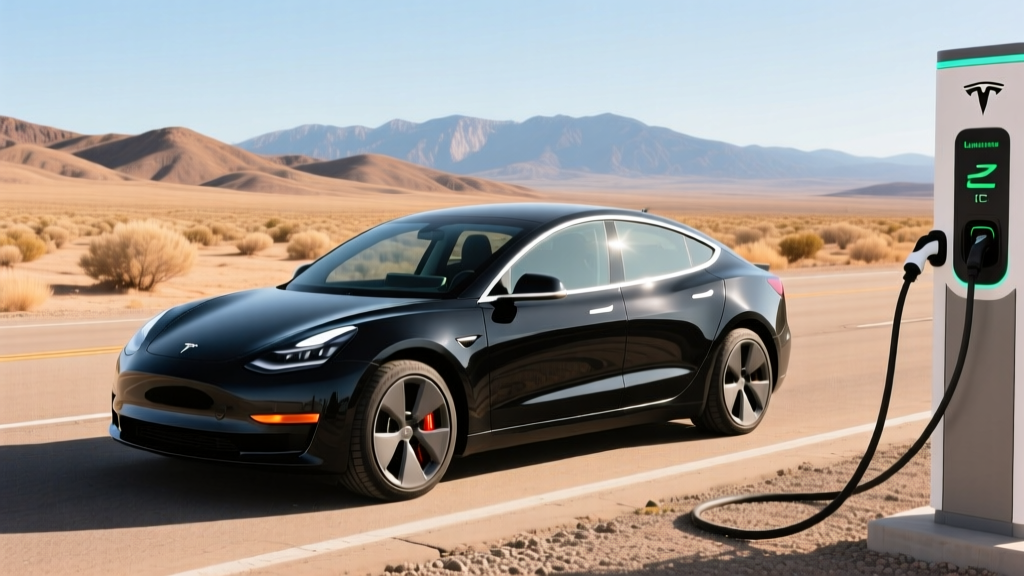
Reno sits at 4,505 feet, gets sub-freezing winters, and is surrounded by mountain passes that eat EV range. The 2026 Tesla Model 3 Long Range AWD remains one of the most practical EVs for Northern Nevada — not because it's flawless, but because Tesla's Supercharger network and heat-pump thermal management handle the Sierra Nevada's extremes better than most. For daily Reno-Sparks commuting and occasional I-80 runs to Sacramento or Tahoe, the Model 3 Long Range is the trim to target.
EPA estimated range: 341 miles (Long Range AWD) / 272 miles (RWD)
Real-world Reno expectation: Expect ~280–305 miles on the Long Range in mixed city/highway driving above 4,000 ft. Highway-only runs on I-80 at 75 mph drop that to ~260 miles. In January cold (teens to low 20s°F), budget 20–25% loss — plan for ~220–240 usable miles on a full charge.
2026 Tesla Model 3: Spec Table for Reno Buyers
| Spec | RWD | Long Range AWD | Performance |
|---|---|---|---|
| EPA Range | 272 mi | 341 mi | 315 mi |
| Battery (usable) | ~60 kWh (LFP) | ~75 kWh (NMC) | ~75 kWh (NMC) |
| Horsepower | 271 hp | 346 hp | 510 hp |
| 0–60 mph | 5.8 sec | 4.2 sec | 2.9 sec |
| Drivetrain | RWD | Dual-Motor AWD | Dual-Motor AWD |
| Peak DC Charge | 170 kW | 250 kW | 250 kW |
| 10–80% DCFC Time | ~25 min | ~21 min | ~21 min |
| Level 2 Home Rate | 11.5 kW (~44 mi/hr) | 11.5 kW (~44 mi/hr) | 11.5 kW (~44 mi/hr) |
| MPGe (combined) | 132 MPGe | 131 MPGe | 119 MPGe |
| kWh/100 mi | 25 | 25 | 28 |
| Base MSRP | $38,990 | $45,740 | $52,990 |
| Battery Warranty | 8 yr / 100,000 mi | 8 yr / 120,000 mi | 8 yr / 120,000 mi |
Source: fueleconomy.gov and Tesla's 2026 spec sheets. MSRP excludes $1,390 destination fee.
Charging in Northern Nevada: Superchargers, Home, and the I-80 Gap
Reno itself is well-served: Tesla operates multiple Supercharger stations in the city (including V3/V4 stalls at 150–250 kW) and destination chargers at casinos and hotels. The practical gap shows up on longer trips.
| Charging Level | Power (kW) | Miles Added/Hour | Reno Availability |
|---|---|---|---|
| Level 1 (120V outlet) | ~1.4 kW | ~5 mi/hr | Any standard outlet; emergency/trickle only |
| Level 2 (240V home) | 11.5 kW | ~44 mi/hr | Home garage (200A panel recommended) |
| DC Fast (V3 Supercharger) | up to 250 kW | ~1,000 mi/hr (peak) | Reno, Sparks, Carson City; 15–20 min typical stop |
| DC Fast (V4 Supercharger) | up to 350 kW (cable-limited on Model 3) | ~1,200 mi/hr (peak) | Expanding along I-80 corridor |
Home charging is non-negotiable in Reno. With winter range loss and NV Energy's time-of-use rates (off-peak as low as ~$0.08/kWh overnight), a Level 2 Wall Connector ($450) plus electrician install ($800–$2,200 depending on panel proximity) pays for itself in months versus public DCFC pricing ($0.30–$0.48/kWh at Superchargers). A full 10–80% charge on Level 2 takes roughly 5–6 hours for the Long Range — easily overnight.
The I-80 corridor caveat: Eastbound toward Elko or westbound past Sacramento, Supercharger spacing widens to 90–140 miles in some stretches. The Long Range's ~260-mile real-world highway buffer handles this, but the RWD trim's ~210-mile cold-weather highway range makes it a risky choice for regular Donner Pass or Lovelock runs.
Battery Chemistry: LFP vs NMC — Why It Matters in the Sierras
The RWD Model 3 uses an LFP (lithium iron phosphate) battery; Long Range and Performance trims use NMC (nickel manganese cobalt). The differences are material for Reno owners:
- LFP (RWD): Tolerates daily 100% charging without accelerated degradation — ideal for commuters who need every mile. However, LFP loses more capacity in cold weather (~30% range drop in sub-20°F temps) and has lower energy density.
- NMC (Long Range/Performance): Higher energy density (more range per pound), better cold-weather retention (~20–25% loss), but Tesla recommends charging to 80% daily and only hitting 100% before long trips to preserve longevity.
For Reno's winters, the NMC-equipped Long Range AWD is the pragmatic pick. The heat pump (standard since 2021) recovers waste heat from the drivetrain to warm the cabin, cutting winter range loss versus older resistive-heater EVs.
Does the 2026 Model 3 Qualify for the Federal EV Tax Credit?
Under IRS §30D rules (current for 2026), the Model 3's credit eligibility is trim-dependent and sourcing-sensitive. Here's the framework:
- Vehicle MSRP must be ≤ $55,000 (sedan cap) — RWD and Long Range qualify; Performance at $52,990 base qualifies but loaded trims may exceed the cap.
- Buyer AGI limits: $150,000 single / $225,000 head of household / $300,000 married filing jointly.
- Battery critical-mineral and component sourcing must meet annual thresholds (increasing yearly through 2032). Tesla's Nevada Gigafactory sourcing has historically helped, but verify the specific VIN via the IRS portal at purchase.
- Point-of-sale transfer: Since 2024, the credit can be applied at the dealer as a down-payment reduction rather than waiting for a tax refund.
Always confirm eligibility at irs.gov and consult a tax professional — sourcing rules shift annually.
| Trim | MSRP | Est. Max Credit | Effective Price |
|---|---|---|---|
| RWD | $38,990 | $7,500 (if sourcing qualifies) | ~$31,490 |
| Long Range AWD | $45,740 | $7,500 (if sourcing qualifies) | ~$38,240 |
| Performance | $52,990 | $7,500 (if under MSRP cap) | ~$45,490 |
Note: Nevada has no state EV rebate as of 2026, though NV Energy offers a ~$500 residential charger incentive and discounted TOU rates.
Interior, Tech, and Daily Livability
The 2026 Model 3 "Highland" refresh continues to polarize. The minimalist interior — 15.4-inch center touchscreen, no instrument cluster, stalkless steering-wheel turn signals — demands a two-week adjustment period. Once acclimated, the UX is fast and logical, but passengers unfamiliar with the car will hunt for wiper and vent controls.
Space: 23 cu ft trunk (plus ~3 cu ft frunk), 42.3 inches front legroom, 35.3 inches rear. Rear seat is tight for adults over 6 feet on longer drives. A Hyundai Ioniq 6 offers similar rear room; a Model Y adds ~10 cu ft and a taller roofline for family duty.
Tech highlights: Tesla's native navigation with Supercharger routing and battery preconditioning is still best-in-class — the car warms its battery en route to a DCFC to hit peak charge speed. The 17-speaker audio system, ventilated front seats (added in Highland), and ambient lighting are genuine upgrades over the pre-2024 interior.
Driver assist — be precise about what it is: Basic Autopilot (traffic-aware cruise + lane centering) is standard. Full Self-Driving (Supervised) is a $8,000 option or $99/month subscription. This is SAE Level 2 — you must remain attentive, hands on or near the wheel, and legally responsible. It is not self-driving. FSD handles Reno's arterial roads reasonably well but struggles on unmapped construction zones and snow-obscured lane markings on Mt. Rose Highway.
Ownership Costs and Longevity in Nevada
NV Energy's residential EV rate (~$0.10/kWh off-peak) makes home charging a Model 3 roughly $4.50 per 100 miles, versus ~$14 per 100 miles in a 28-MPG gas sedan at $3.90/gallon. Over 15,000 miles/year, that's ~$1,425 in annual fuel savings.
Insurance is the offset: Model 3 premiums in Washoe County run $1,800–$2,400/year for a 35-year-old driver with clean record — roughly 25–40% above a comparable Camry. Get three quotes before committing.
Battery degradation on NMC Model 3s averages ~10% loss over 100,000 miles per fleet data from Recurrent Auto. Tesla's 8-year/120,000-mile battery warranty guarantees ≥70% capacity retention. Out-of-warranty pack replacement runs $12,000–$16,000 — rare before 150,000 miles but worth budgeting for decade-plus owners.
Pros and Cons: The Honest Reno Scorecard
- Supercharger network reliability on I-80 and US-395
- Heat pump handles Sierra cold better than most EVs
- Dual-motor AWD on Long Range is confident in snow
- Best-in-class navigation with DCFC preconditioning
- Low operating cost on NV Energy TOU rates
- OTA updates add features post-purchase
- Stalkless turn signals remain divisive and unsafe for some
- Rear seat is tight for adults on long trips
- RWD/LFP trim loses significant range in sub-20°F cold
- Insurance premiums 25–40% above gas sedans
- No Apple CarPlay / Android Auto — Tesla-only ecosystem
- FSD is Level 2, not autonomous — marketing outpaces capability
Is the Model 3 Worth It vs. Competitors in Reno?
The realistic cross-shops for a Reno EV buyer:
- Hyundai Ioniq 6 SE Long Range: EPA 361 mi, CCS connector (smaller public network in rural NV), ~$42,000. Better rear-seat room, CarPlay, but DCFC infrastructure is a real disadvantage east of Reno.
- Polestar 2 Long Range Dual Motor: EPA 320 mi, NACS adapter available, ~$49,900. Nicer interior materials, Google built-in, but pricier and smaller Supercharger-native advantage.
- Tesla Model Y Long Range: EPA 320 mi, same powertrain, ~$48,000. Choose this if you need cargo space (30 cu ft) or regularly carry adults in back.
For Reno specifically, Tesla's Supercharger dominance on I-80 and US-395 is the tiebreaker. Public CCS infrastructure in rural Nevada remains sparse, and that reality outweighs spec-sheet advantages from competitors on paper.
Who Should Buy the Model 3 in Reno — And Who Shouldn't
Buy it if: You commute Reno–Sparks or Reno–Carson City, have garage access for Level 2 charging, want AWD for Sierra winters, and value the Supercharger network for Tahoe or Sacramento runs.
Pass if: You regularly haul four adults (get the Model Y), you lack home charging access (public-only EV life in Reno is painful in winter), or you need a true Level 4 autonomous experience (no consumer vehicle offers this).
Frequently Asked Questions
What is the real-world range of the Tesla Model 3 in Reno winters?
Long Range AWD owners should plan for ~220–240 miles on a full charge in January (teens to 20s°F), versus ~280–305 miles in mild weather. The heat pump helps, but cold chemistry and cabin heating still cost 20–25% range.
How fast does the Model 3 Long Range charge at Reno Superchargers?
At a V3 Supercharger (250 kW capable), the Long Range peaks around 250 kW and charges 10–80% in roughly 21 minutes. Sustained rate averages ~150 kW across the curve — peak kW only holds briefly below 50% SoC.
How much does a 2026 Model 3 cost after the federal tax credit?
Long Range AWD drops from $45,740 to ~$38,240 if you qualify for the full $7,500 §30D credit. Eligibility depends on battery sourcing, your AGI, and the MSRP cap — verify at irs.gov before signing.
Does the Model 3 qualify for the full $7,500 federal EV tax credit in 2026?
It depends on trim, buyer income, and battery sourcing for that production batch. RWD and Long Range are under the $55,000 sedan MSRP cap. Check the IRS clean-vehicle portal for the specific VIN's critical-mineral and component compliance.
Is the Model 3 better than the Model Y for Reno families?
For two-adult households or solo commuters, the Model 3 is lighter, more efficient, and cheaper. For families with kids in car seats or regular rear-passenger duty, the Model Y's taller roofline, 30 cu ft cargo, and easier rear access are worth the ~$2,000 premium.
Can I drive a Model 3 from Reno to Lake Tahoe in winter without charging?
Yes. Reno to South Lake Tahoe is ~58 miles one-way with ~2,300 feet of elevation gain. The Long Range handles a round trip (~120 miles) with substantial buffer even in cold weather, though regen braking is reduced on a cold battery descending the grade.