The Short Answer: Is the 2026 F-150 Lightning the Right Truck for You?
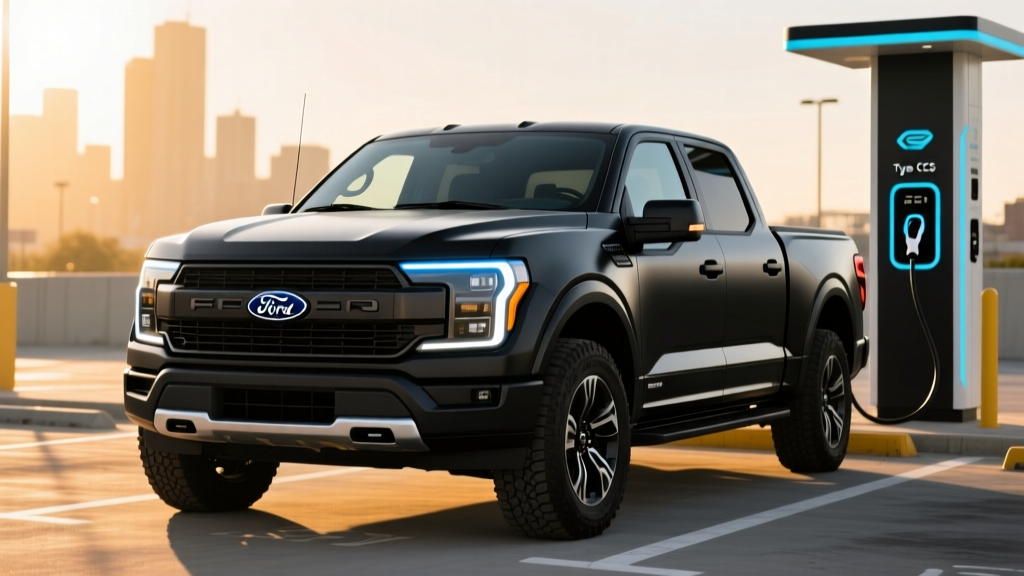
If you're shopping for a new Ford truck EV, the 2026 F-150 Lightning remains the only full-size electric pickup that drives and works like a conventional F-150. Expect 230–320 miles of EPA range depending on battery pack, a base MSRP around $54,995 (Pro trim), and §30D federal tax credit eligibility up to $7,500 if you meet income and sourcing requirements. It tows up to 10,000 lbs, offers a front trunk (frunk) with 400 lbs of payload capacity, and charges at up to 150 kW DC (10–80% in roughly 41 minutes with the extended-range pack). For buyers with home Level 2 charging and daily commutes under 200 miles, it's a practical work-and-family truck. For frequent long-haul towers or those without reliable charging access, a gas F-150 or the F-150 PowerBoost hybrid may still be the smarter buy.
2026 F-150 Lightning: Range, Battery, and Efficiency by Trim
Ford offers the Lightning with two battery options. The standard-range pack uses 98 kWh usable lithium-ion (NMC chemistry), while the extended-range pack steps up to 131 kWh usable. Both are liquid-cooled with active thermal management — critical for preserving battery health during heavy towing or fast-charging sessions.
| Spec | Standard Range (98 kWh) | Extended Range (131 kWh) |
|---|---|---|
| EPA Range | ~230 miles | ~320 miles |
| Real-World Range (highway, 70 mph) | ~185–200 miles | ~260–280 miles |
| Cold-Weather Range (20°F, estimated) | ~160–175 miles | ~225–245 miles |
| MPGe (combined) | ~68 MPGe | ~70 MPGe |
| Efficiency | ~49 kWh/100 mi | ~48 kWh/100 mi |
| Max Towing Capacity | 7,700 lbs | 10,000 lbs |
| Horsepower | 452 hp | 580 hp |
| 0–60 mph | ~4.5 sec | ~3.8 sec |
| Max Payload | ~2,235 lbs | ~1,800 lbs |
Real-World Range Reality Check
The EPA sticker says 320 miles for the extended-range pack — but that's a blended city/highway test cycle. On a flat highway at 70 mph, expect closer to 260–280 miles in mild weather. Towing a 5,000-lb trailer? Plan for 120–150 miles before needing a charge. In sub-freezing temperatures, the heat pump helps, but you'll still lose roughly 20–30% of range compared to 70°F conditions. These aren't flaws — they're physics. Plan your trips accordingly.
Charging Speeds: Home and Public Infrastructure
Understanding kW (power, or charge rate) versus kWh (energy, or battery capacity) is essential. The Lightning's battery stores energy in kWh; the charger delivers it in kW. A higher kW means faster charging — but only up to the vehicle's acceptance rate and the battery's state of charge.
| Charging Level | Power (kW) | Miles Added per Hour | Typical Use Case |
|---|---|---|---|
| Level 1 (120V outlet) | ~1.4 kW | ~3–4 mi/hr | Emergency/top-off only |
| Level 2 (240V, 48A) | ~11.5 kW | ~28–30 mi/hr | Daily home charging |
| Level 2 (240V, 80A — Ford Charge Station Pro) | ~19.2 kW | ~45–50 mi/hr | Fast home charging; extended-range pack |
| DC Fast Charge (peak) | ~150 kW | N/A (10–80% in ~41 min, ext. range) | Road trips, public stations |
The Lightning uses the NACS (North American Charging Standard) connector on 2025+ models, giving it native access to the Tesla Supercharger network — over 25,000 stalls in the U.S. Older CCS1 models can use a Ford-provided adapter. At a DC fast charger, the extended-range pack peaks near 150 kW but tapers significantly above 80% state of charge — that final 20% can take as long as the first 80%. For road trips, plan stops at 15–20% remaining and charge to 80% for maximum efficiency.
Home charging installation is the hidden cost most first-time buyers underestimate. A Level 2 home setup (240V, 48–80A) requires a dedicated circuit, often a panel upgrade, and a licensed electrician.
| Item | Estimated Cost |
|---|---|
| Level 2 charger hardware (Ford Charge Station Pro or equivalent) | $600–$1,200 |
| Electrician labor (run 240V line, mount charger) | $800–$2,500 |
| Electrical panel upgrade (if needed — 200A service) | $1,500–$3,500 |
| Permit and inspection | $100–$400 |
| Total estimated installation | $1,600–$7,600 |
If your home already has a 200-amp panel with spare capacity, you'll likely land in the $1,500–$3,000 range. Older homes with 100-amp service may need a full panel upgrade, pushing costs toward the upper end. Always get a quote from a licensed electrician before purchasing.
F-150 Lightning vs. Gas F-150 vs. PowerBoost Hybrid: Cost Comparison
The decision between a new Ford truck EV, a conventional gas F-150, and the F-150 PowerBoost hybrid comes down to your driving patterns, fuel costs, and how long you plan to keep the truck.
| Metric | F-150 Lightning (Ext. Range) | F-150 PowerBoost Hybrid | F-150 Gas (3.5L EcoBoost) |
|---|---|---|---|
| Base MSRP (2026 est.) | ~$69,995 (XLT ext.) | ~$58,995 | ~$52,995 |
| Fed. Tax Credit (§30D) | Up to $7,500 (if eligible) | None | None |
| Effective Starting Price | ~$62,495 | ~$58,995 | ~$52,995 |
| Fuel/Energy Cost per Mile | ~$0.05–$0.07 (home charging) | ~$0.16 (25 MPG, $3.80/gal) | ~$0.19 (20 MPG, $3.80/gal) |
| Annual Fuel Cost (15,000 mi) | ~$750–$1,050 | ~$2,400 | ~$2,850 |
| Annual Maintenance (est.) | ~$300–$500 | ~$700–$900 | ~$800–$1,100 |
| 5-Year Fuel/Energy Total | ~$3,750–$5,250 | ~$12,000 | ~$14,250 |
| 5-Year Maintenance Total | ~$1,500–$2,500 | ~$3,500–$4,500 | ~$4,000–$5,500 |
Over five years and 75,000 miles, the Lightning can save $8,000–$12,000 in fuel and maintenance compared to a gas F-150 — enough to offset most of the price premium, especially with the tax credit. But these savings assume reliable home charging at residential electricity rates (~$0.13–$0.18/kWh). If you rely exclusively on public DC fast charging at $0.35–$0.50/kWh, your per-mile cost rises to $0.15–$0.20, narrowing the gap significantly.
Source: EPA fueleconomy.gov for official MPGe and range data.
Federal Tax Credit Eligibility: What You Actually Qualify For
The §30D Clean Vehicle Credit can reduce your tax burden by up to $7,500 — but eligibility hinges on several requirements that change frequently. As of 2026, the key rules include:
- MSRP cap: Vans, SUVs, and pickup trucks must have an MSRP at or below $80,000.
- Buyer income limits: Modified AGI must not exceed $300,000 (joint), $225,000 (head of household), or $150,000 (single).
- Battery sourcing: A percentage of critical minerals and battery components must be sourced from the U.S. or free-trade-agreement partners. This requirement tightens annually.
- Point-of-sale transfer: You can transfer the credit to the dealer at purchase, reducing your out-of-pocket cost immediately — even if you owe less than $7,500 in taxes.
- Final assembly: Vehicle must be assembled in North America (the Lightning is built in Dearborn, MI).
The F-150 Lightning qualifies on MSRP and assembly. Battery sourcing compliance varies by model year and pack — always verify current eligibility on IRS.gov's qualified vehicle list before signing paperwork. Consult a tax professional for your specific situation.
Real-World Ownership: What First-Time EV Truck Buyers Must Know
Buying an electric truck isn't the same as buying a gas truck. Here are the ownership realities that don't show up on a spec sheet:
Home Charging Is Non-Negotiable for Most Owners
Over 80% of EV charging happens at home. If you live in an apartment, condo, or street-parking situation without access to a dedicated 240V outlet, the Lightning becomes significantly less practical. Public charging infrastructure is improving — the Supercharger network is reliable — but relying on it daily adds cost, time, and frustration.
Towing Devastates Range
This is the single biggest shock for new EV truck owners. A 6,000-lb trailer can cut your range by 50–60%. A 320-mile truck becomes a 130-mile truck under load. For contractors and boaters who tow frequently over long distances, plan charging stops every 100–120 miles or consider the PowerBoost hybrid instead.
Cold Weather Hits Hard — But Preconditioning Helps
At 20°F, expect 20–30% range loss due to battery chemistry limitations and cabin heating demands. The Lightning's heat pump mitigates this better than resistive heating, but physics wins. Always precondition the battery while plugged in before a cold-weather drive — this warms the pack using grid power rather than battery energy, preserving range and enabling faster DC charging.
Insurance Costs More
EV truck insurance premiums run 15–25% higher than comparable gas F-150s, driven by higher repair costs and battery replacement values. Get quotes before purchasing — the $150/month difference can eat into your fuel savings.
The Frunk Is Genuinely Useful
The 14.1-cubic-foot front trunk (Mega Power Frunk) offers 400 lbs of payload, lockable storage, and built-in power outlets. Owners consistently cite it as their favorite feature — groceries, tools, and gear stay separated from the bed and secured from weather.
Common Misconceptions About the F-150 Lightning
| Myth | Fact |
|---|---|
| "The battery will need replacing in 5 years." | Ford warranties the battery for 8 years/100,000 miles with a minimum 70% capacity retention threshold. Real-world degradation data from 2022–2024 models shows most packs losing only 5–10% over 60,000+ miles. |
| "You can't tow anything with an electric truck." | The extended-range Lightning tows up to 10,000 lbs. The limitation isn't capability — it's range under load. Short-haul towing (under 100 miles round trip) works well. |
| "Charging takes too long." | At home on Level 2 (19.2 kW), a depleted extended-range pack charges fully in ~7 hours — overnight. On road trips, DC fast charging adds ~150 miles in 20 minutes. |
| "It's more expensive than a gas F-150." | Higher MSRP, yes — but after the $7,500 tax credit, lower fuel/maintenance costs, and 5-year ownership math, total cost of ownership is often lower than a comparably equipped gas F-150. |
| "The Lightning is self-driving with BlueCruise." | BlueCruise is a SAE Level 2 driver-assistance system. It allows hands-free driving on pre-approved divided highways, but you must remain attentive and ready to take over at all times. |
SAE Automation Level: BlueCruise Is Level 2
Ford's BlueCruise enables hands-free driving on over 130,000 miles of pre-qualified divided highways in the U.S. and Canada. However, it is classified as SAE Level 2 — the driver must remain engaged, eyes on the road (monitored by a driver-facing camera), and ready to resume control instantly. This is not autonomous driving. Only Level 4 systems like Waymo's robotaxi operate without a human driver.
Decision Framework: Should You Buy the New Ford Truck EV?
Choose the F-150 Lightning If:
- You have access to home Level 2 charging (garage, driveway, or dedicated parking with 240V access).
- Your daily driving is under 200 miles and you can charge overnight.
- You value low running costs, instant torque, and the frunk for daily work or family use.
- You tow occasionally on short hauls (under 120 miles round trip) or have charging at your destination.
- You qualify for the §30D tax credit, bringing the effective price closer to a gas F-150.
Choose the F-150 PowerBoost Hybrid If:
- You cannot charge at home and don't want to rely on public infrastructure.
- You tow heavy trailers over long distances regularly (200+ miles).
- You live in a region with extreme cold and limited charging infrastructure.
- You want a lower upfront purchase price and don't mind higher fuel costs.
Choose the Gas F-150 If:
- You're on a tight budget and need the lowest possible MSRP.
- You drive very high annual miles (25,000+) in rural areas with sparse charging.
- You need maximum range consistency regardless of weather, load, or terrain.
Frequently Asked Questions
What is the real-world range of the 2026 F-150 Lightning?
The extended-range pack is EPA-rated at ~320 miles, but expect 260–280 miles on the highway in mild weather, and 225–245 miles in cold conditions (20°F). Towing cuts range roughly in half. The standard-range pack delivers ~185–200 highway miles in practice.
How long does it take to charge the F-150 Lightning at home?
With the Ford Charge Station Pro (80A, 19.2 kW), the extended-range pack charges from empty to full in roughly 7 hours. A standard 48A Level 2 charger takes about 11–12 hours. Most owners charge partially each night rather than from empty.
Does the F-150 Lightning qualify for the $7,500 federal tax credit?
It can — the Lightning meets the MSRP cap (under $80,000 for trucks), North American assembly, and has historically met battery-sourcing requirements. However, sourcing rules tighten annually. Verify current eligibility at IRS.gov and confirm your income falls within the AGI limits ($150K single / $300K joint).
Can the Lightning power my home during an outage?
Yes, with the optional Ford Intelligent Backup Power system (requires the 80A Charge Station Pro and a home integration system installed by a licensed electrician). The Lightning's 131 kWh extended-range battery can supply up to 9.6 kW of continuous power — enough to run essential circuits in an average home for 3–5 days depending on usage. Expect an additional $3,000–$5,000 for the transfer switch and installation.
What is the battery replacement cost?
Out-of-warranty replacement for the extended-range pack is estimated at $20,000–$30,000 based on current pricing. However, the battery is warranted for 8 years/100,000 miles, and industry degradation data suggests most packs retain 85–90%+ capacity at 100,000 miles. Full replacement is rare and typically only needed after collision damage or extreme long-term degradation.
Is the Lightning good for off-road use?
The Lightning has ~8.9 inches of ground clearance and available all-wheel drive with electronic locking rear differential. It handles light off-road trails, dirt roads, and job sites well. For serious rock crawling or deep mud, a purpose-built off-road truck (Raptor, Tremor) with higher clearance remains superior — but the Lightning's instant torque and low center of gravity make it surprisingly capable on moderate terrain.