Tesla Reliability in 2026: What Consumer Reports Data Actually Shows
If you've searched "Tesla reliability Consumer Reports" lately, you've likely found a mixed picture. Consumer Reports (CR) has historically ranked Tesla mid-to-low in predicted reliability, citing panel gaps, interior trim issues, and occasional suspension complaints. However, CR's most recent data shows meaningful improvement in the refreshed Model 3 (internally called "Highland"), which entered production in late 2023 and carries forward into the 2025–2026 model years with fewer reported build-quality defects.
The nuance matters: Tesla's powertrain and battery reliability consistently scores well — it's the body hardware, paint, and interior fitment that drag the overall score down. For buyers, this means the mechanical and electrical systems that matter most for long-term ownership are solid, while cosmetic issues remain the primary risk. Let's break down the full 2026 Tesla Model 3 profile — range, charging, pricing, and how it stacks up — so you can decide whether the reliability trade-offs are worth the performance and efficiency gains.
2026 Tesla Model 3: Full Spec Sheet
| Specification | RWD (Base) | Long Range AWD | Performance AWD |
|---|---|---|---|
| EPA Range | 272 mi | 341 mi | 315 mi |
| Battery Capacity (usable) | ~57.5 kWh (LFP) | ~75 kWh (NMC) | ~75 kWh (NMC) |
| Battery Chemistry | LFP (CATL) | NMC | NMC |
| Drivetrain | RWD (single motor) | AWD (dual motor) | AWD (dual motor) |
| Horsepower | 271 hp | 346 hp | ~430 hp |
| 0–60 mph | 5.8 sec | 4.2 sec | 2.9 sec |
| MPGe (combined) | 132 MPGe | 131 MPGe | 119 MPGe |
| Efficiency (kWh/100 mi) | 25 | 26 | 28 |
| Max DC Fast Charge | ~170 kW | ~250 kW | ~250 kW |
| 10–80% DC Charge Time | ~25 min | ~22 min | ~22 min |
| Level 2 Home Charge Rate | ~11.5 kW / 44 mi/hr | ~11.5 kW / 44 mi/hr | ~11.5 kW / 44 mi/hr |
| Base MSRP | $38,990 | $47,740 | $54,990 |
| Cargo Volume | 23 cu ft (trunk + frunk combined) | ||
| Rear Legroom | 35.2 in | ||
| Battery Warranty | 8 yr / 100,000 mi | 8 yr / 120,000 mi | 8 yr / 120,000 mi |
Source: EPA fueleconomy.gov, Tesla.com specifications. Pricing reflects MSRP before destination.
Real-World Range vs. EPA Estimates
EPA Sticker: 341 miles (Long Range AWD)
Real-World Highway (70 mph, moderate climate): ~280–300 miles
Cold Weather (below 30°F): ~230–260 miles (20–30% reduction)
City/Commuter Driving with Regen: ~310–330 miles
Tesla's efficiency engineering is genuinely class-leading. The Model 3 Long Range achieves 131 MPGe combined, translating to just 26 kWh per 100 miles — a figure that beats nearly every rival sedan. But EPA range is measured under controlled conditions that don't reflect sustained highway speeds or winter driving.
In real-world testing at 70–75 mph on flat terrain in 65–75°F conditions, expect the Long Range to deliver roughly 280–300 miles before needing a charge stop. Drop below freezing, and the LFP-equipped RWD model is hit hardest — LFP chemistry is more sensitive to cold-induced range loss, sometimes shedding 25–30% in deep winter. The NMC packs in the Long Range and Performance trims handle cold somewhat better, and Tesla's heat pump (standard on all trims) mitigates cabin-heating energy draw significantly compared to resistive heaters.
The RWD's 272-mile EPA figure is honest for city and suburban driving, but a 250-mile road trip in winter will require planning. If your commute is under 60 miles round-trip, even the base model offers ample daily buffer.
Charging Speed: DC Fast Charge and Home Level 2
| Charging Level | Power (kW) | Miles Added per Hour | Notes |
|---|---|---|---|
| Level 1 (120V household) | ~1.4 kW | ~5 mi/hr | Emergency/trickle only |
| Level 2 (240V, 48A Wall Connector) | ~11.5 kW | ~44 mi/hr | Full charge overnight (~7–8 hrs) |
| DC Fast Charge (Long Range/Perf) | Peak 250 kW | ~1,000+ mi/hr (peak) | 10–80% in ~22 min; tapers above 80% |
| DC Fast Charge (RWD/LFP) | Peak ~170 kW | ~700 mi/hr (peak) | 10–80% in ~25 min; LFP can charge to 100% daily |
The Long Range and Performance trims peak at 250 kW on V3 Superchargers, but — and this is critical — that peak only holds between roughly 10–30% state of charge. The charging curve tapers progressively: by 60% SoC you're likely seeing ~120 kW, and above 80% it drops to under 50 kW. The 10–80% time of ~22 minutes is achievable at a V3 or V4 Supercharger with battery preconditioning active (the car does this automatically when you navigate to a charger).
The RWD's LFP battery charges slower at peak (~170 kW) but has a unique advantage: Tesla recommends charging LFP to 100% at least once per week to maintain cell balancing accuracy. This effectively gives RWD owners the full 272 miles daily, whereas NMC owners are advised to set daily charge limits to 80% (~273 miles on Long Range) for long-term battery health.
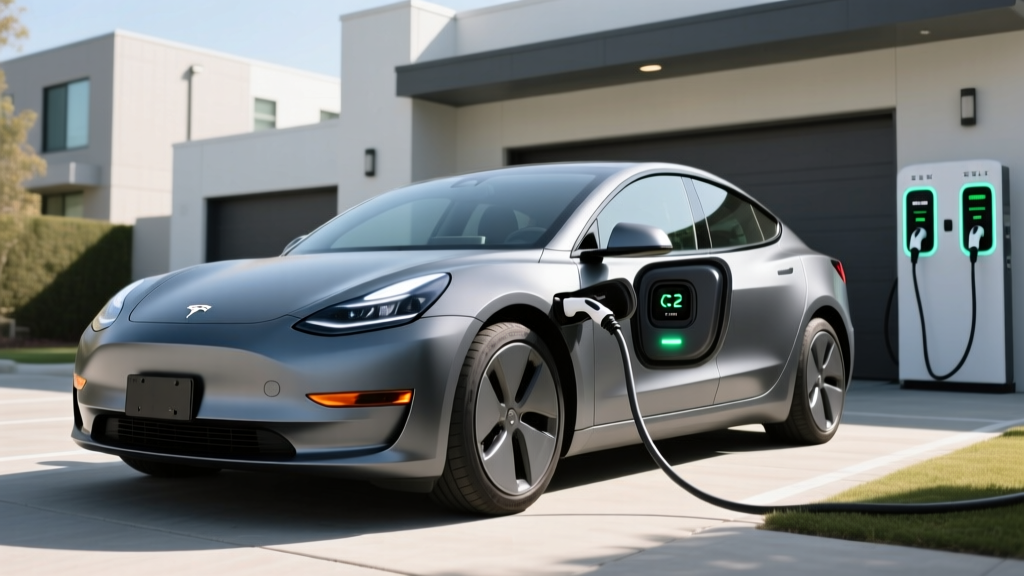
At home, the Tesla Wall Connector on a 60-amp circuit delivers 48 amps / 11.5 kW — enough to fully replenish any Model 3 overnight. Most owners adding ~40 miles of daily driving need only 1–2 hours of Level 2 charging per night. Expect a professional installation (240V/60A circuit, permit, Wall Connector) to run $800–$2,000 depending on panel proximity and local electrical codes.
Consumer Reports Reliability: Where the Model 3 Stands
Consumer Reports' predicted reliability score for the refreshed Model 3 has improved compared to pre-2024 build years. The Highland refresh addressed several pain points: revised suspension components, improved door seals, updated interior materials, and better panel alignment from the Fremont and Shanghai lines.
Here's how reliability breaks down by category based on CR member survey data and owner reports:
- Battery & Powertrain: Strong. Tesla's drive units and battery packs have demonstrated excellent longevity, with many Model 3 vehicles exceeding 100,000 miles with minimal degradation (typically 5–10% loss at 100K miles based on fleet data).
- Infotainment & Electronics: Good. The 15.4-inch touchscreen and Tesla's software stack are responsive and regularly updated over-the-air. Occasional reports of screen delamination on older builds have largely been resolved.
- Body Hardware: Average. Panel gaps, while improved, still draw more complaints than Toyota or Hyundai benchmarks. Some owners report wind noise at highway speeds around the A-pillars.
- Paint & Trim: Below average. Paint chips and minor blemishes remain a recurring complaint, particularly on vehicles delivered from Fremont.
- Climate System: Good. The heat pump is efficient and effective, though some early Highland builds had reports of HVAC noise.
- Suspension: Improved. The refreshed Model 3 uses frequency-selective dampers that improve ride comfort and have shown better durability than pre-refresh components.
For context, CR's overall brand reliability rankings have placed Tesla in the middle third of automakers in recent surveys — a meaningful improvement from the bottom-third placements of 2020–2022. The Model 3 specifically tends to score better than the Model Y and Cybertruck in CR's assessments.
Pricing, Tax Credits, and Total Cost
| Trim | Base MSRP | Destination | §30D Credit Eligible? | Effective Price (with credit) |
|---|---|---|---|---|
| RWD | $38,990 | $1,390 | Yes — up to $7,500* | ~$32,880* |
| Long Range AWD | $47,740 | $1,390 | Yes — up to $7,500* | ~$41,630* |
| Performance AWD | $54,990 | $1,390 | Yes — up to $7,500* | ~$48,880* |
* Under current IRS §30D rules, the full $7,500 credit requires: (1) buyer AGI under $150K single / $300K joint, (2) vehicle MSRP under $55,000 for sedans, (3) battery components and critical minerals meeting North American sourcing thresholds. The credit can be transferred to the dealer at point of sale as an immediate price reduction. Eligibility rules are subject to change — consult a tax professional and verify on IRS.gov before purchasing.
The RWD at ~$32,880 after the credit is one of the most affordable new EVs on the market with over 270 miles of range. The Long Range is the sweet spot for road-trippers: $41,630 effective is competitive with the Hyundai Ioniq 6 ($43,000 range) and BMW i4 (starting ~$52K), while offering superior Supercharger network access.
The Performance trim pushes past the $55,000 MSRP cap for sedans under §30D — meaning it may not qualify for the federal credit depending on exact option configurations and any 2026 rule changes. Verify before ordering.
Pros and Cons: The Honest Scorecard
✅ Pros
- Class-leading efficiency (25–28 kWh/100 mi)
- Access to Tesla Supercharger network (17,000+ North American stalls)
- Over-the-air updates continuously add features
- Strong battery longevity data (5–10% degradation at 100K mi)
- 250 kW peak DC charging on Long Range/Performance
- LFP battery on RWD allows daily 100% charging
- Best-in-class software and app integration
- Competitive pricing after §30D credit
❌ Cons
- Paint quality and panel gaps still draw complaints
- No Apple CarPlay / Android Auto — Tesla-only interface
- Rear visibility is limited; relies heavily on cameras
- RWD cold-weather range loss is significant (LFP chemistry)
- Turn-signal buttons on steering wheel (no stalk) frustrate some drivers
- Service center wait times can be long in high-volume markets
- FSD (Supervised) is still Level 2 — requires full driver attention
- No heads-up display available
Who Should Buy the 2026 Model 3?
Decision Framework
Choose the RWD if: You commute under 60 miles daily, live in a mild climate, want the lowest entry price (~$32,880 after credit), and can charge at home every night. The LFP battery's 100% daily charge capability means you always wake up to 272 miles.
Choose the Long Range AWD if: You take regular road trips (300+ miles), live in a cold-weather state, need AWD traction, or want the fastest DC charging. The NMC battery handles cold better, and 341 EPA miles gives genuine 280+ mile real-world highway range.
Choose the Performance AWD if: Acceleration matters (2.9 sec 0–60), you want adaptive damping and track mode, and the ~$49K effective price (or full MSRP if credit-ineligible) fits your budget. Enthusiast-oriented buyers who don't mind sacrificing some range for speed.
Look elsewhere if: You need a spacious rear seat for tall adults (rear legroom is tight at 35.2 in), you insist on Apple CarPlay, or you want a traditional dealership service experience.
How It Compares: Model 3 vs. Key Competitors
| Metric | Tesla Model 3 LR | Hyundai Ioniq 6 SE | BMW i4 eDrive40 | Polestar 2 LR |
|---|---|---|---|---|
| EPA Range | 341 mi | 361 mi | 307 mi | 320 mi |
| Efficiency (kWh/100 mi) | 26 | 25 | 30 | 28 |
| Peak DC Charging | 250 kW | 350 kW (800V) | 205 kW | 205 kW |
| 10–80% DC Time | ~22 min | ~18 min | ~31 min | ~30 min |
| Base MSRP | $47,740 | $42,600 | $52,200 | $49,900 |
| Apple CarPlay | No | Yes | Yes | Yes |
| Charging Network | Supercharger (native) | NACS adapter needed for SC | NACS adapter needed for SC | NACS adapter needed for SC |
The Ioniq 6 beats the Model 3 on EPA range (361 mi) and DC charging speed (800V architecture enables 350 kW peaks), but Tesla's Supercharger network remains the most reliable and seamless public charging experience in North America. Hyundai, BMW, and Polestar now offer NACS adapters for Supercharger access, but the plug-and-charge integration Tesla owners enjoy — no app, no adapter, just plug in — still sets the standard.
The BMW i4 offers a more traditional luxury interior and CarPlay but sacrifices efficiency and charging speed. The Polestar 2 is compelling for design-conscious buyers but trails on range and charge rate.
Warranty and Long-Term Ownership
Tesla's warranty structure is straightforward:
- Basic Vehicle Warranty: 4 years / 50,000 miles
- Battery & Drive Unit (RWD): 8 years / 100,000 miles, minimum 70% capacity retention
- Battery & Drive Unit (Long Range/Performance): 8 years / 120,000 miles, minimum 70% capacity retention
The 70% retention threshold is standard across the industry (matched by Hyundai, Ford, and others). Real-world fleet data from sources like Tesla's Impact Report shows average degradation of roughly 8–10% at 100,000 miles, well within the warranty buffer. LFP batteries on the RWD model may show slightly different degradation curves — they tend to hold capacity well but can exhibit voltage measurement drift if not regularly charged to 100%.
Insurance costs remain a consideration: Model 3 premiums average 15–25% higher than comparable gas sedans due to repair costs and Tesla's direct-repair ecosystem. Shop quotes before purchasing.
Frequently Asked Questions
What is the real-world range of the 2026 Tesla Model 3?
The Long Range AWD achieves 341 miles EPA, but expect ~280–300 miles in real-world highway driving at 70 mph and ~230–260 miles in cold weather below 30°F. The RWD delivers ~272 EPA miles, with real-world commuter driving yielding ~240–260 miles.
How fast does the Model 3 charge at home and on DC fast chargers?
At home on a Level 2 Tesla Wall Connector (11.5 kW), you'll add ~44 miles per hour — a full overnight charge in 7–8 hours. On DC fast chargers, the Long Range and Performance peak at 250 kW with 10–80% in ~22 minutes. The RWD peaks at ~170 kW with 10–80% in ~25 minutes. Charging speed tapers significantly above 80% SoC.
Does the 2026 Model 3 qualify for the $7,500 federal EV tax credit?
The RWD and Long Range trims qualify for up to $7,500 under IRS §30D, provided the buyer meets income caps ($150K single / $300K joint) and the vehicle meets battery sourcing requirements. The credit can be applied at point of sale. The Performance trim may exceed the $55,000 sedan MSRP cap depending on options — verify current eligibility at IRS.gov before ordering.
Is the Tesla Model 3 reliable according to Consumer Reports?
Tesla's predicted reliability has improved in CR's recent assessments, particularly for the refreshed Model 3. Battery and powertrain reliability are strong. The main weakness remains body hardware — paint quality and panel alignment draw more complaints than Japanese and Korean competitors. Overall, CR places Tesla in the middle third of brands.
Is the Model 3 worth buying vs. the Hyundai Ioniq 6 or BMW i4?
If Supercharger network access, software integration, and efficiency are your top priorities, the Model 3 Long Range is hard to beat at ~$41,630 after the credit. If you prefer CarPlay, faster 800V DC charging, and slightly more EPA range, the Ioniq 6 is a strong alternative. The BMW i4 suits luxury-focused buyers who don't mind higher pricing and slower charging.
Is Tesla's Autopilot or FSD actually self-driving?
No. Both Autopilot and Full Self-Driving (Supervised) are SAE Level 2 driver-assistance systems. You must keep your hands on the wheel and eyes on the road at all times. Tesla's camera-only vision system is capable on highways but requires constant supervision. True Level 4 driverless operation is currently limited to geofenced robotaxi services like Waymo — not any consumer Tesla vehicle.