The Tesla Model 3 remains one of the most searched electric sedans in the U.S., and for good reason: it undercuts most premium EVs on price while delivering class-leading efficiency and access to the Supercharger network. But for buyers typing "Tesla 3 rebate" into search engines, the real question is whether the federal tax credit applies, how much you'll actually pay after incentives, and whether the real-world range justifies the purchase. This review covers the 2026 Model 3 lineup with exact figures on range, charging, pricing, and §30D eligibility.
2026 Tesla Model 3 Lineup at a Glance
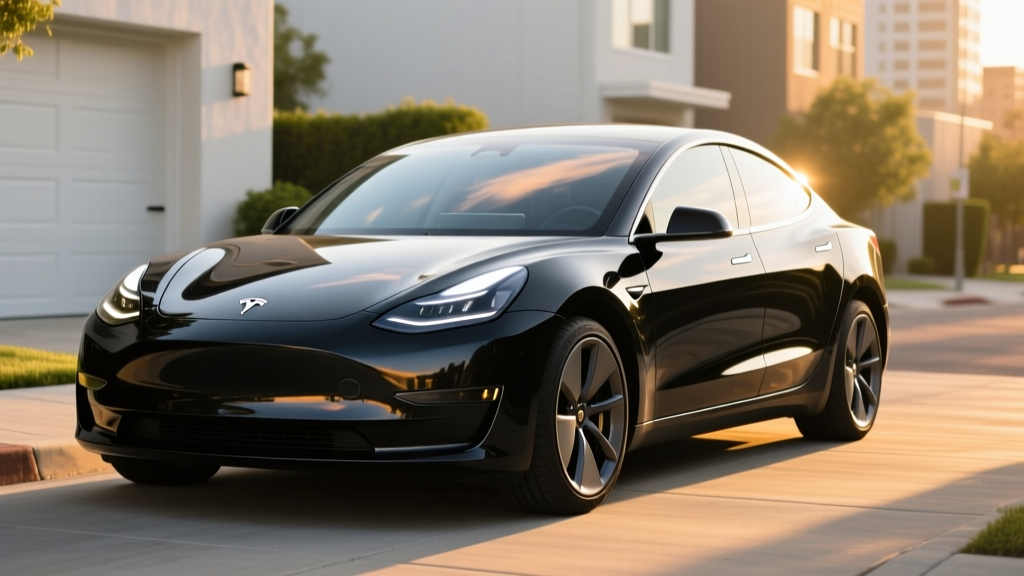
Tesla currently offers the Model 3 in three trims for the 2026 model year. The Long Range RWD serves as the efficiency champion, the Long Range AWD adds all-weather traction, and the Performance variant targets driving enthusiasts. All trims share the refreshed "Highland" body introduced in late 2023, featuring improved NVH (noise, vibration, harshness), ventilated front seats, a rear passenger touchscreen, and ambient lighting.
| Spec | Long Range RWD | Long Range AWD | Performance AWD |
|---|---|---|---|
| Base MSRP | $42,380 | $47,380 | $52,380 |
| EPA Range | 363 mi | 341 mi | 315 mi |
| Battery (usable) | ~75 kWh (NMC) | ~75 kWh (NMC) | ~75 kWh (NMC) |
| Drivetrain | Rear-Wheel Drive | Dual-Motor AWD | Dual-Motor AWD |
| Horsepower | ~271 hp | ~346 hp | ~510 hp |
| 0–60 mph | 5.8 sec | 4.2 sec | 2.9 sec |
| MPGe (combined) | 132 MPGe | 125 MPGe | 118 MPGe |
| Efficiency | 25 kWh/100mi | 27 kWh/100mi | 29 kWh/100mi |
| Max DC Charge Rate | 250 kW | 250 kW | 250 kW |
| 10–80% DCFC Time | ~25 min | ~25 min | ~25 min |
| Level 2 (11.5 kW) | ~44 mi/hr | ~44 mi/hr | ~44 mi/hr |
Real-World Range: What the EPA Number Doesn't Tell You
EPA Estimate: Up to 363 miles (Long Range RWD)
Real-World Expectation: ~290–320 miles highway at 70 mph; ~240–270 miles in freezing weather with cabin heat
The Model 3 Long Range RWD's 363-mile EPA rating is among the highest of any mainstream EV sedan. However, EPA tests include substantial low-speed city driving where regenerative braking recaptures energy. On a sustained 70 mph highway run in moderate temperatures (65–75°F), expect roughly 290–320 miles before needing to charge, based on independent testing and owner data aggregated by fueleconomy.gov.
Cold weather hits all EVs hard, and the Model 3 is no exception. At 20°F with the cabin heater active, range can drop 25–30%, putting the Long Range AWD closer to 240 miles of usable range. Tesla's heat pump (standard on all trims) mitigates this better than resistive heating, but physics wins in deep cold. The Performance trim's stickier tires and sportier tuning also increase rolling resistance, which is why its EPA rating sits 48 miles below the RWD variant despite sharing the same battery pack.
One practical advantage: Tesla's navigation system automatically preconditions the battery when you route to a Supercharger, warming the pack to optimize charge speed. This matters — arriving at a DC fast charger with a cold battery can double your charging time.
Charging Speed: Supercharger Access Is the Real Advantage
All 2026 Model 3 trims peak at 250 kW on DC fast chargers, which translates to a 10–80% charge in approximately 25 minutes under ideal conditions. The charge curve tapers significantly above 80% — going from 80% to 100% can add another 20–25 minutes. For road trips, the practical strategy is to charge to 80% and move on, which is why Tesla's Supercharger network (now open to other EVs via the NACS standard) remains a key selling point.
| Charging Level | Power | Speed (Miles Added) | Best Use Case |
|---|---|---|---|
| Level 1 (120V) | ~1.4 kW | ~3–5 mi/hr | Emergency / overnight trickle |
| Level 2 (240V, 48A) | 11.5 kW | ~44 mi/hr | Daily home charging |
| DC Fast (Supercharger V3/V4) | Up to 250 kW | ~175 mi in 15 min | Road trips |
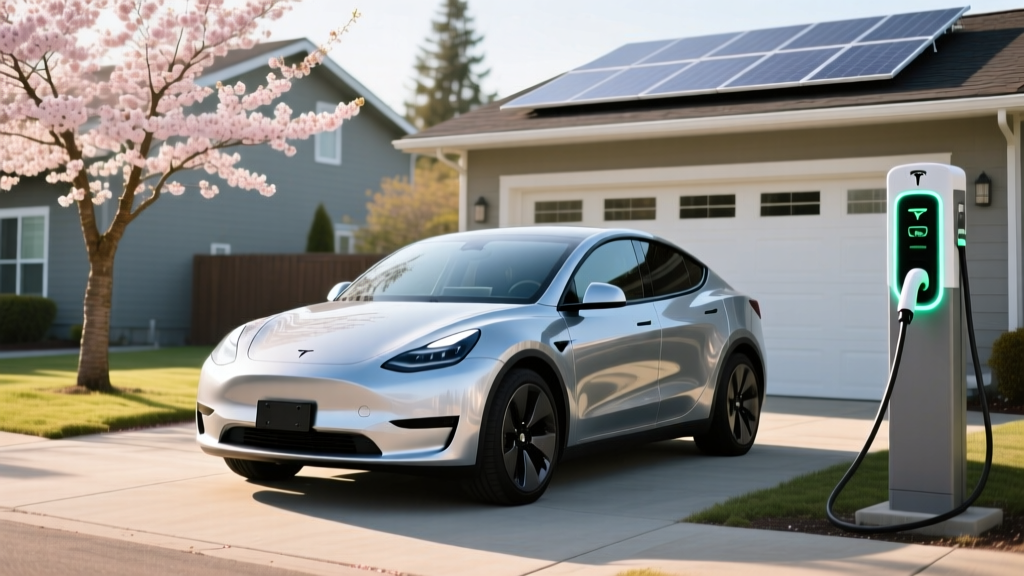
For home charging, a Level 2 wall connector on a 60-amp circuit delivers 11.5 kW, adding roughly 44 miles of range per hour. A full overnight charge (8 hours) replenishes about 350 miles — more than enough for daily driving. Installation typically costs $800–$2,000 depending on your panel capacity and run length, but this assumes your electrical panel has spare capacity. A 200-amp panel upgrade can add $1,500–$3,000.
The Model 3 ships with a NACS (North American Charging Standard) port natively. With the industry-wide adoption of NACS by Ford, GM, Rivian, and others, Tesla's proprietary connector advantage has diminished — but the Supercharger network's reliability and density remain unmatched for cross-country travel.
Federal Tax Credit: Does the Model 3 Qualify for the Rebate?
This is the question driving most "Tesla 3 rebate" searches. As of 2026, the Tesla Model 3 does qualify for the full $7,500 federal EV tax credit under IRS §30D, but only if you meet all eligibility requirements. Here's the breakdown:
- MSRP Cap: The Model 3 is classified as a sedan, so the MSRP cap is $55,000. The Long Range RWD ($42,380) and Long Range AWD ($47,380) both qualify. The Performance trim ($52,380) also qualifies, but adding premium paint, FSD, or wheels can push the sticker above $55,000 — at which point you lose the credit.
- Buyer Income Cap: Modified adjusted gross income (MAGI) must not exceed $150,000 (single), $225,000 (head of household), or $300,000 (married filing jointly).
- Battery Sourcing: The Model 3's battery components and critical minerals must meet phased-in domestic-content thresholds. Tesla has maintained eligibility through its supply chain, but the IRS updates qualifying vehicle lists periodically — always verify at irs.gov before purchasing.
- Point-of-Sale Transfer: Since 2024, buyers can transfer the $7,500 credit to the dealer at purchase, effectively reducing the purchase price upfront rather than waiting for a tax refund. Tesla supports this at delivery.
| Trim | Base MSRP | After $7,500 Credit | Est. Destination + Fees |
|---|---|---|---|
| Long Range RWD | $42,380 | $34,880 | +$1,390 |
| Long Range AWD | $47,380 | $39,880 | +$1,390 |
| Performance AWD | $52,380 | $44,880 | +$1,390 |
Important caveat: State and local incentives vary widely. California's CVRP, Colorado's innovative motor vehicle credit, and various utility rebates can stack on top of the federal credit. Check your state energy office and local utility for current programs — these change frequently and may have separate income or price caps.
Interior, Cargo, and Daily Livability
The refreshed Model 3 interior is markedly improved over the pre-2024 versions. Ventilated front seats, acoustic glass all around, and a rear 8-inch touchscreen for passengers address the most common complaints from earlier owners. The minimalist cabin still divides opinion — there are no physical stalks (turn signals are on the steering wheel) and no traditional instrument cluster.
Cargo capacity is practical for a compact sedan: 23 cubic feet total (15.6 cu ft trunk + 3.1 cu ft frunk + under-floor storage). Rear legroom measures 35.3 inches, which is adequate for adults but tighter than a Hyundai Ioniq 6 (37.0 in) or BMW i4 (36.1 in). The panoramic glass roof creates an airy feel, though it does reduce headroom slightly compared to vehicles with traditional steel roofs.
Tech features include a 15.4-inch center touchscreen, over-the-air updates, Tesla's app-based phone-as-key, Sentry Mode dashcam recording, and a HEPA air filtration system. The infotainment system is responsive and feature-rich, but it lacks Apple CarPlay and Android Auto — a dealbreaker for some buyers who prefer their phone's native navigation and music interfaces.
Driver Assistance: Autopilot and FSD Supervised
SAE Automation Level: Level 2 — The driver must remain fully engaged and supervise at all times. This is NOT self-driving.
Every Model 3 comes standard with Basic Autopilot, which includes adaptive cruise control and lane-centering on highways. Tesla's optional Full Self-Driving (Supervised) package ($8,000 or $99/month) adds automatic lane changes, navigate-on-autopilot for highway interchanges, and city-street autosteer. Despite the name, FSD Supervised remains a Level 2 driver-assist system — you are legally and practically responsible for the vehicle at all times.
In real-world use, FSD handles many highway and suburban scenarios competently, but it still makes unpredictable decisions in construction zones, unprotected left turns, and complex intersections. Competitors like GM's Super Cruise and Ford's BlueCruise offer hands-free driving on pre-mapped highways with more predictable behavior, though they cover fewer roads. NHTSA continues to monitor ADAS safety data across all manufacturers.
Warranty and Long-Term Battery Outlook
Tesla covers the Model 3 with a 4-year/50,000-mile limited vehicle warranty and an 8-year/120,000-mile battery and drive unit warranty (Long Range and Performance trims). The battery warranty guarantees at least 70% capacity retention over the warranty period. If the pack falls below that threshold, Tesla will repair or replace it at no cost.
Real-world degradation data from owner surveys and fleet analytics shows that NMC packs in the Model 3 typically lose 8–12% capacity over the first 100,000 miles, with the steepest drop occurring in the first 20,000 miles before leveling off. Tesla recommends daily charging to 80–90% for NMC chemistry (unlike LFP packs, which tolerate 100% daily charges better). For most owners, the battery will outlast the vehicle's economic life.
Verdict: Who Should Buy the 2026 Model 3?
Choose the Model 3 Long Range RWD if: You want maximum range (363 mi EPA), lowest price after the rebate (~$34,880), and primarily drive in mild climates where AWD isn't essential.
Choose the Model 3 Long Range AWD if: You need all-weather traction for snow or rain, want the extra power (346 hp), and can accept a 22-mile range trade-off.
Choose the Model 3 Performance if: You prioritize acceleration (2.9 sec 0–60) and track capability, and the $52,380 MSRP keeps you under the $55,000 tax-credit cap without expensive add-ons.
Look elsewhere if: You need Apple CarPlay/Android Auto, want a traditional instrument cluster, prefer physical controls, or need more rear-seat legroom for tall passengers.
Pros
- Class-leading efficiency (132 MPGe combined on RWD)
- Access to the most reliable DC fast-charging network
- Full $7,500 federal tax credit eligibility (verify at purchase)
- Over-the-air updates continuously add features
- Strong resale value relative to other EVs
Cons
- No Apple CarPlay or Android Auto
- Turn signals on steering wheel (no stalks) require adaptation
- Rear legroom is tighter than key competitors
- FSD (Supervised) is expensive and still requires full driver attention
- Panel gap and paint quality can vary — inspect at delivery
Frequently Asked Questions
What is the real-world range of the Tesla Model 3?
The Long Range RWD achieves 363 miles EPA, but expect 290–320 miles on highway trips at 70 mph and 240–270 miles in freezing temperatures. The AWD and Performance trims deliver proportionally less due to higher weight and rolling resistance.
How fast does the Model 3 charge at home and on the road?
On a Level 2 home charger (11.5 kW), the Model 3 adds about 44 miles of range per hour, fully charging overnight. On a 250 kW Supercharger, it charges from 10–80% in approximately 25 minutes, adding up to 175 miles in 15 minutes under ideal conditions.
How much does the Tesla Model 3 cost after the federal rebate?
The Long Range RWD starts at $42,380 and drops to $34,880 after the $7,500 §30D credit (if you meet income and sourcing requirements). The Long Range AWD falls to $39,880 and the Performance to $44,880. State incentives may reduce the price further.
Does the Tesla Model 3 qualify for the federal EV tax credit in 2026?
Yes, all three Model 3 trims currently qualify for the full $7,500 credit, provided the buyer's MAGI is within limits ($150K single / $300K joint), the MSRP stays under $55,000 (sedan cap), and battery-sourcing requirements are met. Always confirm on the IRS clean vehicle credits page before ordering.
Is the Model 3 worth buying vs. the Hyundai Ioniq 6 or BMW i4?
The Model 3 wins on efficiency, charging network access, and price-after-credit. The Ioniq 6 offers more rear legroom and 800V ultra-fast charging (10–80% in ~18 min on a 350 kW charger). The BMW i4 provides a more traditional luxury interior with physical controls and CarPlay. Choose based on which trade-offs matter most to you.
What are the biggest drawbacks of the Model 3?
The lack of Apple CarPlay/Android Auto, steering-wheel-mounted turn signals (no stalks), firm ride quality on larger wheels, and the need to stay fully engaged even with FSD are the most cited owner complaints. Panel gaps and paint quality should be inspected carefully at delivery.