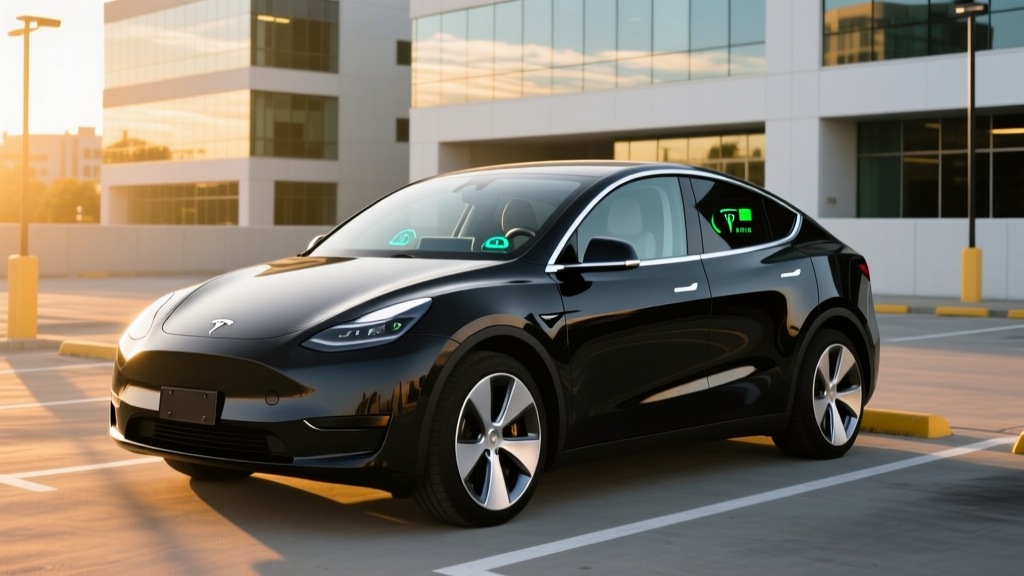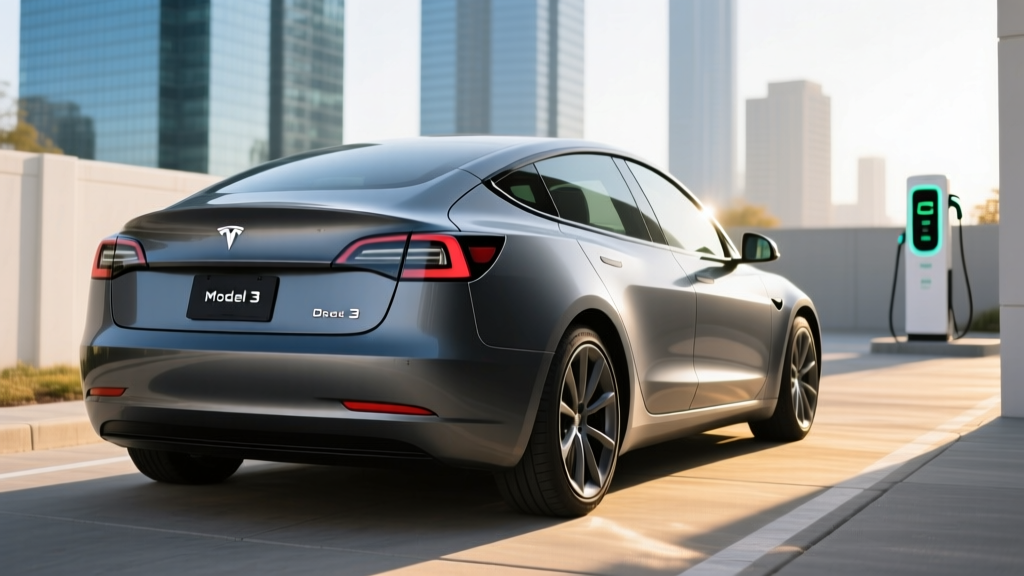
The Tesla Model 3 Rear-Wheel Drive remains the entry point into Tesla's lineup and one of the most efficient electric sedans on the market. With the refreshed "Highland" architecture now fully established for the 2026 model year, the RWD variant delivers an EPA-estimated 363 miles of range, a lithium iron phosphate (LFP) battery designed for longevity, and access to the Supercharger network — all starting under $39,000 before incentives. But how does it stack up when you look past the sticker and into real-world driving, charging curves, and ownership economics?
This review breaks down every number that matters: range under highway and cold-weather conditions, actual DC fast-charging behavior, home charging logistics, and the specific §30D tax credit rules that determine whether you'll pay $38,990 or closer to $31,490.
Quick Verdict: Who the Model 3 RWD Is For
The Model 3 Rear-Wheel Drive is best suited for commuters and moderate-mileage drivers who prioritize efficiency, low running costs, and reliable DC fast-charging infrastructure over all-wheel-drive traction or sub-4-second acceleration. It's a strong pick for solo drivers or couples without heavy cargo or towing needs. If you live in a mild-to-moderate climate and can charge at home, this trim offers arguably the best cost-per-mile-of-range value in the EV sedan segment.
Choose the Model 3 RWD if: You want maximum range per dollar, commute under 80 miles round-trip, live in a region with mild winters, and value Supercharger access for road trips.
Look at the Long Range AWD instead if: You need all-weather traction, regularly drive in sub-20°F conditions, want dual-motor performance, or need 30+ additional miles of buffer range.
Range, Efficiency, and Real-World Expectations
The 2026 Tesla Model 3 Rear-Wheel Drive carries an EPA-estimated 363 miles of range on its 60 kWh (usable) LFP battery pack. That figure places it among the most range-efficient vehicles in its price class, achieving approximately 132 MPGe combined (25 kWh/100 mi) according to fueleconomy.gov.
EPA Range: 363 miles
Real-World Highway (70-80 mph): Expect approximately 290–320 miles. The Model 3's aerodynamic efficiency (0.219 Cd) helps, but sustained highway speeds consume more energy than the EPA mixed cycle suggests.
Cold Weather (below 30°F): Plan for 220–270 miles depending on cabin heating demands and whether you precondition. LFP chemistry is slightly more resistant to cold-induced capacity loss than NMC, but resistance still rises meaningfully below freezing.
City/Commuter Driving: 340–363 miles is achievable with regenerative braking and lower average speeds.
The key advantage of the LFP pack here isn't just range — it's the ability to charge to 100% daily without accelerated degradation concerns. Tesla explicitly recommends periodic 100% charges for LFP vehicles to maintain battery calibration, unlike NMC packs where 80% daily limits are preferred.
Battery Chemistry and Longevity
| Specification | Detail |
|---|---|
| Battery Chemistry | LFP (Lithium Iron Phosphate) |
| Usable Capacity | ~60 kWh |
| Gross Capacity | ~66 kWh |
| Drivetrain | Rear-Wheel Drive (single motor) |
| Motor Type | Permanent magnet synchronous |
| Horsepower | 271 hp |
| Torque | 317 lb-ft |
| 0–60 mph | 5.8 seconds |
| Top Speed | 125 mph |
LFP chemistry trades some energy density for dramatically improved cycle life and thermal stability. Where NMC packs typically show 10–15% degradation over 150,000 miles, LFP packs have demonstrated under 10% degradation at 200,000+ miles in fleet data. The practical upshot: the Model 3 RWD's battery is likely to outlast the vehicle's economic life for most first owners.
Tesla backs the battery and drive unit with an 8-year / 100,000-mile warranty, guaranteeing a minimum of 70% capacity retention over that period. The limited vehicle warranty covers 4 years / 50,000 miles.
Charging Speed: DC Fast, Level 2, and the Curve Reality
Charging is where the Model 3 RWD's LFP pack shows both strengths and limitations. The peak DC fast-charge rate is 170 kW, lower than the Long Range AWD's 250 kW capability. Here's what that means in practice:
| Charging Method | Power | Speed / Time |
|---|---|---|
| DC Fast Charge (peak) | 170 kW | 10–80% in ~25 minutes |
| DC Fast Charge (sustained avg) | ~110–130 kW | 10–80% real-world avg |
| Level 2 (home, 48A / 11.5 kW) | 11.5 kW | ~44 mi/hr added; 0–100% in ~5.5 hrs |
| Level 2 (standard 32A / 7.7 kW) | 7.7 kW | ~30 mi/hr added; 0–100% in ~8 hrs |
| Level 1 (120V / 12A) | 1.4 kW | ~5 mi/hr added; emergency/trickle only |
The 10–80% DC charge takes approximately 25 minutes under ideal conditions (warm battery, V3/V4 Supercharger). However, the LFP charge curve is relatively flat through the mid-range before tapering sharply above 80%. On road trips, charging from 10% to 60% is brisk — it's the final 20% where you'll notice the slowdown. Strategy: charge to 60–70% and move on unless you need the full range for the next leg.
At home, the Model 3 RWD accepts up to 11.5 kW on Level 2 (48 amps on a 60-amp circuit). A Tesla Wall Connector installed on a dedicated 60A circuit will replenish the full 60 kWh pack in roughly 5.5 hours — more than enough for overnight charging. Most owners on a standard 40A/32A circuit will see a full charge in about 8 hours, which still covers daily needs comfortably.
Preconditioning matters. If you navigate to a Supercharger via the car's built-in navigation, the battery management system will warm the pack en route, enabling faster charge acceptance on arrival. Skipping this step — for example, pulling into a charger without nav routing — can add 5–8 minutes to your session in cold weather.
Pricing, Tax Credits, and Total Cost
| Item | Amount |
|---|---|
| Base MSRP (RWD trim) | $38,990 |
| Destination fee | $1,390 |
| As-tested (with common options: paint, wheels) | $41,000–$44,500 |
| Federal §30D tax credit (if eligible) | Up to $7,500 |
| Effective price after max credit | From ~$31,490 |
The Model 3 RWD qualifies at or below the $55,000 MSRP cap for sedans under IRS §30D rules. However, eligibility for the full $7,500 credit depends on three factors that change annually and vary by buyer:
- Buyer income caps: Modified AGI must not exceed $150,000 (single), $225,000 (head of household), or $300,000 (joint filers).
- MSRP cap: The vehicle's base MSRP plus commonly included options must stay under $55,000 for sedans. The Model 3 RWD clears this easily.
- Battery sourcing requirements: A percentage of critical minerals and battery components must be sourced from the U.S. or free-trade-agreement partners. Tesla's LFP cells (sourced from CATL in China) have faced scrutiny under these rules. Check the current-year eligibility at fueleconomy.gov before purchasing, as partial ($3,750) or full ($7,500) credit status can shift with regulatory updates.
- Point-of-sale transfer: As of 2024, you can transfer the credit to the dealer at purchase, reducing your out-of-pocket cost immediately rather than waiting for a tax refund. This applies to the Model 3 if purchased through Tesla's direct sales model.
Important: Consult a tax professional and verify current-year sourcing compliance on irs.gov before relying on the credit in your purchase decision. Rules have shifted year-over-year since 2023.
Interior, Cargo, and Technology
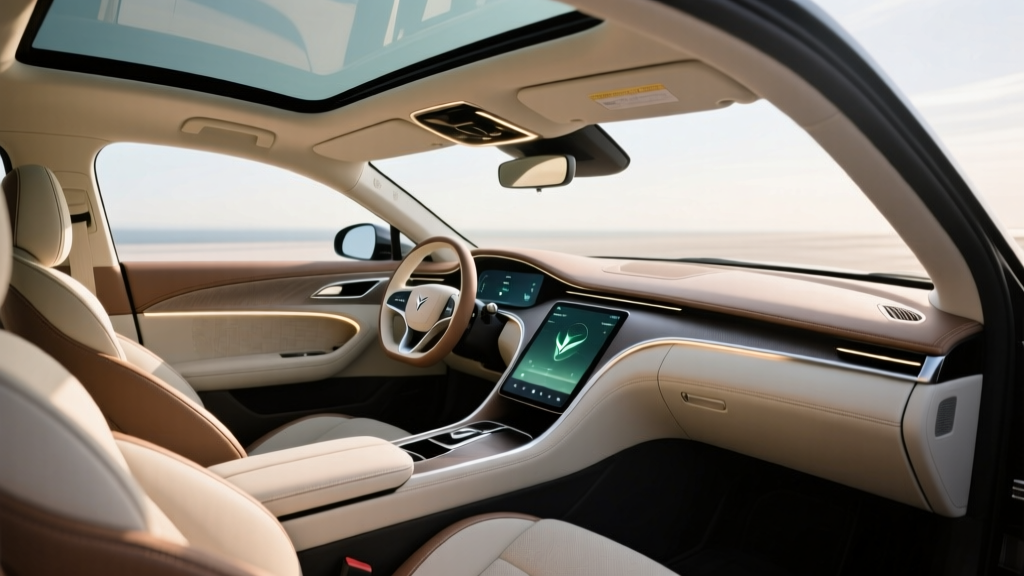
The Highland-refreshed Model 3 interior is a meaningful step up from pre-2024 models in materials and noise isolation. Acoustic glass, ventilated front seats, ambient lighting, and a rear 8-inch touchscreen are now standard on the RWD trim.
| Measurement | Specification |
|---|---|
| Front headroom | 40.3 in |
| Front legroom | 42.7 in |
| Rear headroom | 37.8 in |
| Rear legroom | 35.2 in |
| Cargo volume (trunk) | 23 cu ft |
| Frunk (front trunk) | 3.1 cu ft (limited in RWD due to components) |
| Total cargo | ~26 cu ft |
Rear legroom at 35.2 inches is adequate for average-height adults but tight for anyone over 6'2" on longer trips. The trunk is generous for a compact sedan, and the glass roof creates an airy feel, though it does reduce headroom slightly compared to competitors with conventional roofs.
Tech highlights:
- 15.4-inch center touchscreen with Tesla's latest UI and Google Maps-based navigation
- Over-the-air updates that add features post-purchase
- Tesla app with remote climate, charging status, Sentry Mode cameras, and location tracking
- Basic Autopilot (adaptive cruise + lane centering) included; Enhanced Autopilot ($6,000) and FSD Supervised ($8,000) are optional
- No Apple CarPlay or Android Auto — Tesla's native system is the only interface
Driver-Assist Clarification: Tesla Autopilot and FSD (Supervised) are SAE Level 2 driver-assistance systems. The driver must remain fully engaged, hands on the wheel (or providing torque input), and eyes on the road at all times. These are not self-driving systems. FSD Supervised can navigate complex intersections and city streets, but it makes errors and requires constant supervision.
Pros and Cons
Pros
- 363 miles EPA range at under $39K is exceptional value per mile of range
- LFP battery supports daily 100% charging with minimal degradation risk
- Supercharger network access — the most reliable public charging ecosystem in the U.S.
- Class-leading efficiency (132 MPGe / 25 kWh/100 mi)
- Strong OTA update track record adds features over time
- Low center of gravity, responsive handling for a commuter sedan
- Minimal maintenance costs (no oil changes, fewer brake replacements due to regen)
Cons
- 170 kW peak DC charge rate is slower than rivals (Hyundai Ioniq 6: 350 kW peak)
- Rear seat legroom is tight for taller passengers
- No Apple CarPlay/Android Auto — a dealbreaker for some buyers
- RWD only — no AWD option on this trim; winter traction depends entirely on tires
- Touchscreen-dependent controls (no physical buttons for climate, mirrors, or glovebox)
- FSD and Enhanced Autopilot are expensive add-ons with Level 2 limitations
- LFP battery sourcing may affect full $7,500 tax credit eligibility in some model years
How It Compares to Key Competitors
The Model 3 RWD's closest rivals include the Hyundai Ioniq 6 SE (361 mi EPA, 350 kW DC charging), the BMW i4 eDrive35 (301 mi, premium positioning), and the Polestar 2 Standard Range Single Motor (276 mi). Here's how the numbers stack up:
| Spec | Tesla Model 3 RWD | Hyundai Ioniq 6 SE | Polestar 2 Std Range |
|---|---|---|---|
| EPA Range | 363 mi | 361 mi | 276 mi |
| Battery (usable) | 60 kWh (LFP) | 77.4 kWh (NMC) | 69 kWh (NMC) |
| Peak DC Charge | 170 kW | 350 kW | 200 kW |
| 10–80% DC Time | ~25 min | ~18 min | ~26 min |
| 0–60 mph | 5.8 sec | 6.9 sec | 5.9 sec |
| Base MSRP | $38,990 | $42,500 | $45,900 |
| Efficiency | 132 MPGe | 140 MPGe | 107 MPGe |
The Ioniq 6 charges significantly faster on DC (a meaningful advantage on road trips) and offers slightly better efficiency, but costs more and lacks Supercharger-native access (though NACS adapters are available). The Polestar 2 offers a more traditional interior with physical controls but trails substantially in range and value. The Model 3 RWD's combination of range, price, and charging-network access remains difficult to beat for the cost-conscious buyer.
Ownership Costs and Safety
Over five years, the Model 3 RWD's total cost of ownership benefits from low fueling costs (approximately $550–$700/year for electricity at 12,000 miles, depending on local rates) and minimal scheduled maintenance. Insurance premiums, however, tend to run 15–25% higher than comparable gas sedans due to repair-cost data — budget $1,800–$2,400/year depending on your profile and state.
The Model 3 earned the IIHS Top Safety Pick+ rating and a 5-star overall rating from NHTSA. Standard active safety includes automatic emergency braking, blind-spot monitoring, lane departure warning, and rear cross-traffic alert.
Frequently Asked Questions
What is the real-world range of the Tesla Model 3 Rear-Wheel Drive?
The EPA estimates 363 miles. In real-world highway driving at 70–80 mph, expect 290–320 miles. In cold weather below 30°F, range drops to approximately 220–270 miles depending on heating use and preconditioning. City driving with regenerative braking can approach or match the EPA figure.
How fast does the Model 3 RWD charge at home and on DC fast chargers?
On a DC fast charger (Supercharger V3/V4), the peak rate is 170 kW, with a 10–80% charge taking about 25 minutes under ideal conditions. At home on a 48-amp Level 2 charger (11.5 kW), you'll add roughly 44 miles of range per hour and fully charge in about 5.5 hours. A standard 32-amp Level 2 circuit takes about 8 hours for a full charge.
Does the Tesla Model 3 RWD qualify for the $7,500 federal EV tax credit?
The Model 3 RWD is under the $55,000 MSRP sedan cap, making it structurally eligible. However, the full $7,500 credit depends on battery critical-mineral and component sourcing requirements that have been in flux for LFP cells sourced from China. Buyers must also meet income caps ($150K single / $300K joint). Verify current-year eligibility at fueleconomy.gov and consult a tax professional before purchasing. The credit can be transferred at point of sale to reduce your purchase price directly.
Is the Model 3 RWD worth buying over the Long Range AWD?
If you don't need all-wheel drive, the RWD saves $8,000–$10,000 and still delivers 363 miles of range with an LFP battery that may outlast the Long Range's NMC pack. The Long Range adds AWD, a faster 250 kW charge rate, and quicker acceleration (4.2 sec 0–60), but for most commuters in mild climates, the RWD is the smarter financial choice.
Can I charge the Model 3 RWD to 100% every day?
Yes. Tesla specifically recommends charging LFP batteries to 100% at least once per week to maintain accurate state-of-charge calibration. Unlike NMC batteries, LFP chemistry tolerates full charges without significant accelerated degradation. Daily 100% charging is fine for this trim.
How does the Model 3 RWD handle in winter and snow?
Rear-wheel drive with traction control is manageable in light snow with proper winter tires, but it lacks the inherent traction advantage of AWD. If you regularly drive in heavy snow or icy conditions, the Long Range AWD is a better choice. The LFP battery's thermal management system and heat pump (standard) help preserve range in cold weather, but expect 25–35% range reduction in sustained sub-freezing temperatures.
What are the biggest drawbacks of the Model 3 RWD?
The 170 kW DC charge rate is slower than competitors like the Ioniq 6 (350 kW). The rear seat is tight for tall passengers. There's no Apple CarPlay or Android Auto. All vehicle controls run through the touchscreen, which some drivers find distracting. And the LFP battery's Chinese sourcing may limit tax credit eligibility depending on current-year rules.
The 2026 Tesla Model 3 Rear-Wheel Drive is a spec-driven buyer's EV: it wins on range-per-dollar, efficiency, and charging-network access. It loses points on DC charge speed, rear-seat space, and the touchscreen-only interface. For the right use case — commuting, moderate road trips, home charging, mild climate — it remains one of the most rational electric vehicle purchases available.