Quick Verdict: The Tesla Model 3's Range and Longevity, By the Numbers
If you're searching for how many miles a Tesla Model 3 can last, you're asking two related but distinct questions: how far it drives on a single charge, and how long the battery and vehicle survive over years of ownership. The 2026 Tesla Model 3 answers both convincingly, but the real-world numbers differ from the EPA sticker in ways every buyer should understand before signing a purchase agreement.
The current-generation Model 3 (refreshed for the 2024 model year and carried into 2026) offers up to 363 miles of EPA-estimated range in Long Range AWD trim, peaks at 250 kW on DC fast chargers, and carries a battery warranty guaranteeing at least 70% capacity retention over 8 years or 120,000 miles. With proper care, Tesla's LFP and NMC battery packs are engineered to outlast 200,000+ miles before significant degradation — though actual longevity depends heavily on your charging habits, climate, and usage patterns.
Below, we break down every spec that determines how far a Model 3 goes per charge, how quickly it recovers range, what range loss looks like over time, and whether it still earns its spot against rivals like the Hyundai Ioniq 6, BMW i4, and Chevrolet Equinox EV in 2026.
2026 Tesla Model 3 Full Spec Sheet
| Spec | RWD (Base) | Long Range AWD | Long Range AWD (18" Aero) | Performance AWD |
|---|---|---|---|---|
| EPA Range | 272 mi | 341 mi | 363 mi | 315 mi |
| Battery (usable, est.) | ~57 kWh (LFP) | ~75 kWh (NMC) | ~75 kWh (NMC) | ~75 kWh (NMC) |
| Drivetrain | RWD, single motor | AWD, dual motor | AWD, dual motor | AWD, dual motor |
| Horsepower | 271 hp | 346 hp | 346 hp | ~510 hp |
| 0-60 mph | 5.8 sec | 4.2 sec | 4.2 sec | 2.9 sec |
| MPGe (combined) | 132 MPGe | 131 MPGe | 134 MPGe | 118 MPGe |
| Efficiency (kWh/100 mi) | 25 | 26 | 25 | 28 |
| Max DC Fast Charge | 170 kW | 250 kW | 250 kW | 250 kW |
| 10-80% DCFC Time | ~25 min | ~22 min | ~22 min | ~22 min |
| Level 2 Home Charging | 11.5 kW (~44 mi/hr) | 11.5 kW (~44 mi/hr) | 11.5 kW (~44 mi/hr) | 11.5 kW (~44 mi/hr) |
| Base MSRP | $38,990 | $44,990 | $44,990 | $52,990 |
| Battery Warranty | 8 yr / 100,000 mi | 8 yr / 120,000 mi | 8 yr / 120,000 mi | 8 yr / 120,000 mi |
Sources: EPA Fuel Economy, Tesla Model 3 Specifications. Pricing reflects 2025-2026 model year MSRP before destination fees. Specs subject to change; verify at point of purchase.
Real-World Range: What the EPA Sticker Doesn't Tell You
EPA sticker: 363 miles (Long Range, 18" wheels)
Real-world highway (70-80 mph, mild weather): ~290-320 miles
Real-world mixed city/highway (55-70 mph): ~320-350 miles
Cold weather (below 32°F) mixed driving: ~240-290 miles (20-30% reduction)
Highway driving at sustained speeds above 70 mph increases aerodynamic drag, which is the single largest efficiency penalty for EVs. Cold weather reduces battery chemical efficiency and increases cabin heating load, even with the Model 3's heat pump.
The EPA's test cycle includes substantial low-speed city driving where regenerative braking recovers energy. On a pure highway road trip at 75-80 mph, expect the Long Range AWD to deliver closer to 290-320 miles before the battery reaches 5% State of Charge (SoC). The RWD model, with its smaller ~57 kWh LFP battery, typically nets 220-245 miles in real-world highway conditions.
The Model 3's heat pump — standard on all trims since the Highland refresh — mitigates cold-weather losses compared to older EVs using resistive PTC heaters, but physics still applies. In sub-freezing temperatures, precondition the battery while plugged in to minimize range loss. Tesla's navigation system automatically warms the battery pack when you route to a Supercharger, which improves charging speed and recovers some efficiency.
For context, the Model 3 Long Range's 25 kWh/100 mi efficiency rating (per the EPA) is among the best in its class. The Hyundai Ioniq 6 SE Long Range achieves 24 kWh/100 mi, while the BMW i4 eDrive40 uses about 28 kWh/100 mi. At a national average electricity price of $0.17/kWh, the Model 3 Long Range costs roughly $4.25 per 100 miles to fuel at home — about one-quarter the cost of a 30 MPG gas car at $3.50/gallon.
Charging Speed and Infrastructure: DC Fast, Level 2, and Supercharger Access
Charging speed determines how practical the Model 3 is for road trips and daily life. Here's what each charging level delivers:
| Charging Level | Power (kW) | Miles of Range Added per Hour | Notes |
|---|---|---|---|
| Level 1 (120V household) | ~1.4 kW | ~3-5 mi/hr | Emergency/top-off only; a full charge takes 40+ hours |
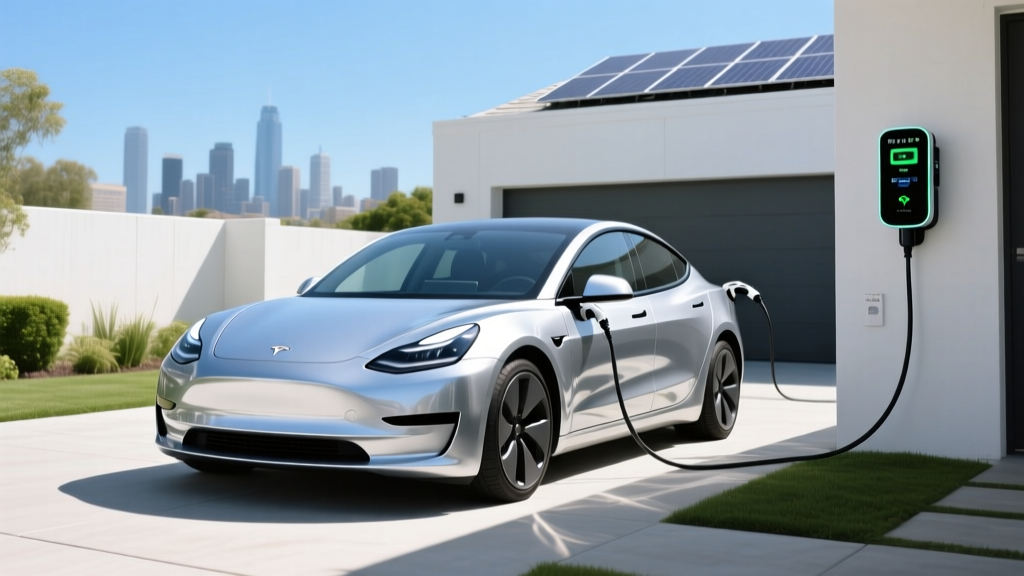
| Level 2 (240V home/public) | Up to 11.5 kW | ~44 mi/hr | Full overnight charge in 7-9 hours; standard for daily use |
| DC Fast Charge (Long Range/Performance) | Up to 250 kW | ~175 mi in 15 min | Peak rate sustained only between 10-30% SoC; tapers significantly above 80% |
| DC Fast Charge (RWD LFP) | Up to 170 kW | ~130 mi in 15 min | LFP chemistry limits peak charge rate; still adequate for road trips |
A critical concept here is the charge curve. The 250 kW peak on the Long Range and Performance truns is not sustained across the entire session. The battery management system (BMS) allows maximum charge rate only when the battery is at a low State of Charge (typically 10-30%) and at optimal temperature. As SoC climbs past 50%, the rate tapers to ~100 kW, and above 80% it drops further to ~50 kW or less. This is why manufacturers quote 10-80% times — the final 20% takes almost as long as the first 70%.
For home charging, a Level 2 wall connector on a 60-amp circuit delivers the full 11.5 kW, adding roughly 44 miles of range per hour. A typical overnight session of 8 hours restores ~350 miles — more than enough to refill any Model 3 trim from near-empty. Installation costs for a 240V/60A circuit typically run $800-$2,000 depending on panel proximity and local permit fees. If your electrical panel is at capacity, a panel upgrade to 200A can add $1,500-$3,000.
Tesla's Supercharger network remains the most reliable DC fast-charging ecosystem in the U.S., with over 6,000 V3/V4 stalls (250-350 kW) nationwide. The Model 3 uses the NACS (North American Charging Standard) connector natively. With adapters, you can also access Electrify America and other CCS-equipped networks, though charging speeds may be limited by adapter overhead.
Battery Longevity: How Many Total Miles Before Degradation?
When owners ask "how many miles can a Tesla Model 3 last," they're often really asking about battery lifespan. Here's what the data shows:
Battery chemistry matters. The RWD trim uses an LFP (lithium iron phosphate) battery, while the Long Range and Performance trims use NMC (nickel manganese cobalt). These chemistries have different longevity profiles:
| Factor | LFP (RWD Trim) | NMC (Long Range / Performance) |
|---|---|---|
| Energy density | Lower (smaller pack, less range) | Higher (more range per kg) |
| Cycle life | 3,000-5,000+ cycles | 1,500-2,500 cycles |
| Daily charging to 100% | Recommended by Tesla | Not recommended; 80% daily limit advised |
| Cold-weather performance | Slightly worse range retention | Better low-temp efficiency |
| Expected lifespan | 300,000-500,000+ mi (est.) | 200,000-350,000 mi (est.) |
| Degradation at 100k mi | ~5-8% loss | ~7-10% loss |
Tesla's own 2024 Impact Report (the most recent comprehensive data available) showed that Model 3 batteries retained approximately 85% of their original capacity after 150,000 miles. That translates to a Long Range AWD still delivering ~290 miles of range at that mileage — still very usable.
The battery warranty provides a safety net: Tesla guarantees the battery will retain at least 70% of its original capacity for 8 years or 100,000 miles (RWD) and 8 years or 120,000 miles (Long Range/Performance). If degradation exceeds 30% within the warranty window, Tesla replaces or refurbishes the pack at no cost. Out-of-warranty replacement costs for a Model 3 battery currently run $12,000-$16,000 at Tesla Service Centers, though third-party options are emerging at lower prices.
Maximizing battery life: For NMC owners, keep daily charging at 80% and only charge to 100% before road trips. For LFP owners, Tesla recommends charging to 100% at least once per week to help the BMS calibrate. Avoid leaving the car at very low SoC (below 10%) for extended periods, and minimize repeated DC fast charging if you have reliable Level 2 access at home.
Performance, Interior, and Daily Livability
The Model 3's performance credentials are well-established. The Performance trim's 2.9-second 0-60 mph time puts it in sports-car territory, while the base RWD's 5.8 seconds is brisk for daily commuting. All trims benefit from a low center of gravity (battery pack under the floor), which gives the Model 3 composed handling that outperforms its sedan rivals in cornering confidence.
The refreshed "Highland" interior brought meaningful improvements over the pre-2024 Model 3:
- Cargo space: 23 cu ft trunk + 3.1 cu ft frunk (front trunk), totaling 26.1 cu ft — competitive with the BMW i4 (23.2 cu ft, no frunk) but less than the Hyundai Ioniq 6 (12.3 cu ft trunk + 0.5 cu ft frunk, though the Ioniq 6 has a liftback design that aids loading).
- Rear legroom: 35.3 inches — adequate for adults under 6 feet, though taller passengers will find the sloping roofline limiting on longer trips.
- Front headroom: 40.3 inches — generous for most drivers.
- Infotainment: 15.4-inch center touchscreen with no physical buttons, ventilated front seats, ambient lighting, and an 8-inch rear passenger screen. No Apple CarPlay or Android Auto — Tesla's proprietary system handles everything including navigation, media, and vehicle controls.
- Ride quality: The Highland refresh significantly improved ride comfort with new suspension tuning and acoustic glass, addressing the most common complaint about earlier Model 3s.
The minimalist interior is polarizing. There are no physical stalks for turn signals (they're buttons on the steering wheel), no instrument cluster behind the wheel, and the gear selector is on the touchscreen. Most owners adapt within a week, but test-drive before committing if you're transitioning from a traditional vehicle.
Pricing, Tax Credits, and Total Cost of Ownership
The Model 3 may qualify for up to $7,500 in federal tax credits, but eligibility depends on multiple factors that change annually:
- MSRP cap: Sedans must be priced at or below $55,000 (the RWD and Long Range qualify; the Performance at $52,990 base also qualifies before options push it over).
- Buyer income cap: Modified AGI must not exceed $150,000 (single), $225,000 (head of household), or $300,000 (joint filers).
- Battery sourcing: Critical minerals and battery components must meet escalating domestic-content thresholds. Tesla sources LFP cells from CATL (China) for the RWD, which may disqualify that trim from the full credit depending on current-year FEOC (Foreign Entity of Concern) rules. The Long Range/Performance NMC packs, manufactured at Tesla's Nevada Gigafactory, are more likely to qualify for the full $7,500.
- Point-of-sale transfer: As of 2024, buyers can transfer the credit to the dealer at purchase, reducing the out-of-pocket price immediately rather than waiting for a tax refund.
Always verify current eligibility on IRS.gov and consult a tax professional. Rules and sourcing requirements are subject to legislative changes.
| Trim | Base MSRP | Destination Fee | Est. Federal Credit | Effective Price (if eligible) |
|---|---|---|---|---|
| RWD | $38,990 | $1,390 | $3,750-$7,500* | $32,880-$36,630 |
| Long Range AWD | $44,990 | $1,390 | $7,500 | $38,880 |
| Performance AWD | $52,990 | $1,390 | $7,500** | $46,880 |
*RWD credit amount depends on LFP battery sourcing compliance with FEOC rules. **Performance trim may exceed $55K MSRP cap with options, eliminating credit eligibility. Verify at point of sale.
5-year ownership cost perspective: According to AAA and Department of Energy data, the average EV owner saves $4,000-$6,000 on fuel over 5 years compared to a comparable gas sedan getting 30 MPG. Electricity at $0.17/kWh (national average) costs about $0.043/mile in the Model 3 Long Range, versus $0.117/mile for gasoline at $3.50/gallon. Maintenance savings are significant too — no oil changes, no transmission fluid, no spark plugs, and regenerative braking extends pad life to 100,000+ miles in typical driving.
Insurance is the offset: Model 3 premiums average 15-25% higher than comparable gas sedans due to repair costs and Tesla's direct-repair network. Budget $1,800-$2,400/year depending on your state and driving record.
Autopilot and Smart Driving Features
Tesla Autopilot and Full Self-Driving (Supervised) are Level 2 driver-assistance systems under the SAE International classification. This means the system can control steering, acceleration, and braking simultaneously, but the driver must remain fully engaged, hands on or near the wheel, and eyes on the road at all times. The car is not driving itself. You are legally and practically responsible for every action the vehicle takes.
Only Level 4 systems (e.g., Waymo's driverless robotaxi service in select cities) operate without a human driver. No consumer vehicle sold in 2026 is Level 4 or Level 5.
The Model 3 comes standard with Basic Autopilot, which includes Traffic-Aware Cruise Control and Autosteer (lane centering) on divided highways. The optional Full Self-Driving (Supervised) package ($8,000 one-time or $99/month subscription as of early 2026) adds Navigate on Autopilot (automatic highway interchanges), Auto Lane Change, Autopark, Summon, and traffic light/stop sign recognition.
In practice, FSD Supervised handles most highway scenarios competently but requires constant vigilance. City-street performance has improved significantly through Tesla's neural-network-based "end-to-end" software architecture, but it still makes errors at complex intersections, construction zones, and unprotected left turns. It is a convenience feature, not a replacement for an attentive driver. NHTSA continues to monitor Tesla's Autopilot/FSD safety record through its Standing General Order on crash reporting.
Pros and Cons: The Honest Assessment
Pros
- Best-in-class efficiency (25 kWh/100 mi) translates to lower charging costs and more range per kWh
- Access to Tesla Supercharger network — the most reliable DC fast-charging ecosystem in the U.S.
- Over-the-air (OTA) updates continuously add features and improve performance post-purchase
- LFP battery option (RWD) offers exceptional cycle life and can be charged to 100% daily without degradation concerns
- Strong resale value relative to most EV competitors
- Highland refresh dramatically improved ride quality and cabin noise isolation
- Comprehensive active safety suite standard (AEB, blind-spot monitoring, lane departure prevention)
Cons
- No Apple CarPlay or Android Auto — you must use Tesla's proprietary infotainment
- Turn signal buttons on steering wheel (no stalks) require adaptation and frustrate some drivers
- Rear seat space is tighter than competitors like the Hyundai Ioniq 6 or BMW i4
- Higher insurance premiums than comparable gas or EV sedans
- RWD LFP battery has reduced cold-weather range and slower DC fast charging
- FSD (Supervised) costs $8,000 extra and remains a Level 2 system — not autonomous
- Tesla Service Center wait times can be long in some metro areas
- No heads-up display or traditional instrument cluster
Who Should Buy the 2026 Tesla Model 3?
Decision Framework
Choose the Model 3 RWD if: You're a budget-conscious commuter with home charging access, your daily round-trip is under 80 miles, you live in a mild climate, and you want the lowest entry price with maximum battery cycle life (LFP).
Choose the Model 3 Long Range AWD if: You take regular road trips (200+ miles), live in a cold-weather state, want dual-motor traction in snow/rain, and need 300+ miles of real-world range to minimize charging stops. This is the best all-around trim for most buyers.
Choose the Model 3 Performance if: You prioritize acceleration and handling above all else and are willing to pay a premium (and sacrifice ~50 miles of range) for sub-3-second 0-60 times and track-capable braking.
Look elsewhere if: You need maximum rear-seat space for tall passengers or child seats (consider the Model Y or Ioniq 5), you want Apple CarPlay/Android Auto (consider the BMW i4 or Hyundai Ioniq 6), or you lack home charging access and your area has limited public charging infrastructure.
The Model 3's strongest competitive position in 2026 is the Long Range AWD at $44,990 before credits. At an effective price of ~$38,880 after the $7,500 federal credit, it undercuts the BMW i4 xDrive40 ($57,000+), matches the Hyundai Ioniq 6 SEL ($45,500) on range while beating it on charging infrastructure, and delivers better efficiency than nearly every competitor. The Chevrolet Equinox EV 3RS offers comparable range at a lower price but trails significantly on charging speed and driving dynamics.
Frequently Asked Questions
What is the real-world range of the Tesla Model 3?
The Long Range AWD delivers approximately 290-320 miles on the highway and 320-350 miles in mixed driving. The RWD delivers about 220-245 miles on the highway. Cold weather (below 32°F) reduces range by 20-30% across all trims.
How fast does the Tesla Model 3 charge at home and on the road?
At home on a Level 2 (240V) charger, the Model 3 adds about 44 miles of range per hour, with a full charge taking 7-9 hours. On a DC fast charger, the Long Range and Performance trims peak at 250 kW and charge from 10-80% in about 22 minutes. The RWD peaks at 170 kW with a 10-80% time of about 25 minutes.
Does the Tesla Model 3 qualify for the $7,500 federal EV tax credit?
The Long Range AWD and Performance trims are strong candidates for the full $7,500 credit, as their NMC batteries are manufactured domestically. The RWD's eligibility depends on whether its LFP battery (sourced from CATL) meets current-year FEOC critical-mineral requirements, which may limit it to a partial credit or none. All trims fall under the $55,000 MSRP cap for sedans, and buyer income must be below $150K (single) / $300K (joint). Verify on IRS.gov before purchasing.
How many total miles can the Tesla Model 3 battery last before replacement?
Based on Tesla's fleet data and independent analysis, the NMC batteries in Long Range/Performance trims typically retain 85% capacity at 150,000 miles and are expected to remain functional beyond 200,000-350,000 miles. The LFP battery in the RWD has an even longer cycle life, with estimates of 300,000-500,000+ miles. Tesla's warranty guarantees at least 70% capacity retention for 8 years/100,000-120,000 miles.
Is the Tesla Model 3 worth buying over the Hyundai Ioniq 6 or BMW i4?
The Model 3 Long Range wins on efficiency, Supercharger network access, and value after tax credits. The Ioniq 6 offers slightly better aerodynamics and a more traditional interior with physical controls. The BMW i4 provides a more premium cabin and superior rear-seat space but costs significantly more. If you prioritize charging infrastructure reliability and software features, the Model 3 remains the strongest choice. If you prefer CarPlay/Android Auto and a more conventional driving experience, the Ioniq 6 is the best alternative.
How much does it cost to charge a Tesla Model 3 at home vs. public chargers?
At home using the national average electricity rate of $0.17/kWh, a full charge of the Long Range (75 kWh) costs about $12.75. At a Tesla Supercharger, rates vary by location and time of day but average $0.30-$0.40/kWh, making a full charge $22.50-$30.00. Home charging is consistently 40-60% cheaper than public DC fast charging.