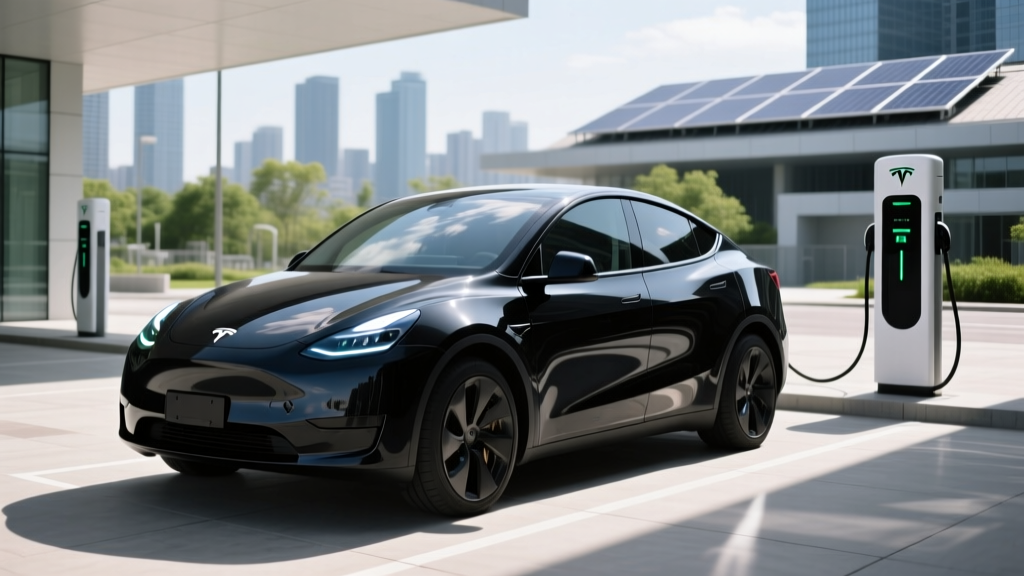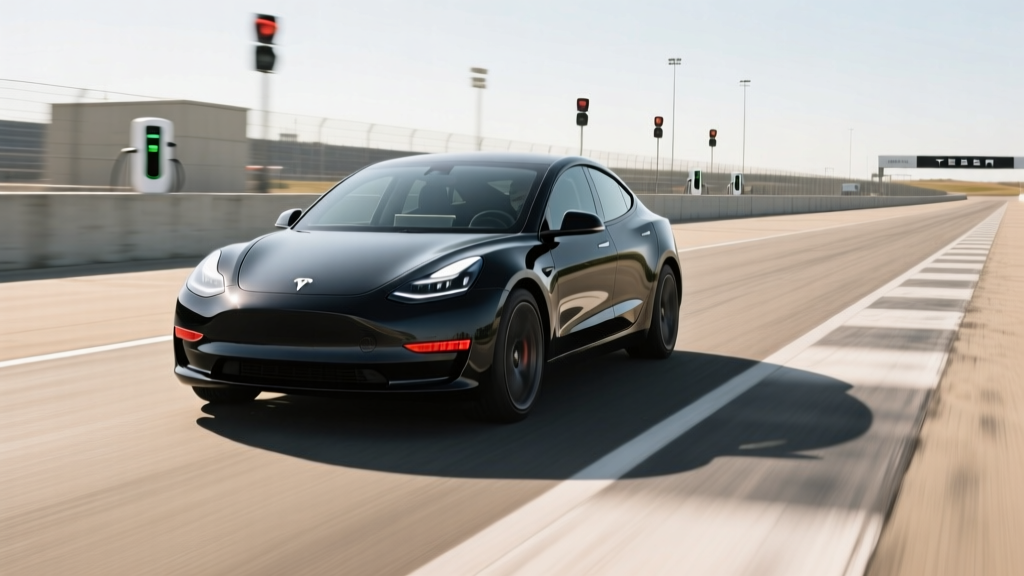
The refreshed Tesla Model 3 (internally dubbed "Highland" and carried into the 2025–2026 model years) is no longer just the entry point into Tesla's lineup — it's a legitimate performance sedan that punches well above its price class. But beyond the spec sheet, what does a Tesla Model 3 quarter mile run actually look like, and how does daily ownership stack up against rivals like the Hyundai Ioniq 6, BMW i4, and Polestar 2? We break down every number that matters.
Performance by the Numbers: Tesla Model 3 Quarter Mile and Acceleration
The 2026 Tesla Model 3 is offered in three trims, each with a distinct performance profile. The dual-motor variants deliver the kind of straight-line acceleration that used to require six-figure supercars, while the base RWD model is no slouch either.
| Trim | Drivetrain | Horsepower | 0-60 mph | Quarter Mile (est.) | Top Speed |
|---|---|---|---|---|---|
| Model 3 RWD | Rear-Wheel Drive | 271 hp | 5.8 sec | 14.4 sec @ 96 mph | 125 mph |
| Model 3 Long Range AWD | Dual-Motor AWD | 346 hp | 4.2 sec | 12.7 sec @ 112 mph | 125 mph |
| Model 3 Performance | Dual-Motor AWD | 510 hp | 2.9 sec | 11.3 sec @ 125 mph | 163 mph |
The Tesla Model 3 quarter mile times above are based on manufacturer data and independent testing from outlets like Car and Driver and Motor Trend. The Performance trim's 11.3-second run at 125 mph places it in the territory of a Porsche 911 Carrera S — at roughly one-third the price. Instant torque delivery (no gear shifts, no turbo lag) is what makes EV acceleration feel so violent off the line, and the Model 3 Performance exploits this fully.
The Long Range AWD strikes the best balance for most buyers: a 4.2-second 0-60 time is quicker than a BMW M340i, yet it carries the longest range of the lineup. The base RWD model's 5.8 seconds still out-accelerates most gas-powered compact sedans in its price bracket.
Range, Efficiency, and the Real-World Reality Check
EPA Estimates vs. What You'll Actually See
RWD: EPA 272 mi — Expect ~230–250 mi on highway trips at 70+ mph; ~190–210 mi in freezing weather with cabin heat.
Long Range AWD: EPA 341 mi — Expect ~285–310 mi highway; ~240–265 mi in sub-30°F conditions.
Performance: EPA 315 mi — Expect ~260–290 mi highway; ~220–245 mi in deep cold.
Highway driving at sustained speeds above 70 mph reduces range 10–15% vs. EPA. Cold weather (below 30°F) can reduce range 20–30% due to battery resistance and cabin heating demands. Preconditioning the battery while plugged in mitigates some cold-weather loss.
The Model 3 Long Range AWD achieves an EPA-estimated 134 MPGe combined, translating to roughly 25 kWh per 100 miles — among the most efficient vehicles in its class. The RWD model posts 132 MPGe combined, while the Performance trim drops to 119 MPGe due to its more aggressive power delivery and stickier tires.
Efficiency is where Tesla's engineering still shines. The heat pump (standard on all trims since the refresh) recovers waste heat from the powertrain to warm the cabin, reducing the winter range penalty compared to resistive-heater EVs. According to fueleconomy.gov, the Long Range AWD's 25 kWh/100mi combined figure beats the Hyundai Ioniq 6's 27 kWh/100mi and the BMW i4 eDrive40's 31 kWh/100mi.
Battery Chemistry, Capacity, and Long-Term Degradation
| Trim | Battery Capacity (usable) | Chemistry | Warranty |
|---|---|---|---|
| RWD | ~57.5 kWh | LFP (Lithium Iron Phosphate) | 8 yr / 100,000 mi (≥70% retention) |
| Long Range AWD | ~75 kWh | NMC (Nickel Manganese Cobalt) | 8 yr / 120,000 mi (≥70% retention) |
| Performance | ~75 kWh | NMC (Nickel Manganese Cobalt) | 8 yr / 120,000 mi (≥70% retention) |
The chemistry split matters more than most buyers realize. The RWD's LFP battery offers a longer cycle life and can (and should) be charged to 100% regularly — Tesla recommends this in the vehicle's settings. LFP is also less prone to thermal runaway and doesn't rely on cobalt, which simplifies supply-chain ethics. The trade-off: LFP has lower energy density (hence the smaller capacity and shorter range) and performs worse in extreme cold.
The Long Range and Performance trims use NMC chemistry, which packs more energy into a similar physical footprint, enabling the 341-mile EPA range. Tesla recommends daily charging to 80% for NMC batteries, only going to 100% before long trips. Over a 150,000-mile ownership cycle, NMC batteries typically degrade 10–15%, while LFP packs often lose only 5–10% based on fleet data from sources like Recurrent Auto.
Charging Speed: DC Fast Charging and Home Level 2
| Charging Method | RWD (LFP) | Long Range / Performance (NMC) |
|---|---|---|
| Max DC Fast Charge | 170 kW peak | 250 kW peak |
| 10–80% DCFC Time | ~25 minutes | ~20 minutes |
| Level 2 (240V / 48A) | 11.5 kW (~37 mi/hr) | 11.5 kW (~44 mi/hr) |
| Level 1 (120V / 12A) | ~1.4 kW (~4 mi/hr) | ~1.4 kW (~5 mi/hr) |
| Connector | NACS (native Tesla); CCS via adapter | |
The Model 3's charging advantage isn't just peak speed — it's access. Tesla's Supercharger network remains the most reliable and widespread DC fast-charging infrastructure in North America, with over 6,500 stalls in the U.S. alone as of early 2026. The Long Range and Performance trims peak at 250 kW at V3 Superchargers, though sustained rates taper significantly above 60% state of charge (SoC). Expect the average charging rate across a 10–80% session to land around 140–160 kW, not the headline 250 kW figure.
For home charging, a Tesla Wall Connector on a 60-amp circuit delivers up to 11.5 kW (48 amps continuous), adding roughly 37–44 miles of range per hour of charging. An overnight 8-hour session fully replenishes any Model 3 variant. Installation costs for a dedicated 240V/60A circuit typically run $800–$2,000 depending on panel proximity and local permitting, according to industry electrician surveys.
The RWD's lower 170 kW DC peak is a meaningful disadvantage on road trips — you'll spend about 5 extra minutes per fast-charge stop compared to the Long Range. For buyers who road-trip more than a few times per year, this alone justifies the Long Range upgrade.
Pricing, Trims, and Federal Tax Credit Eligibility
| Trim | Base MSRP | Est. After §30D Credit* | Federal Credit Eligible |
|---|---|---|---|
| RWD | $38,990 | ~$31,490 | Yes (up to $7,500) |
| Long Range AWD | $47,740 | ~$40,240 | Yes (up to $7,500) |
| Performance | $54,990 | ~$47,490 | Yes (up to $7,500) |
*Federal tax credit eligibility depends on multiple factors under IRS §30D rules. As of 2026:
- MSRP Cap: Sedans must be under $55,000 MSRP. The RWD and Long Range qualify; the Performance trim at $54,990 barely clears this cap (options like FSD or premium paint can push it over — verify your exact build).
- Income Cap: Modified adjusted gross income must not exceed $150,000 (single), $225,000 (head of household), or $300,000 (joint filers).
- Battery Sourcing: The full $7,500 requires meeting both critical-mineral and battery-component sourcing requirements. Partial credits ($3,750) apply if only one requirement is met. Tesla's shifting supply chain means eligibility can change — always confirm via the IRS portal at the time of purchase.
- Point-of-Sale Transfer: Buyers can transfer the credit to the dealer at purchase, reducing the purchase price directly rather than waiting for a tax refund.
Prices above exclude the $1,390 destination fee. Common add-ons like Ultra Red paint ($2,500) and 19-inch Nova wheels ($1,500) can push the Long Range near the $55,000 MSRP cap — a trap that eliminates credit eligibility. Build carefully.
Interior, Cargo, Tech, and Daily Livability
The refreshed Model 3 interior is markedly improved over the pre-2024 version. Ventilated front seats, ambient lighting, rear-seat ventilation, and significantly improved sound insulation (Tesla claims a 30% reduction in road noise) transform the cabin experience. The 15.4-inch center touchscreen remains the command center for virtually all vehicle functions, including climate controls — a polarizing design choice that still frustrates some drivers who prefer physical buttons.
Cargo and passenger dimensions:
- Trunk: 21.0 cu ft (rear seats up) / 56.1 cu ft (rear seats folded)
- Front trunk (frunk): 3.1 cu ft
- Rear legroom: 35.2 inches
- Front headroom: 40.3 inches
- Seating capacity: 5 passengers
The 21 cu ft trunk beats the BMW i4's 16.6 cu ft but trails the Hyundai Ioniq 6's 12.3 cu ft trunk (though the Ioniq 6's liftback design offers more practical total volume with seats folded). The Model 3's frunk adds useful space for charging cables or a small bag — something the i4 and Polestar 2 lack entirely.
Tech highlights:
- Tesla Autopilot (SAE Level 2) standard — adaptive cruise + lane centering
- Full Self-Driving (Supervised) available as a $8,000 option or $99/month subscription
- Over-the-air updates continuously add features
- Sentry Mode dashcam recording, Dog Mode climate, and theater mode for parked streaming
- Native NACS port — no adapter needed at Superchargers; CCS adapter included for third-party networks
Tesla Autopilot and FSD (Supervised) are SAE Level 2 driver-assistance systems. The driver must remain fully attentive, hands on or near the wheel, and ready to take over at any moment. These are not autonomous or self-driving systems. Only Level 4 services like Waymo operate without a human driver. See SAE J3016 for the full automation taxonomy.
Pros, Cons, and the Verdict vs. Competitors
Pros
- Class-leading Supercharger network access (NACS native)
- Performance trim: supercar quarter mile at sedan pricing
- Best-in-class efficiency (kWh/100mi) for Long Range
- OTA updates keep the car improving post-purchase
- Strong resale value relative to EV market average
- Improved cabin quietness and seat comfort post-refresh
Cons
- No physical buttons — all controls via touchscreen
- Rear visibility compromised by sloping roofline
- RWD LFP battery slower to DC fast-charge (170 kW peak)
- FSD subscription cost adds up; still requires full driver attention
- Insurance premiums 15–25% above segment average
- Turn-signal stalks removed — steering-wheel buttons instead
Who is the Model 3 best for? The Long Range AWD is the sweet spot for commuters who road-trip 2–4 times per year and want Supercharger reliability. The Performance trim suits driving enthusiasts who want sub-3-second sprints without buying a second car. The RWD works well for budget-conscious urban commuters who charge at home and rarely exceed 200 miles in a day.
Who should look elsewhere? Families needing easy car-seat access should consider the Model Y's taller roofline and wider rear doors. Buyers who want physical controls and a more traditional cockpit should test the Hyundai Ioniq 6 or BMW i4. Those in extreme-cold climates (sustained sub-zero temperatures) may prefer an NMC-based Long Range over the LFP RWD, or consider a PHEV for winter flexibility.
Frequently Asked Questions
What is the Tesla Model 3 quarter mile time?
The 2026 Tesla Model 3 Performance runs the quarter mile in approximately 11.3 seconds at 125 mph. The Long Range AWD achieves roughly 12.7 seconds at 112 mph, and the base RWD posts about 14.4 seconds at 96 mph. These figures are competitive with sports sedans costing significantly more, thanks to instant electric torque delivery.
What is the real-world range of the Tesla Model 3?
The EPA rates the Long Range AWD at 341 miles, but real-world highway driving at 70+ mph typically yields 285–310 miles. In freezing weather, expect 240–265 miles. The RWD's 272-mile EPA rating translates to roughly 230–250 miles on the highway and 190–210 miles in deep cold.
How fast does the Model 3 charge at home and on the road?
On a home Level 2 charger (240V/48A), all Model 3 trims charge at up to 11.5 kW, adding 37–44 miles of range per hour. At a Tesla V3 Supercharger, the Long Range and Performance peak at 250 kW (10–80% in ~20 minutes), while the RWD peaks at 170 kW (~25 minutes for 10–80%).
Does the Tesla Model 3 qualify for the federal EV tax credit?
The RWD ($38,990) and Long Range AWD ($47,740) qualify for up to $7,500 under IRS §30D, provided the buyer meets income caps ($150K single / $300K joint) and the vehicle meets battery-sourcing requirements. The Performance trim at $54,990 MSRP is just under the $55,000 sedan cap but can exceed it with options — verify before ordering. Check current eligibility at fueleconomy.gov.
Is the Tesla Model 3 worth buying over the Hyundai Ioniq 6 or BMW i4?
The Model 3 wins on charging infrastructure (Supercharger network), efficiency (kWh/100mi), and straight-line performance per dollar. The Ioniq 6 offers a more conventional interior with physical controls and comparable range at a lower price, but its non-Tesla charging network experience is less reliable. The BMW i4 provides a more premium, driver-focused cockpit but at a significant price premium and lower range. For buyers prioritizing road-trip charging ease and tech, the Model 3 remains the default pick.