Quick Verdict: Still the Benchmark Sports Sedan EV
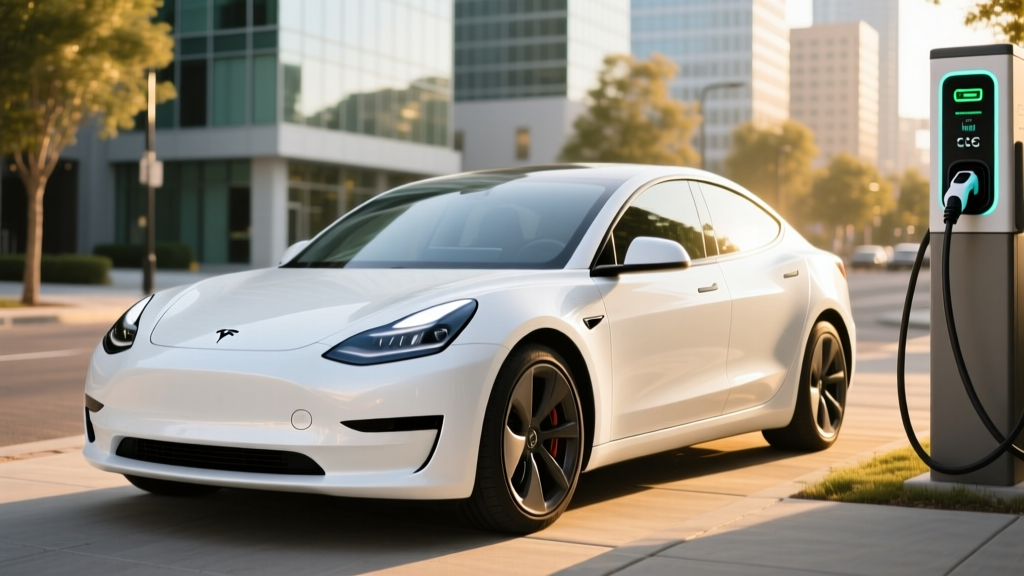
The Tesla Model 3 Performance (Highland refresh, continuing into the 2026 model year) remains the default answer for buyers who want a sub-$55,000 electric sedan that can embarrass sports cars costing twice as much at a stoplight — while still delivering over 300 miles of EPA range and access to the largest fast-charging network in North America. Ordering it in Pearl White Multi-Coat ($1,500 premium) gives the sedan a cleaner, more premium presence that better hides road grime than solid black and avoids the maintenance concerns of matte wraps.
But the Performance trim isn't for everyone. The stiffer adaptive suspension, 20-inch wheels, and aggressive torque delivery trade some ride comfort for cornering grip, and the minimalist cabin still polarizes buyers who prefer physical controls. This review breaks down the exact numbers — range, charging curves, real-world efficiency, tax credit math — so you can decide whether the Model 3 Performance in white is the right EV for your driveway.
Full Specifications at a Glance
| Spec | Value |
|---|---|
| EPA Range | 315 miles |
| Battery (usable) | ~79 kWh, NMC (nickel manganese cobalt) |
| Drivetrain | Dual-motor AWD |
| Peak Power | 510 hp / 546 lb-ft torque |
| 0–60 mph | 2.9 seconds (with rollout subtracted) |
| Top Speed | 163 mph |
| EPA Efficiency | 113 MPGe combined (30 kWh/100 mi) |
| Max DC Fast Charge | 250 kW peak (CCS via NACS adapter or native NACS) |
| 10–80% DC Charge | ~25 minutes (peak conditions, preheated) |
| Level 2 Home Charge | 11.5 kW (~44 mi/hr) |
| Cargo Volume | 23 cu ft (trunk + frunk combined) |
| Rear Legroom | 35.3 inches |
| Curb Weight | ~4,065 lbs |
| Battery Warranty | 8 years / 120,000 miles (70% retention) |
| Base MSRP | $52,990 (before incentives) |
| As-Tested (White) | $56,490 (Pearl White + FSD) |
Range: EPA Sticker vs. What You'll Actually See
Real-World Highway (70 mph, 65°F): ~265–280 miles
Cold-Weather Highway (30°F, heater on): ~220–245 miles
City / Commuter (regenerative braking heavy): ~295–310 miles
The 315-mile EPA figure is legitimate for mixed driving, but the Model 3 Performance's 20-inch Performance wheels and stickier Pirelli P Zero tires carry an efficiency penalty versus the Long Range AWD trim (which rates at 341 miles on 18-inch Aero wheels). On a flat 70-mph highway loop in mild weather, expect to use roughly 33–35 kWh per 100 miles, which nets around 270 miles before you'd want to stop at 10% SoC.
Cold weather is the bigger variable. NMC chemistry loses roughly 15–25% of usable capacity at freezing temperatures, and cabin heating (even with the Model 3's efficient heat pump) compounds the hit. On a January road trip from Denver to Vail, plan for closer to 230 miles of real range. Preconditioning the battery while still plugged in at home recovers some of that loss and is essential before any DC fast-charge stop.
According to fueleconomy.gov, the combined rating is 113 MPGe, which translates to about 30 kWh per 100 miles — a strong efficiency figure for a 510-hp AWD sedan, though the Long Range RWD trim edges it out at 132 MPGe.
Charging Speed: Home, Destination, and DC Fast
| Level | Power | Miles Added per Hour | Typical Use |
|---|---|---|---|
| Level 1 (120V) | ~1.2 kW | ~3–4 mi/hr | Emergency / trickle |
| Level 2 (240V, 48A) | 11.5 kW | ~44 mi/hr | Home overnight (Wall Connector) |
| Level 2 (240V, 32A) | 7.7 kW | ~30 mi/hr | Public / workplace |
| DC Fast (Tesla Supercharger V3) | 250 kW peak | ~175 mi in 15 min | Road trips |
| DC Fast (non-Tesla CCS) | Up to 250 kW | Varies by station | EA, EVgo, etc. |
kW vs. kWh refresher: kW (kilowatts) measures the rate of charging — like water pressure from a hose. kWh (kilowatt-hours) measures the total energy stored in the battery — like the size of the bucket. The Model 3 Performance has a ~79 kWh bucket and can accept water at up to 250 kW pressure, but only briefly.
The charging curve matters more than the peak number. On a V3 Supercharger with a preheated battery, the Model 3 Performance pulls 250 kW only between roughly 10–25% SoC, then tapers to ~170 kW through 50%, ~100 kW by 70%, and drops sharply above 85%. That's why Tesla quotes 10–80% in about 25 minutes — the last 20% can take nearly as long as the first 60%. For road trips, the optimal strategy is to charge to 80% and drive on, rather than sitting at the stall waiting for 100%.
At home on a Tesla Wall Connector (hardwired 60A circuit, delivering 48A to the car), you'll recover roughly 44 miles of range per hour. A full overnight session from 20% to 90% takes about 6–7 hours. If your home has a NEMA 14-50 outlet on a 50A breaker, expect ~30 mi/hr using the Mobile Connector — still plenty for daily commutes under 80 miles round-trip.
The Model 3 uses the NACS (North American Charging Standard) connector natively, which means direct plug-in at all 6,000+ Tesla Supercharger stalls across the US. For Electrify America, EVgo, and other CCS networks, Tesla includes or sells a CCS adapter. As of 2026, Supercharger reliability remains best-in-class per J.D. Power EV charging satisfaction data.
Performance: 2.9 Seconds Changes How You Think About Sedans
The dual-motor powertrain pairs a permanent-magnet rear motor with an induction front motor, producing a combined 510 horsepower and 546 lb-ft of torque. The 0–60 mph time of 2.9 seconds (Tesla's figure, with a 1-foot rollout subtracted per drag-racing convention) puts the Model 3 Performance in supercar territory — roughly matching a Porsche 911 Carrera S while carrying four adults and their luggage.
The Highland refresh introduced a new adaptive damping suspension with track-tuned springs, stiffer bushings, and revised steering calibration. In Track Mode, torque bias shifts rearward for controlled oversteer. In everyday Comfort mode, the ride is firm but not punishing over highway expansion joints — a meaningful improvement over the pre-2024 Performance model, which many reviewers found too stiff for daily driving.
The Performance trim includes upgraded brakes (larger front rotors, red calipers), a carbon-fiber spoiler, 20-inch Performance wheels, and a lowered stance. These aren't just cosmetic: the larger brakes handle repeated hard stops without fade, and the aero tweaks reduce lift at highway speed.
Interior, Tech, and Daily Livability
The cabin follows Tesla's minimalist philosophy: a single 15.4-inch center touchscreen handles everything from climate control to media to vehicle settings. The Highland update added ventilated front seats, ambient lighting, rear-seat ventilation, and a rear 8-inch touchscreen for passengers — addressing the most common complaints about the prior generation.
Cargo space totals 23 cubic feet (trunk plus front trunk), which is competitive with compact luxury sedans like the BMW 3 Series. The rear seats fold 60/40 for longer items. Rear legroom at 35.3 inches is adequate for adults under 6 feet, though taller passengers will notice the sloping roofline cutting into headroom.
Autopilot (standard) includes adaptive cruise control, lane centering, and automatic emergency braking. Full Self-Driving (Supervised) — a $8,000 option or $99/month subscription as of 2026 — adds automated lane changes, traffic light/stop sign recognition, and city-street navigation. However, FSD remains an SAE Level 2 driver-assistance system: you must keep your hands on the wheel and eyes on the road at all times. It is not autonomous driving.
The 17-speaker audio system, glass roof (with improved UV-blocking tint on Highland models), wireless phone charging, and over-the-air software updates round out a tech package that still leads the segment in integration, even if some buyers miss physical knobs for volume and temperature.
Pricing, Tax Credits, and Total Cost
| Item | Cost |
|---|---|
| Base MSRP (Performance AWD) | $52,990 |
| Pearl White Multi-Coat paint | +$1,500 |
| FSD (Supervised) purchase | +$8,000 (optional) |
| Destination fee | $1,000 (est.) |
| As-tested (White, no FSD) | ~$55,490 |
| Federal §30D tax credit (if eligible) | Up to $7,500 |
| Effective price (with full credit) | ~$47,990 |
Federal tax credit eligibility (§30D) is not automatic. As of 2026, the Model 3 Performance qualifies for the full $7,500 credit only if all of the following are met:
- MSRP cap: Vehicle base price must be ≤ $55,000 for sedans (the Model 3 Performance at $52,990 clears this).
- Buyer income cap: Modified AGI must not exceed $150,000 (single), $225,000 (head of household), or $300,000 (joint). Check IRS §30D guidelines for current-year thresholds.
- Battery sourcing: Critical minerals and battery components must meet phased-in domestic-content and FEOC (Foreign Entity of Concern) thresholds. Tesla's US-built cells from the Nevada and Texas Gigafactories have largely met these requirements, but exact eligibility can shift with supply-chain changes — always confirm on the IRS qualified vehicles list at point of sale.
- Point-of-sale transfer: As of 2024+, you can transfer the credit to the dealer at purchase, reducing your out-of-pocket cost immediately rather than waiting for a tax return.
Consult a tax professional before relying on credit eligibility — rules are subject to change and individual situations vary.
Pros and Cons
Pros
- 2.9-second 0–60 mph — supercar acceleration at sedan pricing
- 315-mile EPA range covers most commutes and road trips comfortably
- 250 kW peak DC charging on the most reliable network (Supercharger)
- Over-the-air updates continuously add features
- Adaptive suspension balances track capability with daily comfort
- Strong resale value relative to most EV competitors
- Pearl White hides dirt well and avoids black-paint swirl marks
Cons
- Touchscreen-only controls frustrate some drivers
- Rear headroom limited by coupe-like roofline
- 20-inch Performance wheels reduce range vs. Long Range trim
- FSD (Supervised) is expensive and still requires full driver attention
- Insurance premiums run 20–40% higher than comparable gas sedans
- No Apple CarPlay / Android Auto (Tesla-native infotainment only)
- Firm ride may not suit buyers prioritizing luxury comfort
Who Should Buy the Model 3 Performance in White?
Ideal buyer: A driving enthusiast with a home Level 2 charger and a daily commute under 100 miles who wants a practical four-door that can also handle weekend canyon roads and occasional road trips. The Performance trim is for buyers who value acceleration and handling over maximum range — if 340+ miles matters more than 0–60 times, the Long Range AWD at $47,990 is the smarter pick.
Not ideal for: Families needing maximum rear-seat space (consider Model Y), buyers in areas with sparse Supercharger coverage who road-trip frequently, or anyone who strongly prefers physical buttons and traditional luxury interiors (look at the BMW i4 M50 or Genesis Electrified G80 instead).
Pearl White Multi-Coat is the strongest color choice for buyers planning to keep the car 5+ years: it resists visible scratching, shows less dust than black or gray, and photographs well for resale listings. It also pairs cleanly with the Performance trim's black accents and red brake calipers.
Frequently Asked Questions
What is the real-world range of the Tesla Model 3 Performance?
EPA-rated at 315 miles, but expect 265–280 miles on the highway at 70 mph in mild weather, and 220–245 miles in freezing temperatures. City driving with regenerative braking can approach the EPA sticker. The 20-inch Performance wheels cost roughly 25–30 miles of range versus the Long Range trim's 18-inch Aero wheels.
How fast does it charge at home and on the road?
On a home Tesla Wall Connector (11.5 kW), you gain about 44 miles per hour — a full overnight session covers most needs. On a V3 Supercharger, peak rate is 250 kW, with a 10–80% session taking roughly 25 minutes when the battery is preconditioned. Above 80%, charging slows dramatically to protect the NMC cells.
Does the 2026 Model 3 Performance qualify for the $7,500 federal tax credit?
It can — the $52,990 base MSRP is under the $55,000 sedan cap, and Tesla's US battery production generally meets critical-mineral and component requirements. However, buyer income limits (§30D caps), battery sourcing rules, and FEOC restrictions all apply. Verify current eligibility on the IRS qualified clean vehicles page before purchasing, and consult a tax professional.
Is the Model 3 Performance worth it over the BMW i4 M50 or Hyundai Ioniq 6?
The Model 3 Performance wins on raw acceleration (2.9s vs. 3.7s for the i4 M50), Supercharger network access, and software integration. The BMW i4 M50 offers a more traditional luxury interior and physical controls. The Ioniq 6 is more efficient (up to 361 miles EPA on the SEL trim) but less powerful. If Supercharger access and 0–60 performance are your priorities, Tesla still leads.
Is Pearl White worth the $1,500 upcharge?
For most buyers, yes. Pearl White Multi-Coat is a tri-coat paint that shows fewer swirl marks and water spots than solid black, reflects more heat in summer, and photographs better for resale. Solid white (no upcharge) was discontinued in the US market; Pearl White is the entry-level light color.
What's the battery warranty and expected lifespan?
Tesla covers the Model 3 Performance battery and drive units for 8 years or 120,000 miles, whichever comes first, with a guaranteed minimum 70% capacity retention. Real-world data from Teslanomics and Recurrent Auto shows NMC packs in Model 3 vehicles typically degrade 8–12% over the first 100,000 miles, with the degradation curve flattening significantly after year 3. Avoid routinely charging to 100% (set daily limit to 80–90%) and minimize DC fast-charging sessions to extend long-term health.