Why the Tesla Model 3 Performance Weight Matters for EV Buyers
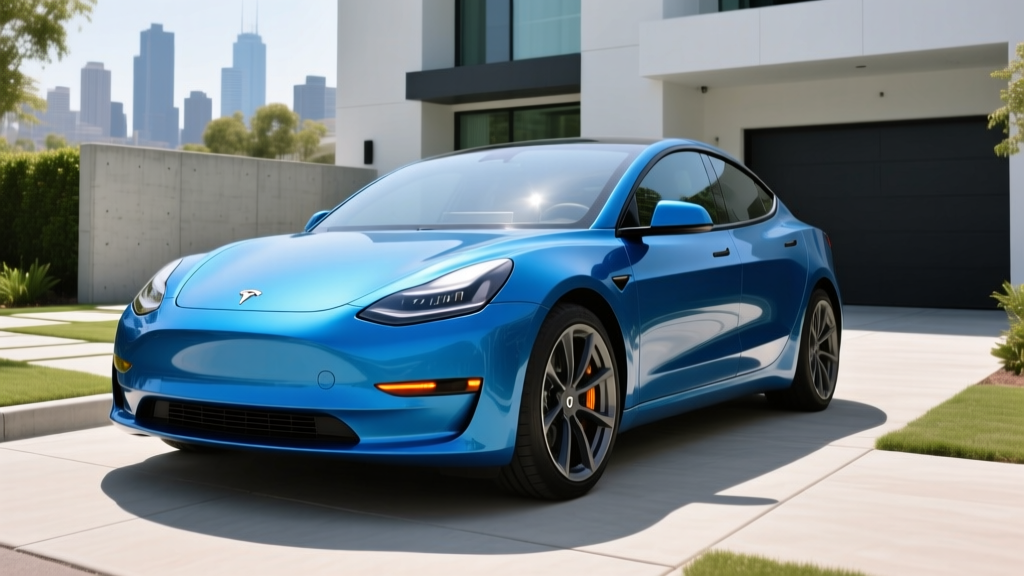
When enthusiasts talk about sports sedans, curb weight is one of the first numbers they check — and for good reason. The Tesla Model 3 Performance weight sits at approximately 4,048 lbs (1,836 kg) in its latest dual-motor configuration. That figure places it squarely between traditional performance sedans and heavier luxury EVs, and it directly influences everything from 0-60 times and cornering dynamics to real-world range and tire wear.
For 2026, the Tesla Model 3 Performance (internally dubbed "Highland" for the refreshed generation that launched for the 2024 model year) continues to offer a compelling blend of acceleration, technology, and daily-driver practicality. But understanding how its mass interacts with the 82 kWh battery pack, dual electric motors, and adaptive suspension is key to deciding whether this is the right EV for your garage.
In this review, we break down every critical spec — from EPA range and DC fast-charging curves to IRS §30D tax credit eligibility — so you can evaluate the Model 3 Performance on data, not marketing.
| Spec | Value |
|---|---|
| Curb Weight | 4,048 lbs (1,836 kg) |
| EPA Range | 315 miles |
| Battery (usable) | ~79 kWh (NMC, 82 kWh total) |
| Drivetrain | Dual-motor AWD |
| Horsepower | 510 hp (combined) |
| 0-60 mph | 2.9 seconds |
| Top Speed | 163 mph |
| Peak DC Fast Charge | 250 kW |
| 10-80% DC Charge Time | ~25 minutes |
| Level 2 Home Charge Rate | 11.5 kW (~44 mi/hr) |
| EPA Efficiency | 113 MPGe combined (29 kWh/100 mi) |
| Cargo Volume | 23 cu ft (trunk + frunk) |
| Base MSRP | $54,990 (before incentives) |
| Battery Warranty | 8 years / 120,000 miles |
Range Reality Check: EPA Sticker vs. What You'll Actually Get
The EPA rates the 2026 Model 3 Performance at 315 miles on a full charge. That number comes from the agency's standardized multi-cycle test, and you can verify it on fueleconomy.gov. But as any experienced EV owner knows, the sticker is a starting point — not a guarantee.
- City / moderate-speed commuting (65°F): 300–325 miles — EVs thrive in stop-and-go thanks to regenerative braking.
- Highway cruising at 70-75 mph (65°F): 260–285 miles — aerodynamic drag and the 4,048-lb curb weight push energy consumption higher.
- Cold weather (20-30°F), highway: 210–245 miles — battery chemistry slows, cabin heating draws power, and the heat pump helps but can't fully offset losses.
- Track / aggressive driving: 150–190 miles — sustained high-power output drains the pack rapidly.
The Model 3 Performance's weight contributes to higher energy use at speed compared to the lighter Long Range RWD variant (363 mi EPA, ~3,900 lbs). If maximizing range is your priority over acceleration, the LR trim is the more efficient choice.
Tesla's thermal management system, which includes a heat pump standard on all trims, helps mitigate cold-weather losses. Preconditioning the battery while plugged in — a feature accessible through the Tesla app or scheduled departure settings — warms the NMC cells to optimal temperature, preserving range and enabling faster DC charging when you hit a Supercharger.
Charging Speed: DC Fast Charge Curve and Home Level 2
The Model 3 Performance supports a peak DC fast-charge rate of 250 kW on V3 Tesla Superchargers (CCS-compatible via the built-in NACS port, which is now the industry standard in North America). Here's what that actually looks like in practice:
| Charging Level | Power / Rate | Time or Miles Added |
|---|---|---|
| Level 1 (120V household) | ~1.4 kW | ~3–4 miles per hour |
| Level 2 (240V, 48A Wall Connector) | 11.5 kW | ~44 miles per hour; full charge in ~7.5 hours |
| DC Fast (V3 Supercharger) | Peak 250 kW | 10–80% in ~25 minutes |
| DC Fast (V4 Supercharger / third-party CCS) | Up to 250 kW (vehicle-limited) | Similar to V3 speeds |
Understanding the charge curve: The 250 kW peak is just that — a peak. The Model 3 Performance sustains its highest charge rate between roughly 10% and 40% state of charge (SoC). Above 50%, the rate tapers progressively to protect the NMC battery cells. By 80% SoC, you're typically pulling 60–80 kW, and charging above 90% slows to a trickle. This is why Tesla (and every other automaker) quotes 10-80% times rather than 0-100%.
For home charging, Tesla's Wall Connector at 48 amps delivers 11.5 kW — enough to replenish a nearly empty battery overnight. Most owners who plug in each evening never need to visit a public charger for daily driving. A standard NEMA 14-50 outlet on a 40-amp circuit delivers about 9.6 kW, adding roughly 37 miles of range per hour — adequate for most commutes.
Performance and Driving Dynamics: What 4,048 Pounds Feels Like
The headline number is 2.9 seconds to 60 mph — a figure that was supercar territory a decade ago. Tesla achieves this with a dual-motor all-wheel-drive setup producing 510 horsepower and an estimated 546 lb-ft of torque. Launch control, activated through the track mode interface, manages traction across all four wheels with millisecond precision.
But what about the Tesla Model 3 Performance weight in corners? At 4,048 lbs, this is not a lightweight sports sedan. For context, a BMW M3 Competition weighs roughly 3,840 lbs, while the Porsche Taycan 4S tips the scales at about 4,700 lbs. The Model 3 Performance sits in between, and its driving dynamics reflect that.
Tesla's adaptive damper suspension (introduced with the Highland refresh) significantly improves ride quality over the pre-2024 models. The system adjusts damping force based on road conditions and driving mode. In Comfort mode, the ride is compliant enough for daily commuting. In Sport, body roll tightens and steering response sharpens. The low center of gravity — a natural benefit of the under-floor battery pack — helps mask the mass during directional changes, though you'll feel the weight transfer during hard braking and quick transitions.
Tire choice matters enormously here. The Model 3 Performance ships with 20-inch wheels and Pirelli P Zero summer tires (or all-season alternatives depending on market). Switching to high-performance all-season rubber sacrifices a few tenths of grip but dramatically improves cold-weather usability and tread life.
Pricing, Tax Credits, and Total Cost
The 2026 Tesla Model 3 Performance starts at $54,990 (MSRP, including destination). With options like Ultra Red paint ($2,500), Full Self-Driving (Supervised) capability ($8,000), and premium interior upgrades, an as-tested price can approach $65,000–$67,000.
| Item | Amount |
|---|---|
| Base MSRP (Performance AWD) | $54,990 |
| As-Tested (with common options) | ~$58,500–$65,000 |
| Federal §30D Tax Credit (max) | Up to $7,500 |
| Effective Price After Max Credit | ~$47,490 (base) |
Federal tax credit eligibility (§30D) — critical caveats:
- MSRP cap: The Model 3 qualifies (sedan cap is $55,000; the Performance at $54,990 clears it). However, adding options that push the vehicle's total above $55,000 does NOT disqualify it — the cap applies to base MSRP by body style, not final transaction price.
- Buyer income cap: Modified adjusted gross income must not exceed $150,000 (single), $225,000 (head of household), or $300,000 (joint filers).
- Battery sourcing: The credit is split into two $3,750 halves — one for critical minerals and one for battery component assembly. Tesla's battery supply chain has shifted significantly, and eligible credit amounts can change quarterly. Always verify current eligibility on irs.gov before purchasing.
- Point-of-sale transfer: Since 2024, buyers can transfer the credit to the dealer at purchase, reducing the upfront price rather than waiting for a tax refund. Tesla applies this at checkout if you qualify.
Consult a tax professional to confirm your personal eligibility. State and local incentives (such as California's CVRP or utility rebates) may stack on top of the federal credit — check your state's energy office for current programs.
Interior, Cargo, and Daily Practicality
The Model 3 cabin follows Tesla's minimalist philosophy: a single 15.4-inch center touchscreen handles navigation, climate, media, and vehicle settings. There is no traditional instrument cluster; speed and range information appear in the upper-left corner of the display. A rear 8-inch screen for back-seat passengers was added with the Highland refresh.
Interior dimensions:
- Front legroom: 42.7 inches
- Rear legroom: 35.2 inches
- Front headroom: 40.3 inches
- Rear headroom: 37.8 inches
Rear-seat space is adequate for adults on shorter trips but tight for taller passengers on long drives — the sloping roofline cuts into headroom, and the floor-mounted battery raises the floor height, creating a knees-up seating position. Compare this to the Hyundai Ioniq 6 (37.0 inches rear legroom) or BMW i4 (36.3 inches), and the Model 3 is competitive but not class-leading.
Cargo capacity: The trunk offers 21 cubic feet, with an additional 2 cubic feet in the front trunk (frunk) — total 23 cu ft. The rear seats fold in a 60/40 split, expanding cargo space for longer items. The frunk is useful for charging cables, a small bag, or groceries you want to keep separate.
Technology, Driver Assistance, and Safety
Every Model 3 Performance includes Tesla's Autopilot suite as standard: adaptive cruise control, lane-keeping assist, automatic emergency braking, and blind-spot monitoring. These features constitute SAE Level 2 driver assistance — the driver must remain attentive and keep hands on the wheel at all times.
Tesla's Autopilot and optional Full Self-Driving (Supervised) are Level 2 systems. They can steer, accelerate, and brake under certain conditions, but the driver is fully responsible for vehicle operation at all times. "Full Self-Driving" is a feature name, not a description of capability. True driverless operation (Level 4) is currently limited to robotaxi services like Waymo in geofenced urban areas.
The optional Full Self-Driving (Supervised) package ($8,000) adds features like automatic lane changes on highways, navigate-on-autopilot for on/off-ramp transitions, traffic light and stop sign recognition, and assisted parking. FSD has improved significantly through iterative neural-network updates, but it remains a supervised system that can make errors — particularly in construction zones, unusual intersections, and adverse weather. Budget-conscious buyers should note that standard Autopilot covers the vast majority of highway commuting needs.
Safety ratings are strong: the Model 3 earned a 5-star overall rating from NHTSA and a Top Safety Pick+ designation from IIHS (highest rating in all crashworthiness categories).
- Drive the car without an attentive, licensed driver in the seat
- Handle all road conditions — construction zones, unmapped roads, and severe weather require manual control
- Eliminate driver liability — you are legally responsible for the vehicle at all times
- Replace the need for insurance — standard auto coverage is required
Pros, Cons, and Who Should Buy the Model 3 Performance
- 2.9-second 0-60 mph — supercar acceleration at a sedan price
- 315 miles EPA range covers most road trips with one charge stop
- 250 kW Supercharger network access (now expanding to non-Tesla networks via NACS adoption)
- Over-the-air updates continuously add features and refinements
- Low center of gravity and adaptive suspension improve handling over prior generations
- Strong safety ratings (NHTSA 5-star, IIHS TSP+)
- Qualifies for up to $7,500 federal tax credit (verify eligibility)
- 4,048-lb weight limits agility compared to lighter sports sedans
- Minimalist interior lacks physical controls — everything is touchscreen-dependent
- Rear seat space is tighter than some competitors (BMW i4, Hyundai Ioniq 6)
- No Apple CarPlay or Android Auto — Tesla's native infotainment only
- FSD (Supervised) is expensive at $8,000 and still requires full driver attention
- Insurance premiums are above average for the segment
- Summer tires are standard; all-season or winter tires are an extra cost for cold climates
- Choose the Model 3 Performance if: You want the fastest-accelerating EV sedan under $60K, rely on road-trip charging infrastructure, and accept the minimalist interior as a trade-off for performance.
- Choose the Model 3 Long Range instead if: Range (363 mi EPA) and efficiency matter more than 0-60 times, and you want a lighter, more efficient daily driver.
- Consider the BMW i4 M50 if: You prefer a more traditional cabin with physical controls, Apple CarPlay, and a slightly more refined ride — at a higher price (~$67,000).
- Consider the Hyundai Ioniq 6 if: Budget is a priority ($42,000 base) and you want competitive range (361 mi) with a more spacious rear seat.
Warranty and Long-Term Ownership
Tesla covers the Model 3 Performance's battery and drive unit for 8 years or 120,000 miles, whichever comes first, with a guaranteed minimum 70% capacity retention during that period. The limited vehicle warranty is 4 years or 50,000 miles.
NMC battery chemistry (used in the Performance trim for its higher energy density) typically shows 5-10% degradation over the first 50,000 miles, after which the curve flattens. Real-world data from high-mileage Tesla owners suggests 85-90% state of health (SoH) at 100,000 miles is common with normal charging habits — meaning roughly 270 miles of range from a full charge at that point.
To maximize battery longevity: avoid routinely charging to 100% (set your daily limit to 80-90%), use preconditioning before DC fast charging, and minimize prolonged exposure to extreme heat or cold while parked at low SoC.
Frequently Asked Questions
What is the real-world range of the Tesla Model 3 Performance?
The EPA rates it at 315 miles. In real-world driving, expect 260–285 miles on the highway at 70-75 mph in mild weather, 300+ miles in city driving with regenerative braking, and 210–245 miles in cold weather (20-30°F) with cabin heating active.
How fast does the Model 3 Performance charge at home and on the road?
On a Level 2 home charger (11.5 kW via Tesla Wall Connector), you'll add about 44 miles of range per hour — a full charge takes roughly 7.5 hours. At a V3 Supercharger, the peak rate is 250 kW, and a 10-80% session takes about 25 minutes. Charging above 80% slows significantly to protect the battery.
How much does the Model 3 Performance cost after the federal tax credit?
Base MSRP is $54,990. If you qualify for the full $7,500 §30D federal tax credit (income and battery-sourcing requirements apply), the effective price drops to approximately $47,490. Eligibility depends on your filing status, income, and current battery component sourcing rules — verify on irs.gov before purchasing.
Is the Tesla Model 3 Performance worth buying vs. competitors?
It offers the best acceleration-to-price ratio in its segment and benefits from Tesla's mature Supercharger network (now open to non-Tesla EVs, reducing its exclusivity advantage). The BMW i4 M50 drives more traditionally but costs significantly more. The Hyundai Ioniq 6 is cheaper and offers comparable range but can't match the Performance's acceleration. If speed, tech, and charging infrastructure are your top priorities, the Model 3 Performance is hard to beat at its price point.
What are the biggest pros and cons?
Top pros: 2.9s 0-60, 315-mi range, Supercharger access, OTA updates, strong safety ratings. Top cons: 4,048-lb weight limits cornering agility, touchscreen-only controls, tight rear seat, no CarPlay/Android Auto, expensive FSD option, higher-than-average insurance costs.
Does the Tesla Model 3 Performance qualify for the $7,500 federal EV tax credit?
It can, but eligibility is not automatic. The base MSRP ($54,990) falls under the $55,000 sedan cap. Your income must be below IRS thresholds ($150K single / $300K joint). Battery critical-mineral and component sourcing requirements determine whether you receive the full $7,500 or a partial amount. Rules change periodically — always check the latest guidance at irs.gov and consult a tax professional.
How does the Tesla Model 3 Performance weight compare to other EVs?
At 4,048 lbs, the Model 3 Performance is lighter than the Porsche Taycan 4S (~4,700 lbs) and BMW iX (~5,600 lbs), but heavier than the Model 3 Long Range RWD (~3,900 lbs) and Hyundai Ioniq 6 (~4,300 lbs for the dual-motor variant). The weight is primarily from the larger NMC battery pack needed to support both the 315-mile range and the dual-motor power output.