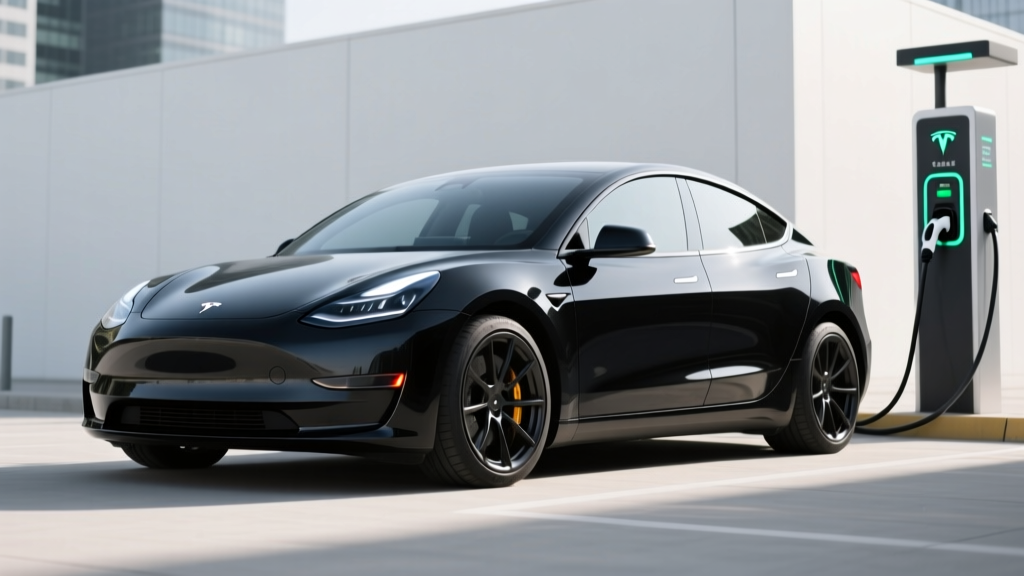
The Tesla Model 3 Performance returned to the lineup in 2024 after a brief hiatus, and for 2026 it remains the quickest, fastest sedan you can buy under $55,000. With a new dual-motor setup, adaptive dampers, and track-ready hardware baked into the refreshed "Highland" body, this trim isn't just a software unlock — it's a fundamentally re-engineered performance machine. But beyond the headline 163 mph top speed and 3.1-second 0-60 sprint, how does it function as a daily EV? We break down every spec that matters.
Quick Verdict: Who the Model 3 Performance Is For
The 2026 Tesla Model 3 Performance targets driving enthusiasts who want supercar-rivaling acceleration without supercar ownership costs. It's ideal for single professionals or couples who prioritize speed, handling precision, and access to the Supercharger network over cargo flexibility or back-seat comfort. If you regularly haul kids in car seats or need over 20 cubic feet of cargo, a Model Y Performance or Ioniq 5 N may serve you better. For solo commuters, canyon-carvers, and track-day hobbyists, this is the sharpest EV sedan on the market at its price point.
Performance Specs: Top Speed, Acceleration, and Powertrain
| Spec | Value |
|---|---|
| 0-60 mph | 3.1 seconds (with rollout) |
| Top Speed | 163 mph |
| Drivetrain | Dual-motor AWD |
| Horsepower | 510 hp (combined) |
| Torque | 546 lb-ft |
| Front Motor | Induction (3D3) |
| Rear Motor | Permanent-magnet synchronous (4D2) |
| Battery Capacity | 79 kWh usable (NMC) |
| EPA Range | 315 miles |
| EPA Efficiency | 119 MPGe / 28 kWh/100 mi |
| Curb Weight | ~4,065 lbs |
The 163 mph top speed is electronically governed and achievable with the factory performance tires. What makes the Model 3 Performance's acceleration so effective isn't just peak power — it's the new rear drive unit (the 4D2 motor), which delivers torque more progressively than the older LR motor, reducing the "jerk" factor at low speeds while still hitting 3.1 seconds to 60. The front induction motor disconnects during light-load cruising to reduce drag, contributing to the sedan's strong efficiency.
Tesla's updated adaptive dampers (a first for Model 3) allow real-time stiffness adjustment, and the Track Mode V3 software enables adjustable front/rear torque distribution, stability control intervention levels, and regenerative braking intensity. This is a genuine track tool, not just a straight-line drag strip car.
Real-World Range: What to Expect Beyond the EPA Sticker
Real-World Expectation: 260–290 miles in mixed highway/city driving at 70-75 mph. In freezing temperatures (below 32°F), expect 220–250 miles due to battery resistance and cabin heating demand. City-only driving with aggressive regen can approach or exceed the EPA figure thanks to stop-and-go energy recovery.
The Model 3 Performance uses a ~79 kWh usable nickel-manganese-cobalt (NMC) battery pack. NMC chemistry offers higher energy density than the LFP packs found in the Model 3 RWD, which is necessary to hit 315 miles in a performance-oriented AWD configuration. However, NMC degrades slightly faster over time and benefits from daily charging to 80% rather than 100% for longevity.
At highway speeds (75-80 mph), the Model 3 Performance consumes roughly 30-32 kWh/100 mi, translating to about 250-265 miles from a full charge on a warm day. Cold weather adds two penalties: increased battery internal resistance (reducing usable capacity by 5-10%) and cabin heating demand (which can add 2-5 kW of continuous draw without a heat pump — though the Highland Model 3 does include a heat pump, mitigating this somewhat). On a 30°F road trip at 75 mph, plan for roughly 220-240 miles between stops.
Charging Speed: DC Fast, Level 2, and the Charge Curve
| Level | Power / Rate | Speed | Notes |
|---|---|---|---|
| DC Fast Charge (peak) | 250 kW (CCS via NACS adapter or native NACS) | ~170 miles in 15 min | V3/V4 Superchargers |
| 10-80% DC Fast | ~250 kW peak, tapering above 50% | ~25-27 minutes | With battery preconditioning |
| Level 2 Home (48A) | 11.5 kW | ~44 miles per hour | Requires Wall Connector + 60A circuit |
| Level 2 Home (32A) | 7.7 kW | ~30 miles per hour | Common 40A circuit setup |
| Level 1 (120V) | ~1.4 kW | ~3-5 miles per hour | Emergency/trickle only |
The Model 3 Performance supports up to 250 kW on DC fast charging via the NACS (North American Charging Standard) connector native to all Teslas. At a V3 or V4 Supercharger, the charge curve peaks near 250 kW between roughly 5-30% state of charge, then tapers to ~150 kW by 50%, ~90 kW by 70%, and ~40 kW above 85%. This means the advertised "170 miles in 15 minutes" is achievable from a low state of charge, but a 10-90% session will take closer to 38-42 minutes.
Preconditioning matters. Navigate to a Supercharger using the car's built-in navigation, and the battery thermal management system will pre-warm the pack for optimal charge acceptance. Without preconditioning (e.g., arriving at a non-navigated charger on a cold day), peak speeds may drop to 150-180 kW initially, adding 5-8 minutes to your session.
For home charging, Tesla's Wall Connector at 48 amps on a dedicated 60-amp circuit delivers 11.5 kW, replenishing roughly 44 miles of range per hour. A full overnight charge from 10% to 80% takes about 5 hours — more than adequate for daily use. Budget $500-$1,200 for professional installation of a 60-amp circuit, depending on panel proximity and local permitting (Tesla Wall Connector details). Consult a licensed electrician for your specific panel capacity.
Pricing, Trims, and Federal Tax Credit Eligibility
| Item | Amount |
|---|---|
| Base MSRP (Model 3 Performance) | $52,990 |
| Destination fee | $1,390 |
| Ultra Red paint upgrade | $2,500 |
| Full Self-Driving (Supervised) | $8,000 (or $99/mo) |
| As-tested (with paint + FSD) | $64,880 |
The 2026 Tesla Model 3 Performance starts at $52,990 before destination. This is a single-trim offering — there's no lower-cost Performance variant. Options are limited to paint color (Glacier Blue, Solid Black, Pearl White, Ultra Red, Stealth Grey, Quicksilver), 20" wheel style, and the FSD software package.
- MSRP cap: Sedans must be under $55,000. The Model 3 Performance at $52,990 qualifies; adding paint or FSD does NOT change the MSRP cap calculation (destination included).
- Buyer income cap: AGI must not exceed $150,000 (single), $225,000 (head of household), or $300,000 (married filing jointly).
- Battery sourcing: Critical minerals and battery component requirements phase in annually. Verify current-year compliance at IRS qualified vehicle list.
- Point-of-sale transfer: You can transfer the up-to-$7,500 credit to the dealer at purchase, reducing your out-of-pocket cost immediately (effective price: ~$45,490 + destination).
- Leasing: Commercial clean vehicle credit (§45W) may apply to leases, bypassing MSRP and income caps — consult a tax professional.
Interior, Cargo, and Technology
The "Highland" refresh brought meaningful interior upgrades to the Model 3. The Performance trim includes sport seats with enhanced bolstering, a rear 8" touchscreen for passengers, ventilated front seats, ambient lighting, and an upgraded 17-speaker audio system. The 15.4" front touchscreen remains the primary interface — there is no instrument cluster, and turn signals are on the steering wheel (a capacitive button system that draws polarized reviews).
| Dimension | Measurement |
|---|---|
| Front legroom | 42.7 in |
| Rear legroom | 35.2 in |
| Cargo (trunk) | 21.0 cu ft |
| Frunk (front trunk) | 3.1 cu ft |
| Total cargo | 24.1 cu ft |
Cargo space is adequate for a sport sedan but trails hatchback competitors. The 21 cu ft trunk is deep but narrow at the opening, and the 3.1 cu ft frunk is best for charging cables. Rear-seat space fits adults under 6'0" comfortably, but the sloping roofline limits headroom for taller passengers.
On the technology front, Tesla's software ecosystem remains the industry benchmark for responsiveness and over-the-air updates. Navigation, streaming (Spotify, Apple Music, YouTube while parked), and phone-as-key functionality are standard. The key drawback: Tesla's reliance on touchscreen controls for nearly everything (glovebox, mirror adjustment, wiper speed) demands a learning curve and can distract during spirited driving.
Driver Assistance: Autopilot and FSD Supervised
Tesla Autopilot and Full Self-Driving (Supervised) are Level 2 driver-assistance systems per SAE International. The driver must remain fully engaged, hands on the wheel (or torque-confirmed), and eyes on the road at all times. These systems do not replace the driver. Only Level 4 services like Waymo operate without a human driver in geofenced areas.
Standard Autopilot includes Traffic-Aware Cruise Control and Autosteer (lane centering on marked highways). The optional $8,000 FSD (Supervised) adds automatic lane changes, Navigate on Autopilot (highway on/off-ramp routing), Autopark, and Smart Summon. As of 2026, FSD remains a supervised system requiring constant driver attention. It performs well on highways but can struggle with construction zones, faded lane markings, and unprotected left turns. The NHTSA continues to monitor Tesla's Autopilot/FSD safety record (NHTSA AV safety resources).
Pros and Cons at a Glance
- 3.1s 0-60 and 163 mph top speed under $55K
- Adaptive dampers and Track Mode V3 — genuine handling chops
- 250 kW DC fast charging with Supercharger network access
- 315-mile EPA range covers most road trips with one stop
- Class-leading software, OTA updates, and infotainment
- Qualifies for up to $7,500 federal tax credit (with caveats)
- Steering-wheel turn signals and no stalks — divisive ergonomics
- Rear-seat headroom tight for passengers over 6'0"
- 24 cu ft total cargo trails hatchback rivals
- Screen-dependent controls distract during performance driving
- No Apple CarPlay or Android Auto
- FSD ($8,000) remains Level 2 — not autonomous
How It Compares: Model 3 Performance vs. Rivals
The closest competitors to the Model 3 Performance are the Hyundai Ioniq 6 N (when available in the U.S.), the BMW i4 M50, and the Polestar 2 BST. The BMW i4 M50 offers a more traditional luxury interior and physical controls but costs $15,000+ more and can't match the Tesla's Supercharger network advantage. The Ioniq 6 N provides comparable thrills with an 800V architecture for faster charging, but its EPA range is lower (~270 mi) and Hyundai's dealer charging infrastructure is less reliable. The Polestar 2 BST is a limited-edition niche play with similar performance but less range and a smaller charging network.
For pure performance-per-dollar and daily usability, the Model 3 Performance is unmatched in its class. The deciding factor for most buyers will be whether they can charge at home and whether Tesla's minimalist interior philosophy aligns with their preferences.
Warranty and Long-Term Ownership
| Coverage | Term |
|---|---|
| Basic vehicle | 4 years / 50,000 miles |
| Battery & drive unit | 8 years / 120,000 miles |
| Battery capacity retention | Minimum 70% over warranty period |
Tesla's battery warranty guarantees at least 70% capacity retention over 8 years or 120,000 miles — meaning if your 79 kWh pack drops below ~55 kWh of usable capacity within that window, Tesla replaces or repairs it at no cost. Real-world degradation data from Tesla's fleet suggests most Model 3 packs retain 90%+ capacity at 100,000 miles with normal charging habits (avoiding frequent 100% charges and deep discharges). A full battery replacement outside warranty currently runs $12,000-$16,000 at a Tesla Service Center.
Insurance costs for the Model 3 Performance are notably higher than the Long Range or RWD trims. Expect $2,400-$3,600 annually depending on your age, location, and driving record. Always get an insurance quote before purchasing — this is one of the most overlooked ownership costs.
Frequently Asked Questions
What is the real-world range of the Tesla Model 3 Performance?
The EPA rates it at 315 miles, but real-world highway driving at 70-75 mph yields roughly 260-290 miles in moderate temperatures. In freezing weather, plan for 220-250 miles. City driving with regenerative braking can approach or exceed the EPA estimate.
How fast does the Model 3 Performance charge?
On a V3 or V4 Supercharger, it peaks at 250 kW and charges from 10-80% in approximately 25-27 minutes with battery preconditioning. At home on a 48A Level 2 Wall Connector, it adds about 44 miles of range per hour (11.5 kW).
Does the Model 3 Performance qualify for the federal EV tax credit?
Yes, as of 2026 the Model 3 Performance qualifies for up to $7,500 under IRS §30D, provided the buyer meets income caps ($150K single / $300K joint), and the vehicle's battery sourcing meets current-year critical mineral and component requirements. The credit can be transferred at point of sale. Always verify on the IRS qualified vehicles list before purchasing.
What is the top speed of the Tesla Model 3 Performance?
The 2026 Model 3 Performance has an electronically limited top speed of 163 mph, achievable with the factory performance tire specification.
Is the Model 3 Performance worth buying over the Long Range?
If you value acceleration, adaptive dampers, and track capability, the Performance trim's ~$5,000 premium over the Long Range AWD is justified. If you prioritize maximum range (the LR AWD achieves ~341 miles EPA) and don't care about track driving, the Long Range is the more practical daily choice.
Does FSD make the Model 3 self-driving?
No. Tesla's Full Self-Driving (Supervised) is an SAE Level 2 driver-assistance system. The driver must remain fully engaged at all times. It is not autonomous and does not replace active driving.
Sources: EPA range and efficiency data from fueleconomy.gov. Tax credit rules from IRS.gov. Vehicle specifications from Tesla's official configuration pages.