The Quick Answer: Is There a Honda CRF Electric?
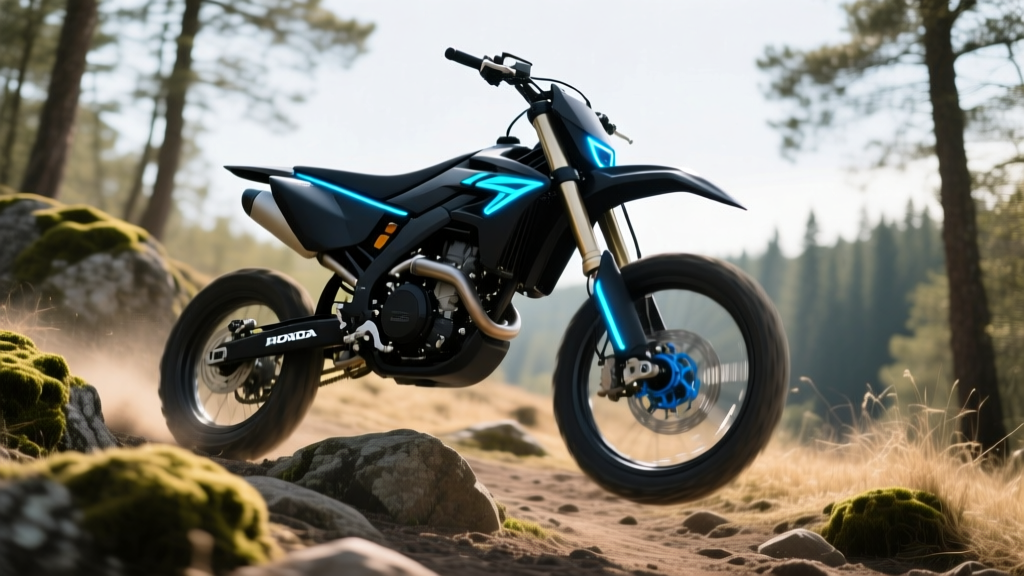
As of 2026, Honda has not released or officially announced a production "Honda CRF Electric" dirt bike or motorcycle. The CRF lineup (CRF250R, CRF450R, CRF300L, CRF1100L Africa Twin) remains powered by internal combustion engines. Honda has filed multiple electric motorcycle patents and showcased concepts like the EM1 e: electric scooter, but no electric CRF model is available for purchase, and Honda has not published a timeline for an electrified off-road motorcycle.
If you're searching for a Honda CRF electric because you want an emission-free off-road bike, this guide covers what Honda is actually doing in the electric two-wheeler space, which electric dirt bikes do exist today, and whether waiting for a Honda CRF-E makes sense for your riding needs.
Why "Honda CRF Electric" Searches Are Surging
The Honda CRF family is one of the most recognized names in off-road motorcycling. The CRF250R and CRF450R dominate motocross and supercross, while the CRF300L and CRF250F serve trail riders and dual-sport enthusiasts. With electric vehicles reshaping every segment of transportation, riders naturally wonder when Honda will bring battery power to its flagship dirt bikes.
Several factors fuel this curiosity:
- Honda's EM1 e: scooter went on sale in select markets (Europe, Japan) with a swappable battery and roughly 25 miles of urban range — proof Honda is building electric two-wheelers.
- Patent filings discovered in Japan and Europe show Honda exploring electric motorcycle frames with mid-mounted motors and chain drive — architecture that could suit an off-road application.
- Competitor movement: brands like KTM (Freeride E-XC), Zero Motorcycles (FX/FXE), and smaller companies like Sur-Ron and Talaria have released electric off-road bikes, creating market pressure.
- Noise restrictions at riding areas and land-access battles make silent electric dirt bikes increasingly attractive for trail access preservation.
Despite these signals, Honda's motorcycle division has not confirmed a production CRF-E, CRF Electric, or any electric off-road model for the 2026 or 2027 model year. Everything discussed below regarding a hypothetical Honda CRF electric is speculative and based on industry analysis, not official Honda specifications.
What Honda Has Actually Said About Electric Motorcycles
Honda's stated electrification strategy focuses heavily on four-wheel vehicles (the Honda 0 Series EV lineup, including the Prologue SUV) and on small electric two-wheelers for urban commuting in Asia and Europe. The EM1 e: scooter, with its Honda Mobile Power Pack e: swappable battery, represents Honda's current production electric motorcycle commitment.
For high-performance and off-road motorcycles, Honda executives have publicly noted the engineering challenges specific to dirt bikes:
- Weight distribution: A competitive 450cc motocross bike weighs around 240 lbs wet. Current battery energy density makes matching that weight with equivalent power extremely difficult.
- Suspension travel and frame geometry: Off-road bikes need 12+ inches of suspension travel and specific frame flex characteristics that large battery packs complicate.
- Heat management: Sustained high-power off-road use (motocross laps, hard enduro) generates significant battery and motor heat without the airflow available at highway speeds.
- Charging logistics: Trail riders often ride in remote areas without access to Level 2 charging. A swappable battery system could solve this, but carrying spare 15+ kWh packs on a motorcycle is impractical.
Honda's patent activity suggests the company is solving these problems in R&D, but the gap between patent and production in the motorcycle industry typically spans 3–5 years.
Electric Dirt Bikes You Can Actually Buy in 2026
While the Honda CRF electric doesn't exist, several electric off-road motorcycles are available now. Here's how the current market compares to what a gas CRF250F or CRF450R delivers:
| Model | Type | Motor/Battery | Est. Range | Weight (lbs) | Price (MSRP) | Top Speed |
|---|---|---|---|---|---|---|
| KTM Freeride E-XC | Enduro/Trail | 18 kW motor / 3.9 kWh (swappable) | ~45–60 min riding | ~245 | ~$11,500 | ~53 mph |
| Zero FX (Z-Force) | Dual-Sport/Trail | 44 hp / 7.2 kWh | ~40–50 mi (mixed) | ~247 | ~$12,000 | ~85 mph |
| Sur-Ron Storm Bee | Light Trail | 22.5 kW peak / 60V 38Ah | ~35–50 mi | ~143 | ~$5,000 | ~56 mph |
| Talaria Sting MX4 | Light MX/Trail | 12 kW peak / 60V 38Ah | ~30–45 mi | ~132 | ~$4,500 | ~50 mph |
| Honda CRF250F (gas) | Trail | 249cc 4-stroke | ~60–80 mi (2.6 gal tank) | ~234 | ~$5,000 | ~65 mph |
| Honda CRF450R (gas) | Motocross | 449cc 4-stroke | ~30–40 min moto | ~241 | ~$9,700 | ~70+ mph |
Key takeaway: No current electric dirt bike matches the sustained high-power output and refueling convenience of a gas CRF450R for competitive motocross. For trail riding and casual off-road use, electric options like the KTM Freeride E-XC and Sur-Ron Storm Bee offer viable alternatives — with the trade-off being limited range and longer "refueling" times (hours on a charger vs. minutes pouring in gasoline).
Real-World Ownership: What an Electric Dirt Bike Actually Costs
If you're considering an electric off-road bike while waiting (or not) for a Honda CRF electric, here's a practical cost breakdown comparing electric vs. gas ownership over 3 years of weekend trail riding (~1,500 miles/year):
| Cost Category | Electric (e.g., Zero FX) | Gas (e.g., Honda CRF250F) |
|---|---|---|
| Purchase price | $12,000 | $5,000 |
| Fuel/energy (4,500 mi total) | ~$180 (at $0.15/kWh) | ~$750 (at $4.00/gal, ~50 mpg off-road) |
| Oil changes | $0 | ~$150 |
| Air filter replacement | $0 | ~$90 |
| Chain/sprocket maintenance | ~$200 | ~$200 |
| Tires (off-road wear) | ~$400 | ~$400 |
| Brake pads | ~$100 (regen reduces wear) | ~$150 |
| Battery degradation reserve | ~$0 (under warranty) | N/A |
| 3-Year Total | ~$12,880 | ~$6,690 |
Analysis: The electric bike saves roughly $570 in fuel and maintenance over 3 years, but the ~$7,000 higher purchase price means the gas CRF250F remains far cheaper in total cost for recreational riders. The electric option breaks even only if you factor in intangible benefits: silent operation (critical for land access), zero local emissions, instant torque, and dramatically reduced maintenance complexity.
For riders who put on 5,000+ miles per year or ride in noise-restricted areas, the math shifts closer to parity — but for the average weekend trail rider, the gas CRF remains the economical choice in 2026.
Charging Reality for Off-Road Electric Bikes
Unlike electric cars with access to the growing DC fast-charging network (Tesla Superchargers, Electrify America, EVgo), electric dirt bikes face a unique charging challenge:
- Home charging (Level 1, 120V): Most electric dirt bikes charge via a standard wall outlet. A 7.2 kWh battery (Zero FX) takes approximately 8–10 hours from empty on a 120V outlet — overnight charging works if you ride one day and charge that night.
- No public charging compatibility: Electric motorcycles typically don't use CCS or NACS connectors. You can't pull up to an Electrify America station and charge your dirt bike. This is a critical limitation for multi-day riding trips or remote trail systems.
- Swappable batteries (KTM approach): The KTM Freeride E-XC uses a removable battery you can swap in under a minute. Carrying a charged spare ($3,000+ per battery) effectively doubles your range but requires planning and transport for the spare.
- Generator charging: Some riders carry a portable inverter generator (Honda EU2200i, ~$1,200) to recharge at remote trailheads — which somewhat defeats the emissions benefit.
These constraints are likely why Honda has not rushed an electric CRF to market. The charging ecosystem for off-road electric motorcycles is years behind what EV car owners enjoy.
Common Misconceptions About a Honda CRF Electric
| Myth | Fact |
|---|---|
| "Honda is releasing a CRF Electric in 2026." | Honda has made no official announcement. The EM1 e: scooter is Honda's only current production electric two-wheeler, and it's an urban commuter, not an off-road bike. |
| "Electric dirt bikes have the same power as a 450cc gas bike." | Current electric dirt bikes produce 20–45 hp. A Honda CRF450R produces ~55 hp. The gap is narrowing but not closed, especially for sustained high-RPM motocross use. |
| "Electric dirt bikes are heavier than gas bikes." | Not always. The Sur-Ron Storm Bee (143 lbs) is lighter than the Honda CRF250F (234 lbs). However, full-power electric bikes like the Zero FX (~247 lbs) are comparable to gas equivalents. |
| "You can charge an electric dirt bike at any EV charging station." | Most electric motorcycles use proprietary chargers or standard 120V outlets. Public DC fast chargers (CCS/NACS) are not compatible with current electric dirt bikes. |
| "Battery replacement will cost thousands in a few years." | Modern lithium motorcycle batteries are warrantied for 3–5 years. Degradation to 80% capacity typically takes 500–1,000 full charge cycles — several years of weekend riding. Replacement costs range from $2,000–$4,000 depending on the model. |
Should You Wait for a Honda CRF Electric or Buy Now?
Decision Framework: What Should You Do?
Buy a gas Honda CRF now if:
- You ride competitively in motocross, enduro, or hare scrambles and need sustained high power
- You ride in remote areas with no access to electrical outlets
- Your budget is under $6,000 for a new bike
- You need 60+ miles of range per ride without carrying spare batteries
- You want proven dealer support and parts availability across the US
Buy a current electric dirt bike now if:
- You ride primarily on private property or noise-restricted trails where silent operation matters
- Your rides are typically under 40 miles and you have access to a standard outlet for overnight charging
- You want near-zero routine maintenance (no oil, no air filter, no carburetor/EFI tuning)
- You value instant torque delivery and simplified riding (no clutch, no shifting on most models)
- Land access preservation is a priority — silent bikes help keep trails open
Wait for a Honda CRF Electric (or similar OEM electric dirt bike) if:
- You want OEM build quality, warranty, and nationwide dealer support on an electric off-road bike
- You're willing to wait 2–4+ years with no guaranteed release date
- You believe Honda's swappable battery ecosystem (Mobile Power Pack) will eventually extend to off-road models
- Your current gas bike is still running well and there's no urgency to replace it
What a Future Honda CRF Electric Might Look Like (Speculative)
Based on Honda's patent filings, the EM1 e: platform, and industry trends, a production Honda CRF electric — if it arrives — would likely feature:
- Battery: 4–8 kWh usable capacity, likely using Honda's swappable Mobile Power Pack format (multiple packs for higher-capacity models)
- Motor: Mid-mounted permanent magnet motor with chain final drive, producing 25–50 hp depending on model tier
- Range: 30–60 miles of mixed trail riding (highly dependent on throttle use and terrain)
- Weight: 220–260 lbs (battery weight remains the primary engineering challenge)
- Charging: Standard 120V AC charging with optional faster charger; DC fast charging unlikely on initial models
- Price: Estimated $8,000–$14,000 depending on model, based on current electric motorcycle pricing and Honda's premium positioning
- Target rider: Trail and recreational riders first; motocross-specific models would likely follow years later once battery energy density improves
These are educated estimates, not confirmed specifications. Honda's motorcycle division has historically been conservative with new powertrain technology — the company was among the last major OEMs to adopt fuel injection across its off-road lineup.
Frequently Asked Questions
Does Honda make any electric motorcycles in 2026?
Honda sells the EM1 e: electric scooter in select international markets (Europe, Japan, parts of Asia). It features a swappable Honda Mobile Power Pack e: battery and approximately 25 miles of urban range. Honda does not sell the EM1 e: in the United States as of early 2026, and Honda has no electric dirt bike, dual-sport, or motorcycle available in any market.
How much would a Honda CRF Electric cost if it were released?
There is no official pricing because the product doesn't exist. Based on comparable electric dirt bikes (KTM Freeride E-XC at ~$11,500, Zero FX at ~$12,000), a Honda CRF-class electric off-road bike would likely be priced between $8,000 and $14,000 depending on battery size and performance tier. This is significantly more than the gas CRF250F (~$5,000) or CRF450R (~$9,700).
Are electric dirt bikes street-legal?
It depends on the model and your state. Some electric dirt bikes (like certain Zero Motorcycles models) come street-legal from the factory with DOT-approved lighting, mirrors, and speedometers. Pure off-road models like the KTM Freeride E-XC and most Sur-Ron/Talaria bikes are not street-legal unless you add required equipment and your state permits it. Gas Honda CRF models follow the same rules — the CRF300L is street-legal; the CRF450R is not.
Can you ride an electric dirt bike in the rain and mud?
Yes. Production electric dirt bikes from established manufacturers (Zero, KTM) are sealed against water and mud ingress to similar standards as gas bikes. The battery, motor, and controller are housed in sealed enclosures. However, submerging any electric vehicle (gas or electric) beyond its rated wading depth risks damage. Check the manufacturer's IP (ingress protection) rating for specifics.
Will Honda's electric dirt bike use the same batteries as their scooters?
Honda's patent filings and public statements suggest the Mobile Power Pack e: swappable battery system is designed to scale across vehicle types. A single pack (~1.5 kWh) powers the EM1 e: scooter; an off-road motorcycle might use 3–5 packs for 4.5–7.5 kWh total. This modular approach would let riders carry spare packs or swap at future Honda battery-exchange stations — but this is speculative until Honda confirms a production model.
Do electric dirt bikes qualify for any tax credits or incentives?
The federal §30D clean vehicle tax credit applies to four-wheel vehicles, not motorcycles. However, some states and local utility districts offer rebates for electric motorcycles and off-highway vehicles. California's air quality programs occasionally include off-road equipment incentives. Check your state's environmental agency or utility provider for current programs — eligibility and amounts vary significantly by jurisdiction.
The Bottom Line
The Honda CRF electric is one of the most anticipated products in the off-road community, but it does not exist as of 2026. Honda is investing in electric two-wheelers for urban commuting and in four-wheel EVs for the mass market, but an electric CRF dirt bike remains in the patent-and-prototype stage with no announced release date.
Riders who need an off-road bike today should choose based on their actual requirements: a gas CRF for competitive riding, remote trails, and budget-conscious ownership; a current electric model like the KTM Freeride E-XC or Zero FX for noise-sensitive areas, low maintenance, and rides under 50 miles. If Honda eventually brings a CRF electric to market, it will likely leverage the company's swappable battery expertise — but waiting for an unannounced product means potentially years of uncertainty.
For updates on Honda's electric motorcycle strategy, monitor Honda's global newsroom and official model-year announcements rather than relying on rumor forums and speculative renders.