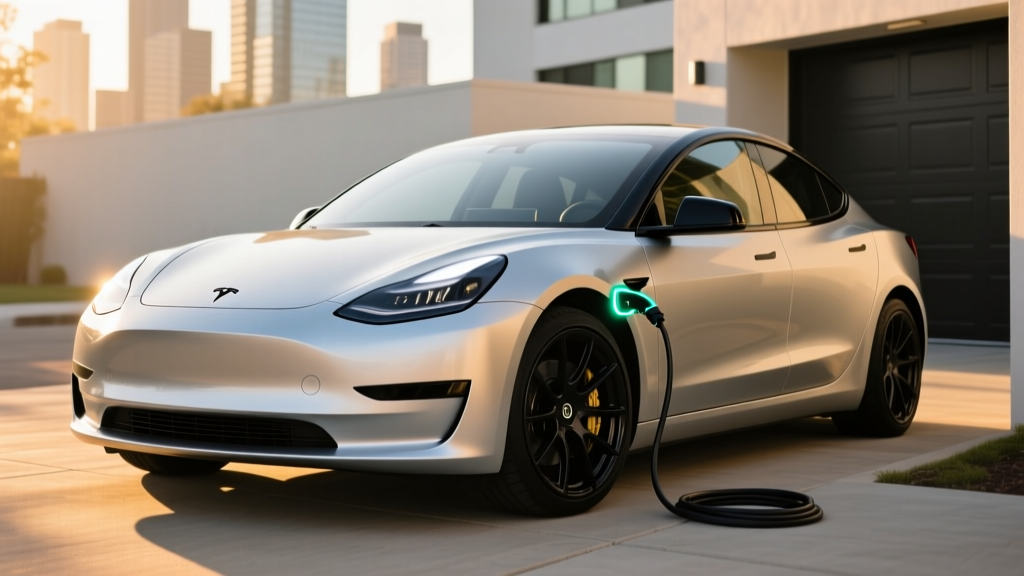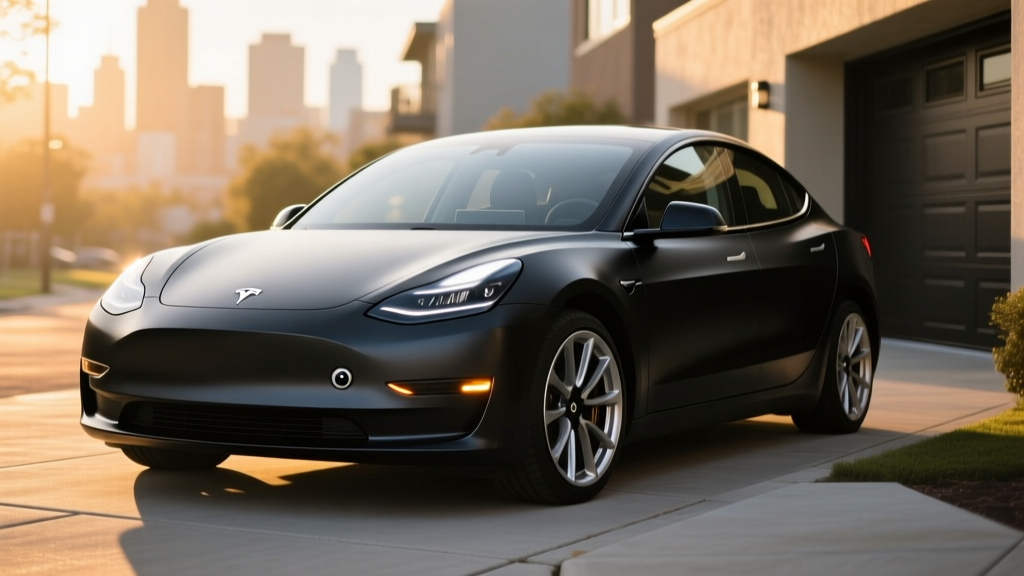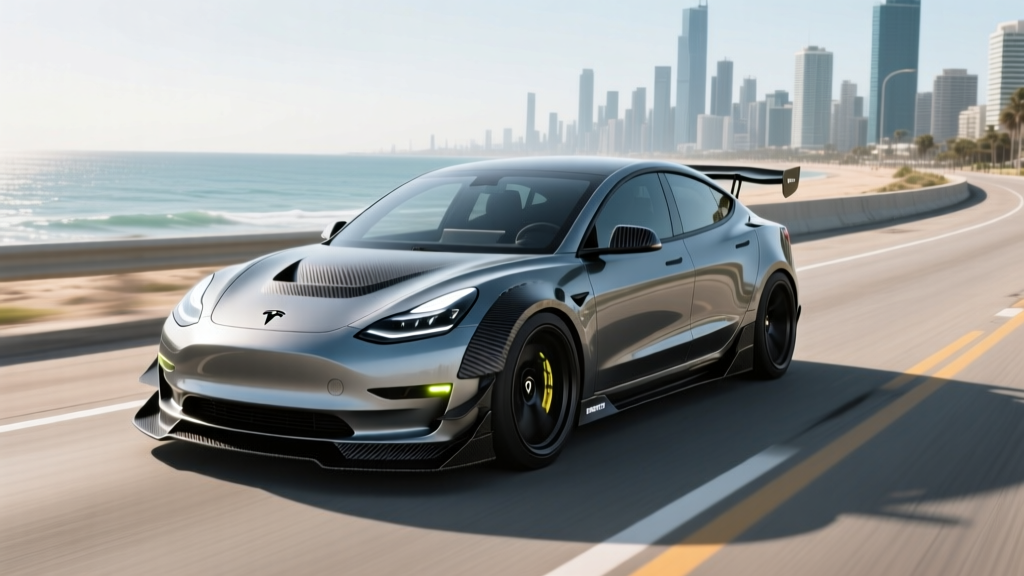
The Tesla Model 3 Performance has long occupied a unique space in the EV market: a compact sport sedan that hits 60 mph in the low-three-second range while offering over 300 miles of EPA range and access to the Supercharger network. But for enthusiasts who want to push beyond stock, the aftermarket ecosystem around the Model 3 has matured considerably. From coilover suspensions and lightweight forged wheels to software-based power unlocks, the modding scene is real—and growing.
This review covers the 2026 Tesla Model 3 Performance as it ships from the factory, then breaks down which aftermarket modifications deliver genuine performance gains, which are cosmetic-only, and which can void your warranty or degrade your range. Whether you're considering a set of lighter wheels or a full suspension overhaul, the data below will help you spend smart.
2026 Tesla Model 3 Performance: Factory Specs at a Glance
| Spec | Value |
|---|---|
| EPA Range | 315 miles |
| Battery (usable) | ~79 kWh, NMC (nickel manganese cobalt) |
| Drivetrain | Dual-motor AWD |
| Horsepower | 510 hp (combined) |
| Torque | 546 lb-ft |
| 0–60 mph | 2.9 seconds (with rollout subtracted) |
| Top Speed | 163 mph |
| Max DC Fast Charge | 250 kW (peak) |
| 10–80% DC Charge Time | ~25 minutes |
| Level 2 Home Charge Rate | 11.5 kW (~44 mi/hr) |
| Efficiency | 132 MPGe combined / 25 kWh/100 mi |
| Cargo Volume | 23 cu ft (trunk + frunk) |
| Rear Legroom | 35.3 inches |
| Curb Weight | ~4,065 lbs |
| Base MSRP | $54,990 (incl. destination) |
| Battery/Drive Unit Warranty | 8 years / 120,000 miles (min 70% retention) |
The 2026 Model 3 Performance rides on Tesla's "Highland" refresh platform, which introduced a stiffer body structure, revised suspension geometry, ventilated front seats, and a rear touchscreen for passengers. The NMC battery pack provides high energy density, which matters for sustaining the power output this trim demands. The LFP chemistry found in the base RWD Model 3 is not used here—NMC's superior power delivery characteristics make it the right choice for a performance application.
The EPA rates the 2026 Model 3 Performance at 315 miles. In mixed real-world driving at 70 mph highway speeds, expect approximately 265–285 miles in moderate temperatures (60–80°F). In cold weather (below 32°F), range can drop to 220–245 miles due to battery resistance and cabin heating demand. Tesla's heat pump mitigates this better than resistive heaters, but physics still applies. City driving with heavy regen use can match or slightly exceed the EPA number.
Which Tesla Model 3 Performance Mods Actually Work?
The EV aftermarket is different from the ICE world. There's no intake, exhaust, or turbo to swap. Performance gains come from three areas: reducing mass, improving mechanical grip, and software calibration. Here's what the data shows for each category.
Lightweight Forged Wheels: The Single Best Mod
The stock Model 3 Performance comes with 20-inch wheels wrapped in Michelin Pilot Sport 4S tires (235/35R20 front, 255/35R20 rear). These wheels weigh approximately 27–29 lbs each. Switching to a set of forged aluminum wheels (from brands like TSportline, V-Sport, or Unplugged Performance) can shed 4–7 lbs per corner. That's 16–28 lbs of unsprung mass reduction.
Why it matters: reducing unsprung weight improves suspension response, braking feel, and—critically for an EV—efficiency. Owners consistently report 5–12 Wh/mi improvement after switching to lighter wheels, which translates to roughly 8–15 additional miles of range on a full charge. You also gain sharper turn-in and better ride compliance over rough surfaces.
Cost: $1,800–$3,500 for a set of four forged wheels.
Range impact: +8 to +15 miles (real-world, depending on tire choice).
Warranty risk: Low. Tesla generally accepts aftermarket wheels as long as they are the correct size, offset, and load rating. Keep your stock wheels for warranty visits.
Coilover Suspension: Track Feel, Daily Drivable
The stock Model 3 Performance suspension is tuned for a blend of comfort and sport, but enthusiasts often want flatter cornering and adjustable ride height. Aftermarket coilover kits from MPP (Mountain Pass Performance), Unplugged Performance, and KW offer height-adjustable, damper-adjustable setups specifically valved for the Model 3's weight distribution.
MPP's Sport coilovers, for example, lower the car 15–25mm and significantly reduce body roll without making the ride punishing on typical US roads. The key is choosing a kit with proper spring rates for the Model 3's ~4,065-lb curb weight—too stiff and you'll upset the chassis over mid-corner bumps.
Cost: $2,200–$4,500 (plus ~$400–$600 installation).
Performance gain: Noticeably flatter cornering, adjustable ride height, improved steering feedback.
Warranty risk: Moderate. Suspension mods can be cited if Tesla attributes a driveline or subframe issue to altered geometry. Document your alignment specs.
Software Tunes: Proceed With Extreme Caution
Unlike ICE vehicles where an ECU flash is routine, Tesla's powertrain software is tightly integrated with battery thermal management, traction control, and regenerative braking systems. Third-party software "tunes" that claim to unlock additional power or alter regen behavior are rare and carry significant risk.
Tesla can detect modified software during service visits and over-the-air updates, and will almost certainly void your battery and drive unit warranty (the 8-year/120,000-mile coverage worth potentially $15,000+ in replacement costs). Tesla has also been known to remotely lock out vehicles with unauthorized software modifications.
Our recommendation: Avoid third-party powertrain software entirely. The risk-to-reward ratio is terrible. Use Tesla's built-in Track Mode instead, which adjusts torque distribution, cooling, and regen for circuit driving without voiding anything.
Aftermarket Brake Upgrades
The stock Model 3 Performance brakes are adequate for street use but can fade during repeated track laps. Aftermarket big brake kits (BBKs) from Brembo or AP Racing, adapted for the Model 3 by shops like Unplugged Performance, offer larger rotors and multi-piston calipers for sustained high-speed braking.
Cost: $4,000–$8,000 installed.
Use case: Track days and high-speed canyon driving. For daily commuting and occasional spirited driving, the stock brakes with upgraded pads (e.g., EBC Yellowstuff or Carbotech) at $300–$600 are sufficient.
Charging Speed: DC Fast Charge and Home Charging
| Charging Level | Power | Speed (Miles Added) | Notes |
|---|---|---|---|
| Level 1 (120V outlet) | ~1.4 kW | ~3–4 mi/hr | Emergency/trickle only |
| Level 2 (240V, 48A) | 11.5 kW | ~44 mi/hr | Full charge in ~8 hours |
| DC Fast Charge (peak) | 250 kW | ~1,000+ mi/hr (peak) | 10–80% in ~25 min |
| DC Fast Charge (sustained avg.) | ~140–160 kW | Varies | Curve tapers above 50% SoC |
A critical detail many spec sheets omit: the charge curve. The Model 3 Performance can peak at 250 kW, but only when the battery is preconditioned (via navigation to a Supercharger) and at a low state of charge (below 20%). From 10–50% SoC, you'll see sustained rates of 180–230 kW. Above 60%, the rate drops sharply to protect the NMC cells. The 10–80% time of ~25 minutes is accurate for a preconditioned pack at a V3 or V4 Supercharger.
For home charging, a Level 2 wall connector at 48 amps (11.5 kW) will add roughly 44 miles of range per hour. A full charge from 10% takes about 7–8 hours—ideal for overnight charging. Tesla's Wall Connector costs $475, and professional installation typically runs $500–$1,500 depending on your electrical panel's capacity. If your panel is maxed out at 100A, a panel upgrade to 200A can add $1,500–$3,000.
Pricing, Trims, and Federal Tax Credit Eligibility
| Trim | MSRP | Est. Price After §30D Credit |
|---|---|---|
| Model 3 RWD (Long Range) | $44,130 | ~$36,630 (if eligible) |
| Model 3 Long Range AWD | $49,130 | ~$41,630 (if eligible) |
| Model 3 Performance | $54,990 | ~$47,490 (if eligible) |
The 2026 Model 3 Performance starts at $54,990 including destination. As tested with Ultra Red paint ($2,000), white interior ($1,000), and FSD (Supervised) capability ($8,000), the price reaches approximately $65,990.
Federal tax credit eligibility under IRS §30D is nuanced. The Model 3 Performance qualifies for up to $7,500 if you meet all of the following requirements:
- MSRP cap: Sedans must be at or below $55,000. The Model 3 Performance at $54,990 clears this by $100. Adding options does not change the MSRP cap calculation—it's based on the base MSRP plus destination.
- Buyer income limits: Adjusted gross income must not exceed $150,000 (single), $225,000 (head of household), or $300,000 (joint filers).
- Battery sourcing: A percentage of critical minerals and battery components must be sourced from the US or free-trade-agreement partners. Tesla's US-built packs have largely met these thresholds for 2025–2026, but verify current eligibility on fueleconomy.gov before purchasing, as sourcing rules tighten annually.
- Point-of-sale transfer: As of 2024, the credit can be transferred to the dealer at purchase, reducing your out-of-pocket cost directly rather than waiting for tax filing.
Always confirm eligibility with a tax professional. Rules change, and your specific situation (lease vs. purchase, prior EV credit usage, state incentives) affects the final outcome.
Pros, Cons, and Who Should Buy the Model 3 Performance
- 2.9-second 0–60 mph is supercar territory
- 315 miles EPA range covers most road trips
- Supercharger network reliability (17,000+ US stalls)
- Over-the-air updates add features over time
- Track Mode is genuinely useful for circuit driving
- Low center of gravity from floor-mounted battery
- Mature aftermarket mod ecosystem
- FSD (Supervised) remains SAE Level 2—driver must stay engaged
- Rear seat legroom (35.3 in.) is tight for tall adults
- No Apple CarPlay or Android Auto
- Turn-signal stalks removed (steering-wheel buttons)
- Ride can be firm on rough roads, even stock
- Insurance premiums run 20–40% higher than comparable ICE sedans
- Suspension/powertrain mods risk warranty coverage
The Model 3 Performance is ideal for driving enthusiasts who also want a daily-commuter EV. It works as a primary vehicle for singles or couples without large cargo needs. It's a strong road-trip car thanks to Supercharger density. It is not ideal for families needing generous rear-seat space, for towing (not rated for towing), or for buyers who prefer physical buttons and CarPlay integration.
Tesla's Autopilot and FSD (Supervised) are SAE Level 2 driver-assistance systems. The driver must remain fully attentive, keep hands on the wheel (or demonstrate engagement), and be prepared to take over at any moment. These are not self-driving systems. Level 4 driverless operation (no human needed) is currently only available in limited robotaxi services like Waymo in select cities.
Competitor Comparison: Is the Model 3 Performance Still the Best?
The Model 3 Performance's closest competitors in 2026 include the BMW i4 M50, the Hyundai Ioniq 6 N, and the Porsche Taycan (base). Here's how they stack up on the numbers that matter:
| Spec | Tesla Model 3 Perf. | BMW i4 M50 | Ioniq 6 N | Porsche Taycan |
|---|---|---|---|---|
| 0–60 mph | 2.9 sec | 3.7 sec | 3.2 sec | 4.5 sec |
| EPA Range | 315 mi | 270 mi | 290 mi | 279 mi |
| Max DC Charge | 250 kW | 205 kW | 350 kW | 270 kW |
| Base MSRP | $54,990 | $69,900 | $62,500 | $92,000 |
| §30D Credit Eligible | Yes (up to $7,500) | No (MSRP cap) | No (MSRP + sourcing) | No (MSRP cap) |
| Cargo (cu ft) | 23 | 17 | 12 | 15 |
The Model 3 Performance wins on price, range, and straight-line acceleration. The Ioniq 6 N offers a more engaging "simulated shift" driving experience and faster peak charging (350 kW). The BMW i4 M50 and Porsche Taycan deliver superior interior quality and ride refinement but at significantly higher prices—and neither qualifies for the federal tax credit. If outright value-per-horsepower and Supercharger access matter most, the Model 3 Performance is still the benchmark.
Mod Budget Guide: Where to Spend Your First $5,000
If you're a new Model 3 Performance owner looking to allocate your first modification budget, here's the priority order based on measurable impact:
- Lightweight forged wheels + high-performance tires ($2,500–$3,500): Biggest bang for the buck. Improves handling, ride, efficiency, and braking simultaneously.
- High-performance brake pads ($300–$600): Carbotech XP10 or EBC Yellowstuff pads improve initial bite and fade resistance without a full BBK.
- Aftermarket sway bars ($600–$900): Reduces body roll without changing ride quality. A good intermediate step before coilovers.
- Coilover suspension ($2,200–$4,500): Save for this after wheels/tires. It transforms the car's dynamics but is a larger investment.
Avoid spending on cosmetic-only carbon fiber parts, "range-extending" underbody panels (marginal gains of 1–2%), or any software modification that touches the powertrain.
Frequently Asked Questions
What is the real-world range of the 2026 Model 3 Performance?
The EPA rates it at 315 miles. Expect 265–285 miles in real-world highway driving at 70°F, and 220–245 miles in freezing temperatures. City driving with regen can approach or exceed the EPA number.
How fast does it charge at home and on the road?
At home on a Level 2 (240V, 48A) charger, it adds ~44 miles per hour (11.5 kW). On a V3/V4 Supercharger, it peaks at 250 kW and charges from 10–80% in approximately 25 minutes when preconditioned.
How much does the Model 3 Performance cost after the federal tax credit?
The base MSRP is $54,990. If you qualify for the full $7,500 §30D credit (meeting income, MSRP, and battery-sourcing requirements), the effective price drops to approximately $47,490. Verify current eligibility on fueleconomy.gov and with a tax professional.
Does the Model 3 Performance qualify for the federal EV tax credit?
Yes, the 2026 Model 3 Performance qualifies for up to $7,500 under IRS §30D, provided the buyer's income is within limits ($150K single / $300K joint), and the vehicle meets current battery-sourcing requirements. The MSRP of $54,990 is under the $55,000 sedan cap.
Will aftermarket mods void my Tesla warranty?
Wheels and tires generally will not. Suspension modifications can be cited if Tesla attributes a related failure to the mod. Any software modification to the powertrain will almost certainly void the 8-year/120,000-mile battery and drive unit warranty. The Magnuson-Moss Warranty Act offers some protection, but fighting Tesla on a denied claim is costly and uncertain.
Is the Model 3 Performance worth buying over the BMW i4 M50 or Ioniq 6 N?
If value, range, and charging infrastructure are your priorities, yes—the Model 3 Performance is $10,000–$37,000 less expensive and offers the longest range and best Supercharger access. If interior luxury (BMW) or track-day engagement with simulated shifts (Hyundai) matter more, those are compelling alternatives at a premium.