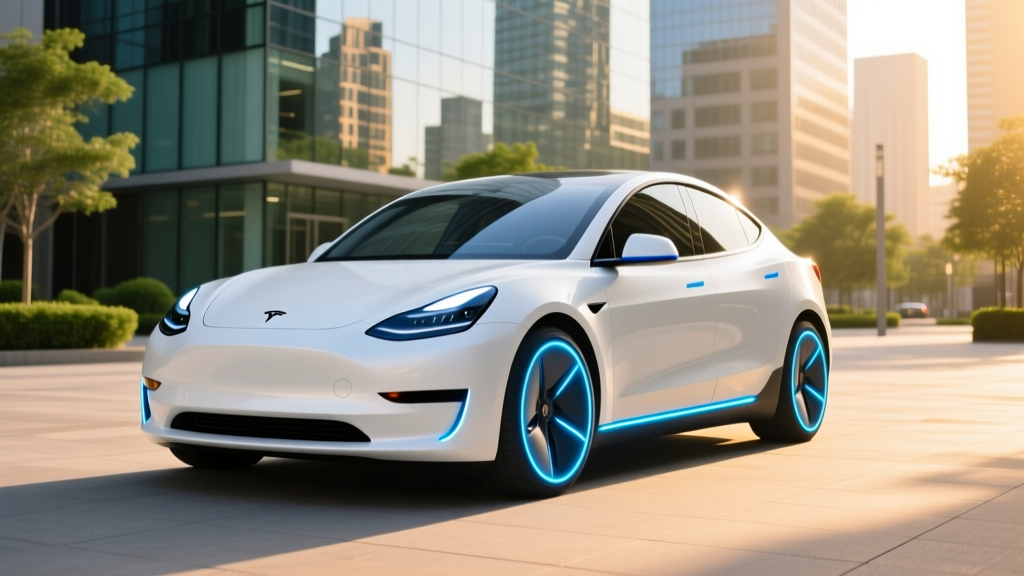
The Tesla Model 3 Performance has long occupied a unique space in the EV market: a sport sedan that undercuts legacy performance cars on price while delivering supercar-rivaling acceleration. For 2026, the Model 3 Performance (internally known as the "Highland" refresh carried forward) continues to refine its cabin materials, ride quality, and technology suite — addressing the most common complaints from early Model 3 owners. This review examines the 2026 Tesla Model 3 Performance interior, along with the range, charging, and ownership data that matter most to buyers.
Quick Verdict: Who the Model 3 Performance Is For
If you want a daily-drivable electric sport sedan with a minimalist but well-built cabin, access to the most reliable DC fast-charging network in North America, and sub-3-second 0-60 mph acceleration, the Model 3 Performance remains the benchmark at its price point. It best suits solo drivers or couples who prioritize driving dynamics and tech over rear-seat space and traditional luxury cues. Families needing maximum cargo room or buyers who prefer physical controls should look to the Hyundai Ioniq 5 N or BMW i4 M50 instead.
2026 Tesla Model 3 Performance Interior: Materials, Space & Tech
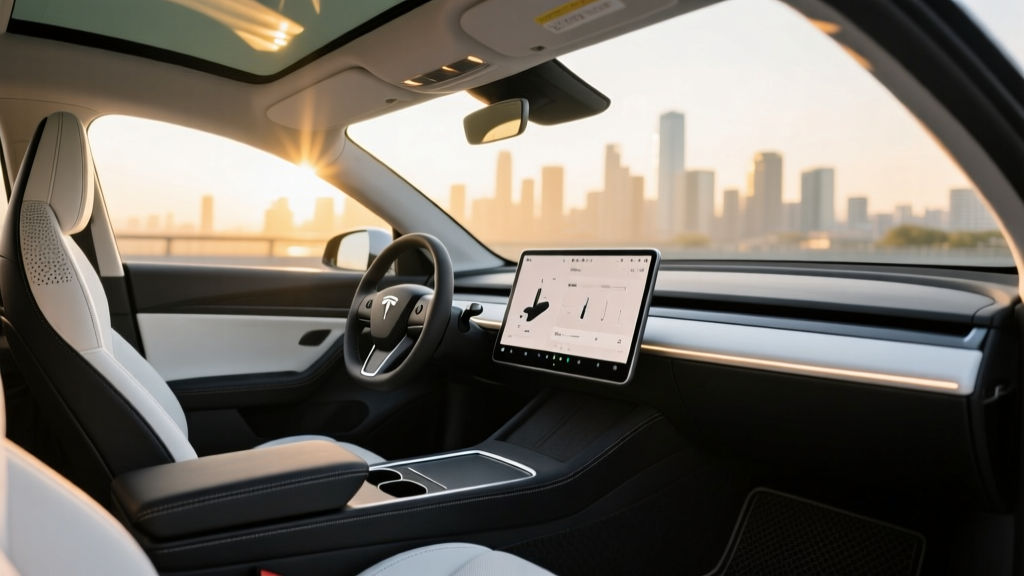
The Highland refresh brought meaningful upgrades to a cabin that was, frankly, the Model 3's weakest link in its early years. For 2026, Tesla continues with the revised interior architecture:
Materials and Build Quality
Soft-touch materials now cover the dashboard top, door uppers, and center console — a stark departure from the hard plastics of pre-2024 Model 3s. The seats in the Performance trim use a sport-oriented bolster design with a textile-and-synthetic-leather combination (Tesla has moved away from the full "vegan leather" branding). Panel gaps, historically a Tesla sore spot, have improved substantially at the Fremont and Shanghai plants, though we still recommend inspecting delivery vehicles carefully.
Infotainment and Controls
The 15.4-inch center touchscreen remains the nerve center of the car. There is no instrument cluster — speed, range, and navigation appear on a slim strip at the top of the center display or, in the Performance, on a secondary 8-inch rear touchscreen for passengers. The turn-signal stalks have been eliminated; signals are activated via steering-wheel buttons, which remains polarizing. Climate vent direction is adjusted entirely through the screen. Ventilated front seats and ambient lighting are standard on the Performance trim.
Passenger and Cargo Dimensions
| Measurement | Specification |
|---|---|
| Front headroom | 40.3 in |
| Front legroom | 42.7 in |
| Rear headroom | 37.8 in |
| Rear legroom | 35.2 in |
| Trunk (rear cargo) | 21.0 cu ft |
| Frunk (front trunk) | 3.1 cu ft |
| Total cargo volume | 24.1 cu ft |
Rear-seat space is adequate for adults on shorter trips but tight for anyone over 6 feet on longer drives. The trunk opening is narrower than a Model Y's liftgate, limiting bulky-item practicality.
Range, Battery & Efficiency: Real-World Expectations
Real-World Expectation: ~260–280 miles on highway road trips at 70-80 mph; ~220–250 miles in freezing temperatures (below 32°F) with cabin heat. City/regenerative driving can match or slightly exceed the EPA sticker.
The 2026 Model 3 Performance uses an NMC (nickel manganese cobalt) lithium-ion battery pack with approximately 82 kWh usable capacity. Tesla does not publish official pack chemistry per trim, but the Performance variant's energy density requirements and AWD configuration point to NMC rather than the LFP chemistry found in the RWD Standard Range model.
| Specification | Value |
|---|---|
| Battery chemistry | NMC (nickel manganese cobalt) |
| Usable battery capacity | ~82 kWh |
| EPA range | 315 miles |
| EPA efficiency | 113 MPGe combined (30 kWh/100 mi) |
| Drivetrain | Dual-motor AWD |
Efficiency is a Tesla strong suit. The Model 3 Performance's ~30 kWh/100 mi figure is competitive with the BMW i4 M50 (which is heavier) and significantly better than the Hyundai Ioniq 5 N under similar driving conditions. Per fueleconomy.gov, the Model 3 Performance ranks among the most efficient AWD performance sedans available.
Charging Speed: DC Fast, Level 2 & Home Setup
Charging speed determines road-trip viability and daily convenience. Here's what the 2026 Model 3 Performance delivers across charging levels:
| Charging Level | Power / Rate | Speed / Time |
|---|---|---|
| Level 1 (120V household) | ~1.4 kW | ~3–4 miles per hour |
| Level 2 (240V home, 48A) | 11.5 kW (onboard charger max) | ~44 miles per hour; full charge in ~8 hours |
| DC Fast Charge (peak) | 250 kW (Supercharger V3/V4) | 10–80% in ~25 minutes |
| DC Fast Charge (CCS adapter) | Up to 250 kW at compatible stations | Varies by station output |
Charging curve reality: The Model 3 Performance peaks at 250 kW only when the battery is preconditioned (navigating to a Supercharger triggers this automatically) and state of charge is below ~40%. Above 50% SoC, power tapers to ~150 kW, and above 80% it drops sharply to protect battery longevity. Plan road-trip stops around the 10–80% window for fastest throughput.
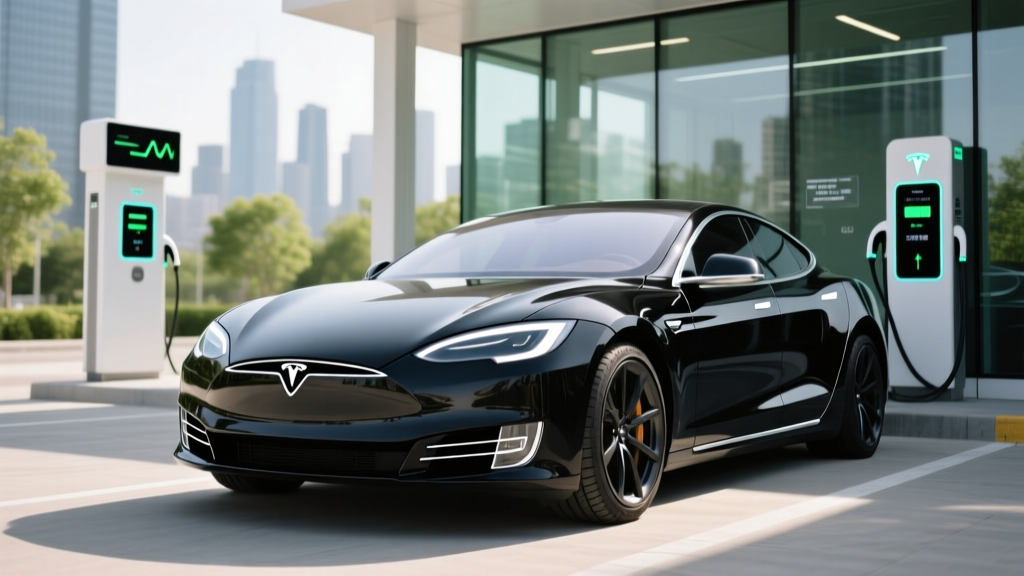
Tesla's North American Charging Standard (NACS) connector is now the industry standard adopted by Ford, GM, Rivian, and others. Model 3 owners have native access to over 17,000 Supercharger stalls in North America — a decisive advantage over competitors relying on Electrify America or third-party networks with lower uptime.
Performance: Acceleration, Handling & Ride Quality
| Specification | Value |
|---|---|
| 0–60 mph | 2.9 seconds (with rollout subtracted) |
| Horsepower | 510 hp (combined) |
| Torque | 546 lb-ft |
| Top speed | 163 mph |
| Drivetrain | Dual-motor all-wheel drive |
| Suspension | Adaptive dampers (Performance-tuned) |
The Highland refresh introduced adaptive dampers to the Performance trim, replacing the earlier fixed setup that drew criticism for being too stiff on rough pavement. The 2026 model offers selectable drive modes that adjust damper firmness, throttle response, and regen levels. The new rear-drive-dominant torque bias gives the car a more neutral handling character compared to the understeer-prone earlier dual-motor setup.
Track Mode remains available for closed-course driving, enabling adjustable stability control, torque distribution, and cooling management. Regenerative braking is strong enough for one-pedal driving in most conditions, though Tesla has reintroduced a low-regen setting for drivers who prefer coasting.
Pricing, Tax Credits & Ownership Costs
| Item | Amount |
|---|---|
| Base MSRP (Performance AWD) | $52,990 |
| Destination fee | $1,390 |
| As-tested (Ultra Red, 20" wheels, FSD) | ~$62,490 |
| Federal §30D tax credit (if eligible) | Up to $7,500 |
| Effective price after max credit | ~$45,490 (base) |
Federal tax credit eligibility (§30D): The Model 3 Performance qualifies for up to $7,500 in federal tax credits, but eligibility depends on several conditions per current IRS rules:
- MSRP cap: Sedans must be under $55,000 MSRP. The base Model 3 Performance at $52,990 qualifies; adding options that push MSRP above $55,000 may disqualify the credit.
- Buyer income cap: Modified adjusted gross income must not exceed $150,000 (single), $225,000 (head of household), or $300,000 (joint).
- Battery sourcing: Critical minerals and battery component requirements phase in annually. Tesla's shift toward North American-sourced materials has kept the Model 3 eligible, but always verify current-year status on fueleconomy.gov before purchasing.
- Point-of-sale transfer: Eligible buyers can transfer the credit to the dealer at purchase, receiving the discount upfront rather than waiting to claim it on their tax return.
Note: Tax credit rules are subject to legislative change. Consult a tax professional and verify eligibility at the time of purchase.
5-Year Ownership Cost Snapshot
Compared to a similarly quick BMW M340i xDrive, the Model 3 Performance saves substantially on fuel (electricity vs. premium gasoline), has zero oil changes, and benefits from lower scheduled maintenance. However, insurance premiums for the Model 3 Performance tend to run 15–25% higher than average sedans due to repair-cost data. Tesla's own insurance product is available in many states and uses real-time driving data to set rates.
Driver Assistance & Autonomy: Autopilot and FSD
The 2026 Model 3 Performance ships with Tesla's basic Autopilot (traffic-aware cruise control and lane centering) standard. Full Self-Driving (Supervised) remains an $8,000 option or $99/month subscription and adds automated lane changes, city-street navigation, traffic-light recognition, and parking assist. Hardware 4.0 (HW4) cameras and processing are standard, offering improved low-light and rain performance over the older HW3 system.
Pros, Cons & Competitor Comparison
Pros
- Sub-3-second 0-60 mph at a sub-$55K starting price
- Best-in-class Supercharger network access (17,000+ stalls)
- Industry-leading efficiency (~30 kWh/100 mi)
- Upgraded interior materials and adaptive suspension
- Strong over-the-air update cadence adds features post-purchase
- Eligible for up to $7,500 federal tax credit (base MSRP)
Cons
- No physical controls — everything routed through touchscreen
- Turn-signal buttons on steering wheel remain divisive
- Rear seat is tight for tall adults on long trips
- No Apple CarPlay or Android Auto integration
- FSD (Supervised) is expensive and still requires full driver attention
- Insurance costs above segment average
Key Competitors at a Glance
| Model | 0-60 mph | EPA Range | Base MSRP | DC Fast Peak |
|---|---|---|---|---|
| Tesla Model 3 Performance | 2.9s | 315 mi | $52,990 | 250 kW |
| BMW i4 M50 | 3.7s | 270 mi | $69,700 | 205 kW |
| Hyundai Ioniq 5 N | 3.4s | 221 mi | $66,100 | 238 kW |
| Polestar 2 BST | 4.1s | 276 mi | $64,900 | 205 kW |
The Model 3 Performance wins on price, range, and charging-network access. The Ioniq 5 N offers a more engaging, driver-focused experience with simulated gear shifts and a hot-hatch form factor. The BMW i4 M50 delivers a more traditional luxury interior with physical controls and superior sound insulation but at a significant price premium.
Battery Warranty & Long-Term Ownership
Tesla covers the Model 3 Performance battery and drive unit with an 8-year / 120,000-mile warranty (whichever comes first), with a minimum 70% capacity retention threshold. Real-world data from fleet operators and Tesla's own impact reports suggest NMC packs in the Model 3 lose approximately 10–12% capacity over the first 150,000 miles, with degradation tapering significantly after the initial break-in period.
The vehicle's limited warranty covers 4 years / 50,000 miles bumper-to-bumper. Tesla does not offer a free maintenance plan, but scheduled service needs are minimal — cabin air filter replacements, brake fluid checks (regen braking minimizes pad wear), and tire rotations are the primary items.
Frequently Asked Questions
What is the real-world range of the 2026 Tesla Model 3 Performance?
The EPA rates it at 315 miles. In real-world highway driving at 70-80 mph, expect 260-280 miles. In freezing temperatures with cabin heating, range can drop to 220-250 miles. City driving with regenerative braking may slightly exceed the EPA figure.
How fast does the Model 3 Performance charge at home and on the road?
At home on a 240V Level 2 charger (48 amps), the onboard charger accepts up to 11.5 kW, adding roughly 44 miles of range per hour and fully charging overnight in about 8 hours. On DC fast chargers (Tesla Superchargers), it peaks at 250 kW and charges from 10-80% in approximately 25 minutes with battery preconditioning.
Does the 2026 Tesla Model 3 Performance qualify for the federal EV tax credit?
Yes, the base Model 3 Performance at $52,990 MSRP qualifies for up to $7,500 under IRS §30D, provided the buyer meets income caps ($150K single / $300K joint) and battery-sourcing requirements are met at time of purchase. Options that push MSRP above $55,000 may disqualify the vehicle. Always verify current eligibility on fueleconomy.gov.
Is the Tesla Model 3 Performance worth buying over competitors?
If you value acceleration, range, efficiency, and Supercharger network access at a competitive price, yes. If you prefer physical controls, a traditional luxury interior, or Apple CarPlay, the BMW i4 M50 or Polestar 2 may suit you better despite higher pricing and lower range.
Does the Model 3 Performance have Apple CarPlay or Android Auto?
No. Tesla uses its proprietary infotainment system exclusively. Navigation, music streaming, and phone integration are handled through Tesla's native apps and Bluetooth. This is a dealbreaker for some buyers who rely on CarPlay for familiar interfaces.
How does the Highland interior compare to older Model 3 cabins?
Significantly improved. Soft-touch materials replace hard plastics, ambient lighting is standard, ventilated seats are included on the Performance, and panel gaps are tighter. The elimination of turn-signal stalks and gear stalk (now a screen swipe) takes adaptation but cleans up the steering column visually.