Tesla Model 3 Performance: The Specs That Matter
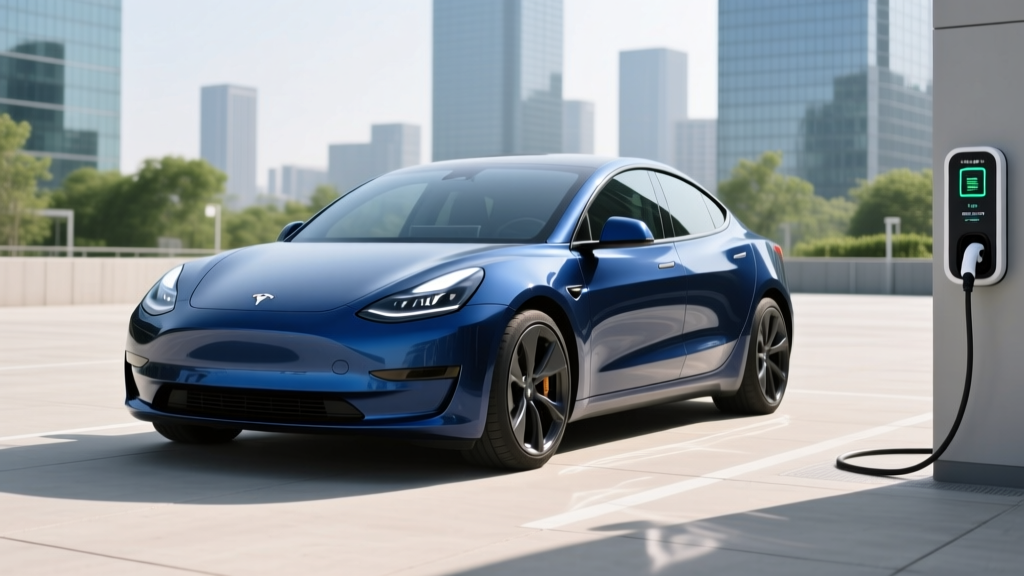
The Tesla Model 3 Performance remains the benchmark for affordable electric sport sedans. With dual-motor all-wheel drive, track-tuned suspension, and access to the largest DC fast-charging network in North America, it occupies a narrow lane: a daily-drivable EV that can genuinely hold its own on a road course. For 2026, the refreshed "Highland" generation continues with meaningful interior and chassis upgrades over the pre-2024 model, while the powertrain output has been revised upward. Below, we dissect the numbers buyers actually need — from the real-world range you can expect on a highway road trip to the exact charging curve at a Supercharger.
| Spec | Value |
|---|---|
| EPA Range | 315 miles |
| Battery (usable) | ~79 kWh, NMC (nickel manganese cobalt) |
| Drivetrain | Dual-motor AWD |
| Horsepower | 510 hp (combined) |
| Torque | 546 lb-ft |
| 0–60 mph | 2.9 seconds |
| Top Speed | 163 mph |
| Max DC Fast Charge | 250 kW (peak) |
| 10–80% DC Charge Time | ~25 minutes |
| Level 2 Home Charging | 11.5 kW (~44 mi/hr) |
| EPA Efficiency | 121 MPGe combined / 28 kWh/100 mi |
| Cargo Volume | 23 cu ft (trunk + frunk combined) |
| Base MSRP | $54,990 (before incentives) |
| Battery Warranty | 8 years / 120,000 miles (min 70% retention) |
Horsepower, Acceleration, and the Dual-Motor Powertrain
The headline figure is 510 horsepower and 546 lb-ft of torque from the dual-motor all-wheel-drive system. Tesla pairs a permanent-magnet synchronous motor on the rear axle with an induction motor up front. The rear motor handles the bulk of propulsion and regenerative braking duties, while the front motor provides torque vectoring, traction recovery, and additional power under hard acceleration.
The 2.9-second 0–60 mph time is not just a spec-sheet number — it is repeatable. Unlike internal-combustion performance sedans that lose pace as ambient temperature climbs or altitude increases, the Model 3 Performance's electric drivetrain delivers consistent launch performance. The new-generation adaptive damping system (standard on Performance trims) firms up under Track Mode, reducing body roll and improving corner-exit grip.
For context, this powertrain output places the Model 3 Performance in the territory of a BMW M3 Competition (503 hp, ~$80,000) or an Audi RS 5 (444 hp, ~$78,000) — at a fraction of the MSRP and with zero tailpipe emissions during operation.
EPA Range vs. Real-World Expectations
EPA Estimated Range: 315 miles
Real-World Expectation: Plan for approximately 260–280 miles on a sustained highway trip at 70–75 mph. In cold weather (below 32°F), expect a further 15–25% reduction, bringing usable highway range down to roughly 200–230 miles before needing to charge.
The EPA cycle blends city and highway driving with climate-control load, and Tesla's efficiency engineering — including a standard heat pump for cabin heating and battery thermal management — helps the Model 3 Performance score well. However, electric vehicles lose proportionally more range at sustained highway speeds than gas cars do, because there are no gears to optimize the motor's operating efficiency at 75 mph. Aerodynamic drag increases with the square of speed, and the Performance trim's staggered 20-inch wheels and wider rear tires add rolling resistance compared to the Long Range trim's 18- or 19-inch setups.
Cold weather compounds the issue. Lithium-ion cells operate less efficiently at low temperatures, and cabin heating draws significant power even with the heat pump. In our experience with NMC packs in the Highland-generation Model 3, preconditioning the battery (via the Tesla app or navigation to a Supercharger) recovers some of that lost efficiency by warming the cells before driving or charging. Always precondition in winter — it is the single highest-impact habit for cold-climate EV owners.
Charging Speed: DC Fast and Home Level 2
The Model 3 Performance retains the NACS (North American Charging Standard) connector natively, meaning direct access to Tesla's Supercharger network — the most reliable and extensive DC fast-charging infrastructure in the United States. No adapter is needed at Tesla stalls, and as of 2026, the Supercharger network has largely phased out CCS adapter requirements for non-Tesla vehicles.
| Charging Level | Power | Speed / Time |
|---|---|---|
| Level 1 (120V household) | ~1.4 kW | ~3–4 miles per hour |
| Level 2 (240V home, 48A) | 11.5 kW | ~44 miles per hour; full charge in ~7 hours |
| DC Fast Charge (Supercharger V3) | 250 kW peak | 10–80% in ~25 minutes |
| DC Fast Charge (Supercharger V4) | Up to 250 kW | Similar curve; improved stall availability |
A critical detail that spec sheets gloss over: peak kW is not sustained kW. The Model 3 Performance hits its 250 kW peak only at a low state of charge (roughly 10–20% SoC) and with a preconditioned battery. As the pack fills, the charge rate tapers to protect cell longevity. From 50–80%, you will see rates closer to 80–120 kW. Above 80%, charging slows dramatically — often below 40 kW — which is why Tesla's navigation system typically recommends charging to 80% on road trips rather than waiting for a full pack.
For home charging, a 48-amp Level 2 wall connector on a 60-amp circuit delivers 11.5 kW, adding roughly 44 miles of range per hour. Most owners who plug in overnight will wake up to a full charge regardless of daily driving distance. Installation of a 240V/60A circuit typically costs $500–$2,000 depending on panel proximity and local permit requirements — budget for a licensed electrician to assess your panel capacity before purchase.
Pricing, Trims, and Federal Tax Credit Eligibility
The 2026 Tesla Model 3 Performance starts at a base MSRP of $54,990, including destination. This places it $1,000 below the IRS §30D MSRP cap of $55,000 for sedans, making it potentially eligible for the full $7,500 federal clean vehicle tax credit — but eligibility is not automatic. Buyers must satisfy all of the following:
- Income caps: Modified AGI must not exceed $150,000 (single filer), $225,000 (head of household), or $300,000 (married filing jointly).
- MSRP cap: Vehicle base MSRP must be at or below $55,000 for sedans. Adding options that push the transaction price above this threshold does not disqualify the vehicle — only the manufacturer's stated MSRP matters.
- Battery sourcing: A percentage of critical minerals and battery components must be sourced from the U.S. or free-trade-agreement partners. These thresholds increase annually. Tesla has historically met these requirements for U.S.-built Model 3 variants, but confirm current-year eligibility on fueleconomy.gov before purchasing.
- Point-of-sale transfer: As of 2024, buyers can transfer the credit to the dealer at purchase, reducing the out-of-pocket price directly rather than waiting to claim it on their tax return.
| Scenario | Price |
|---|---|
| Base MSRP | $54,990 |
| With Ultra Red paint + 20" wheels | $57,490 |
| After $7,500 federal credit (if eligible) | $47,490 (base) |
| After potential state incentives (varies) | Check local programs |
State and local incentives vary widely and are not covered here — check your state's energy office or the AFDC state incentive database for current programs. Consult a tax professional to confirm your personal eligibility for §30D before relying on the credit in your purchase budget.
Interior, Technology, and Cargo
The Highland-generation Model 3 interior is a marked improvement over the pre-2024 cabin. Ventilated front seats, ambient lighting, a rear-seat touchscreen for climate and media control, and acoustic glass all around reduce noise and improve comfort. The 15.4-inch central touchscreen handles all vehicle functions — there are no physical buttons for climate, mirrors, or glovebox operation. This minimalist approach divides opinion: some owners appreciate the clean aesthetic, while others find the touchscreen-only interface distracting while driving.
The infotainment system supports streaming (Netflix, YouTube, Spotify) while parked, over-the-air software updates, and a built-in trip planner that factors in elevation, temperature, and charging-station availability for route planning. Apple CarPlay and Android Auto remain unsupported — Tesla's proprietary system is the only interface.
Cargo capacity totals approximately 23 cubic feet: 19.8 cu ft in the rear trunk and roughly 3.1 cu ft in the front trunk (frunk). Rear legroom measures 35.2 inches, adequate for adults on shorter trips but tighter than a midsize sedan like the Hyundai Ioniq 6. The rear seat folds 60/40 for longer cargo, though the trunk opening is narrower than a hatchback or crossover.
Driver Assistance: Autopilot and FSD (Supervised)
SAE Automation Level: Level 2
Tesla Autopilot and Full Self-Driving (Supervised) are Level 2 driver-assistance systems, not autonomous driving. The driver must remain fully engaged, with hands on the wheel and eyes on the road, at all times. Tesla's steering-wheel torque monitoring and cabin camera enforce this requirement. Only Level 4 services like Waymo operate without a human driver in defined geographic zones.
Autopilot (standard) includes adaptive cruise control, lane-centering, and automatic emergency braking. FSD (Supervised), available as a $8,000 option or $99/month subscription, adds navigation-guided lane changes, traffic-light and stop-sign recognition, and enhanced urban street driving. The system has improved substantially through neural-network-based "end-to-end" software (v12 and later), but it still makes errors — particularly in construction zones, during heavy rain, and at complex unprotected left turns.
The Insurance Institute for Highway Safety (IIHS) has tested the Model 3 and awarded it strong crash-test ratings. Check the latest results on iihs.org. Autopilot does not replace attentive driving — treat it as a fatigue-reduction tool on long highway stretches, not a chauffeur.
Ownership Costs and Warranty
Tesla covers the Model 3 Performance with a basic vehicle warranty of 4 years / 50,000 miles and a battery and drive unit warranty of 8 years / 120,000 miles, guaranteeing a minimum of 70% battery capacity retention over that period. NMC chemistry in the Model 3 Performance offers higher energy density than the LFP packs used in the RWD trim, but NMC is more sensitive to sustained high states of charge. Tesla recommends daily charging to 80% for NMC packs and 100% only for longer trips — following this guidance helps preserve long-term battery health.
Insurance premiums for the Model 3 Performance are typically 20–40% higher than for the Long Range or RWD trims, reflecting the higher repair costs and performance capability. Get quotes before purchasing. Maintenance costs are low — no oil changes, no spark plugs, minimal brake wear thanks to regenerative braking — but tire replacement on the Performance's staggered 20-inch setup can run $1,200–$1,800 for a set of four performance summer tires.
How It Stacks Up Against Competitors
The Model 3 Performance's closest rivals include the BMW i4 M50, the Hyundai Ioniq 6 N, and the Polestar 2 Long Range Dual Motor with Performance Pack. The i4 M50 offers more traditional luxury materials and Apple CarPlay but starts near $70,000 and lacks Supercharger access (though BMW has partnered with Electrify America). The Ioniq 6 N is a thrilling driver's car with simulated gear shifts and an 800V architecture enabling 10–80% charging in ~18 minutes, but its real-world range is lower (~220–240 miles highway). The Polestar 2 is refined and well-built but trails on 0–60 time and charging speed.
Where the Model 3 Performance wins outright: the Supercharger network. For owners who road-trip regularly, the reliability and geographic coverage of Tesla's DC fast-charging network remains a decisive advantage. Third-party networks (Electrify America, EVgo, ChargePoint) have improved but still trail on uptime and ease of use.
Choose the Tesla Model 3 Performance if: You want the best combination of acceleration, range, and charging infrastructure at this price point, and you are comfortable with a touchscreen-centric interior and no Apple CarPlay.
Consider the Hyundai Ioniq 6 N if: You prioritize engagement and track-day fun over maximum range, and you want 800V ultra-fast charging capability.
Consider the BMW i4 M50 if: You value traditional luxury, physical controls, CarPlay, and are willing to pay a $15,000+ premium.
Pros and Cons
Pros
- 510 hp and 2.9-second 0–60 at a sub-$55K MSRP
- 315-mile EPA range with strong real-world highway efficiency
- Native Supercharger access — the best public charging network
- Over-the-air updates continuously add features
- Strong crash-test ratings and standard active safety
- Low ongoing maintenance costs
Cons
- No Apple CarPlay or Android Auto
- Touchscreen-only controls can distract while driving
- Rear seat and trunk space tighter than midsize rivals
- Insurance premiums significantly above segment average
- NMC battery benefits from 80% daily charge limit (vs. LFP's 100% tolerance)
- FSD (Supervised) is impressive but not autonomous — Level 2 only
Frequently Asked Questions
What is the real-world range of the Tesla Model 3 Performance?
The EPA rates it at 315 miles, but real-world highway driving at 70–75 mph yields approximately 260–280 miles. In cold weather (below freezing), plan for 200–230 miles before needing to charge. Preconditioning the battery and using seat heaters instead of cabin heat can recover some lost range.
How fast does the Model 3 Performance charge at home and on the road?
At home on a 240V Level 2 charger (48A/11.5 kW), it adds roughly 44 miles of range per hour — a full overnight charge. On a Tesla V3 Supercharger, it peaks at 250 kW and charges from 10–80% in approximately 25 minutes, though the rate tapers significantly above 50% SoC.
Does the 2026 Model 3 Performance qualify for the $7,500 federal EV tax credit?
It can, but eligibility depends on your income (AGI caps apply), the vehicle's MSRP (must be at or below $55,000 for sedans), and battery-component and critical-mineral sourcing requirements that change annually. Confirm current eligibility on fueleconomy.gov and consult a tax professional before relying on the credit.
How much horsepower does the Tesla Model 3 Performance have?
The 2026 Model 3 Performance produces 510 horsepower and 546 lb-ft of torque from its dual-motor all-wheel-drive system, enabling a 2.9-second 0–60 mph time.
Is the Model 3 Performance worth buying over the Long Range trim?
If you value acceleration, adaptive suspension, and track capability, the Performance justifies its premium (roughly $7,000 over the Long Range AWD). If your priority is maximum range and lower cost, the Long Range AWD (EPA 341 miles, ~$47,990) is the better daily commuter. The Performance trades ~26 miles of EPA range for substantially more power and chassis hardware.
What is the battery warranty on the Model 3 Performance?
Tesla covers the battery and drive unit for 8 years or 120,000 miles, whichever comes first, with a guaranteed minimum of 70% capacity retention during that period.