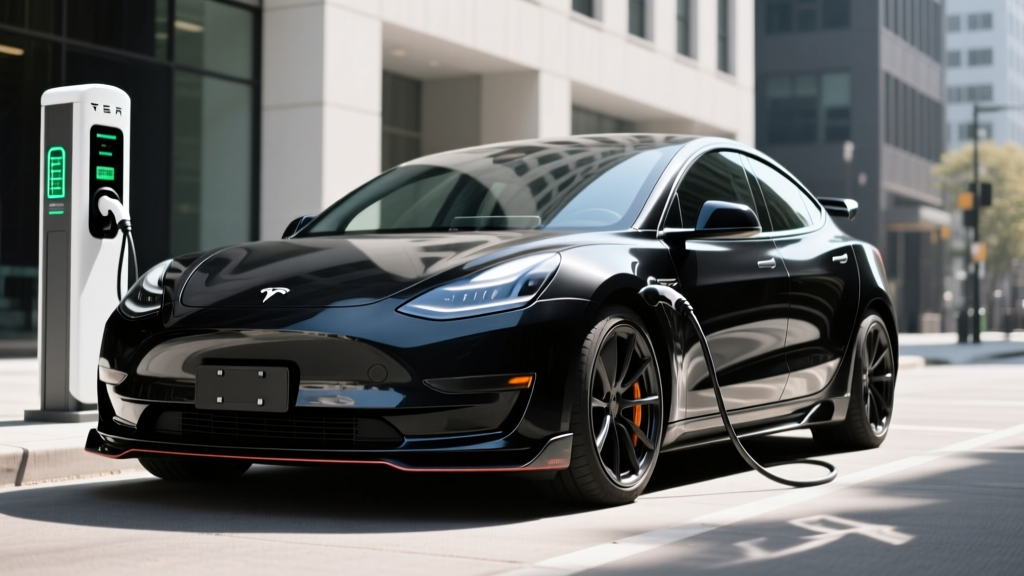
The Tesla Model 3 Performance badge represents the flagship of Tesla's refreshed sedan lineup — a dual-motor, all-wheel-drive EV that pairs track-capable acceleration with the longest EPA range in the Model 3 family. For 2026, the Performance variant continues to offer a compelling mix of sub-3-second 0-60 times, access to the Supercharger network, and a price point that undercuts most performance sedans — gas or electric. But specs alone don't tell the full ownership story. This review breaks down real-world range expectations, charging-curve behavior, federal tax credit eligibility under current IRS §30D rules, and the practical trade-offs buyers need to weigh before signing.
Tesla Model 3 Performance Badge: Quick Verdict
The Model 3 Performance is best understood as a sports sedan that happens to be electric. With 510 horsepower, adaptive damping, and Track Mode, it competes directly with the BMW M3, Audi RS5, and Porsche Taycan — while delivering over 300 miles of EPA range and lower running costs. The 2026 model year carries forward the Highland refresh architecture introduced in late 2023, with ventilated seats, an upgraded sound system, ambient lighting, and rear passenger touchscreen as standard. It's an outstanding choice for driving enthusiasts who want daily usability and road-trip capability, though the minimalist interior and reliance on touchscreen controls remain polarizing.
Spec Table: 2026 Tesla Model 3 Performance
| Specification | Value |
|---|---|
| EPA Estimated Range | 346 miles |
| Battery Capacity (Usable) | ~79 kWh (NMC chemistry) |
| Drivetrain | Dual-Motor AWD |
| Horsepower | 510 hp |
| Torque | 546 lb-ft |
| 0-60 mph | 2.9 seconds |
| Top Speed | 163 mph |
| Max DC Fast Charge Rate | 250 kW (peak) |
| 10-80% DC Fast Charge Time | ~25 minutes |
| Level 2 Home Charge Rate | 11.5 kW (~44 mi/hr) |
| MPGe (Combined) | 121 MPGe |
| Efficiency | 28 kWh/100 mi |
| Cargo Volume | 23 cu ft (trunk + frunk) |
| Rear Legroom | 34.9 inches |
| Battery Warranty | 8 years / 120,000 miles |
| Base MSRP | $54,990 (before destination) |
Range and Efficiency: EPA vs. Real-World
Real-World Highway (70-80 mph): ~280-300 miles
Real-World Cold Weather (below 32°F): ~230-260 miles
Mixed Commute (city + suburban): ~310-330 miles
The EPA's 346-mile estimate for the Model 3 Performance is among the highest of any performance-oriented EV on the market. According to fueleconomy.gov, the combined efficiency rating of 121 MPGe (28 kWh per 100 miles) reflects Tesla's industry-leading drivetrain efficiency and aerodynamic optimization from the Highland redesign.
However, real-world range diverges meaningfully from the sticker number depending on driving conditions. At sustained highway speeds of 70-80 mph, expect approximately 280-300 miles before needing to charge — a reduction of roughly 13-19% from the EPA figure. This is typical for EVs, as higher speeds increase aerodynamic drag disproportionately. In cold weather (below 32°F), range can drop to 230-260 miles due to battery resistance and cabin heating demands, though the Model 3's heat pump mitigates some of this loss compared to older resistance-heater EVs.
For city and suburban driving with frequent regenerative braking opportunities, you'll see results closer to — or occasionally exceeding — the EPA estimate. Tesla's energy app provides real-time consumption tracking and range prediction that adjusts based on elevation, speed, and temperature, which remains one of the best route-planning tools in the industry.
Charging Speed: DC Fast and Home Level 2
| Charging Level | Power | Speed (Miles Added) | Notes |
|---|---|---|---|
| Level 1 (120V outlet) | ~1.4 kW | ~3-5 mi/hr | Emergency/trickle only |
| Level 2 (240V, 48A) | 11.5 kW | ~44 mi/hr | Full charge in ~8 hours |
| DC Fast (Tesla Supercharger V3/V4) | 250 kW peak | Up to 175 mi in 15 min | 10-80% in ~25 min |
| DC Fast (CCS adapter, non-Tesla) | Up to 250 kW | Varies by station | Adapter required for CCS stations |
The Model 3 Performance supports a peak DC fast-charge rate of 250 kW on Tesla's V3 and V4 Superchargers. In practice, the charging curve peaks near 250 kW only between roughly 10-30% state of charge, then tapers progressively. You'll see sustained rates around 150-180 kW through the mid-SoC range, dropping below 100 kW past 60%, and slowing significantly above 80% to protect battery longevity. A 10-80% session takes approximately 25 minutes at a V3 Supercharger — adequate for a meal break on road trips.
For home charging, the onboard charger accepts up to 11.5 kW on a 240V, 48-amp circuit (such as a Tesla Wall Connector or equivalent Level 2 unit). This adds roughly 44 miles of range per hour, meaning a full charge from near-empty takes about 8 hours — easily accomplished overnight. Installation of a dedicated 60-amp circuit for Level 2 charging typically costs $500-$2,000 depending on panel proximity and local electrical requirements. Always consult a licensed electrician for final specifications.
With Tesla's North American Charging Standard (NACS) now adopted by most major automakers, Model 3 owners benefit from native access to the Supercharger network — widely regarded as the most reliable DC fast-charging infrastructure in the US. A CCS adapter (sold separately) enables charging at Electrify America and other non-Tesla networks, though plug-and-charge compatibility varies by station.
Performance and Driving Dynamics
The numbers are striking: 510 horsepower, 546 lb-ft of torque, and a 2.9-second 0-60 mph time make the Model 3 Performance one of the quickest sedans at any price. The dual-motor AWD system provides instantaneous torque to all four wheels, with torque vectoring that enhances corner exit grip. Tesla's updated adaptive damping system (introduced with the Highland refresh) delivers noticeably improved ride quality over the pre-2024 Performance model, with compliant behavior in Comfort mode and firm, controlled body motions in Sport.
Track Mode allows drivers to adjust torque distribution, stability control intervention, and regenerative braking intensity — useful for closed-course driving or aggressive canyon runs. The steering is precise and well-weighted, though some enthusiasts note it lacks the tactile feedback of hydraulic or electromechanical systems in traditional sports sedans.
Braking performance has improved with the refresh, but repeated hard use (as on a track) can still overheat the friction brakes before the motor's regenerative system fully compensates. For most street driving, including spirited mountain roads, the braking system is more than adequate.
Interior, Technology, and Cargo
The Highland interior overhaul addressed many criticisms of the prior Model 3. Ventilated front seats, a 15.4-inch front touchscreen, an 8-inch rear passenger touchscreen, ambient lighting, and a 17-speaker premium audio system are all standard on the Performance trim. Build quality — panel gaps, material fit, and sound insulation — has improved substantially, with acoustic glass reducing cabin noise at highway speeds.
Cargo capacity totals 23 cubic feet across the trunk and front trunk (frunk), which is competitive for the segment. The rear seat folds 60/40 for longer items. Rear legroom measures 34.9 inches — adequate for adults on shorter trips but tighter than a midsize sedan for long-distance comfort.
Tesla's infotainment system remains screen-centric: climate controls, glovebox release, mirror adjustments, and even the speedometer are accessed through the central display. There is no traditional instrument cluster or head-up display. This minimalist approach appeals to some buyers and frustrates others — it's a personal preference with no middle ground.
On the driver-assistance front, the Model 3 Performance includes Tesla's Basic Autopilot (adaptive cruise control and lane centering) as standard. Full Self-Driving (Supervised) is available as an $8,000 add-on or $99/month subscription. It's critical to understand that FSD is an SAE Level 2 system: the driver must remain fully engaged, hands on or near the wheel, and eyes on the road at all times. It is not autonomous driving. Tesla's vision-only approach (no lidar or radar) continues to generate debate about its ceiling capability in edge-case scenarios.
Pricing, Tax Credits, and Ownership Cost
| Item | Amount |
|---|---|
| Base MSRP (Performance AWD) | $54,990 |
| Destination Fee | $1,390 |
| As-Tested (with FSD, Ultra Red, no other options) | $64,380 |
| Federal Tax Credit (§30D) — Potential Maximum | Up to $7,500 |
| Estimated Price After Max Credit | From ~$48,880 |
The 2026 Tesla Model 3 Performance starts at $54,990 before destination, placing it below the IRS §30D MSRP cap of $55,000 for sedans. This means it qualifies for the full federal tax credit — up to $7,500 — provided the buyer meets all eligibility requirements.
Those requirements are specific and worth verifying before purchase:
- Income caps: Modified adjusted gross income (MAGI) must not exceed $150,000 (single), $225,000 (head of household), or $300,000 (married filing jointly).
- Battery sourcing: The $7,500 credit is split into two $3,750 halves — one tied to critical minerals sourcing and one to battery component manufacturing. Sourcing requirements tighten annually; verify current-year compliance on the IRS clean vehicle credits page or with your Tesla advisor at point of sale.
- Point-of-sale transfer: As of 2024, buyers can transfer the credit to the dealer at purchase, reducing the upfront cost rather than waiting for a tax refund. Tesla supports this process at delivery.
The Model 3 Performance's MSRP sits just $10 below the $55,000 sedan cap. Adding any factory option that pushes the total above $55,000 (such as FSD) does not disqualify the vehicle — the cap applies to base MSRP by body style, not as-equipped price. However, always confirm with your tax professional before relying on credit eligibility.
On the ownership-cost side, electricity for the Model 3 Performance averages approximately $0.04-$0.06 per mile when charging at home (at $0.13-$0.18/kWh national average rates), compared to $0.12-$0.18 per mile for a comparable gas performance sedan at 25 MPG combined. Insurance premiums for the Model 3 Performance tend to run higher than average — typically $2,200-$3,200 annually depending on location and driving record — due to repair costs and the vehicle's performance classification.
Warranty and Battery Longevity
Tesla covers the Model 3 Performance with a 4-year/50,000-mile basic vehicle warranty and an 8-year/120,000-mile battery and drive unit warranty. The battery warranty guarantees retention of at least 70% of original capacity over the coverage period — if degradation exceeds 30%, Tesla will repair or replace the battery pack.
The Performance variant uses an NMC (nickel manganese cobalt) battery pack, which offers higher energy density than LFP (lithium iron phosphate) chemistry but is more sensitive to sustained high states of charge. Tesla recommends daily charging to 80-90% for NMC packs and reserving 100% charges for trips. Real-world degradation data from Tesla's fleet suggests approximately 10-12% capacity loss over 150,000 miles — well within the warranty threshold and consistent with modern NMC longevity expectations.
Pros and Cons
- 2.9-second 0-60 mph — supercar acceleration in a practical sedan
- 346-mile EPA range — longest in the Model 3 lineup
- 250 kW peak DC charging with Supercharger network access
- Adaptive damping delivers improved ride quality over prior generation
- Lower per-mile energy cost vs. gas performance sedans
- Over-the-air updates continuously add features
- No instrument cluster or HUD — all controls via central screen
- Rear seat legroom tight for taller passengers on long trips
- Insurance premiums above segment average
- FSD remains Level 2 (driver must supervise at all times)
- Turn signal buttons on steering wheel (no stalk) take adjustment
- MSRP near sedan tax-credit cap — watch for rule changes
Who Should Buy the Model 3 Performance?
The Tesla Model 3 Performance badge is ideal for driving enthusiasts who want sports-sedan acceleration with daily-driver practicality and road-trip capability. It suits commuters with home charging access, weekend canyon carvers who value Track Mode, and tech-forward buyers who prefer over-the-air updates and the Supercharger ecosystem. It's less ideal for families needing spacious rear seats, buyers who prefer physical controls and traditional instrumentation, or those without reliable home or workplace charging options.
Consider the BMW i4 M50 or Hyundai Ioniq 6 instead if: You prefer a traditional instrument cluster, more rear-seat room, or a more conventional dealership experience.
Frequently Asked Questions
What is the real-world range of the Tesla Model 3 Performance?
The EPA rates it at 346 miles, but real-world highway driving at 70-80 mph yields approximately 280-300 miles. In cold weather below freezing, expect 230-260 miles. City and suburban driving with regenerative braking can approach or slightly exceed the EPA estimate.
How fast does the Model 3 Performance charge?
On a Tesla V3 or V4 Supercharger, it peaks at 250 kW and charges from 10-80% in approximately 25 minutes. At home on a 240V, 48-amp Level 2 charger, it adds about 44 miles per hour, completing a full charge overnight in roughly 8 hours.
Does the Model 3 Performance qualify for the federal EV tax credit?
Yes, as of current IRS §30D rules, the Model 3 Performance qualifies for up to $7,500 because its base MSRP of $54,990 falls under the $55,000 sedan cap. Buyer income limits ($150K single / $300K joint) and battery-sourcing requirements apply. The credit can be transferred at point of sale to reduce the purchase price.
Is the Model 3 Performance worth buying over competitors?
It offers the best combination of acceleration, range, and charging infrastructure in its price range. The BMW i4 M50 ($67,795) is more expensive with less range. The Hyundai Ioniq 6 (Limited AWD, ~$52,600) offers competitive efficiency but slower acceleration. For pure performance-per-dollar with Supercharger access, the Model 3 Performance remains difficult to beat.
What battery chemistry does the Model 3 Performance use?
The Performance variant uses NMC (nickel manganese cobalt) chemistry, which provides higher energy density than LFP. Tesla recommends charging to 80-90% daily and reserving 100% for trips to maximize long-term battery health. The 8-year/120,000-mile warranty guarantees at least 70% capacity retention.
Is Tesla's Full Self-Driving actually self-driving?
No. FSD (Supervised) is an SAE Level 2 driver-assistance system. The driver must remain fully attentive, with hands on or near the steering wheel and eyes on the road. It does not make the vehicle autonomous. Only Level 4 services like Waymo operate without a driver — and those are limited to specific geofenced areas in select cities.