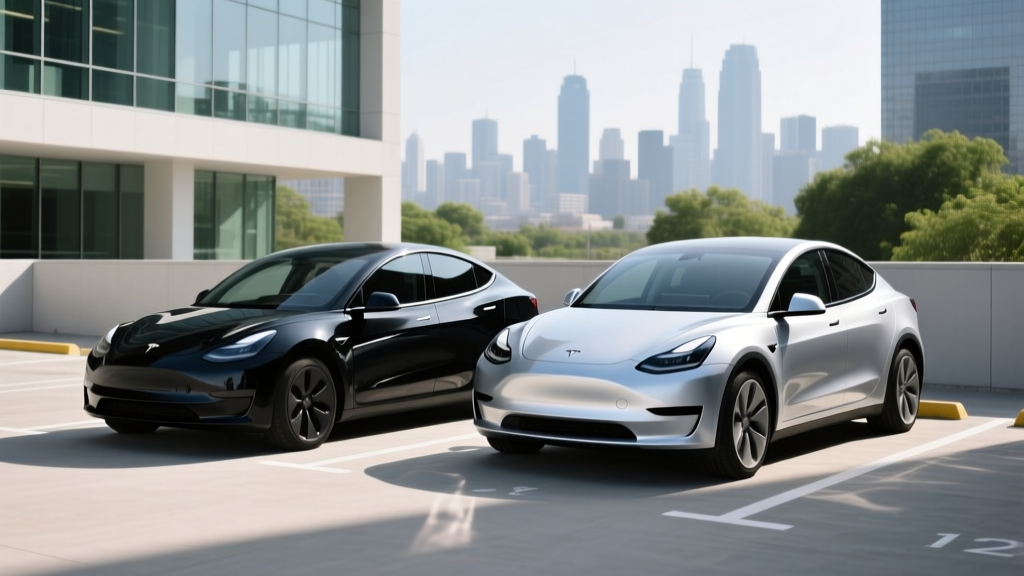
Quick Verdict: Still the Benchmark Sports Sedan EV
The 2026 Tesla Model 3 Performance remains the default answer for buyers who want sports-sedan acceleration, usable daily range, and access to the most reliable DC fast-charging network in North America. With a dual-motor all-wheel-drive powertrain producing roughly 510 horsepower and an EPA-estimated 315 miles of range, it threads the needle between track-day capability and weekday commuting. The refreshed Highland architecture — now in its third model year — brings improved ride compliance, a quieter cabin, and ventilated front seats that the pre-2024 Model 3 sorely lacked.
But the Performance trim isn't for everyone. The $52,990 starting MSRP pushes past the IRS §30D federal tax credit cap for sedans ($55,000), meaning buyers must stay disciplined on options to keep credit eligibility alive. And while Tesla's Supercharger network is unmatched, the absence of Apple CarPlay, Android Auto, and a traditional instrument cluster continues to polarize shoppers cross-shopping the BMW i4 M50 and Hyundai Ioniq 6.
| Spec | 2026 Model 3 Performance |
|---|---|
| EPA Range | 315 miles |
| Battery (usable) | ~82 kWh, NMC (nickel manganese cobalt) |
| Drivetrain | Dual-motor AWD |
| Horsepower | ~510 hp |
| 0-60 mph | 2.9 seconds |
| Top Speed | 163 mph |
| Peak DC Fast Charge | 265 kW |
| 10-80% DC Charge Time | ~25 minutes |
| Level 2 Charge Rate | 11.5 kW (~44 mi/hr) |
| Efficiency | 125 MPGe combined / 27 kWh/100 mi |
| Cargo Volume | 23 cu ft (trunk + frunk) |
| Base MSRP | $52,990 (before incentives) |
| Battery Warranty | 8 years / 120,000 miles (70% retention) |
Range and Efficiency: EPA vs. the Real World
The 2026 Model 3 Performance carries an EPA-estimated 315 miles of combined range from its roughly 82 kWh usable NMC battery pack. That figure represents a modest improvement over the 2024-2025 Highland Performance trims, attributable to minor inverter and thermal-management tweaks Tesla has rolled out silently over successive production batches.
EPA sticker: 315 miles. In mixed suburban/highway driving at 65-75 mph in moderate temperatures (60-80°F), expect 270-290 miles before needing to charge. On sustained 80 mph interstate runs, that drops to roughly 245-260 miles. In freezing conditions (below 32°F) without preconditioning, range can fall to 210-235 miles — the heat pump helps, but cold batteries and cabin heating exact a real toll. Always plan road-trip charging stops around 200-220 miles of usable buffer to avoid sweating the last 10%.
Efficiency lands at approximately 125 MPGe combined (27 kWh per 100 miles), which is competitive with the Hyundai Ioniq 6's 140 MPGe Long Range but trails the Lucid Air Pure's class-leading 146 MPGe. The Performance trim's stickier summer tires and sport-tuned suspension add rolling resistance compared to the Long Range RWD, which returns 132 MPGe.
Charging Speed: Supercharger Muscle, Home Convenience
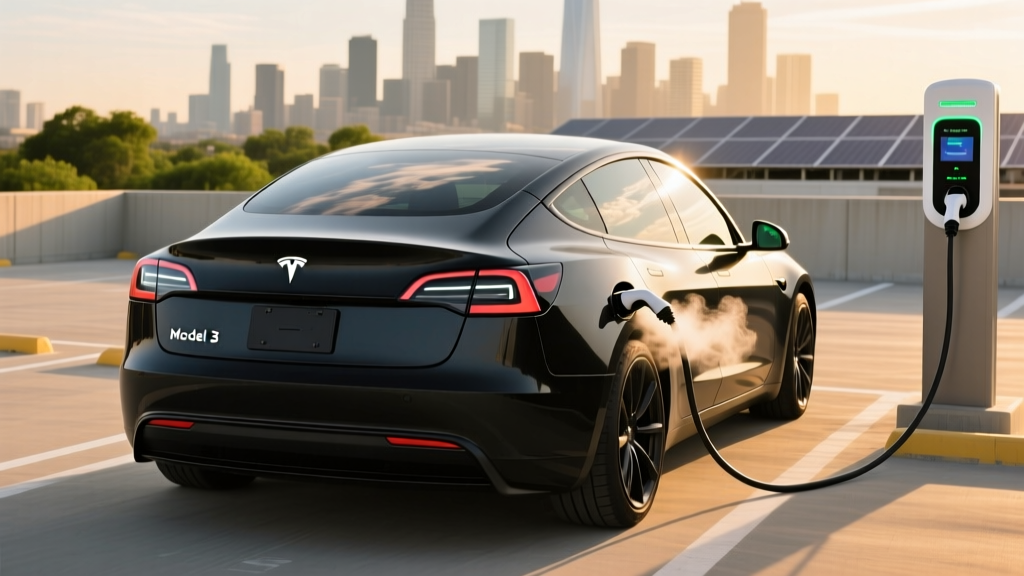
The Model 3 Performance supports a peak DC fast-charge rate of 265 kW at V4 Superchargers and compatible third-party CCS/NACS stations. In practice, that peak is sustained only between roughly 10% and 35% state of charge. The charge curve tapers progressively: by 60% SoC you'll see around 130-150 kW, and above 80% the rate drops below 60 kW as the battery management system protects cell longevity.
| Charging Level | Power | Speed (Approx.) |
|---|---|---|
| Level 1 (120V household) | ~1.4 kW | ~5 miles per hour |
| Level 2 (240V / 48A Wall Connector) | 11.5 kW | ~44 miles per hour |
| DC Fast Charge (peak) | 265 kW | 10-80% in ~25 minutes |
| DC Fast Charge (average 10-80%) | ~160 kW avg | ~190 miles added in 25 min |
For home charging, Tesla's Gen 3 Wall Connector on a 60-amp circuit delivers the full 11.5 kW, replenishing roughly 44 miles of range per hour. A full 10-100% charge at home takes approximately 8.5 hours — easily handled overnight. Buyers should budget $800-$1,500 for professional Wall Connector installation (equipment included), with costs rising to $2,000-$4,000 if a panel upgrade from 100A to 200A service is needed.
Preconditioning matters. Navigate to any Supercharger using the built-in navigation and the car will warm the battery en route, enabling peak charge rates on arrival. Show up cold to a charger and your first 5-10 minutes will be spent at 50-80 kW while the pack warms up — a frustrating waste of a charging stop.
Performance: 2.9 Seconds Changes How You Think About Sedans
The dual-motor all-wheel-drive powertrain in the 2026 Model 3 Performance produces approximately 510 horsepower and launches the car from 0-60 mph in 2.9 seconds with rollout subtracted. That number is repeatable — Tesla's electric powertrain doesn't suffer the heat-soak power fade that plagues turbocharged combustion rivals after consecutive hard launches.
Track Mode, standard on the Performance trim, allows adjustable torque distribution between front and rear motors, configurable regenerative braking levels, and adjustable stability control intervention. The adaptive dampers (a 2024 Highland addition) firm up noticeably in Track Mode but remain compliant enough for daily use in their comfort setting — a major improvement over the crashy ride of the pre-refresh Model 3 Performance.
Braking is where compromises show. The standard brake hardware is adequate for street use but will fade during sustained track sessions. Buyers planning regular HPDE or track-day use should budget for aftermarket pads and high-temperature brake fluid.
Interior, Cargo, and Daily Livability
The Highland interior refresh carries forward for 2026 with ambient lighting, ventilated front seats, acoustic glass on all four doors, and rear-seat ventilation — features absent from pre-2024 Model 3s. The 15.4-inch center touchscreen handles all infotainment, climate, and vehicle controls. There is no separate instrument cluster; speed and navigation information appear on the left third of the main display or on the optional rear-seat screen.
Cargo space: 23 cubic feet total (19.8 cu ft trunk + 3.1 cu ft front trunk/frunk). That's competitive with the BMW i4 (16.6 cu ft liftback, no frunk) but less than the Polestar 2's 14.4 cu ft + 1.4 cu ft frunk setup. The Model 3's trunk opening is relatively narrow, which makes loading bulky items like a large dog crate or folded bicycle more awkward than the numbers suggest.
Passenger space: Front legroom is generous at 42.2 inches; rear legroom measures 35.2 inches — adequate for adults on shorter trips but tight for six-footers behind tall drivers. The rear middle seat is best reserved for children. Headroom is compromised by the sloping roofline for anyone over 5'10".
Pricing, Trims, and Federal Tax Credit Eligibility
The 2026 Model 3 Performance starts at $52,990 (including destination), placing it $2,010 below the IRS §30D sedan MSRP cap of $55,000. This is critical: any factory-installed options that push the total MSRP above $55,000 will disqualify the vehicle from the federal tax credit. As of the 2026 tax year, the Performance trim is typically ordered with minimal options — Ultra Red paint ($2,000) or Full Self-Driving (Supervised) at $8,000 will push you over the cap and kill credit eligibility.
| Configuration | MSRP | After §30D Credit |
|---|---|---|
| Performance (base, Solid Black) | $52,990 | ~$45,490 |
| Performance + Ultra Red paint | $54,990 | ~$47,490 |
| Performance + FSD (Supervised) | $60,990 | Ineligible (over $55K cap) |
IRS §30D eligibility checklist for 2026:
- MSRP cap: Sedans must not exceed $55,000 (including destination and factory options)
- Buyer income limits: Modified AGI ≤ $150,000 (single), $225,000 (head of household), $300,000 (married filing jointly)
- Battery sourcing: Critical minerals and battery component requirements phase up annually — verify current-year compliance on irs.gov before purchasing
- Point-of-sale transfer: The credit can be applied as a down-payment reduction at the dealer, subject to dealer registration and buyer tax-liability verification
Consult a tax professional to confirm eligibility — rules are subject to change and individual circumstances vary. State incentives (California's CVRP, Colorado's innovative motor vehicle credit, etc.) may stack on top but have separate requirements.
Tech, Driver Assistance, and What's Missing
Every 2026 Model 3 includes Tesla's Basic Autopilot — adaptive cruise control and lane-centering on marked highways. This is an SAE Level 2 driver-assistance system, meaning the driver must remain fully engaged with hands on the steering wheel and eyes on the road at all times.
Despite the "Full Self-Driving" branding, Tesla's FSD (Supervised) remains an SAE Level 2 system. The driver is legally and practically responsible for all vehicle operation. Hands-on-wheel monitoring is enforced via camera and torque sensors. This is fundamentally different from Waymo's Level 4 robotaxi service, which operates without a human driver in defined geofenced areas. Never use FSD as a substitute for attentive driving.
FSD (Supervised) adds automatic lane changes, traffic-light and stop-sign recognition, and city-street navigation. It has improved substantially since 2024, but real-world behavior remains inconsistent in construction zones, unprotected left turns, and heavy rain. At $8,000 (or $99/month subscription), the value proposition depends heavily on your commute complexity and tolerance for beta-grade software.
What's missing: No Apple CarPlay or Android Auto. No heads-up display. No traditional instrument cluster. No physical buttons for climate or volume (all screen-based). No rear wiper. These omissions are deal-breakers for some buyers and non-issues for others — but they're worth test-driving before committing.
Pros and Cons
- 2.9-second 0-60 mph with repeatable performance
- Access to Tesla Supercharger network (17,000+ stalls in North America)
- 315-mile EPA range covers most road trips with one stop
- Over-the-air updates continuously add features
- Class-leading efficiency for a performance EV
- Improved ride quality over pre-2024 Model 3
- No Apple CarPlay / Android Auto
- Options easily push MSRP above $55K tax-credit cap
- Rear seat headroom tight for tall passengers
- Brakes not suited for sustained track use without upgrades
- No physical buttons — everything through the touchscreen
- Insurance premiums 15-25% higher than segment average
Who Should Buy the 2026 Model 3 Performance?
Buy the Model 3 Performance if: You want sub-3-second acceleration with daily-driver comfort, you have reliable home Level 2 charging, you take road trips that align with Supercharger corridors, and you're comfortable with a screen-centric interior.
Look elsewhere if: You need maximum rear-seat space for tall teenagers or adults (consider the Model Y or Hyundai Ioniq 5), you refuse to live without CarPlay (BMW i4, Polestar 2), you regularly drive in extreme cold above the Arctic Circle where LFP competitors or PHEVs offer more flexibility, or you need towing capacity (Model 3 is not rated for towing).
For the performance-EV buyer who prioritizes acceleration, charging infrastructure, and software sophistication over traditional luxury materials and physical controls, the 2026 Model 3 Performance remains the car to beat — even as the BMW i4 M50, Audi S4 e-tron, and Hyundai Ioniq 6 N close the gap.
Frequently Asked Questions
What is the real-world range of the 2026 Tesla Model 3 Performance?
The EPA rates it at 315 miles combined. In real-world highway driving at 70-80 mph in moderate weather, expect 245-290 miles depending on speed and temperature. In sub-freezing conditions, plan for 210-235 miles. Always build in a 30-40 mile buffer above your next charging stop.
How fast does the Model 3 Performance charge at home and on the road?
At home on a 240V/48A Tesla Wall Connector, it charges at 11.5 kW — adding roughly 44 miles per hour, or a full charge overnight in ~8.5 hours. On DC fast chargers, it peaks at 265 kW and achieves a 10-80% charge in approximately 25 minutes, though the charge curve tapers significantly above 60% SoC.
Does the 2026 Model 3 Performance qualify for the $7,500 federal EV tax credit?
It can, but only if the as-ordered MSRP stays at or below $55,000 (the §30D sedan cap) and the buyer meets income limits ($150K single / $300K married filing jointly). Battery sourcing requirements also apply and change annually — verify on irs.gov before ordering. Adding FSD or premium paint can push you over the cap.
How does it compare to the BMW i4 M50?
The i4 M50 offers a more traditional luxury interior with CarPlay, a heads-up display, and physical controls, but delivers only 227 miles of EPA range and charges at a peak of 205 kW. The Model 3 Performance wins on range, charging speed, acceleration (2.9s vs. 3.7s), and Supercharger access. The i4 wins on interior refinement and dealer service infrastructure.
What battery chemistry does the Model 3 Performance use?
The Performance trim uses an NMC (nickel manganese cobalt) battery pack with approximately 82 kWh of usable capacity. NMC offers higher energy density than LFP (lithium iron phosphate), enabling the 315-mile range in a compact package. Tesla recommends daily charging to 80-90% for NMC packs and reserving 100% charges for road trips to maximize long-term battery health.
Is the Model 3 Performance good for road trips?
Yes — the 315-mile range and Tesla's Supercharger network make it one of the most road-trip-capable EVs available. Plan stops every 200-220 miles for 20-25 minute charging breaks (align with meal or restroom stops) and the car handles 500+ mile days comfortably. Navigation automatically routes through Superchargers and preconditioning the battery for each stop.