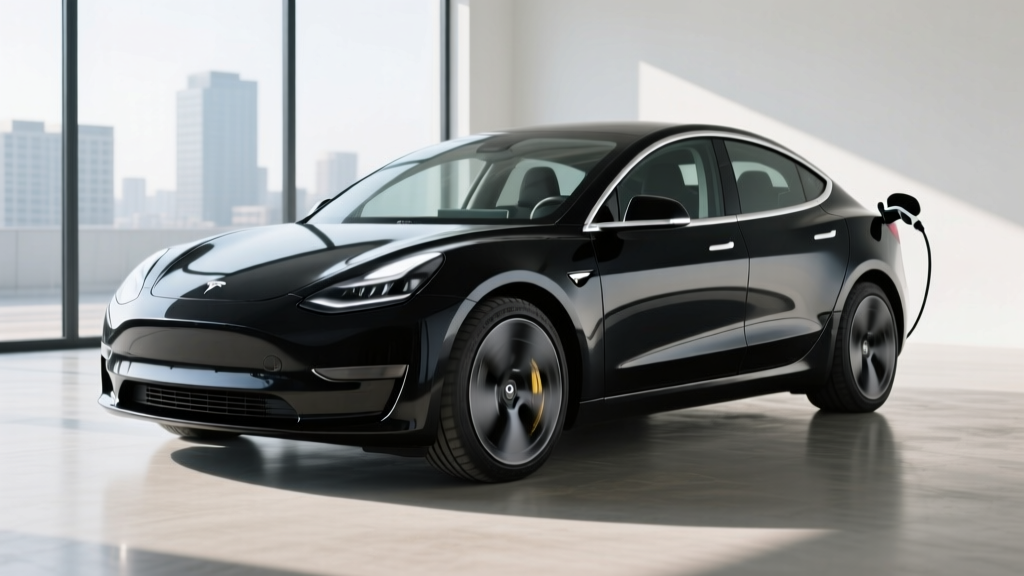
The 2023 Tesla Model 3 Performance represents the final model year of the pre-refresh ("Project Highland") sedan before Tesla redesigned the platform for 2024. For buyers evaluating used examples or remaining dealer inventory in 2026, this variant remains one of the quickest production sedans on the road and a benchmark for electric efficiency. Below is a data-driven breakdown of what ownership actually looks like — range, charging behavior, costs, and where it stands against competitors that have since caught up.
Quick Verdict: Still a Performance Bargain in the Used EV Market
The 2023 Model 3 Performance delivers supercar-rivaling acceleration (3.1 seconds to 60 mph) with a usable 315-mile EPA range and access to the most reliable DC fast-charging network in North America. Its dual-motor AWD powertrain and NMC battery chemistry prioritize energy density and peak output over the cycle-life advantages of LFP packs found in the RWD trim. The trade-off: a minimalist interior that divides opinion, a firm ride, and the absence of the acoustic glass and suspension refinements that the 2024+ Highland refresh introduced. For the performance-per-dollar ratio, few EVs — new or used — compete.
Range, Efficiency, and Real-World Expectations
Real-World Highway (70 mph, 65°F): ~265–285 miles
Cold Weather (30°F, mixed driving): ~220–250 miles
Efficiency: 113 MPGe combined / 26 kWh per 100 miles
The EPA's 315-mile figure is achievable in moderate-temperature city and suburban driving where regenerative braking recaptures energy frequently. On sustained highway runs at 70–80 mph, expect to use roughly 28–30 kWh/100 mi, translating to 265–285 miles before the buffer depletes. In freezing conditions, the Model 3's heat pump helps, but battery chemistry limitations and cabin heating still reduce usable range by 15–25%. Tesla's trip planner and battery preconditioning partially mitigate this by warming the pack before you reach a Supercharger, preserving charge speed even in cold weather.
According to fueleconomy.gov, the 2023 Model 3 Performance achieves 113 MPGe combined — a strong figure for a 4,800-lb dual-motor sedan, though the Long Range RWD variant edges it out at 132 MPGe.
Battery Chemistry, Capacity, and Longevity
| Spec | Value |
|---|---|
| Usable Battery Capacity | ~75 kWh (82 kWh gross) |
| Chemistry | NMC (Nickel Manganese Cobalt) |
| Thermal Management | Active liquid cooling + heat pump |
| Battery Warranty | 8 years / 120,000 miles (min 70% retention) |
| Drive Unit Warranty | 8 years / 120,000 miles |
| Recommended Daily Charge Limit | 80% (for NMC longevity) |
The NMC chemistry in the Performance trim offers higher energy density than the LFP packs Tesla uses in the Standard Range/RWD models, enabling the 315-mile range in a compact form factor. The trade-off is that NMC cells degrade slightly faster when habitually charged to 100%. Tesla recommends setting the daily charge limit to 80% and only charging to full for road trips. Real-world degradation data from fleet studies suggests NMC packs lose roughly 5–8% capacity over the first 100,000 miles, after which the curve flattens. The 8-year/120,000-mile battery warranty guarantees at least 70% capacity retention — a floor that most packs never approach under normal use.
Charging Speed: DC Fast, Level 2, and Level 1
| Charging Level | Max Power (kW) | Speed (miles of range per hour) | Notes |
|---|---|---|---|
| DC Fast Charge (Supercharger V3) | 250 kW peak | ~1,000 mi/hr at peak | 10–80% in ~28 min; tapers significantly above 80% |
| DC Fast Charge (CCS adapter) | ~150–200 kW (station dependent) | Varies | Requires Tesla CCS adapter for non-Tesla networks |
| Level 2 (Tesla Wall Connector, 48A) | 11.5 kW | ~44 mi/hr | Full charge in ~7 hours from 10% |
| Level 2 (Generic J1772 w/ adapter) | Up to 11.5 kW | ~44 mi/hr | Requires Tesla J1772 adapter (included) |
| Level 1 (120V household outlet) | ~1.2 kW | ~3–4 mi/hr | Emergency/trickle only; ~4 days for full charge |
At a V3 Supercharger (250 kW), the 2023 Model 3 Performance peaks at roughly 250 kW when the battery is preconditioned and at a low state of charge (~5–10%). However, the charge curve tapers: you'll reach 50% in about 15 minutes, 80% in roughly 28 minutes, but the final 20% can take an additional 20–25 minutes. For road trips, the practical strategy is charging from 10% to 80% and moving on — adding roughly 220 miles of range in under 30 minutes.
For home charging, a Tesla Wall Connector on a 60-amp circuit delivers up to 11.5 kW (48 amps continuous), replenishing about 44 miles of range per hour. A full overnight charge from 20% to 80% takes about 4 hours — more than sufficient for daily driving. Installation costs for a 240V/60A circuit typically range from $800 to $2,500 depending on panel capacity and conduit runs; homes with 100-amp electrical panels may require a $2,000–$4,000 panel upgrade.
Performance and Drivetrain
| Performance Spec | Value |
|---|---|
| 0–60 mph | 3.1 seconds (manufacturer, rollout subtracted) |
| Top Speed | 162 mph |
| Horsepower | ~480 hp (combined dual motor) |
| Torque | ~471 lb-ft |
| Drivetrain | Dual-motor AWD (permanent magnet rear + induction front) |
| Quarter Mile | ~11.3 seconds @ 119 mph |
| Curb Weight | 4,065 lbs |
The dual-motor setup pairs a permanent magnet synchronous motor on the rear axle with an induction motor up front, allowing the front motor to freewheel (reducing drag) when AWD traction isn't needed. The result is both ferocious acceleration and competitive efficiency. The Performance trim includes Tesla's Track Mode, which adjusts torque distribution, stability control, and regenerative braking for closed-course driving. The lowered sport suspension and 20-inch Überturbine wheels improve cornering at the cost of ride comfort — potholes and expansion joints transmit more sharply than in the Long Range variant.
Pricing, Trims, and Federal Tax Credit Eligibility
| Trim | Original MSRP (2023) | Estimated Used Price (2026) | Federal Credit Eligibility |
|---|---|---|---|
| Model 3 Performance (AWD) | $53,990 (incl. destination) | $32,000–$38,000 | Used: up to $4,000 (§25E); New (in 2023): $7,500 (§30D) if buyer met income/sourcing rules |
When new, the 2023 Model 3 Performance qualified for the full $7,500 federal tax credit under IRS §30D, subject to buyer income caps ($150,000 single / $300,000 joint modified AGI) and battery critical-mineral sourcing requirements that Tesla satisfied for most 2023 production. The MSRP cap for sedans is $55,000, which the Model 3 Performance cleared at $53,990.
For 2026 buyers purchasing a used 2023 Model 3 Performance, the §25E Previously-Owned Clean Vehicle Credit offers up to $4,000 (30% of the sale price, capped at $4,000) if the sale price is $25,000 or less and the buyer's income falls under $75,000 single / $150,000 joint. Since used Performance models typically sell for $32,000–$38,000 in 2026, most will exceed the $25,000 sale-price cap and will not qualify. Always verify current rules on the IRS website and consult a tax professional before relying on credit eligibility.
Interior, Cargo, and Technology
The 2023 Model 3's interior is defined by its radical minimalism: a single 15-inch landscape touchscreen controls virtually every function, from climate to mirrors to glovebox release. There is no instrument cluster — speed and navigation appear on the left third of the central screen. Build quality improved significantly over earlier model years, with consistent panel gaps and soft-touch materials, though the vegan leather seats remain firm on long drives.
| Dimension | Measurement |
|---|---|
| Cargo Volume (trunk + frunk) | 23 cu ft (trunk: 22 cu ft; frunk: ~1 cu ft, limited by electronics) |
| Front Legroom | 42.7 inches |
| Rear Legroom | 35.2 inches |
| Front Headroom | 40.3 inches |
| Rear Headroom | 37.8 inches (glass roof creates openness) |
| Seating Capacity | 5 passengers |
Tech highlights:
- Autopilot (Level 2 SAE driver-assist) with adaptive cruise, lane centering, and automatic emergency braking — standard
- Full Self-Driving (Supervised) capability — $15,000 option or $199/month subscription; still requires active driver engagement at all times
- Over-the-air updates adding features post-purchase (theater mode, dashcam improvements, UI refinements)
- Sentry Mode (360° parking surveillance using external cameras)
- Native navigation with real-time Supercharger routing and battery preconditioning
- 14-speaker premium audio with immersive sound
Notable drawbacks: The 2023 Model 3 lacks blind-spot monitoring indicators in side mirrors (relies on screen-based visualization), has no physical buttons for common functions, and the rear-seat center position is cramped. The frunk is nearly useless on the Performance trim due to electronics packaging. Road noise at highway speed is noticeable — an issue the 2024 Highland refresh addressed with acoustic glass.
Safety Ratings
The 2023 Model 3 earned a 5-star overall safety rating from NHTSA, with 5 stars in frontal crash, side crash, and rollover categories. The IIHS named it a Top Safety Pick+ (with acceptable headlights on specific trims). The rigid battery pack mounted low in the chassis contributes to excellent structural integrity and a low rollover risk.
Competitive Landscape: Is It Worth Buying in 2026?
| Spec | 2023 Tesla Model 3 Performance | 2023 BMW i4 M50 | 2023 Hyundai Ioniq 6 Limited AWD |
|---|---|---|---|
| EPA Range | 315 mi | 270 mi | 270 mi |
| 0–60 mph | 3.1 sec | 3.7 sec | 5.1 sec |
| Peak DC Charge | 250 kW | 200 kW | 240 kW |
| 10–80% Time | ~28 min | ~31 min | ~18 min |
| Original MSRP | $53,990 | $68,795 | $56,100 |
| Est. Used Price (2026) | $32K–$38K | $40K–$48K | $30K–$36K |
The BMW i4 M50 offers a more luxurious interior and traditional cockpit layout but at a significant price premium and with less range. The Ioniq 6 charges faster (18 minutes 10–80%) thanks to its 800V architecture and delivers class-leading efficiency, but can't match the Tesla's acceleration or Supercharger network convenience. The Model 3 Performance occupies a unique niche: supercar acceleration, strong range, and the lowest cost of entry among the three on the used market.
- You prioritize acceleration and driving dynamics above interior luxury
- You road-trip frequently and value the Supercharger network
- You want maximum range in a compact sport sedan
- You're comfortable with a screen-centric interface
- You prefer physical controls and a traditional instrument cluster (BMW i4)
- Ride comfort and cabin quietness are top priorities (2024+ Model 3 Highland or Ioniq 6)
- You need practical rear-seat space for adults regularly (consider Model Y or Ioniq 5)
Pros and Cons at a Glance
- 3.1-second 0–60 mph — one of the quickest sedans at any price
- 315-mile EPA range is excellent for the segment
- 250 kW Supercharger access with reliable network uptime
- 5-star NHTSA safety; IIHS Top Safety Pick+
- OTA updates continuously improve the vehicle
- Strong used-market value retention relative to non-Tesla EVs
- Minimalist interior and lack of physical controls frustrate some drivers
- Firm ride quality on Performance suspension with 20-inch wheels
- Noticeable road/wind noise at highway speed (pre-Highland)
- No blind-spot mirror indicators; relies on screen visualization
- Tiny frunk; limited small-item storage
- FSD subscription adds cost without delivering full autonomy
Who Should Buy the 2023 Model 3 Performance?
Best for: Solo drivers or couples who commute medium-to-long distances, enjoy spirited driving, and take regular road trips. The combination of 315-mile range, fast DC charging, and dual-motor AWD makes it a capable all-season daily driver. The performance envelope satisfies enthusiasts who also need practicality.
Not ideal for: Families needing easy rear-seat access for child seats (the sedan roofline makes loading awkward), buyers who prioritize plush ride quality over sport handling, or those who want a traditional luxury interior with physical controls. If you need cargo versatility, the Model Y or a crossover EV is the better fit.
Frequently Asked Questions
What is the real-world range of the 2023 Tesla Model 3 Performance?
The EPA rates it at 315 miles combined. In real-world highway driving at 70–80 mph in moderate temperatures, expect 265–285 miles. In freezing conditions, range drops to roughly 220–250 miles due to battery chemistry limitations and cabin heating demands.
How fast does the 2023 Model 3 Performance charge?
On a V3 Supercharger, it peaks at 250 kW and charges from 10% to 80% in approximately 28 minutes. At home on a Level 2 Tesla Wall Connector (11.5 kW / 48 amps), it gains about 44 miles of range per hour, fully replenishing overnight.
Does a used 2023 Model 3 Performance qualify for a federal tax credit in 2026?
Most used examples sell above the $25,000 sale-price cap required by the §25E used-EV credit, making them ineligible. If you find one at or below $25,000 and your income is under $75,000 (single) or $150,000 (joint), you may qualify for up to $4,000. Verify current rules at irs.gov.
Is the 2023 Model 3 Performance worth buying over the refreshed 2024+ Highland model?
The 2024+ Highland refresh adds acoustic glass, a rear touchscreen, ventilated seats, ambient lighting, and a significantly improved suspension. If cabin comfort and noise isolation matter to you, the Highland is a meaningful upgrade. If you prioritize value and don't mind a firmer, louder ride, the 2023 Performance delivers identical powertrain performance at a lower used-market price.
What is the battery warranty on the 2023 Model 3 Performance?
Tesla covers the battery and drive units for 8 years or 120,000 miles, whichever comes first, with a guaranteed minimum of 70% capacity retention. In practice, NMC packs in Tesla vehicles have shown strong longevity, with most retaining 90%+ capacity at 100,000 miles when following the 80% daily charge recommendation.
How does Autopilot work on the 2023 Model 3?
Autopilot is a standard SAE Level 2 driver-assist system providing adaptive cruise control and lane centering. FSD (Supervised) adds automated lane changes, navigation-guided exits, and traffic light recognition, but still requires continuous driver supervision. Neither system makes the vehicle autonomous.