The BYD Atto 1: What US Buyers Need to Know in 2026
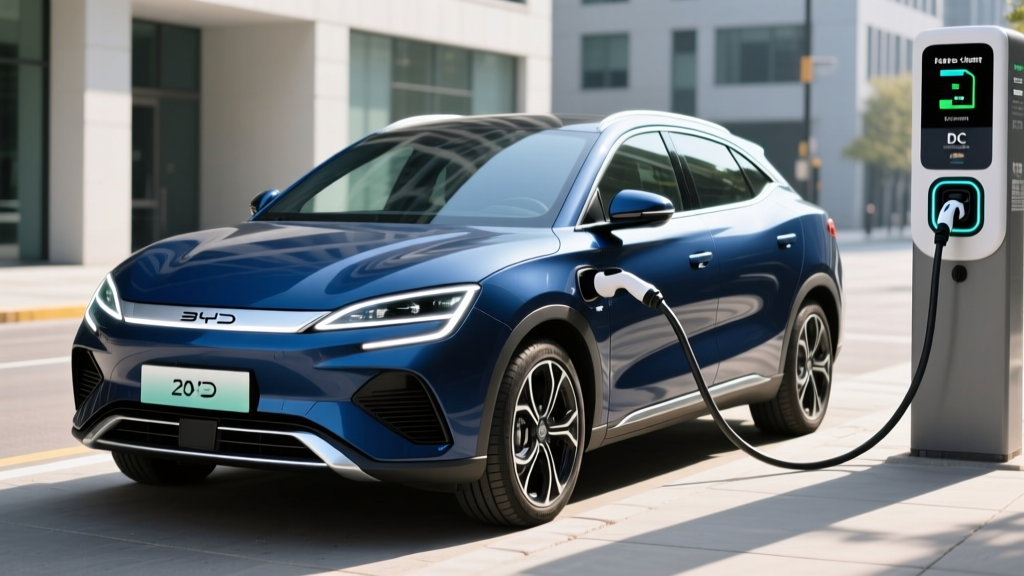
BYD has become the world's largest battery-electric vehicle manufacturer by volume, and the BYD Atto 1 (sold as the Yuan UP in China and the Dolphin Mini in select export markets) represents the company's entry into the subcompact electric crossover segment. For US-based EV shoppers searching for an affordable, city-friendly electric vehicle, the Atto 1 raises an immediate question: can you actually buy one in the United States?
The short answer, as of early 2026, is no — BYD does not currently sell passenger vehicles in the US market. The company has focused its international expansion on Europe, Southeast Asia, Latin America, and Australia. However, with ongoing speculation about a potential US entry and the Atto 1's strong value proposition in markets where it is available, we've compiled a comprehensive profile based on confirmed global specs, real-world testing data from international reviewers, and an honest assessment of what this EV would mean for American buyers if and when it arrives.
| Spec | Standard Range | Extended Range |
|---|---|---|
| Battery Capacity (usable) | 32 kWh | 45.12 kWh |
| Battery Chemistry | LFP (Lithium Iron Phosphate) — BYD Blade Cell | |
| CLTC Range | 301 km (~187 mi) | 401 km (~249 mi) |
| Estimated EPA Range | ~155–170 mi | ~205–225 mi |
| Motor Output | 70 kW (94 hp) | 130 kW (174 hp) |
| Drivetrain | FWD (single motor, front axle) | |
| 0–100 km/h (0–62 mph) | ~12.0 sec | ~7.9 sec |
| Max DC Fast Charge | ~45 kW | ~65 kW |
| Level 2 AC Charge Rate | 7 kW (onboard charger) | |
| Length × Width × Height | 4,310 × 1,830 × 1,675 mm | |
| Wheelbase | 2,620 mm | |
Note: BYD publishes range under China's CLTC standard, which yields higher numbers than the US EPA cycle. We've applied a typical 0.80–0.85 conversion factor based on observed CLTC-to-EPA deltas for comparable BYD models (Dolphin, Atto 3) tested under both standards. Official EPA figures will not exist unless BYD homologates the Atto 1 for US sale.
Battery, Range, and Real-World Efficiency
The Atto 1 uses BYD's proprietary Blade Battery architecture — a cell-to-pack LFP (lithium iron phosphate) design that eliminates the module layer, improving volumetric efficiency and thermal stability. LFP chemistry trades energy density for longevity: you get more charge cycles (typically 3,000+ before significant degradation), no cobalt or nickel in the cathode, and better resistance to thermal runaway compared to NMC packs.
Extended Range (45.12 kWh): CLTC-rated 401 km (~249 mi). Estimated EPA equivalent: 205–225 miles. Expect 170–190 miles on sustained highway driving at 70+ mph, and 140–160 miles in sub-freezing winter conditions with cabin heating active.
Standard Range (32 kWh): CLTC-rated 301 km (~187 mi). Estimated EPA equivalent: 155–170 miles. Highway-realistic: 125–145 miles. Winter: 105–120 miles.
LFP batteries also exhibit a flatter voltage curve, meaning the state-of-charge percentage is less linear — BYD recommends periodic 100% charges to calibrate the BMS, unlike NMC packs where daily 80% limits are preferred.
Efficiency figures under CLTC hover around 12.0–12.5 kWh/100 km for the extended-range variant, translating to roughly 28–30 kWh per 100 miles in real-world mixed driving — comparable to the Chevrolet Bolt EV's 28 kWh/100mi and slightly less efficient than the Hyundai Kona Electric's 26 kWh/100mi, largely due to the Atto 1's crossover body generating more aerodynamic drag than a hatchback.
Charging Speed: DC Fast and Home Level 2
This is where the Atto 1 reveals its budget positioning. DC fast-charging capability is modest by 2026 standards:
| Charging Method | Power | Time / Rate |
|---|---|---|
| DC Fast Charge (Extended Range) | Peak ~65 kW | 30–80% in ~30 min (est.) |
| DC Fast Charge (Standard Range) | Peak ~45 kW | 30–80% in ~30 min (est.) |
| Level 2 AC (Home/Public) | 7 kW | 0–100% in ~6.5 hr (Extended) / ~4.5 hr (Standard) |
| Level 1 AC (120V household) | ~1.4 kW | ~3–4 mi/hr added |
The 65 kW peak on the extended-range model means you'll add roughly 100–120 miles in a 30-minute DC session under ideal conditions. The charge curve tapers noticeably above 80% state of charge — a common LFP characteristic — so planning stops around the 30–80% window is essential for road-trip efficiency. For comparison, the Hyundai Kona Electric peaks at 100+ kW, and the Chevrolet Equinox EV can pull 150+ kW on compatible chargers.
At home on a 7 kW Level 2 charger (a standard 32-amp, 240V circuit), the extended-range pack refills overnight in about 6.5 hours. This is adequate for daily commuting but slower than the 11 kW onboard chargers found on the Volkswagen ID.4 and Tesla Model Y.
Performance, Ride, and Drivetrain
The Atto 1 is strictly a front-wheel-drive, single-motor affair — there is no AWD or dual-motor variant. The extended-range model's 130 kW (174 hp) motor delivers a 0–62 mph time of approximately 7.9 seconds, which is brisk enough for confident highway merging but won't win any stoplight sprints against the 201-hp Hyundai Kona Electric (6.4 seconds to 60) or the 213-hp Kia Niro EV.
The standard-range model's 70 kW (94 hp) motor is tuned for efficiency and urban driving, with a 12-second 0–62 mph time that feels adequate in city traffic but strained on freeway on-ramps. Top speed is electronically limited to approximately 160 km/h (99 mph) across both trims.
BYD's e-Platform 3.0 underpins the Atto 1, featuring a flat battery pack integrated into the chassis floor for a low center of gravity. International reviews consistently praise the ride quality as compliant and well-damped for the segment, with acceptable body roll and light but accurate steering. Regenerative braking offers two levels plus a one-pedal-driving mode, though reviewers note the regen feel is less aggressive than Tesla or Hyundai's strongest settings.
Interior, Cargo, and Technology
The Atto 1's cabin follows BYD's current design language: a large central rotating touchscreen (12.8 inches on higher trims, 10.1 inches on base), a compact digital instrument cluster, and a center console with wireless phone charging and USB-C ports. The infotainment system runs BYD's DiLink OS, which supports voice commands, over-the-air updates, and app-based remote preconditioning — useful for warming the cabin on cold mornings while plugged in.
Passenger and cargo dimensions:
- Rear legroom: ~900 mm (~35.4 in) — competitive with the Kona Electric and slightly tighter than the Nissan Ariya
- Cargo volume (rear seats up): ~340 liters (~12.0 cu ft)
- Cargo volume (rear seats folded): ~1,100 liters (~38.8 cu ft)
- No front trunk (frunk) — the e-Platform 3.0 layout in this model does not include under-hood storage
Driver-assistance technology includes adaptive cruise control, lane-keeping assist, automatic emergency braking, and a 360-degree camera on upper trims. These constitute SAE Level 2 driver assistance — the driver must remain fully engaged and hands-on at all times. BYD's ADAS suite is functional but has not been evaluated by NHTSA or IIHS, as the vehicle is not sold in the US.
Pricing, Tax Credits, and the US Availability Question
In markets where the Atto 1 is sold (China, Thailand, parts of Latin America), pricing ranges from the equivalent of approximately $14,000 to $20,000 USD depending on trim and local subsidies. This positions it as one of the most affordable electric crossovers globally.
However, for US buyers, the pricing question is largely theoretical:
| Factor | Status |
|---|---|
| US MSRP | Not available — BYD does not sell passenger vehicles in the US (2026) |
| Estimated US Price (if launched) | $25,000–$32,000 (speculative, based on export-market markups) |
| Federal §30D Tax Credit | Highly unlikely to qualify — battery cells and critical minerals are China-sourced, failing the domestic-content requirements under current IRS §30D rules |
| MSRP Cap (§30D) | $55,000 for SUVs / $50,000 for sedans (would likely pass) |
| Buyer Income Cap (§30D) | $150K single / $300K joint (would likely pass for most buyers) |
| Import Tariffs | 100% tariff on Chinese-manufactured EVs (effective 2024+) makes direct import economically unviable |
The 100% tariff on Chinese-built electric vehicles, enacted in 2024, effectively doubles the landed cost of any BYD model imported directly from China. Even if BYD established a non-China assembly plant (as it has done in Thailand, Brazil, and Hungary), the §30D tax credit's battery-sourcing and critical-minerals requirements — which mandate increasing percentages of North American or free-trade-agreement-partner content — would be extremely difficult for a BYD Blade Battery to satisfy. The credit phases out for vehicles with "foreign entities of concern" battery components, a designation that applies to BYD's supply chain.
Bottom line: Even in a hypothetical US launch scenario, the Atto 1 would likely arrive without the $7,500 federal tax credit, competing on a less favorable price basis against credit-eligible models like the Chevrolet Equinox EV and Hyundai Kona Electric.
Warranty and Long-Term Ownership
In international markets, BYD offers the following coverage for the Atto 1:
- Vehicle warranty: 6 years / 150,000 km (~93,000 mi) in most export markets
- Battery warranty: 8 years / 160,000 km (~99,000 mi) with a capacity-retention threshold of 70%
The LFP Blade Battery's inherent longevity is a genuine advantage here. LFP cells routinely demonstrate 80%+ capacity retention after 2,000 full charge cycles — equivalent to roughly 400,000+ miles in the extended-range Atto 1. Degradation anxiety is minimal with this chemistry, though real-world data on the specific Atto 1 pack is still limited given the model's 2024 global launch.
Insurance costs, service network access, and parts availability in the US are impossible to estimate without a domestic dealer presence. This is the single largest ownership risk for any potential gray-market import.
How the Atto 1 Stacks Up Against US-Available Alternatives
Since the BYD Atto 1 is not purchasable in the US, here's how it compares on paper against subcompact electric crossovers that are:
| Spec | BYD Atto 1 (Extended) | Hyundai Kona Electric | Chevrolet Equinox EV | Kia Niro EV |
|---|---|---|---|---|
| EPA Range | ~205–225 mi (est.) | 261 mi | 319 mi | 239 mi |
| Battery (kWh) | 45.12 (LFP) | 64.8 (NMC) | 85 (NMC) | 64.8 (NMC) |
| DC Fast Charge Peak | ~65 kW | ~100 kW | ~150 kW | ~85 kW |
| 0–60 mph | ~7.5 sec (est.) | 6.4 sec | ~8.0 sec | 7.2 sec |
| Base MSRP | N/A (not sold in US) | ~$33,000 | ~$33,600 | ~$39,600 |
| Federal Tax Credit | Unlikely | Up to $7,500 | Up to $7,500 | Up to $7,500 |
| US Availability | No | Yes | Yes | Yes |
The Atto 1's primary advantage is price — in markets where it's sold, it undercuts every competitor here by a significant margin. Its LFP battery longevity is also a plus. However, its range, charging speed, and power output trail the Kona Electric and Equinox EV, both of which benefit from established US dealer networks, NHTSA/IIHS safety ratings, and §30D tax-credit eligibility.
Who Should Consider the BYD Atto 1 — and Who Should Look Elsewhere
- Extremely affordable in global markets ($14K–$20K)
- LFP Blade Battery offers excellent cycle life and thermal safety
- Competent ride quality and interior finish for the price
- Compact dimensions ideal for urban driving and tight parking
- BYD's vertical integration (battery + vehicle) controls costs
- Not available for purchase in the United States
- DC fast charging limited to ~65 kW — slow for road trips
- No AWD option; standard-range model is underpowered
- No US service network, parts supply, or safety crash-test data
- Would almost certainly not qualify for the §30D federal tax credit
- 100% import tariff makes China-built units economically unviable
The Atto 1 would suit: Urban commuters in markets where it's sold who need a compact, affordable EV for daily driving under 40 miles with overnight home charging. Its LFP battery means minimal degradation concern for high-frequency, partial-charge commuters.
US buyers should look at: The Chevrolet Equinox EV (319 mi range, $7,500 credit potential), Hyundai Kona Electric (261 mi, strong charging, credit-eligible), or the upcoming next-generation Chevrolet Bolt — all of which offer US dealer support, crash-test validation, and tax-credit pricing advantages the Atto 1 cannot match under current trade policy.
Frequently Asked Questions
Can I buy the BYD Atto 1 in the United States in 2026?
No. BYD does not sell passenger vehicles in the US market as of 2026. The company's international passenger-vehicle sales are concentrated in Europe, Southeast Asia, Australia, and Latin America. A 100% tariff on Chinese-manufactured EVs and the §30D tax credit's battery-sourcing restrictions make a near-term US launch economically challenging.
What is the real-world range of the BYD Atto 1?
The extended-range variant (45.12 kWh LFP) is rated at 401 km under China's CLTC cycle. In real-world mixed driving, expect approximately 205–225 EPA-equivalent miles. Sustained highway driving at 70+ mph reduces this to roughly 170–190 miles, and sub-freezing winter conditions with cabin heating can drop it to 140–160 miles.
How fast does the BYD Atto 1 charge?
DC fast charging peaks at approximately 65 kW for the extended-range model, achieving a 30–80% charge in roughly 30 minutes. At home on a 7 kW Level 2 charger, a full 0–100% charge takes about 6.5 hours. These speeds are below the segment average — the Kona Electric charges at ~100 kW DC, and the Equinox EV at ~150 kW.
Would the BYD Atto 1 qualify for the $7,500 federal EV tax credit?
Almost certainly not, even if BYD began US sales. The IRS §30D credit requires that battery components and critical minerals meet domestic-content thresholds that increase annually. BYD's Blade Battery is manufactured in China with China-sourced lithium and iron phosphate, which would fail both the component and critical-mineral tests. Additionally, battery components from a "foreign entity of concern" (a designation applicable to Chinese manufacturers) disqualify a vehicle entirely from the credit beginning in 2024.
Is the BYD Atto 1's LFP battery better than NMC?
It depends on your priorities. LFP offers longer cycle life (3,000+ cycles vs. ~1,500 for NMC), better thermal stability (lower thermal-runaway risk), and no cobalt or nickel. The trade-off is lower energy density — LFP packs are heavier and bulkier for the same kWh capacity, which limits range in a small vehicle footprint. For daily commuters who charge at home and don't need maximum range, LFP is arguably the better long-term choice.
What's the closest US-available alternative to the BYD Atto 1?
The Hyundai Kona Electric is the closest match in size and positioning, offering 261 miles of EPA range, 100+ kW DC charging, and eligibility for up to $7,500 in federal tax credits. The Chevrolet Equinox EV offers more range (319 mi) and a larger cabin at a similar price point. Both have established US dealer and service networks.