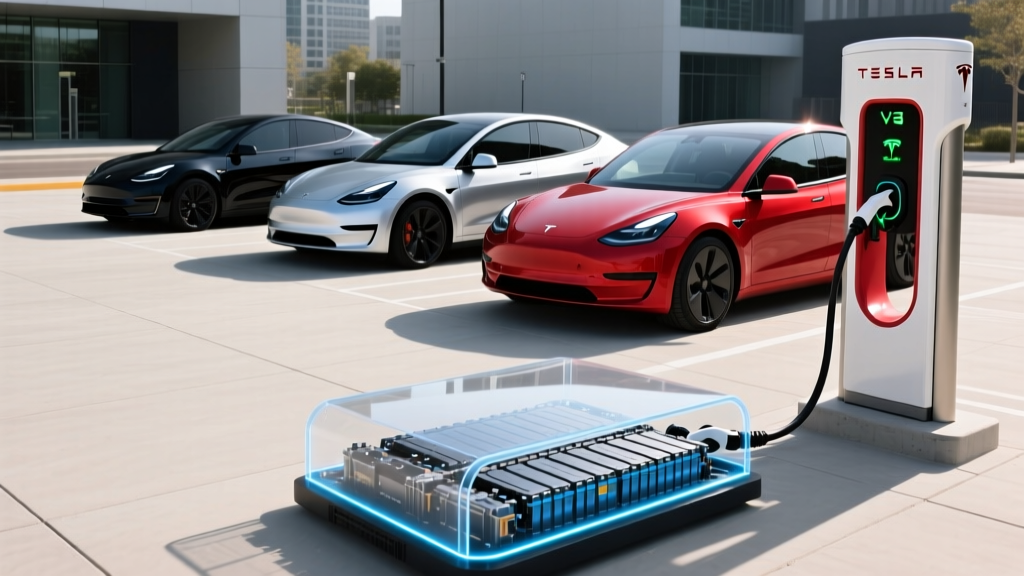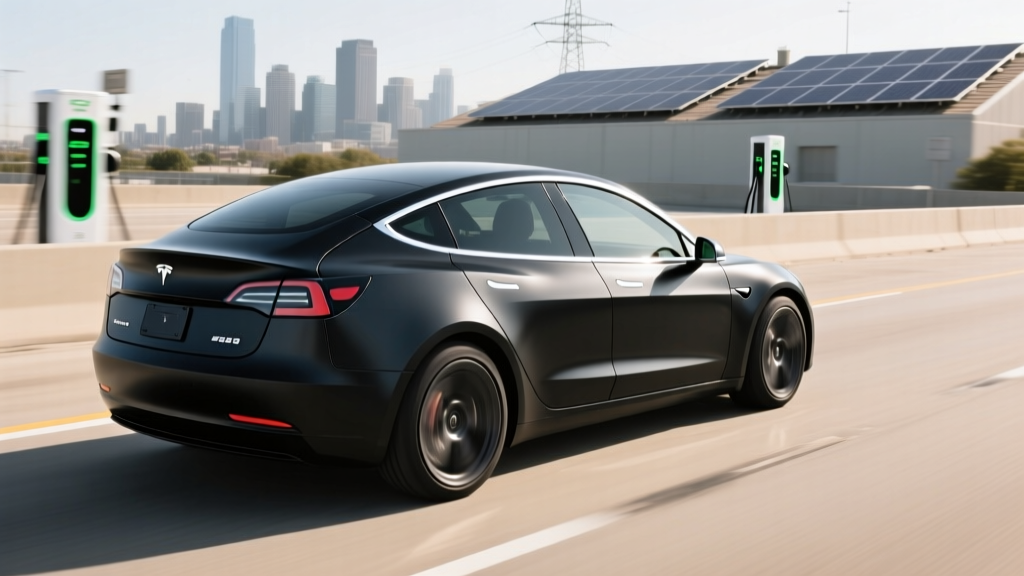
If you've searched for "Tesla 0 60" recently, chances are you're trying to figure out just how quick the refreshed Model 3 Performance really is — and whether that acceleration translates into a compelling daily-driver package. The 2026 Tesla Model 3 Performance carries over the dramatic powertrain and chassis overhaul introduced with the Highland refresh, and it remains one of the fastest sedans you can buy under $55,000. But straight-line speed is only one piece of the EV ownership equation.
In this review, we break down the Model 3 Performance's real-world acceleration, EPA range versus what you'll actually see on the highway, DC fast-charging curves, home charging setup, federal tax credit eligibility under current IRS §30D rules, and how it stacks up against rivals like the Hyundai Ioniq 6, BMW i4 M50, and Polestar 2. If you care about the Tesla 0-60 number but also need a practical commuter, this is the data-driven guide you've been looking for.
2026 Tesla Model 3 Performance: Quick Verdict
The 2026 Model 3 Performance is a dual-motor, all-wheel-drive sport sedan that pairs brutal acceleration with a surprisingly refined ride — a major step up from the pre-Highland era. Tesla's claimed 0-60 mph time of 3.1 seconds holds up in independent testing, and the car's track-oriented chassis tuning makes it genuinely capable beyond drag-strip theatrics. However, its 315-mile EPA range is the lowest in the Model 3 lineup due to larger wheels and stickier tires, and the minimalist interior still polarizes. For buyers who prioritize performance over maximum range, it's the sweet spot of the Model 3 family.
Performance: The Tesla 0-60 Number That Started It All
The headline figure is 3.1 seconds from 0-60 mph, as rated by Tesla and corroborated by multiple independent tests. That time is achieved with the car in Acceleration Boost mode, rollout subtracted (a common drag-strip convention that shaves ~0.2 seconds from the clock). In real-world roll-on testing without rollout subtraction, expect closer to 3.3–3.4 seconds, which is still ferociously quick — faster than a Porsche 911 Carrera from the previous generation.
| Spec | Value |
|---|---|
| 0-60 mph | 3.1 sec (Tesla, rollout subtracted) |
| Top Speed | 163 mph |
| Horsepower | 510 hp (combined dual-motor) |
| Torque | 546 lb-ft |
| Drivetrain | Dual-motor AWD |
| Battery (usable) | ~75 kWh, NMC chemistry |
| EPA Range | 315 miles |
| Efficiency | 121 MPGe combined / 28 kWh/100mi |
| Curb Weight | ~4,065 lbs |
| Base MSRP | $52,990 (before incentives) |
The dual-motor setup uses a permanent-magnet synchronous motor on the rear axle and an induction motor up front. The new Performance model also gets Tesla's adaptive dampers, stiffer springs, and a front-seat bolstering upgrade that actually holds you in place during hard cornering. The result: this is the first Model 3 that feels genuinely sorted on a back road, not just quick in a straight line.
Range and Efficiency: EPA vs. Real World
EPA Estimated: 315 miles
Real-World Highway (70-75 mph, mild weather): ~260–280 miles
Real-World Cold Weather (below 30°F, mixed driving): ~210–235 miles
Real-World City/Commuter (regenerative braking active): ~290–310 miles
The 315-mile EPA figure is measured on the fueleconomy.gov test cycle, and it's achievable in moderate temperatures with mixed driving. However, the Model 3 Performance's 20-inch wheels and summer-compound tires create more rolling resistance and aero drag than the Long Range trim's 18- or 19-inch setups, which is why you'll see a real-world highway deficit of roughly 10-15%.
Cold weather hits all EVs, and the Model 3 is no exception. Tesla's heat pump helps mitigate cabin-heating energy draw, but battery chemistry slows in low temperatures. Expect a 25-30% range reduction in sustained sub-freezing conditions, bringing usable range down to roughly 210-235 miles. That's still sufficient for most commutes, but it matters for road-trip planning.
On the efficiency side, the Model 3 Performance returns 121 MPGe combined (28 kWh per 100 miles). That's slightly thirstier than the Long Range AWD (134 MPGe) but still among the most efficient performance sedans on the market. The BMW i4 M50, for comparison, achieves roughly 98 MPGe combined.
Charging Speed: DC Fast Charging and Home Level 2
Charging speed is where Tesla's Supercharger network advantage becomes tangible, but the Model 3 Performance's peak charge rate isn't class-leading. Here's what to expect across charging levels:
| Charging Level | Max Power | Speed / Time |
|---|---|---|
| Level 1 (120V household) | ~1.4 kW | ~3–4 miles per hour |
| Level 2 (240V home/public) | 11.5 kW (48A) | ~37 miles per hour |
| DC Fast Charge (Supercharger V3) | 250 kW peak | 10–80% in ~25 minutes |
| DC Fast Charge (Supercharger V4) | 250 kW (current vehicles capped) | 10–80% in ~25 minutes |
The Model 3 Performance peaks at 250 kW on a V3 or V4 Supercharger, but that peak is only sustained for a short window between roughly 10-30% State of Charge. Above 50%, the charge curve tapers significantly — by 80% SoC, you're pulling roughly 50-60 kW. This is standard lithium-ion behavior (the battery management system protects cell longevity), but it means the full 10-80% session takes around 25 minutes, not the 15 minutes you might expect from the peak number alone.
For home charging, the onboard charger accepts up to 11.5 kW (48 amps) on a 240V Level 2 circuit. This requires a 60-amp dedicated breaker. A full overnight charge from 10% to 100% takes roughly 7-8 hours. If your home has a standard NEMA 14-50 outlet on a 50-amp breaker, you'll get roughly 9.6 kW (30 mph of range per hour) — adequate for daily top-ups.
With the industry-wide shift to NACS (the Tesla connector now adopted by Ford, GM, Rivian, Hyundai, and others), Supercharger access is no longer a Tesla-exclusive advantage. However, Tesla owners still benefit from the most seamless plug-and-charge experience, with no app or payment friction at Supercharger stalls.
Interior, Tech, and Cargo Space
The Highland-refreshed Model 3 interior is markedly improved over the pre-2024 version. Soft-touch materials replace hard plastics on the dash and door panels, ventilated front seats are now standard on the Performance trim, and ambient lighting adds a premium feel. The 15.4-inch center touchscreen remains the command center for everything — climate, mirrors, glovebox, and media — which still frustrates some buyers who prefer physical controls.
Cargo and passenger dimensions:
- Rear cargo (trunk): 21.0 cu ft
- Front trunk (frunk): 3.1 cu ft
- Total cargo: 24.1 cu ft
- Front legroom: 42.0 inches
- Rear legroom: 35.3 inches
- Rear headroom: 36.0 inches (tighter than some rivals due to sloping roofline)
The rear seat is adequate for adults on shorter trips but not generous. If you regularly carry rear-seat passengers over 6 feet tall, the Hyundai Ioniq 6 or BMW i4 offer slightly more rear headroom. The trunk is practical and deep, with a wide opening, and the frunk adds useful space for charging cables or a small bag.
Tech highlights:
- Tesla Autopilot (SAE Level 2 driver-assist) standard — adaptive cruise, lane centering, automatic emergency braking
- Full Self-Driving (Supervised) available as a $8,000 add-on or $99/month subscription — still Level 2, requires active driver supervision
- Over-the-air updates continuously add features
- Sentry Mode dashcam surveillance while parked
- Dog Mode and Camp Mode climate presets
- No Apple CarPlay or Android Auto — Tesla's proprietary infotainment only
Tesla Autopilot and FSD (Supervised) are SAE Level 2 driver-assistance systems. The driver must remain fully engaged, hands on or near the wheel, and eyes on the road at all times. These are not self-driving systems. Only Level 4 services like Waymo operate without a human driver in defined geographic zones.
Pricing, Trims, and Federal Tax Credit Eligibility
The 2026 Tesla Model 3 Performance starts at $52,990 (including destination), placing it just under the IRS §30D MSRP cap of $55,000 for sedans. That means it can qualify for the full $7,500 federal EV tax credit — but only if you meet all eligibility requirements.
| Trim | MSRP | EPA Range | 0-60 mph |
|---|---|---|---|
| Model 3 RWD | $38,990 | 272 mi | 5.8 sec |
| Model 3 Long Range AWD | $45,490 | 363 mi | 4.2 sec |
| Model 3 Long Range RWD | $42,490 | 368 mi | 4.9 sec |
| Model 3 Performance | $52,990 | 315 mi | 3.1 sec |
- Vehicle MSRP cap: Sedans must be ≤ $55,000 (Model 3 Performance qualifies at $52,990)
- Buyer income cap: AGI ≤ $150,000 (single), $225,000 (head of household), $300,000 (joint)
- Battery sourcing: Critical minerals and battery components must meet phased-in percentages from US/FTA trade partners — verify current-year compliance on IRS.gov's eligible vehicle list
- Point-of-sale transfer: You can transfer the credit to the dealer at purchase to reduce your out-of-pocket cost by $7,500, rather than waiting to claim it on your tax return
- VIN verification: Confirm your specific vehicle's battery sourcing qualifies before finalizing purchase — eligibility can change mid-year based on supply chain shifts
If you qualify, the effective price of the Model 3 Performance drops to roughly $45,490 — putting it in the same ballpark as the Long Range AWD but with substantially more power and chassis hardware. Always confirm eligibility with a tax professional and check the IRS eligible-vehicle list before purchasing, as battery-sourcing requirements have shifted multiple times since 2023.
Warranty, Ownership Costs, and Reliability
Tesla's warranty coverage is competitive but not class-leading:
- Basic vehicle warranty: 4 years / 50,000 miles
- Battery and drive unit warranty: 8 years / 120,000 miles (whichever comes first), with a minimum 70% capacity retention threshold
- Roadside assistance: 4 years / 50,000 miles
The 8-year/120,000-mile battery warranty on the Performance trim is slightly more generous than the Long Range's 8-year/100,000-mile coverage, reflecting the Performance's NMC cells being rated for more aggressive charge/discharge cycles. Tesla does not publish a specific degradation curve, but third-party fleet data (from sources like Recurrent Auto) suggests Model 3 batteries typically retain 90-93% capacity after 100,000 miles under normal use.
Insurance costs tend to run 15-25% higher than comparable gas sedans, a common EV reality. Average annual premiums for the Model 3 Performance hover around $2,200–$2,800 depending on your state, driving record, and coverage level. Get quotes before purchasing — this is a real ownership cost that catches some buyers off guard.
Maintenance is minimal: no oil changes, no spark plugs, no transmission fluid. Expect to replace cabin air filters annually, brake fluid every 2 years, and tires every 25,000–35,000 miles (the Performance's summer tires wear faster than all-seasons).
How It Compares: Model 3 Performance vs. Rivals
The Model 3 Performance doesn't exist in a vacuum. Here's how it stacks up against the key alternatives buyers cross-shop:
| Spec | Tesla Model 3 Perf. | Hyundai Ioniq 6 Limited | BMW i4 M50 | Polestar 2 LRDM |
|---|---|---|---|---|
| 0-60 mph | 3.1 sec | 5.1 sec | 3.7 sec | 4.3 sec |
| EPA Range | 315 mi | 316 mi | 269 mi | 276 mi |
| Peak DC Charge | 250 kW | 240 kW | 205 kW | 205 kW |
| Base MSRP | $52,990 | $52,600 | $69,700 | $54,300 |
| Efficiency (MPGe) | 121 | 140 | 98 | 107 |
| Tax Credit Eligible | Yes (if qualified) | Partial ($3,750–$7,500) | No (MSRP cap) | Yes (if qualified) |
The BMW i4 M50 is quicker than you'd expect and far more luxurious inside, but its $69,700 starting price blows past the $55,000 sedan MSRP cap, making it ineligible for the federal credit. The Ioniq 6 is the efficiency champion and a strong value play, but it can't touch the Tesla's acceleration. The Polestar 2 is solidly built but trails in both performance and charging speed. For the specific combination of sub-3.5-second 0-60 times, 300+ mile range, and sub-$55K pricing, the Model 3 Performance stands alone.
- 3.1-second 0-60 mph — supercar territory at a sedan price
- Adaptive dampers and chassis tuning make it a genuine sports sedan
- Supercharger network access with seamless plug-and-charge
- Eligible for $7,500 federal credit (if buyer/vehicle qualify)
- Over-the-air updates keep adding features post-purchase
- Low running costs vs. gas performance sedans
- 315-mile range is lowest in Model 3 lineup
- No Apple CarPlay or Android Auto
- Touchscreen-only controls frustrate some drivers
- Rear seat headroom is tight for tall passengers
- Summer tires wear quickly (~25K–30K miles)
- FSD (Supervised) remains Level 2, not autonomous
Who Should Buy the Model 3 Performance?
- Choose the Model 3 Performance if: You want a daily-drivable sport sedan with genuine 3-second acceleration, you have access to home Level 2 charging, and you value the Supercharger network for road trips.
- Choose the Model 3 Long Range instead if: Maximum range matters more than acceleration — you'll gain ~50 miles of EPA range and save $7,500.
- Choose the Hyundai Ioniq 6 if: Efficiency and design are your priorities, and you don't need sub-4-second acceleration.
- Choose the BMW i4 M50 if: Interior luxury and brand prestige outweigh the $17,000 price premium and loss of tax-credit eligibility.
The Model 3 Performance is ideal for the enthusiast-commuter: someone who wants to carve a canyon road on Saturday and efficiently commute 40 miles round-trip on Monday, all while charging at home overnight for the equivalent of $1.20 per gallon. It's not the best family hauler (the Model Y fills that role), and it's not the longest-range option (the Long Range RWD does 368 miles). But as a performance-per-dollar proposition in the EV space, it remains remarkably hard to beat.
Frequently Asked Questions
What is the real-world 0-60 time of the Tesla Model 3 Performance?
Tesla rates the Model 3 Performance at 3.1 seconds with rollout subtracted. In independent testing without rollout subtraction, expect 3.3–3.4 seconds. Either way, it's among the quickest sedans under $60,000.
Does the Tesla Model 3 Performance qualify for the $7,500 federal tax credit?
Yes — the $52,990 MSRP falls under the $55,000 sedan cap. However, you must also meet income limits ($150K single / $300K joint AGI), and the vehicle's battery must meet current-year critical-mineral and component sourcing thresholds. Always verify on IRS.gov before purchasing.
How fast does the Model 3 Performance charge at home?
On a 240V Level 2 charger with a 60-amp circuit, the Model 3 Performance charges at up to 11.5 kW, adding roughly 37 miles of range per hour. A full charge from 10% takes about 7-8 hours — easily accomplished overnight.
What's the real-world highway range?
Expect roughly 260–280 miles at highway speeds (70-75 mph) in mild weather. In cold conditions (below 30°F), that drops to approximately 210–235 miles. The EPA's 315-mile rating assumes a mix of city and highway driving at moderate temperatures.
Is FSD (Full Self-Driving) actually self-driving?
No. Tesla's FSD (Supervised) is an SAE Level 2 driver-assistance system. It can handle highway lane changes, on-ramps, and some city streets, but the driver must remain fully attentive and ready to take over at any moment. It does not make the car autonomous.
How does the Model 3 Performance compare to the Model Y Performance for 0-60 time?
The Model Y Performance achieves a 3.5-second 0-60 mph time — quick, but roughly 0.4 seconds behind the Model 3 Performance due to its greater weight and taller profile. If acceleration is your top priority, the sedan wins.