The Tesla Model 3 Modded Landscape in 2026
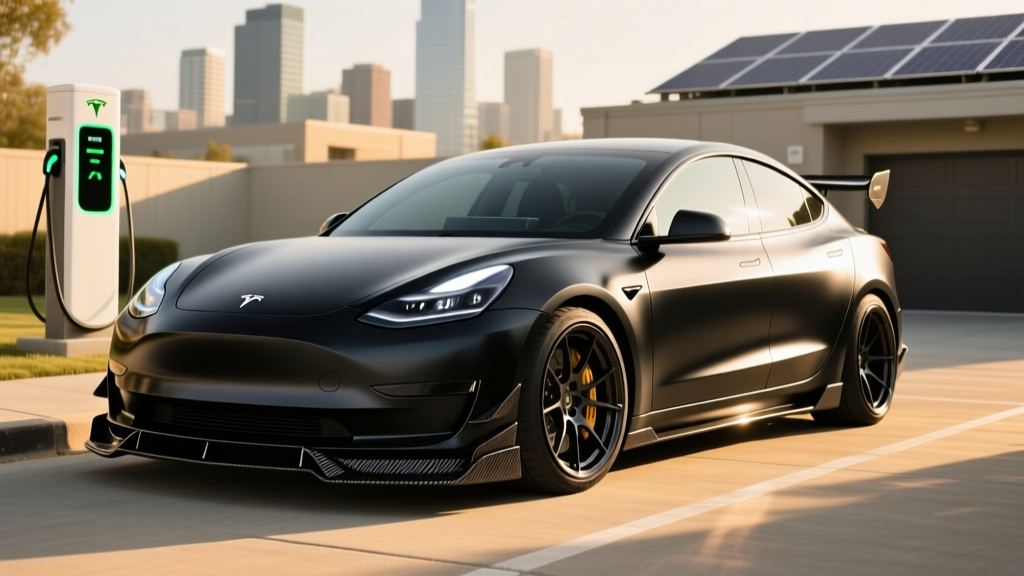
The Tesla Model 3 has been on the road long enough to develop one of the most robust aftermarket ecosystems in the EV world. By 2026, the refreshed "Highland" platform (introduced for the 2024 model year and carried forward) has matured into a highly modifiable sedan, with owners pursuing everything from aesthetic wraps and suspension upgrades to performance tunes and charging optimizations. Whether you're considering buying a pre-modded Model 3 from a private seller or planning to customize a new one, understanding how modifications interact with the car's core EV specs — range, charging, battery health, and warranty — is essential.
This review covers the 2026 Tesla Model 3 lineup as the baseline, then layers in the most popular and impactful modifications owners are making, what they cost, and what risks they carry.
Baseline Specs: What You're Starting With
Before any wrench turns, here's what the 2026 Model 3 brings to the table. Tesla currently offers three trims in the US market:
| Spec | RWD (Base) | Long Range AWD | Performance |
|---|---|---|---|
| EPA Range | 272 mi | 341 mi | 315 mi |
| Battery (usable) | ~60 kWh (LFP) | ~75 kWh (NMC) | ~75 kWh (NMC) |
| Drivetrain | Rear-Wheel Drive | Dual-Motor AWD | Dual-Motor AWD |
| 0-60 mph | 5.8 sec | 4.2 sec | 2.9 sec |
| Horsepower | 271 hp | 346 hp | 510 hp |
| Max DC Fast Charge | 170 kW | 250 kW | 250 kW |
| 10-80% DC Time | ~28 min | ~25 min | ~25 min |
| Level 2 Home Rate | 11.5 kW (~44 mi/hr) | 11.5 kW (~44 mi/hr) | 11.5 kW (~44 mi/hr) |
| MPGe (combined) | 132 MPGe | 131 MPGe | 119 MPGe |
| Efficiency | 25 kWh/100 mi | 25 kWh/100 mi | 28 kWh/100 mi |
| Cargo (trunk + frunk) | 23 cu ft total | 23 cu ft total | 23 cu ft total |
| Rear Legroom | 35.2 in | 35.2 in | 35.2 in |
| Base MSRP | $38,990 | $45,990 | $52,990 |
Source: fueleconomy.gov and Tesla.com.
Real-World Range: What Mods Actually Do to Your Miles
EPA Sticker: 272 mi (RWD) / 341 mi (Long Range) / 315 mi (Performance)
Real-World Highway (70 mph, 72°F): Expect ~230 mi (RWD), ~290 mi (Long Range), ~265 mi (Performance)
Cold Weather (32°F, highway): Reduce above figures by 20-30%. LFP batteries in the RWD trim are particularly sensitive to cold range loss — plan for ~175-190 mi in freezing highway driving.
Modded Impact: Aftermarket wheels (larger/heavier), lowered suspension, and performance tires can reduce range by 5-12%. A full aero kit may recover 1-3% at highway speeds. Unplugged Performance's dual-motor tune does not increase range.
The single biggest mistake modded Model 3 owners make is underestimating how much wheel and tire swaps affect efficiency. Moving from the stock 18" Photon wheels to 20" aftermarket alloys with sticky summer rubber typically costs 15-25 miles of EPA range on the Long Range trim. That's a real-world highway range drop from ~290 miles to ~250 miles — meaningful on road trips.
Conversely, some mods improve efficiency. Owners report that switching to low-rolling-resistance tires (like the Michelin e.Primacy) and adding an aftermarket front lip spoiler can recover 3-5% efficiency at sustained highway speeds. The Model 3's drag coefficient of 0.219 Cd is already excellent, but small aero refinements do register on the energy graph over long distances.
Charging Speed: Mods That Help (and Hurt)
| Charging Level | Stock Spec | Modded Impact |
|---|---|---|
| Level 1 (120V) | ~1.4 kW / ~5 mi/hr | No change — use for overnight trickle only |
| Level 2 (240V, 48A) | 11.5 kW / ~44 mi/hr | Aftermarket J1772-to-NACS adapters (~$150-200) enable non-Tesla L2 stations |
| DC Fast Charge (CCS/NACS) | 170-250 kW peak / 10-80% in ~25-28 min | No aftermarket mod increases peak kW — it's firmware-limited. Battery preconditioning via navigation to a Supercharger remains the best way to hit peak rates. |
A critical note for anyone buying a pre-modded Model 3: some owners install third-party battery management tweaks or "range extender" software modules. These are not recognized by Tesla, can interfere with the BMS (Battery Management System), and will almost certainly void the battery warranty. The stock charge curve — which peaks at 250 kW on Long Range/Performance and tapers sharply above 80% SoC — is already optimized. There is no legitimate aftermarket way to increase DC fast-charge speed.
What does help: installing a high-quality home Level 2 charger (like the Tesla Wall Connector or ChargePoint Home Flex) on a 60A circuit, delivering the full 48A/11.5 kW the Model 3's onboard charger can accept. This adds roughly 44 miles of range per hour of charging — enough to fully replenish any Model 3 trim overnight.
The Most Popular Model 3 Modifications in 2026
Performance & Handling
- Aftermarket coilovers (MPP, Mountain Pass Performance, or Unplugged Performance): $2,000-$3,500 installed. Lowers the car 1-1.5 inches, sharpens cornering, but reduces ride comfort and may scrape on steep driveways. Range impact: negligible if wheel/tire size stays stock.
- Lightweight forged wheels (e.g., T-Sportline, TSportline Forged, or Vossen): $2,400-$4,800 per set. If you stay at 18" or 19" and choose a lightweight design, you can actually improve efficiency slightly vs. stock 19" Sport wheels. Go to 20" and you'll lose range.
- Performance brake kits (Unplugged Performance, Racing Brake): $3,000-$5,500. Worthwhile for track-day use; overkill for daily driving. The stock regenerative braking handles 90%+ of deceleration in normal driving.
Aesthetics & Interior
- PPF (Paint Protection Film) full-body wrap: $3,500-$6,000. Highly recommended — Tesla's paint is notoriously thin and chip-prone. This preserves resale value.
- Ceramic coating: $800-$1,500. Adds hydrophobic protection and gloss but does not prevent rock chips like PPF.
- Aftermarket yoke or flat-bottom steering wheel: $300-$800. Popular but controversial — ensure any replacement retains the steering-wheel-mounted buttons and does not interfere with the airbag or Autopilot torque sensor.
- RGB ambient lighting kits: $150-$400. Integrates with the cabin lighting; purely cosmetic.
Technology & Software
- Enhanced Autopilot or FSD (Supervised) subscription: Not technically a mod, but Tesla's $99/month FSD subscription is the most impactful "upgrade" most owners add. It remains SAE Level 2 — you must remain engaged and supervise at all times.
- Third-party data loggers (Scan My Tesla, Teslalogger): $150-$300. These OBD-II dongles provide granular battery health data (cell voltage imbalance, degradation curves, charge/discharge C-rates) that the Tesla app doesn't show. Invaluable for tracking State of Health (SoH) on a modded or high-mileage car.
Warranty Implications: What Mods Will (and Won't) Void
Tesla's warranty structure for the 2026 Model 3:
- Basic Vehicle: 4 years / 50,000 miles
- Battery & Drive Unit: 8 years / 100,000 miles (RWD) or 8 years / 120,000 miles (Long Range & Performance), with a minimum 70% capacity retention guarantee
The Magnuson-Moss Warranty Act protects you: a modification can only void a warranty claim if Tesla can demonstrate the mod caused the failure. In practice:
- Wheels, tires, PPF, ceramic coating, interior accessories — no warranty impact.
- Suspension mods (coilovers, sway bars) — may void suspension-related claims but not battery/powertrain claims.
- Any electrical modification that taps into the high-voltage system, CAN bus, or BMS — high risk of voiding battery warranty. Tesla's service centers can detect unauthorized CAN bus activity in diagnostic logs.
- Software tunes or third-party "jailbreak" modules — will void powertrain warranty and may result in the car being blacklisted from Tesla's Supercharger network and OTA updates.
Buying a pre-modded Model 3 from a private seller carries risk. If the previous owner installed CAN bus interceptors, battery taps, or software tunes, Tesla may deny future battery warranty claims even after you take ownership. Always request a pre-purchase inspection at a Tesla Service Center and check for diagnostic fault codes before buying a modded example.
Pricing, Tax Credits, and Total Modded Cost
| Trim | Base MSRP | §30D Federal Credit | Effective Price |
|---|---|---|---|
| RWD | $38,990 | Up to $7,500 (if eligible) | ~$31,490 |
| Long Range AWD | $45,990 | Up to $7,500 (if eligible) | ~$38,490 |
| Performance | $52,990 | Up to $7,500 (if eligible) | ~$45,490 |
Critical §30D eligibility requirements (per IRS.gov):
- MSRP cap: Sedans must be ≤$55,000. All three Model 3 trims qualify on MSRP alone (though adding options like FSD purchase can push the transaction price higher — the cap is on base MSRP + destination, not options).
- Buyer income cap: Modified AGI ≤$150,000 (single), ≤$225,000 (head of household), ≤$300,000 (joint).
- Battery sourcing: Critical minerals and battery component requirements phase in annually. For 2026, confirm current-year sourcing compliance on Tesla's website or the IRS qualified vehicles list — these rules change frequently and can disqualify a previously eligible model.
- Point-of-sale transfer: You can transfer the credit to the dealer at purchase for an immediate price reduction, rather than waiting to claim it on your tax return.
For a typical "lightly modded" Model 3 Long Range — adding PPF ($4,500), ceramic coating ($1,200), aftermarket 19" forged wheels ($3,200), and coilovers ($2,800) — expect to invest roughly $11,700 beyond the vehicle price. After the $7,500 credit (if eligible), your all-in cost lands around $44,690.
Is a Modded Model 3 Worth It vs. Competitors?
- Supercharger network access remains the most reliable DC fast-charging ecosystem in the US
- Class-leading efficiency (25 kWh/100 mi on Long Range) means mods that add weight/drag hurt less than on less efficient EVs
- Massive aftermarket support — more mod options than any other EV sedan
- OTA updates continue to add features years after purchase
- Strong resale value, especially with documented PPF and quality mods
- Any CAN bus or BMS modification risks voiding the 8-year battery warranty
- Tesla's service centers may refuse to work on heavily modified vehicles
- Ride quality on stock suspension is already firm — lowering it further compromises daily comfort
- No Apple CarPlay/Android Auto (Tesla's proprietary infotainment only)
- Rear seat space (35.2" legroom) is tighter than Hyundai Ioniq 6 or BMW i4
Compared to key rivals: The BMW i4 M50 offers similar performance and a more luxurious interior but lacks Supercharger access (though BMW now uses NACS, opening Supercharger compatibility). The Hyundai Ioniq 6 charges faster (peak 350 kW on 800V architecture, 10-80% in ~18 minutes) but has a smaller aftermarket scene. If modding is your priority, the Model 3's ecosystem is unmatched.
Who Should Buy a Modded Model 3?
Choose a modded Model 3 if: You value the Supercharger network, enjoy personalizing your vehicle, commute daily and want a sporty sedan with strong efficiency, and understand the warranty tradeoffs of modifications.
Choose a stock Model 3 or competitor if: You want full factory warranty coverage without risk, need maximum rear-seat space for family use, prefer CarPlay integration, or plan to keep the car 8+ years and want zero warranty disputes.
Frequently Asked Questions
What is the real-world range of a modded Tesla Model 3?
A stock Long Range AWD delivers ~290 miles at highway speeds in mild weather. Common mods (larger wheels, lowered suspension, stickier tires) typically reduce this by 5-12%, bringing real-world highway range to ~255-275 miles. In cold weather (32°F), expect a further 20-30% reduction, down to ~190-220 miles for a modded Long Range.
How fast does a modded Model 3 charge?
No aftermarket modification increases the Model 3's DC fast-charge rate — it's firmware-limited to 170 kW (RWD) or 250 kW (Long Range/Performance). At home on Level 2, the 11.5 kW onboard charger delivers ~44 miles of range per hour. A 10-80% DC fast charge takes ~25-28 minutes at a capable Supercharger or CCS station.
Does the Tesla Model 3 qualify for the federal EV tax credit?
All three 2026 Model 3 trims fall under the $55,000 MSRP cap for sedans. However, eligibility also depends on your income (≤$150K single / ≤$300K joint), battery sourcing compliance (which changes annually), and purchasing new from Tesla. Check the IRS qualified vehicles list before purchasing. The credit can be applied at point of sale for an immediate price reduction.
What mods won't void my Tesla warranty?
Wheels, tires, PPF, ceramic coating, interior accessories, and cosmetic body kits generally do not affect warranty coverage. Suspension modifications may void suspension-specific claims. Any modification that interfaces with the high-voltage system, CAN bus, or battery management system carries a high risk of voiding the battery and powertrain warranty.
Is it worth buying a pre-modded Model 3 from a private seller?
It can be a great value if the mods are cosmetic (PPF, wheels, wrap) and well-documented. Avoid pre-modded examples with electrical modifications, CAN bus interceptors, or software tunes, as these may have already compromised the battery warranty. Always get a pre-purchase inspection at a Tesla Service Center and verify no diagnostic fault codes are present.
Does FSD (Supervised) make the Model 3 self-driving?
No. Tesla's Full Self-Driving (Supervised) is an SAE Level 2 driver-assistance system. You must keep your hands on the wheel (or demonstrate attention via the cabin camera), monitor traffic, and be prepared to take over at any moment. It does not make the vehicle autonomous.