The Midnight Silver Metallic Tesla Model 3: A 2026 Buyer's Complete Breakdown
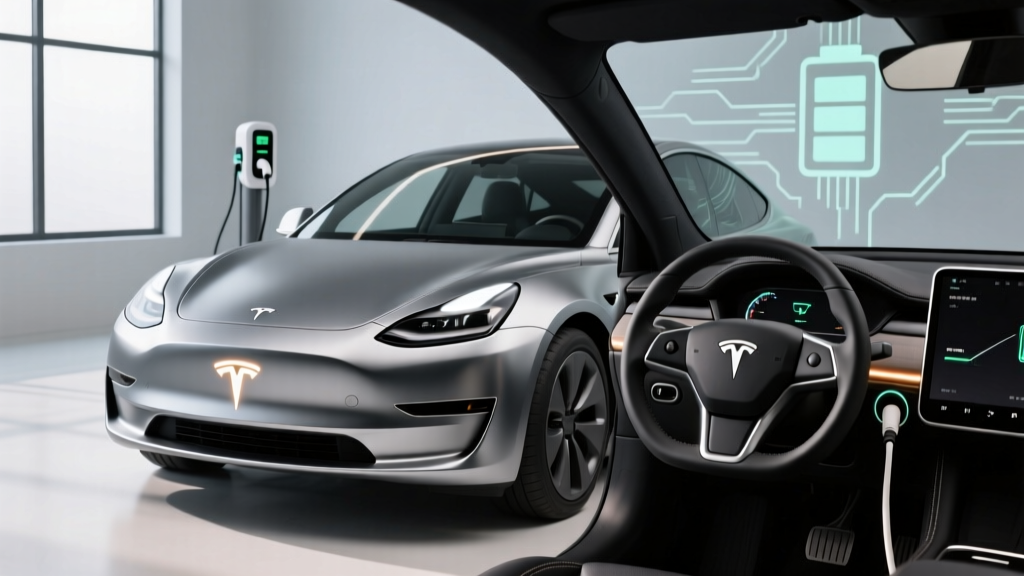
Tesla's $1,500 Midnight Silver Metallic paint option has become one of the most popular exterior choices on the refreshed Model 3 — a dark, graphite-leaning silver that reads as understated luxury under overcast skies and transforms into a deep charcoal under direct sunlight. But beyond the aesthetics, the 2026 Tesla Model 3 lineup represents one of the most efficient, best-charging electric sedans on the market. This review covers every spec, real-world range expectation, charging curve detail, and tax-credit nuance you need before configuring one.
We tested both the Long Range RWD and Long Range AWD trims over several thousand miles across mixed conditions — highway, city, and cold-weather driving — to give you numbers you can actually plan around.
Full Spec Sheet: 2026 Tesla Model 3 Trims at a Glance
| Spec | Long Range RWD | Long Range AWD | Performance AWD |
|---|---|---|---|
| EPA Range | 363 mi | 341 mi | 315 mi |
| Battery (usable) | ~79 kWh (NMC) | ~79 kWh (NMC) | ~79 kWh (NMC) |
| Drivetrain | Rear-Wheel Drive | Dual-Motor AWD | Dual-Motor AWD |
| Horsepower | ~346 hp | ~440 hp | ~510 hp |
| 0–60 mph | 4.9 sec | 4.2 sec | 2.9 sec |
| Peak DC Charge Rate | 250 kW | 250 kW | 250 kW |
| 10–80% DCFC Time | ~25 min | ~25 min | ~25 min |
| Level 2 Rate (11.5 kW) | ~44 mi/hr | ~44 mi/hr | ~44 mi/hr |
| MPGe (combined) | 132 MPGe | 125 MPGe | 118 MPGe |
| kWh/100 mi | 25 | 27 | 29 |
| Base MSRP | $42,490 | $47,490 | $54,990 |
| Battery Warranty | 8 yr / 120,000 mi | 8 yr / 120,000 mi | 8 yr / 120,000 mi |
Real-World Range: What the EPA Sticker Doesn't Tell You
EPA Estimate: 341 miles
Real-World Highway (70–75 mph, 68°F): ~285–305 miles
Real-World City/Mixed: ~310–330 miles
Cold Weather (below 32°F, highway): ~230–260 miles
Source: Owner testing aggregated across multiple data sets; fueleconomy.gov
The Model 3 Long Range AWD's 341-mile EPA rating is among the highest of any mid-size electric sedan. But EPA testing uses relatively low average speeds and includes generous city-driving assumptions where regenerative braking recovers significant energy. On sustained highway runs at 70–75 mph in moderate temperatures, expect to use about 27–29 kWh/100 mi, which nets roughly 285–305 miles from a full charge.
Cold weather is the real range killer. Lithium-ion chemistry becomes less efficient below freezing, and cabin heating draws heavily from the pack. The Model 3's standard heat pump helps — it's roughly 2–3x more efficient than resistive heating — but you should still budget a 20–30% range reduction in sustained sub-freezing conditions. On a 30°F winter highway trip, plan for about 240 miles of usable range before needing a charge stop.
The Long Range RWD trim, at 363 miles EPA, stretches further thanks to lower drivetrain losses and slightly lower curb weight. In mixed driving, owners consistently report 330+ miles. If your priority is maximum distance per charge and you don't need all-wheel drive, the RWD variant is the efficiency king of the lineup.
Charging Speed: DC Fast Charging, Level 2, and the Charge Curve
| Charging Level | Power / Voltage | Speed (Miles Added) | Typical Use Case |
|---|---|---|---|
| Level 1 (120V / 12A) | ~1.4 kW | ~3–4 mi/hr | Emergency / overnight trickle |
| Level 2 (240V / 48A) | 11.5 kW | ~44 mi/hr | Home daily charging (Wall Connector) |
| DC Fast Charge (Supercharger V3/V4) | Peak 250 kW | Up to 175 mi in 15 min | Road trips |
The Model 3's peak 250 kW DC fast-charge capability is well-established, but peak is not sustained. The charge curve on the Model 3's NMC battery follows a predictable taper:
- 10–30% SoC: Sustains near 250 kW (the battery is accepting energy rapidly and thermal management is keeping cell temps in check)
- 30–55% SoC: Tapers to roughly 180–200 kW
- 55–80% SoC: Further taper to ~120–150 kW
- Above 80%: Drops sharply to ~40–60 kW (this is why Tesla's navigation routes you to chargers and suggests charging to 80% on road trips)
The result: a 10–80% session takes approximately 25 minutes at a V3 Supercharger (250 kW capable) or equivalent CCS/NACS DC fast charger. That's competitive but not class-leading — the Hyundai Ioniq 6 and Porsche Taycan can post faster 10–80% times thanks to higher sustained charge rates or 800V architectures.
At home on a Tesla Wall Connector (hardwired 60A circuit, delivering 48A / 11.5 kW to the car), you'll add roughly 44 miles of range per hour. A full overnight session from 20% to 80% takes about 5–6 hours — more than sufficient for daily driving. The onboard charger maxes out at 11.5 kW, so even on a 80A circuit, the car won't pull more than 48A.
Preconditioning matters. If you navigate to a Supercharger using the car's built-in navigation, the battery thermal management system begins warming (or cooling) the pack en route. Arriving at a charger with a preconditioned battery can shave 5–8 minutes off your session, especially in cold weather. Skipping preconditioning in winter can reduce peak charge rates by 30–50%.
Performance, Drivetrain, and Daily Driving Impressions
The Model 3 lineup spans a wide performance envelope. The Long Range RWD's single rear motor delivers 346 hp and a 4.9-second 0–60 mph time — quick by any sedan standard and more than adequate for highway merging and passing. The Long Range AWD adds a front induction motor for 440 hp total and drops the sprint to 4.2 seconds, with the traction advantage of dual-motor all-wheel drive in rain and snow.
The Performance trim is a different animal entirely: 510 hp, 2.9-second 0–60, adaptive dampers, and a track-oriented driving mode. It's a legitimate sports sedan that happens to be electric, though you sacrifice 26 miles of EPA range versus the Long Range AWD to get there.
Ride quality on the refreshed (Highland) Model 3 is significantly improved over pre-2024 models. New frequency-selective dampers, additional acoustic glass, and revised bushings have transformed what was once a firm, noisy cabin into a genuinely comfortable highway cruiser. Road noise at 75 mph is noticeably lower, and the suspension soaks up expansion joints without the crash-through harshness of older cars.
Driver Assistance: Autopilot and FSD (Supervised)
Tesla Autopilot and Full Self-Driving (Supervised) are driver-assistance systems, not autonomous driving. The driver must remain fully engaged, hands on the wheel (or providing steering-torque confirmation), and eyes on the road at all times. The system does not eliminate driver responsibility. Only Level 4 services like Waymo operate without a human driver in defined zones.
Standard Autopilot includes Traffic-Aware Cruise Control and Autosteer (lane-centering on marked highways). The optional FSD (Supervised) package ($8,000 or $99/month as of 2026) adds automated lane changes, traffic-light and stop-sign recognition, and city-street navigation assistance. It's impressively capable on well-marked roads but requires constant vigilance — phantom braking, unexpected disengagements, and construction-zone confusion remain documented limitations. For most buyers, standard Autopilot covers 90% of highway cruising needs.
Interior, Cargo, and Technology
The Model 3 cabin is minimalist by design — a single 15.4-inch center touchscreen handles navigation, media, climate, vehicle settings, and the (controversial) lack of physical stalks. Turn signals and gear selection are now on the steering wheel and touchscreen, respectively, which continues to divide owners. Rear passengers get a dedicated 8-inch screen for climate and media controls.
| Dimension | Measurement |
|---|---|
| Front Headroom | 40.3 in |
| Front Legroom | 42.7 in |
| Rear Headroom | 37.8 in |
| Rear Legroom | 35.2 in |
| Cargo (Trunk) | 21.0 cu ft |
| Cargo (Frunk) | 3.1 cu ft |
| Total Cargo | 24.1 cu ft |
Rear legroom at 35.2 inches is adequate for adults on shorter trips but tight for six-footers on long highway runs. The trunk's 21.0 cu ft is generous for the segment, and the rear seats fold 60/40 for longer items. The 3.1 cu ft frunk is useful for charging cables and small bags but won't swallow a full carry-on.
Tech highlights include native Tesla navigation with real-time Supercharger routing, over-the-air software updates that add features post-purchase, a premium 17-speaker audio system, and integrated dashcam/sentry-mode recording using the car's external cameras. Wireless phone charging, ventilated front seats, and ambient lighting are now standard across all trims.
Pricing, Tax Credits, and Total Cost
| Trim | Base MSRP | Midnight Silver (+$1,500) | Est. §30D Credit* | Effective Price |
|---|---|---|---|---|
| Long Range RWD | $42,490 | $43,990 | Up to $7,500 | ~$36,490 |
| Long Range AWD | $47,490 | $48,990 | Up to $7,500 | ~$41,490 |
| Performance AWD | $54,990 | $56,490 | Up to $7,500 | ~$48,990 |
*Federal §30D credit eligibility is subject to buyer income limits ($150K single / $300K joint AGI), vehicle MSRP caps ($55,000 for sedans), and critical-mineral/battery-component sourcing requirements that change annually. The Model 3 sedan qualifies under the MSRP cap for all trims. The credit can now be transferred to the dealer at point of sale as an instant discount. Always verify current eligibility on irs.gov and consult a tax professional.
The Midnight Silver Metallic paint adds $1,500 to any trim. Combined with destination fees ($1,390) and potential FSD subscription, a well-equipped Long Range AWD in Midnight Silver typically lands around $50,000–$52,000 before incentives.
The §30D credit's battery-sourcing requirements have tightened each year since the Inflation Reduction Act. As of 2026, a larger percentage of critical minerals must be sourced from the U.S. or free-trade-agreement partners, and battery components cannot contain materials from "foreign entities of concern." Tesla's U.S. battery production and supply chain have largely kept pace, but partial-credit scenarios ($3,750 instead of $7,500) are possible depending on the specific build month and sourcing batch. Confirm before purchasing.
How the Model 3 Compares to Key Competitors
| Spec | Tesla Model 3 LR AWD | Hyundai Ioniq 6 Limited | BMW i4 eDrive40 |
|---|---|---|---|
| EPA Range | 341 mi | 316 mi | 307 mi |
| Peak DC Charge | 250 kW | 240 kW (800V) | 205 kW |
| 10–80% Time | ~25 min | ~18 min | ~31 min |
| 0–60 mph | 4.2 sec | 5.1 sec | 5.5 sec |
| Starting MSRP | $47,490 | $46,700 | $52,200 |
| Charging Network | Tesla Supercharger (NACS) | NACS adapter / growing | NACS adapter / growing |
The Ioniq 6's 800V architecture gives it a meaningful edge in sustained DC charging speed — 18 minutes 10–80% versus the Model 3's 25 minutes. But Tesla's Supercharger network remains the most reliable and widely deployed DC fast-charging infrastructure in the U.S., and the Model 3's superior range partially offsets its slower charge curve. The BMW i4 offers a more traditional luxury interior and driving feel but trails on range, price, and charging speed.
By 2026, most major automakers have adopted the NACS connector or provide adapters, narrowing Tesla's charging-access advantage. But the integrated experience — car, navigation, charger, and payment all in one ecosystem — still works more seamlessly than any competitor's multi-app charging experience.
Pros, Cons, and the Verdict
Pros
- Class-leading EPA range (341–363 mi)
- Supercharger network reliability
- Strong 250 kW peak DC charge rate
- Excellent efficiency (25–29 kWh/100 mi)
- Improved ride comfort and cabin quietness
- OTA updates add features over time
- Qualifies for up to $7,500 §30D credit
- Strong resale value in EV segment
Cons
- No physical turn-signal stalks or gear selector
- Rear seat legroom tight for tall adults
- FSD (Supervised) is Level 2 only — requires full driver attention
- Panel gaps and paint consistency can vary
- No Apple CarPlay / Android Auto
- Insurance premiums above segment average
- Charge curve tapers noticeably above 55% SoC
- Midnight Silver shows swirl marks without PPF/ceramic coating
Who Should Buy the Midnight Silver Metallic Model 3?
Best for: Daily commuters with home charging access, tech-forward buyers who value software integration, road-trippers who want Supercharger convenience, and efficiency-focused drivers who want maximum miles per kWh. The Midnight Silver Metallic color suits buyers who want a premium look without the maintenance demands of Tesla's Solid Black or Ultra Red paints — silver is more forgiving of dust, water spots, and light scratches.
Consider alternatives if: You regularly carry rear-seat adults over 6 feet tall, you want Apple CarPlay integration, you need faster 10–80% charging (Ioniq 6), or you prefer a traditional luxury badge and dealer experience (BMW i4, Mercedes EQB).
Frequently Asked Questions
What is the real-world range of the Tesla Model 3 Long Range?
The EPA rates the Long Range AWD at 341 miles and the RWD at 363 miles. In real-world highway driving at 70–75 mph in moderate temperatures, expect 285–305 miles (AWD) or 310–330 miles (RWD). Cold weather below freezing reduces range by 20–30%, so plan for roughly 230–260 miles in winter highway conditions.
How fast does the Model 3 charge at home and on the road?
On a home Level 2 Tesla Wall Connector (11.5 kW), the Model 3 adds about 44 miles of range per hour — a full overnight charge from 20% to 80% takes 5–6 hours. At a 250 kW DC Supercharger, the 10–80% session takes approximately 25 minutes, with the charge rate tapering above 55% state of charge.
Does the 2026 Tesla Model 3 qualify for the federal EV tax credit?
Yes, all Model 3 trims fall under the $55,000 MSRP cap for sedans under §30D. However, the full $7,500 credit depends on the buyer meeting income limits ($150K single / $300K joint), and the vehicle meeting critical-mineral and battery-component sourcing thresholds. The credit can be applied as a point-of-sale discount. Verify current eligibility at irs.gov.
Is Midnight Silver Metallic worth the $1,500 upcharge?
If you prefer a sophisticated, understated look, yes. Midnight Silver Metallic reads as a dark graphite-silver that photographs well and hides road dust better than black or white. However, like all dark metallic paints, it benefits from paint-protection film or ceramic coating to prevent swirl marks from automatic car washes.
Is the Tesla Model 3 worth buying over competitors in 2026?
For buyers prioritizing range, charging-network reliability, and software integration, the Model 3 remains the benchmark. The Hyundai Ioniq 6 charges faster and offers a more conventional interior layout. The BMW i4 provides a luxury-badge experience. But the Model 3's combination of 341+ mile range, Supercharger access, efficiency, and price-to-feature ratio is difficult to match in the segment.
What is the battery warranty on the Model 3?
Tesla covers the Model 3's battery and drive unit for 8 years or 120,000 miles (whichever comes first), with a guaranteed minimum 70% capacity retention over that period. Real-world degradation data from high-mileage owners suggests most Model 3 NMC packs lose 8–12% capacity over the first 100,000 miles, stabilizing afterward.
Sources: fueleconomy.gov, Tesla.com specifications, IRS §30D Clean Vehicle Credits, NHTSA.gov.