Quick Verdict: Still the Benchmark Electric Sedan
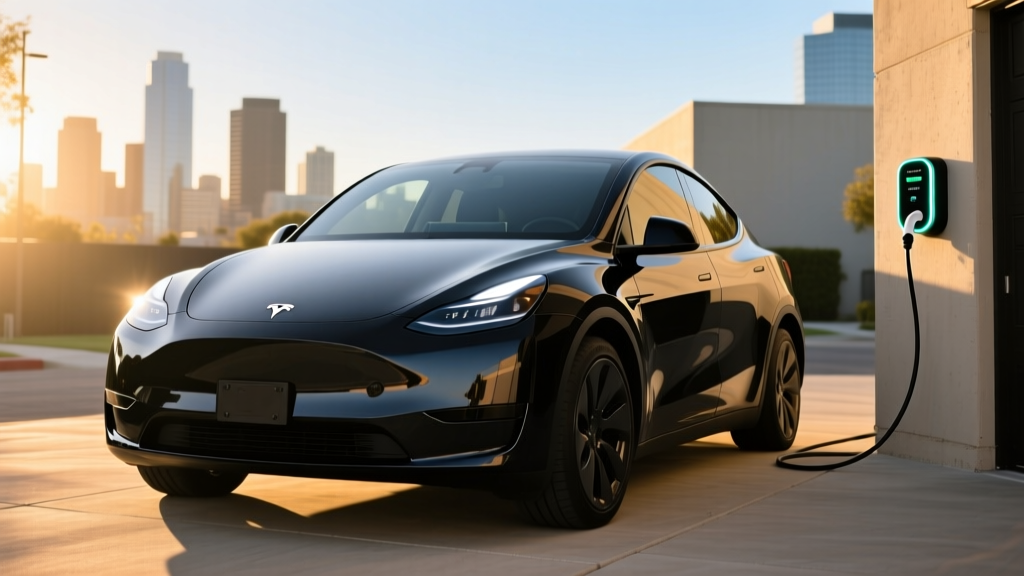
The Tesla Model 3 Long Range remains the default recommendation for buyers seeking a premium electric sedan with serious range and access to the Supercharger network. For 2026, it carries forward the Highland refresh architecture with minor software and efficiency tweaks, delivering an EPA-estimated 363 miles of range, dual-motor all-wheel drive, and DC fast-charging capability that outpaces most rivals in its price bracket. At a starting MSRP around $47,740 (before destination and incentives), it occupies a narrow sweet spot: more range than a Hyundai Ioniq 6 SEL, quicker than a BMW i4 eDrive35, and backed by the most reliable public charging infrastructure in North America.
But the Model 3 Long Range isn't flawless. Its minimalist interior polarizes, rear-seat headroom is tight for taller passengers, and the lack of Apple CarPlay or Android Auto frustrates smartphone-dependent drivers. This review breaks down every spec that matters to real buyers — from sustained charging curves to cold-weather range loss to federal tax credit eligibility under current IRS §30D rules.
Range, Battery, and Efficiency: The Numbers That Matter
Tesla equips the 2026 Model 3 Long Range with a 75 kWh usable battery pack (approximately 79 kWh gross) using NMC (nickel-manganese-cobalt) chemistry. Unlike the base Rear-Wheel-Drive Model 3, which uses LFP (lithium iron phosphate) cells that tolerate frequent 100% charging, the Long Range's NMC pack benefits from daily charging limits of 80-90% for optimal longevity — Tesla's in-car battery management system enforces this via configurable charge limits.
EPA Estimated: 363 miles
Real-World Highway (70-75 mph, mild weather): ~305-325 miles
Real-World City/Mixed: ~340-360 miles
Cold Weather (below 32°F, highway): ~240-270 miles (30-35% reduction typical for NMC packs without heat-pump preconditioning)
The Model 3 Long Range includes a heat pump as standard equipment, which mitigates cabin-heating energy draw in winter. However, cold-soaked battery chemistry still reduces available capacity and regenerative braking effectiveness until the pack warms — preconditioning via the Tesla app or navigation to a Supercharger helps recover ~5-8% of that loss.
Efficiency ratings from fueleconomy.gov list the Model 3 Long Range AWD at 134 MPGe combined (25 kWh/100 miles), placing it among the most efficient all-wheel-drive electric sedans sold in the U.S. That efficiency translates directly to lower charging costs: at the national average electricity rate of $0.16/kWh, a full charge costs roughly $12.60 — equivalent to about $0.035 per mile.
| Specification | Value |
|---|---|
| EPA Range | 363 miles |
| Battery (Usable / Gross) | 75 kWh / ~79 kWh |
| Chemistry | NMC (Nickel-Manganese-Cobalt) |
| Drivetrain | Dual-Motor AWD |
| Horsepower | ~346 hp (combined) |
| 0-60 mph | 4.2 seconds |
| MPGe (Combined) | 134 MPGe (25 kWh/100 mi) |
| Max DC Fast Charge | 250 kW (peak) |
| 10-80% DC Charge Time | ~25-28 minutes |
| Level 2 Home Charge Rate | 11.5 kW (~44 mi/hr) |
| Cargo Volume (Trunk + Frunk) | 23 cu ft trunk + ~3 cu ft frunk |
| Rear Legroom | 35.3 inches |
| Base MSRP | $47,740 (+ $1,390 destination) |
| Battery/Drive Unit Warranty | 8 years / 120,000 miles |
Charging Speed: DC Fast, Level 2, and the Charge Curve Reality
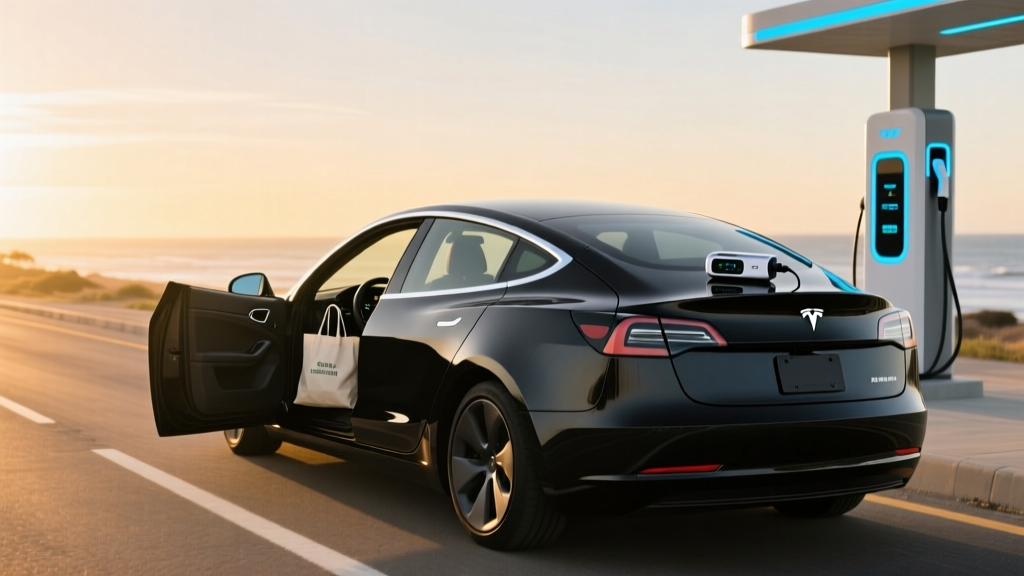
Tesla rates the Model 3 Long Range for a peak DC fast-charge rate of 250 kW at V3 Superchargers. In controlled testing with a preconditioned battery (navigating to the charger activates thermal prep), the Long Range hits 250 kW briefly between 10-20% state of charge, then tapers progressively: ~180 kW at 40%, ~120 kW at 60%, and ~60 kW by 80%. This taper is normal for NMC chemistry and battery-protection protocols, but it means the advertised 250 kW is a peak, not a sustained rate.
| Charge Level | Power (kW) | Approx. Miles Added per Hour | Typical Use Case |
|---|---|---|---|
| Level 1 (120V household) | ~1.4 kW | ~5-6 mi/hr | Emergency/trickle only |
| Level 2 (240V, 48A Wall Connector) | 11.5 kW | ~44 mi/hr | Overnight home charging (full charge in ~7 hrs) |
| Level 2 (public, 7.2 kW typical) | 7.2 kW | ~28 mi/hr | Workplace/hotel destination charging |
| DC Fast (V3 Supercharger, peak) | 250 kW | ~175 mi in 15 min | Road-trip charging; 10-80% in ~25-28 min |
| DC Fast (CCS adapter at EA/others) | Up to 150-250 kW* | Varies by station | Non-Tesla networks via included NACS-to-CCS adapter |
*Charge speed on non-Tesla networks depends on station capability and adapter throughput. Tesla includes a CCS adapter with newer vehicles; NACS remains the native connector.
For home charging, Tesla's Wall Connector ($475) on a 60-amp circuit delivers 48 amps (11.5 kW), adding roughly 44 miles of range per hour. A full 10-100% charge takes approximately 7 hours. Installation costs for a dedicated 240V/60A circuit typically range from $800-$2,000 depending on panel proximity and local permitting — budget an additional $500-$2,500 if your electrical panel requires a 200-amp service upgrade.
Performance and Driving Dynamics
The dual-motor AWD powertrain produces approximately 346 combined horsepower, launching the Model 3 Long Range from 0-60 mph in 4.2 seconds — quick enough to merge confidently onto any highway and overtake without hesitation. Unlike the Performance trim (3.1 seconds, adaptive dampers), the Long Range prioritizes ride comfort with a tuned suspension that absorbs highway imperfections well, though it's firmer than a BMW i4 or Hyundai Ioniq 6.
Regenerative braking offers two modes: Standard (strong regen enabling one-pedal driving in most scenarios) and Low (coasting behavior closer to a conventional automatic). There is no user-adjustable regen strength beyond these presets. The steering is precise but light, and the low center of gravity keeps body roll minimal through corners. Wind and road noise are well-suppressed post-Highland, though some owners report more tire noise on coarse asphalt than expected at this price point.
Interior, Tech, and Daily Usability
The Model 3 cabin is defined by its 15.4-inch central touchscreen, which handles climate controls, media, navigation, and vehicle settings. There are no physical buttons — not even for glovebox release or mirror adjustment. This minimalism appeals to some and frustrates others; test-driving is strongly recommended before purchasing.
Standout Tech Features:
- Autopilot (standard): SAE Level 2 driver-assist with Traffic-Aware Cruise Control and Autosteer (lane centering). Requires continuous driver supervision — this is not self-driving.
- Full Self-Driving (Supervised): Optional $8,000 upgrade adding automatic lane changes, intersection recognition, and parking assist. Still SAE Level 2; driver must remain engaged. NHTSA monitors all Level 2 systems.
- Over-the-air updates: Tesla regularly deploys feature additions and efficiency improvements remotely.
- Sentry Mode / Dashcam: Records surround-camera footage when parked or triggered.
- Phone-as-key: Bluetooth-based entry and start, no fob required.
Notable Drawbacks:
- No Apple CarPlay or Android Auto — Tesla's native infotainment only.
- Rear headroom (37.1 inches) is tight for passengers over 6 feet due to the sloping roofline.
- No traditional instrument cluster; speed and range display on the central screen's left edge.
- Turn-signal buttons on the steering wheel (post-Highland) rather than a stalk — an adjustment period is real.
Pricing, Trim Levels, and Federal Tax Credit Eligibility
The 2026 Tesla Model 3 Long Range AWD starts at $47,740 MSRP, plus a $1,390 destination charge, for an out-the-door base of $49,130 before incentives. Options are limited to paint color ($0-$2,500), wheels ($0-$1,500), interior color ($0-$1,000), and FSD Supervised ($8,000). A typical as-tested configuration with metallic paint and premium interior lands around $50,500-$52,000.
| Item | Amount |
|---|---|
| Base MSRP | $47,740 |
| Destination Fee | $1,390 |
| Typical As-Tested (with options) | ~$50,500 |
| Federal §30D Tax Credit (if eligible) | Up to $7,500 |
| Effective Price After Max Credit | ~$43,000 |
- MSRP Cap: Vehicle must be under $55,000 (sedans). The Model 3 Long Range qualifies at $47,740 base.
- Buyer Income Cap (MAGI): $150,000 single / $225,000 head of household / $300,000 married filing jointly.
- Battery Sourcing: Critical minerals and battery components must meet phased-in domestic/free-trade-partner sourcing thresholds. Tesla's supply chain has adapted, but verify current-year compliance at IRS.gov or via the point-of-sale dealer attestation.
- Point-of-Sale Transfer: Eligible buyers can transfer the credit to Tesla at purchase, reducing the upfront price by up to $7,500 rather than waiting for a tax refund.
- Final Assembly: Must occur in North America. Model 3 is assembled in Fremont, CA and Austin, TX — qualifies.
Credit eligibility is subject to change based on IRS guidance and battery-sourcing verification. Consult a tax professional before relying on credit assumptions.
Warranty and Long-Term Ownership
Tesla covers the Model 3 Long Range battery and drive units for 8 years or 120,000 miles, whichever comes first, with a guaranteed minimum 70% capacity retention over that period. The basic vehicle limited warranty is 4 years / 50,000 miles. Based on long-term fleet data from high-mileage Tesla owners and third-party analysis, NMC packs in the Model 3 typically degrade 8-12% over the first 100,000 miles, with degradation slowing significantly after year three. A replacement battery pack (out of warranty) costs approximately $12,000-$16,000 as of 2026 — rare but not negligible for second owners.
Who Should Buy the Model 3 Long Range (and Who Shouldn't)
- You need 300+ miles of real-world range for frequent road trips and want Supercharger network reliability.
- You value over-the-air updates, a strong driver-assist suite, and a minimalist tech-forward cabin.
- You have home Level 2 charging access and can install a 240V/60A circuit.
- You want AWD traction for snow/rain climates without stepping to a crossover.
- You need CarPlay/Android Auto integration or prefer physical controls.
- You regularly carry tall rear-seat passengers (headroom is limited).
- You want a softer, more luxury-oriented ride (consider the BMW i4 or Genesis Electrified G80).
- You lack home charging and rely exclusively on public infrastructure in a charging-desert region.
- Class-leading EPA range (363 mi) with real-world usability over 300 mi
- 250 kW peak DC charging; 10-80% in ~25-28 minutes
- Access to Tesla Supercharger network (most reliable in North America)
- Quick 4.2-second 0-60 with AWD all-weather capability
- Strong efficiency (134 MPGe, ~25 kWh/100 mi)
- Eligible for up to $7,500 federal tax credit (subject to sourcing rules)
- Over-the-air updates add features post-purchase
- No Apple CarPlay or Android Auto
- Rear headroom tight for tall passengers
- Steep learning curve with screen-only controls and wheel-mounted turn signals
- NMC battery requires 80-90% daily charge limits for longevity (unlike LFP)
- FSD Supervised is expensive ($8,000) and still Level 2 — not autonomous
- Insurance premiums tend to run 15-25% higher than comparable gas sedans
Frequently Asked Questions
What is the real-world range of the Tesla Model 3 Long Range?
The EPA rates it at 363 miles, but expect 305-325 miles at highway speeds (70-75 mph) in mild weather, and 240-270 miles in cold conditions below freezing. City and mixed driving recovers closer to the EPA figure due to regenerative braking.
How fast does the Model 3 Long Range charge at home and on the road?
At home on a 240V/48A Tesla Wall Connector (11.5 kW), it adds about 44 miles per hour, fully charging overnight in ~7 hours. On a V3 Supercharger (250 kW peak), it charges 10-80% in approximately 25-28 minutes, with the rate tapering above 60% SoC.
Does the 2026 Model 3 Long Range qualify for the $7,500 federal EV tax credit?
It meets the MSRP cap ($55,000 for sedans) and North American assembly requirements. Eligibility depends on buyer income (MAGI caps apply) and current battery-sourcing compliance under IRS §30D. Verify at IRS.gov and confirm with Tesla at point of sale.
Is the Model 3 Long Range worth buying versus the Hyundai Ioniq 6 or BMW i4?
The Model 3 wins on range (363 mi vs. Ioniq 6's 361 mi on a larger battery) and Supercharger network access. The Ioniq 6 offers more rear headroom and CarPlay; the BMW i4 delivers a more traditional luxury interior and ride quality. If charging infrastructure reliability is your priority, the Model 3 is the safer bet in 2026.
How long will the Model 3 Long Range battery last?
Tesla warranties the battery for 8 years / 120,000 miles with a 70% retention floor. Real-world fleet data suggests 8-12% degradation over 100,000 miles with proper charging habits (avoiding frequent 100% charges, using preconditioning). Replacement cost out of warranty is approximately $12,000-$16,000.
Is Tesla Autopilot or FSD self-driving?
No. Both Autopilot (standard) and Full Self-Driving Supervised (optional) are SAE Level 2 driver-assist systems. The driver must remain attentive, keep hands on the wheel, and be prepared to take over immediately. No Tesla vehicle is autonomous as of 2026.