Quick Verdict: Should You Buy the Lexus RZ Electric Car?
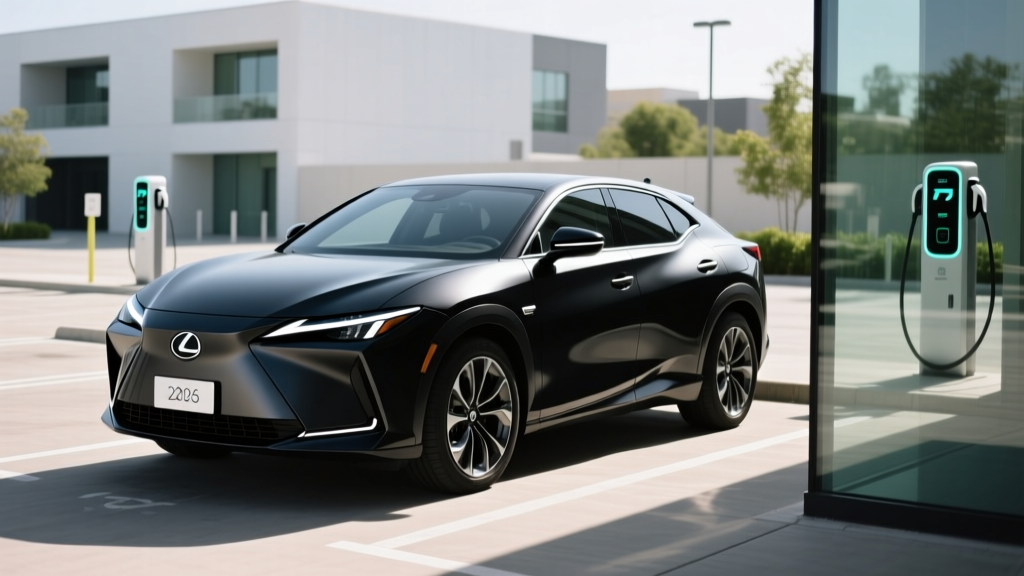
The 2026 Lexus RZ 450e is a luxury electric crossover best suited for buyers who prioritize refinement, ride quality, and brand prestige over maximum range. With an EPA-estimated 220 miles of range (RZ 450e Luxury AWD on 20-inch wheels), it falls short of rivals like the BMW iX and Genesis GV60 on distance, but delivers a quieter cabin and more composed ride. Starting around $54,000 before incentives, the RZ makes financial sense if you can charge at home, drive under 250 miles daily, and qualify for federal or state EV incentives. If you regularly road-trip 300+ miles or live in extreme cold without a garage, a plug-in hybrid like the Lexus RX 500h may serve you better.
Range, Battery, and Real-World Efficiency
The 2026 Lexus RZ 450e packs a 72.8 kWh lithium-ion battery pack (NMC chemistry) powering dual electric motors that produce 308 horsepower and 320 lb-ft of torque. Lexus offers two main range configurations depending on wheel size and drivetrain:
| Trim / Config | EPA Range | MPGe (Combined) | 0-60 mph | Battery (kWh) |
|---|---|---|---|---|
| RZ 450e Premium AWD (18" wheels) | 220 mi | 102 MPGe | 5.0 sec | 72.8 |
| RZ 450e Luxury AWD (20" wheels) | 196 mi | 89 MPGe | 5.0 sec | 72.8 |
| RZ 300e FWD (18" wheels) | 266 mi | 114 MPGe | 7.4 sec | 72.8 |
Real-World Range Reality Check
The EPA sticker on the RZ 450e AWD says 220 miles, but real-world results vary significantly. In mixed highway driving at 70 mph, expect roughly 185–200 miles before needing a charge. In cold weather (below 30°F), range can drop 20–30%, bringing usable range down to 150–175 miles. The RZ 300e FWD fares better, often achieving 230–250 real-world miles in mild conditions thanks to its single-motor efficiency. The RZ uses a heat pump on select trims, which mitigates cold-weather losses somewhat, but it's no substitute for a larger battery on long winter commutes.
Charging Speed and Infrastructure
Lexus equips the RZ with a CCS1 connector for DC fast charging and a J1772 inlet for Level 2 AC charging. As of 2026, the RZ does not natively support NACS (Tesla's connector), though adapters are available for Supercharger access.
| Charging Level | Power (kW) | Time | Miles Added per Hour |
|---|---|---|---|
| Level 1 (120V household) | ~1.4 kW | ~52 hours (0–100%) | ~3–4 mi/hr |
| Level 2 (240V, 32A home) | 7.7 kW | ~9.5 hours (0–100%) | ~22–25 mi/hr |
| Level 2 (240V, 48A home) | 11.5 kW | ~6.5 hours (0–100%) | ~33–36 mi/hr |
| DC Fast Charging (peak) | 150 kW | ~30 min (10–80%) | N/A |
The RZ's peak DC fast-charge rate of 150 kW is its most debated spec. Competitors like the Hyundai Ioniq 5 and Kia EV6 accept up to 350 kW on 800-volt architectures, filling from 10–80% in about 18 minutes. The RZ takes roughly 30 minutes for the same 10–80% session. The charge curve also tapers noticeably above 80% State of Charge (SoC), meaning the final 20% can take as long as the first 70%. For daily driving, most owners charge to 80% at home overnight and only use DC fast charging on road trips — making the 150 kW rate adequate, if not class-leading.
Lexus RZ vs. Gas RX 350: Cost of Ownership
The most common cross-shop for RZ buyers is the gasoline Lexus RX 350. Here's how a 5-year ownership comparison stacks up with concrete numbers, assuming 12,000 miles per year, $3.50/gallon regular fuel, and $0.14/kWh home electricity:
| Cost Factor (5 Years / 60k Miles) | 2026 Lexus RZ 450e | 2026 Lexus RX 350 AWD |
|---|---|---|
| Base MSRP | $54,350 | $49,600 |
| Federal Tax Credit (§30D)* | Up to $3,750 | $0 |
| Effective Purchase Price | ~$50,600 | $49,600 |
| Fuel / Electricity (60k mi) | ~$2,520 | ~$8,400 |
| Maintenance (oil, filters, brakes) | ~$900 | ~$3,200 |
| Insurance (avg. estimate) | ~$10,800 | ~$9,000 |
| Estimated Depreciation | ~$22,000 | ~$18,000 |
| 5-Year Total Cost | ~$86,820 | ~$88,200 |
*Federal tax credit eligibility for the RZ depends on current-year IRS §30D rules, including battery critical-mineral sourcing, buyer income caps ($150k single / $300k joint), and MSRP limits ($80,000 for SUVs). The RZ's credit amount has fluctuated — check IRS.gov for the latest. Some states offer additional rebates; consult your local energy agency.
The RZ breaks even with the RX 350 within roughly 3–4 years on fuel and maintenance savings alone, assuming home charging at average electricity rates. Public DC fast charging at $0.35–$0.50/kWh narrows the gap significantly. Insurance premiums on the RZ tend to run 15–20% higher than the RX due to EV repair-cost data, which partially offsets fuel savings.
Federal Tax Credit and Incentive Eligibility
Navigating the §30D Clean Vehicle Credit requires checking three boxes simultaneously:
- MSRP Cap: The vehicle must have an MSRP at or below $80,000 (SUV/truck category). The RZ clears this easily at ~$54,000–$60,000 depending on trim.
- Buyer Income Cap: Modified adjusted gross income must not exceed $150,000 (single), $225,000 (head of household), or $300,000 (married filing jointly).
- Battery Sourcing: A percentage of critical minerals and battery components must be sourced from the U.S. or free-trade-agreement countries. This requirement has tightened annually since 2024, and the RZ's eligibility has shifted depending on the model year and supply-chain updates. Verify on fueleconomy.gov before purchasing.
- Point-of-Sale Transfer: As of 2024+, you can transfer the credit to the dealer at purchase, reducing your out-of-pocket cost immediately rather than waiting for tax filing.
Because sourcing rules change, never assume a flat $7,500 credit. The RZ has qualified for $3,750 in recent model years due to partial critical-mineral compliance. Consult a tax professional for your specific situation.
Myths vs. Facts: Common Lexus RZ Misconceptions
| Myth | Fact |
|---|---|
| "The RZ can't road-trip because of its range." | With DC fast charging at 150 kW, you add ~100 miles in about 15 minutes. On a 400-mile trip, plan two 20-minute stops — manageable for most drivers. |
| "EV batteries need replacing every 5 years." | Lexus warranties the RZ battery for 8 years/100,000 miles (10 years/150,000 in California and CARB states) with a minimum 70% capacity retention threshold. Most NMC packs retain 85–90% at 100k miles based on industry degradation data. |
| "Charging an EV costs more than gas." | At $0.14/kWh (national average home rate), the RZ costs about $0.042/mile to "fuel." A gas RX 350 at 25 MPG combined and $3.50/gal costs $0.14/mile — over 3x more per mile. |
| "You need a special electrical panel for home charging." | A Level 2 home charger requires a 240V circuit (NEMA 14-50 or hardwired). Most homes with a 200-amp panel can accommodate this for $500–$2,000 installed. Older 100-amp panels may need an upgrade ($1,500–$3,000+). |
| "The RZ is just a rebadged Toyota bZ4X." | While they share the e-TNGA platform, the RZ has a unique Lexus-tuned suspension, more sound insulation, a different interior, and available DIRECT4 torque-vectoring AWD. Driving dynamics and cabin quality are noticeably different. |
Who Should Buy the Lexus RZ — and Who Shouldn't
Decision Framework: Is the RZ Right for You?
Choose the Lexus RZ 450e if:
- You have access to Level 2 home or workplace charging
- Your daily round-trip commute is under 100 miles
- You value a quiet, smooth ride over maximum range or sporty handling
- You want Lexus dealer service and warranty support for your EV
- You qualify for federal or state EV incentives that narrow the price gap with a gas RX
Choose the Lexus RZ 300e (FWD) if:
- You need the longest possible range (266 mi EPA) and don't need AWD
- You live in a mild climate where FWD is practical year-round
Skip the RZ and consider the RX 500h PHEV or RX 350 gas if:
- You lack reliable home or workplace charging access
- You regularly drive 300+ miles in a single day or tow frequently
- You live in extreme cold (sub-0°F) without a garage
- You want the lowest possible upfront purchase price without incentive dependency
Look at competitors (BMW iX, Genesis GV60, Tesla Model Y) if:
- Fast DC charging speed is a top priority (the RZ's 150 kW trails 800V rivals)
- You need 300+ miles of EPA range in an electric luxury crossover
- You want the latest autonomous-driving or hands-free highway tech (the RZ's Lexus Safety System+ 3.0 is a capable Level 2 system, not hands-free)
First-Time EV Buyer Essentials for the RZ
If the Lexus RZ is your first electric car, here's what the dealership won't emphasize:
Home charging is non-negotiable for convenience. Relying solely on public DC fast charging turns a 10-second plug-in-at-home routine into 30-minute weekly stops at Electrify America or EVgo stations. Budget $500–$2,000 for a Level 2 home charger installation (48-amp hardwired unit recommended for the RZ's 11.5 kW onboard charger). Consult a licensed electrician to assess your panel capacity.
Preconditioning matters. The RZ can precondition its battery before a DC fast-charge stop when you set a charging station as your navigation destination. This warms the battery to optimal temperature, enabling faster charging speeds. Skipping preconditioning in cold weather can add 10–15 minutes to your charge session.
Regenerative braking takes adjustment. The RZ offers adjustable regen levels via paddle shifters. At maximum setting, you can approximate one-pedal driving in city traffic, though it doesn't come to a complete stop like some rivals. Expect a week of adaptation.
Tire costs are higher. EVs are heavier and deliver instant torque, which wears tires 20–30% faster than equivalent gas vehicles. Budget $1,200–$1,800 for a set of premium all-season or EV-specific tires every 30,000–40,000 miles.
Frequently Asked Questions
Does the Lexus RZ qualify for the $7,500 federal tax credit in 2026?
The RZ's federal credit has been $3,750 in recent model years due to partial compliance with critical-mineral sourcing requirements under §30D. Eligibility changes as supply chains shift. Verify the current credit amount on IRS.gov or fueleconomy.gov before purchase, and confirm your income falls within the caps.
How long does it take to charge the Lexus RZ at home?
On a 48-amp Level 2 home charger (11.5 kW), the RZ charges from empty to full in about 6.5 hours. Most owners plug in overnight and wake up to a full battery every morning. On a standard 120V outlet (Level 1), a full charge takes over 50 hours — impractical for daily use but usable as a trickle-charge supplement.
What is the real-world highway range of the RZ 450e?
At sustained 70 mph highway speeds in mild weather (60–75°F), expect approximately 185–200 miles from the RZ 450e AWD on 18-inch wheels. With 20-inch wheels, that drops to roughly 165–180 miles. In cold weather (below 30°F), subtract another 20–30%.
Is the Lexus RZ good in snow and winter conditions?
The RZ 450e's DIRECT4 AWD system provides confident traction in snow, and its low center of gravity helps stability. However, winter range loss is real — plan for 150–175 miles of usable range in sub-freezing conditions. A heated garage and battery preconditioning help significantly.
How does Lexus Safety System+ 3.0 compare to Tesla Autopilot?
Both are SAE Level 2 driver-assistance systems requiring active driver supervision. Lexus Safety System+ 3.0 includes adaptive cruise, lane-centering, and automatic emergency braking. It is not hands-free and does not offer automatic lane changes on demand like Tesla's FSD (Supervised). It is, however, less expensive and included standard on all RZ trims. Neither system is "self-driving" — you must keep your hands on the wheel and eyes on the road at all times.
What happens if the RZ battery degrades significantly?
Lexus warranties the high-voltage battery for 8 years/100,000 miles (10 years/150,000 miles in CARB states) against falling below 70% capacity. Industry data on NMC batteries suggests most packs retain 85–92% capacity at 100,000 miles under normal use. A full out-of-warranty battery replacement would cost an estimated $12,000–$18,000, but this scenario is rare within the first decade of ownership.