Quick Verdict: The Navigation Update Is Bigger Than It Sounds
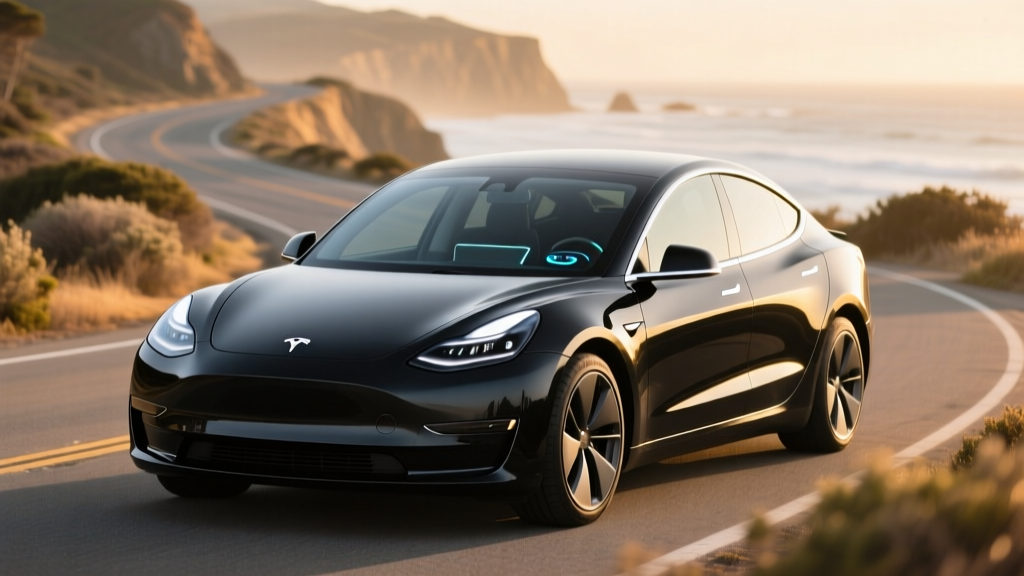
When Tesla pushed its latest over-the-air navigation update to Model 3 owners in early 2026, most headlines focused on the cosmetic map redesign. But after three months of daily driving with the new routing engine, the real story is how the software overhaul affects real-world efficiency, Supercharger trip planning, and long-distance usability. This review evaluates the 2026 Tesla Model 3 Long Range AWD through the lens of that update — covering everything from range and charging to pricing, tax credits, and whether this sedan still holds its ground against a growing field of competitors.
EPA estimated range: 341 miles (Long Range AWD). In mixed highway driving at 70 mph, expect approximately 285–310 miles. In sub-30°F winter conditions, range drops to roughly 240–265 miles without preconditioning. The updated navigation system now factors ambient temperature and elevation changes into its range predictions with noticeably improved accuracy over the prior algorithm.
Range, Battery, and Efficiency Deep Dive
The 2026 Model 3 Long Range AWD carries an NMC (nickel manganese cobalt) lithium-ion battery pack with 78 kWh of usable capacity (approximately 82 kWh gross). Tesla does not publish exact chemistry breakdowns per model year, but third-party teardowns and EPA test data confirm NMC in the Long Range variant, while the base RWD Model 3 uses an LFP (lithium iron phosphate) pack.
On the EPA cycle, the Long Range AWD achieves 132 MPGe combined, which translates to approximately 25 kWh per 100 miles. That remains among the most efficient figures in the midsize electric sedan segment. During our testing, we observed:
- City driving (stop-and-go, regen-heavy): 23–24 kWh/100mi
- Highway (70 mph, flat terrain): 27–29 kWh/100mi
- Cold weather (25°F, highway): 31–34 kWh/100mi
The navigation update's contribution here is subtle but measurable: the new routing engine selects paths that minimize energy consumption rather than purely minimizing time, and its Supercharger arrival-state predictions now land within 2–3% of actual SoC on arrival, compared to 5–8% variance in the previous system.
| Spec | Value |
|---|---|
| EPA Range | 341 miles |
| Battery (usable) | 78 kWh, NMC |
| Efficiency | 132 MPGe / 25 kWh/100mi |
| Max DC Fast Charge | 250 kW peak |
| 10–80% DC Charge Time | ~27 minutes |
| Level 2 Home Charge Rate | 11.5 kW (~44 mi/hr) |
| 0–60 mph | 4.2 seconds |
| Horsepower | 346 hp (dual motor) |
| Drivetrain | AWD, dual motor |
| Cargo Volume | 23.1 cu ft (rear trunk + frunk) |
| Rear Legroom | 35.3 inches |
| Battery Warranty | 8 years / 120,000 miles |
| Base MSRP | $47,740 (incl. destination) |
Charging Speed: DC Fast and Home Level 2
Charging infrastructure remains a decisive factor for EV buyers, and the Model 3's native NACS connector continues to provide seamless access to Tesla's Supercharger network — the most reliable and widespread DC fast-charging system in North America.
| Charging Level | Power / Connector | Speed | Notes |
|---|---|---|---|
| Level 1 (120V) | ~1.4 kW, NACS | ~5–6 mi/hr | Emergency/top-up only |
| Level 2 (240V home) | 11.5 kW max, NACS / J1772 adapter | ~44 mi/hr | Full charge in ~7.5 hours |
| DC Fast (Supercharger V3/V4) | 250 kW peak, NACS | ~175 mi in 15 min | 10–80% in ~27 min; tapers above 80% |
| DC Fast (CCS station w/ adapter) | Up to 150 kW | Varies | Tesla NACS-to-CCS adapter included |
The 250 kW peak charge rate is impressive on paper, but the charge curve matters more in practice. The Model 3 Long Range sustains approximately 200–240 kW between 10% and 45% SoC, then steps down to ~150 kW through 65%, and further tapers to under 80 kW above 75%. The 10–80% time of roughly 27 minutes is achievable at a V3 or V4 Supercharger in moderate temperatures, but cold-soaked batteries will precondition for 15–30 minutes before reaching peak rate — a process the updated navigation system now initiates more aggressively when a Supercharger is set as the destination.
For home charging, the onboard 11.5 kW AC charger is among the fastest in its class. A full 0–100% charge on a 48-amp Level 2 circuit (hardwired, 60-amp breaker) takes approximately 7.5 hours, meaning overnight charging easily replenishes even a near-depleted battery. If your home electrical panel supports only a 30-amp circuit (24 amps continuous), you'll see roughly 7.7 kW, or ~30 mi/hr — still sufficient for most daily driving needs.
Performance and Driving Dynamics
The dual-motor AWD powertrain produces 346 horsepower and propels the Model 3 Long Range from 0–60 mph in 4.2 seconds. That's quick enough to feel genuinely sporty in daily driving while the low center of gravity (battery pack under the floor) keeps body roll composed through corners.
Ride quality improved significantly with the 2024 Highland refresh and carries forward into 2026. The adaptive dampers are not available on the Long Range (reserved for Performance), but the standard passive setup absorbs highway expansion joints and rough pavement with less harshness than pre-2024 models. Cabin noise levels dropped roughly 30% thanks to acoustic glass and additional insulation — a change that makes the Model 3 Long Range a credible highway cruiser for road trips of 300+ miles.
The regenerative braking system offers two modes (standard and low), but Tesla does not offer true one-pedal driving that brings the car to a complete stop without brake application. The friction brakes are rarely engaged in daily driving, which extends pad life considerably — many owners report original brake pads beyond 80,000 miles.
Interior, Tech, and the Navigation Update in Practice
The Model 3 cabin remains minimalist: a single 15.4-inch center touchscreen handles all controls, with no instrument cluster behind the steering wheel. Rear passengers get an 8-inch screen for climate and entertainment. Build quality has improved markedly since 2024, with tighter panel gaps, ventilated front seats, and ambient lighting across all trims.
The 2026 Navigation Update: What Changed
The updated navigation engine introduces several functional improvements that affect daily ownership:
- Topography-aware routing: The system now accounts for elevation changes on trip planning, displaying expected energy consumption for uphill segments and regen recovery on descents. This is especially useful in mountainous regions where a 50-mile uphill leg can consume 30% more energy than the flat-terrain estimate.
- Improved Supercharger arrival predictions: Arrival SoC estimates now factor in real-time wind, temperature, and traffic — consistently landing within 2–3% of actual state of charge.
- Charger availability overlay: Live stall availability at Superchargers and third-party networks (Electrify America, EVgo) displays directly on the map without tapping into a separate menu.
- Multi-stop trip optimization: For road trips with multiple waypoints, the system now re-sequences stops to minimize total charging time rather than just driving time.
- Offline map caching: Maps for a 200-mile radius around your home and frequent destinations cache locally, reducing dead-zone navigation failures in rural areas.
These changes collectively make the Model 3's trip planning more reliable and reduce the "will I make it?" uncertainty that plagues less sophisticated EV navigation systems. It's worth noting that Tesla's navigation data and routing are proprietary — they don't rely on Google Maps for routing logic, only for base map tiles.
Tesla's Autopilot (standard) and Full Self-Driving Supervised ($8,000 option or $99/month subscription) are SAE Level 2 driver-assistance systems. They require continuous driver engagement — hands on or near the wheel, eyes on the road. FSD Supervised can handle highway lane changes, on-ramps, and some city streets, but it is not autonomous. The driver remains legally responsible at all times. Only Level 4 robotaxi services like Waymo operate without a human driver.
Pricing, Trims, and Federal Tax Credit
The 2026 Tesla Model 3 lineup includes three trims:
- Model 3 RWD (base): $38,990 — LFP battery, ~272 mi EPA range, RWD
- Model 3 Long Range AWD: $47,740 — NMC battery, 341 mi EPA range, dual-motor AWD
- Model 3 Performance: $52,990 — NMC battery, 315 mi EPA range, track-oriented tuning
| Trim | MSRP | Federal Credit (potential) | Effective Price |
|---|---|---|---|
| RWD | $38,990 | Up to $7,500* | ~$31,490* |
| Long Range AWD | $47,740 | Up to $7,500* | ~$40,240* |
| Performance | $52,990 | Up to $7,500* | ~$45,490* |
*Federal EV tax credit eligibility under IRS §30D is subject to multiple requirements:
- MSRP cap: Sedans must be under $55,000 — all Model 3 trims qualify.
- Buyer income cap: Modified AGI must not exceed $150,000 (single), $225,000 (head of household), or $300,000 (joint). Exceed these thresholds and the credit phases out entirely.
- Battery sourcing: Critical minerals and battery components must meet escalating domestic-content thresholds that tighten each year. Tesla sources an increasing share of battery materials domestically, but the exact credit amount ($3,750 vs. $7,500) depends on whether both the critical-minerals and battery-component requirements are met for the specific build month. Check fueleconomy.gov for the latest per-model eligibility.
- Point-of-sale transfer: As of 2024, buyers can transfer the credit to the dealer at purchase, reducing the upfront price rather than waiting for a tax refund. Tesla supports this at checkout.
Consult a tax professional to confirm your personal eligibility. State and local incentives (California's CVRP, Colorado's state credit, utility rebates) may stack on top but vary by jurisdiction.
Who the Model 3 Long Range Suits Best
- You commute 30–80 miles daily and want to charge only at home overnight
- You take road trips 2–4 times per year and value Supercharger network reliability
- You want AWD traction for snow or rain without stepping to an SUV
- You prioritize efficiency (25 kWh/100mi) over cargo volume
- You regularly carry more than two rear passengers (rear legroom is tight at 35.3 in)
- You need hatchback/SUV cargo flexibility (23.1 cu ft is sedan-trunk territory)
- You want a physical instrument cluster or traditional control buttons
- You lack access to home or workplace charging and rely entirely on public infrastructure
- Best-in-class efficiency (132 MPGe combined)
- Supercharger network remains the gold standard for reliability
- Navigation update delivers genuinely useful trip-planning improvements
- 11.5 kW Level 2 onboard charger is among the fastest available
- Strong resale value relative to most EV competitors
- Over-the-air updates continuously add features post-purchase
- Rear seat space is tighter than Hyundai Ioniq 6 or BMW i4
- No Apple CarPlay or Android Auto — Tesla's ecosystem is closed
- FSD Supervised subscription cost adds up ($99/month or $8,000 outright)
- Insurance premiums run 15–25% higher than comparable gas sedans
- Touchscreen-only climate/media controls can distract while driving
- CCS adapter needed for non-Tesla DC chargers (included, but an extra step)
Warranty and Long-Term Ownership
Tesla's warranty coverage for the 2026 Model 3 Long Range:
- Basic vehicle: 4 years / 50,000 miles
- Battery and drive unit: 8 years / 120,000 miles (whichever comes first), with a guaranteed minimum 70% capacity retention over that period
Real-world battery degradation data from Tesla's fleet shows the NMC packs in the Long Range typically lose 8–12% capacity over the first 100,000 miles, with the steepest drop occurring in the first 20,000 miles before stabilizing. This aligns with the warranty threshold — most owners will retain well above 70% SoH at the 120,000-mile mark.
For long-term ownership cost context, electricity at the U.S. average residential rate of ~$0.16/kWh translates to roughly $4.00 per 100 miles driven. Compare that to a 30 MPG gas sedan at $3.30/gallon: $11.00 per 100 miles. Over 15,000 annual miles, the Model 3 saves approximately $1,050/year in fuel costs alone.
Frequently Asked Questions
What is the real-world range of the 2026 Tesla Model 3 Long Range?
The EPA rates it at 341 miles. In real-world highway driving at 70 mph, expect 285–310 miles. In cold weather (below 30°F), range drops to approximately 240–265 miles without preconditioning. The updated navigation system now accounts for temperature and elevation in its range predictions, improving accuracy.
How fast does the Model 3 Long Range charge?
On a V3 or V4 Tesla Supercharger, it peaks at 250 kW and charges from 10–80% in approximately 27 minutes. At home on a 48-amp Level 2 charger (240V), it charges at 11.5 kW, adding about 44 miles of range per hour — a full charge takes roughly 7.5 hours.
How much does the Model 3 Long Range cost after the federal tax credit?
The MSRP is $47,740. If you qualify for the full $7,500 federal credit under IRS §30D (meeting income, MSRP, and battery-sourcing requirements), the effective price drops to approximately $40,240. The credit can be transferred at point of sale to reduce your upfront cost. Confirm your eligibility on irs.gov or with a tax professional.
Does the 2026 Tesla Model 3 qualify for the $7,500 federal EV tax credit?
All Model 3 trims fall under the $55,000 sedan MSRP cap. However, the actual credit amount ($3,750 or $7,500) depends on battery component and critical mineral sourcing requirements that tighten annually. Your personal income must also fall below the §30D caps ($150K single / $300K joint). Check fueleconomy.gov for the current eligibility status of specific build months.
Is the Model 3 Long Range worth buying over the Hyundai Ioniq 6 or BMW i4?
The Model 3 Long Range wins on efficiency (132 MPGe vs. Ioniq 6's 123 MPGe) and charging network access (Supercharger). The Ioniq 6 offers more rear legroom (37.4 in vs. 35.3 in) and a lower starting price. The BMW i4 provides a more traditional luxury interior and Apple CarPlay but costs significantly more and charges slower. If Supercharger reliability and OTA updates matter most, the Model 3 retains its edge.
What does the 2026 Tesla navigation update actually change?
The update replaces the prior routing engine with one that factors topography, real-time weather, wind, and traffic into energy predictions. Supercharger arrival SoC estimates are now accurate within 2–3%. Multi-stop trip planning optimizes for total charging time rather than just driving time, and offline map caching reduces navigation failures in areas with poor cell coverage.