Quick Verdict: Should You Lease the 2026 Tesla Model 3?
If you want a sharp-handling, tech-forward electric sedan with access to the most reliable fast-charging network in the U.S., the 2026 Tesla Model 3 remains the default answer. But "default" doesn't mean "automatic." Lease deals in 2026 typically run $329–$449/month depending on trim, money down, and whether the lessor passes through the $7,500 federal EV lease credit (technically the commercial clean vehicle credit under §45W, which leasing companies receive and may or may not apply to your monthly payment). This review dissects what you actually get for those numbers — EPA range versus real-world range, charging curve realities, and the ownership trade-offs that brochures skip.
| Spec | Long Range RWD | Long Range AWD | Performance AWD |
|---|---|---|---|
| EPA Range | 363 mi | 346 mi | 330 mi |
| Battery (usable / chemistry) | ~75 kWh / NMC | ~75 kWh / NMC | ~75 kWh / NMC |
| Peak DC Fast Charge | 250 kW | 250 kW | 250 kW |
| 10–80% DCFC Time | ~25 min | ~25 min | ~25 min |
| Level 2 Home Charge (11.5 kW) | ~44 mi/hr | ~44 mi/hr | ~44 mi/hr |
| 0–60 mph | 4.9 sec | 4.2 sec | 2.9 sec |
| Horsepower | ~295 hp | ~384 hp | ~510 hp |
| Drivetrain | Rear-Wheel Drive | Dual-Motor AWD | Dual-Motor AWD |
| MPGe (combined) | 132 MPGe | 125 MPGe | 118 MPGe |
| kWh / 100 mi | 25 | 27 | 29 |
| Base MSRP (incl. dest.) | $44,130 | $49,130 | $54,630 |
Source: fueleconomy.gov, Tesla spec sheets.
Real-World Range: What the EPA Sticker Doesn't Tell You
EPA sticker: 363 mi (Long Range RWD) / 346 mi (AWD) / 330 mi (Performance)
Real-world highway (70–75 mph, 68°F): expect ~290–310 mi on the Long Range RWD, ~275–295 mi on AWD.
Cold-weather (below 32°F): subtract 20–30%, yielding ~220–250 mi effective range on a full charge.
The Model 3's efficiency is genuinely class-leading among compact EV sedans — the Long Range RWD's 25 kWh/100 mi beats the Hyundai Ioniq 6 (27 kWh/100 mi) and BMW i4 (28–31 kWh/100 mi). But efficiency can't repeal physics. Sustained 80-mph interstate driving in winter with cabin heat will compress range noticeably. Tesla's heat pump mitigates this better than resistive heaters, and preconditioning the battery while navigating to a Supercharger restores fast-charge speeds in cold weather — a critical feature many competitors still lack.
For lessees who drive 30–40 miles daily with home charging, even the Performance trim's 330-mile EPA rating leaves a massive buffer. Range only becomes a practical concern on 400+ mile road trips, where the Model 3's Supercharger network advantage shines.
Charging Speed: DC Fast, Level 2, and the Curve Reality
| Level | Max Power | Miles Added / Hour | Notes |
|---|---|---|---|
| Level 1 (120V / 12A) | ~1.4 kW | ~3–4 mi/hr | Emergency/trickle only |
| Level 2 (240V / 48A) | 11.5 kW | ~44 mi/hr | Full charge in ~7–8 hrs |
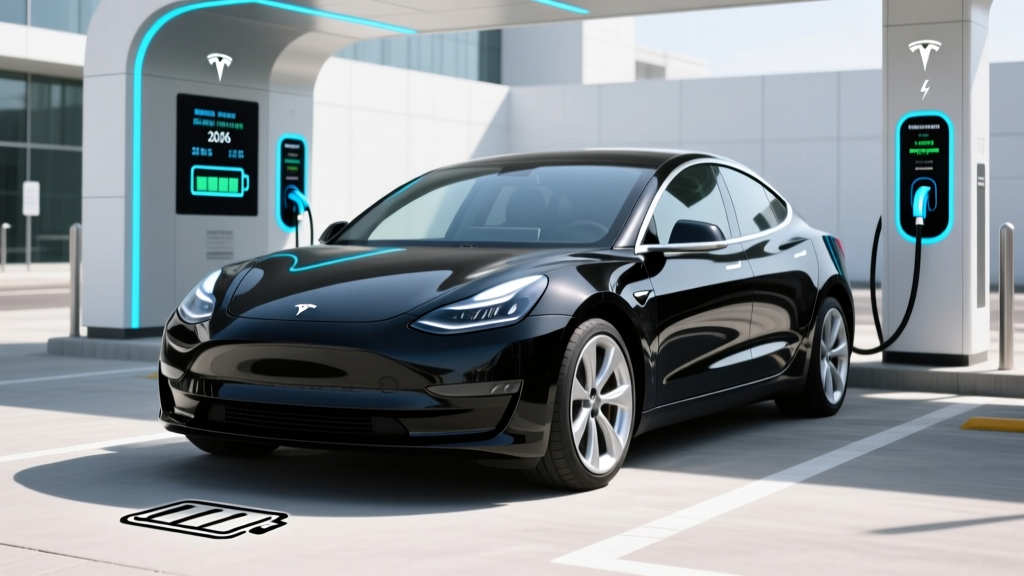
| DC Fast (Supercharger V3/V4) | 250 kW peak | Up to ~175 mi in 15 min | 10–80% in ~25 min |
Important nuance: 250 kW is the peak, not the sustained rate. The Model 3's NMC battery hits peak power only between ~10–45% state of charge, then tapers to ~150 kW by 60%, and below 50 kW past 80%. This is why Tesla (and every honest EV reviewer) quotes 10–80% times rather than "full charge" figures. On a V3 Supercharger, a 10–80% session takes roughly 25 minutes; on a CCS-equipped third-party charger with an adapter (now included with new Teslas), speeds depend on the station's actual output — many Electrify America stalls deliver 150 kW, extending that session to ~35 minutes.
For lessees: home Level 2 charging is the make-or-break experience. A 48-amp Wall Connector on a 60-amp circuit adds ~44 miles per hour of charging — enough to fully replenish overnight. Installation typically costs $800–$2,000 depending on panel proximity; older homes may need a $2,000–$4,000 panel upgrade to support 60-amp service. Factor this into your first-year budget.
Lease Pricing, Tax Credits, and the True Monthly Cost
Here's where leasing the Model 3 diverges from buying — and where the math can work in your favor if you navigate it correctly.
| Factor | Lease (Typical 36-mo) | Purchase |
|---|---|---|
| Federal Credit Mechanism | §45W commercial credit ($7,500) to lessor — may reduce payment | §30D clean vehicle credit — up to $7,500 at point of sale |
| Income Cap? | No (lease credit has no buyer income limit) | Yes: $150K single / $300K joint AGI |
| MSRP Cap? | No | Yes: sedans ≤ $55,000 |
| Battery Sourcing Rules? | No (lease bypasses critical-mineral requirements) | Yes — strict and tightening |
| Typical Monthly Payment* | $329–$449 | $600–$750 (financed at 6.5%) |
| Due at Signing | $2,500–$4,500 (first mo + fees + cap reduction) | Down payment + taxes (unless credit applied) |
| End of Term | Return or purchase at residual | You own the asset |
*Estimates based on 2026 advertised lease offers; actual terms vary by region, credit tier, and lessor. Purchase payments assume 10% down, 72-mo term.
The lease credit loophole explained: When you lease, the leasing company (not you) technically claims the IRS commercial clean vehicle credit under §45W. Reputable lessors — including Tesla Financial Services — typically pass this through as a capitalized-cost reduction, lowering your monthly payment by roughly $150–$200/month over 36 months. This is why leasing can sidestep the §30D purchase credit's income caps, MSRP limits, and battery-sourcing requirements entirely. It's a legitimate structural advantage, not a trick — but confirm in writing that the lessor applies the credit to your deal before signing.
Tax credit eligibility checklist (purchase path, for comparison):
- Buyer AGI ≤ $150,000 (single) or $300,000 (joint)
- Sedan MSRP ≤ $55,000 (all Model 3 trims qualify on price)
- Battery must meet critical-mineral and component sourcing thresholds (varies by model year — verify on IRS.gov)
- Vehicle must be assembled in North America (Model 3: yes, Fremont, CA)
- Credit is now transferable to dealer at point of sale under §30D(g)
Performance, Interior, and Daily Livability
The 2026 Model 3 "Highland" refresh (introduced for 2024, carried forward) transformed the car from a spartan tech pod into a genuinely refined compact sedan. Ventilated front seats, acoustic glass, a rear touchscreen for passengers, ambient lighting, and a notably quieter cabin at highway speed are now standard — addressing the most common complaints of pre-2024 owners.
Performance by the numbers:
- Long Range RWD: 0–60 in 4.9 seconds, ~295 hp. Quick enough for any merge, and RWD delivers the best range.
- Long Range AWD: 0–60 in 4.2 seconds, ~384 hp. The sweet spot for all-weather buyers who don't need track performance.
- Performance AWD: 0–60 in 2.9 seconds, ~510 hp. Supercar acceleration, but sacrifices 33 miles of EPA range and rides firmer.
Interior space:
- Front legroom: 42.3 inches
- Rear legroom: 35.3 inches (tight for adults over 6'0" on long trips)
- Trunk: 23 cu ft (including rear frunk of ~3.1 cu ft)
- Seating: 5 passengers, though the rear middle seat is best for children
Standout tech:
- 15.4-inch center touchscreen running Tesla's proprietary OS — fast, responsive, but no Apple CarPlay or Android Auto
- Over-the-air updates continuously add features
- Standard Autopilot (lane-keep + adaptive cruise) is competent; Full Self-Driving (Supervised) is a $8,000 option or $99/month add-on — but remains SAE Level 2, requiring active driver supervision at all times
- Sentry Mode dashcam, Dog Mode cabin climate, and theater-mode streaming while parked
Notable drawbacks:
- No physical buttons for turn signals (steering-wheel capacitive toggles) or gear selection (touchscreen swipe) — polarizing and takes weeks to habituate
- No CarPlay/Android Auto — a dealbreaker for some lessees accustomed to phone projection
- Rear visibility is compromised by the sloping roofline; rely on the backup camera
- Insurance premiums run 15–30% higher than comparable gas sedans (average ~$2,400–$3,200/year nationally)
Warranty, Reliability, and Long-Term Considerations
Tesla's warranty structure is straightforward:
- Basic vehicle: 4 years / 50,000 miles
- Battery & drive unit (Long Range / Performance): 8 years / 120,000 miles, with a minimum 70% capacity retention guarantee
- Battery & drive unit (RWD standard-range, if equipped): 8 years / 100,000 miles, 70% retention
For a 36-month lease, you'll never touch the powertrain warranty's limits. Battery degradation data from fleet analytics (Recurrent, Teslanomics) shows NMC Model 3 packs typically lose ~5–8% capacity over 100,000 miles, well within the 70% guarantee. LFP chemistry (used in some prior RWD base trims) degrades even slower but isn't offered on 2026 Long Range or Performance models.
Build quality has improved markedly since the Fremont factory's panel-gap reputation of 2018–2021. The Highland refresh tightened tolerances, and NHTSA continues to award the Model 3 five stars overall. IIHS Top Safety Pick+ status holds for the current generation.
Tesla Model 3 vs. Key Competitors: Which Should You Lease?
Choose the Tesla Model 3 if:
- You want Supercharger network access (17,000+ V3/V4 stalls in North America)
- Efficiency and real-world range per kWh matter to you
- You value OTA updates and a mature software ecosystem
- You lease to sidestep §30D sourcing/income restrictions
Choose a competitor if:
- Hyundai Ioniq 6: You want CarPlay, physical buttons, and an 800V architecture (10–80% in ~18 min at 350 kW)
- BMW i4: You prioritize driving refinement, dealer service, and traditional luxury materials
- Polestar 2: You want a Google-built infotainment system and Scandinavian design
- Cadillac CT4-V Blackwing (ICE): You're not ready for electric and want engagement above all
Pros
- Best-in-class efficiency (25 kWh/100 mi LR RWD)
- Supercharger network reliability dwarfs Electrify America / third-party CCS
- Lease credit bypasses §30D income and sourcing restrictions
- Class-leading acceleration across all trims
- Highland refresh fixed most NVH and interior complaints
Cons
- No CarPlay/Android Auto
- Touchscreen-only gear selection and turn signals require adaptation
- Insurance costs 15–30% above segment average
- 250 kW peak DCFC is outpaced by 800V rivals at 350 kW chargers
- Rear seat comfort is adequate, not generous
Who the Model 3 Lease Suits Best
Ideal lessee profile: A tech-comfortable commuter driving 25–50 miles daily with access to home Level 2 charging (garage or driveway with a 240V circuit), who takes 2–4 road trips per year and values minimal charging hassle. The lease structure lets you ride out the steepest depreciation years, capture the $7,500 credit pass-through, and upgrade to the next generation in 36 months.
Less ideal: Apartment dwellers without workplace or home charging (public charging costs 2–3x home rates and adds friction), families needing three-across rear seating (look at Model Y or Ioniq 5), or buyers who prioritize dealer-service convenience over tech innovation.
Frequently Asked Questions
Does the Tesla Model 3 qualify for the federal EV tax credit in 2026?
Yes — if you purchase, the Model 3 qualifies for the full $7,500 §30D credit (sedan MSRP cap is $55,000; all trims comply), subject to buyer income limits and battery-sourcing rules. If you lease, the lessor claims the $7,500 §45W commercial credit with no income or sourcing restrictions, and typically passes savings through as a lower monthly payment.
What is the real-world range of the 2026 Tesla Model 3?
EPA rates the Long Range RWD at 363 miles, but expect ~290–310 miles at sustained highway speeds in mild weather, and ~220–250 miles in sub-freezing conditions. The Performance AWD delivers ~270–290 miles highway in temperate weather.
How fast does the Model 3 charge at home and on the road?
At home on a 48-amp Level 2 charger (11.5 kW), the Model 3 adds ~44 miles per hour — a full overnight charge. On a Tesla V3 Supercharger, it peaks at 250 kW and charges 10–80% in ~25 minutes. On third-party CCS chargers with the included adapter, expect 150–200 kW depending on the station.
Is leasing a Tesla Model 3 better than buying in 2026?
Leasing is advantageous if you want to bypass the §30D purchase credit's income and battery-sourcing restrictions, avoid depreciation risk on a rapidly evolving EV segment, and keep monthly payments lower (~$350–$450 vs. ~$650+ financed). Buying is better if you plan to keep the car 5+ years, drive over 15,000 miles/year (lease penalties apply), or want to build equity.
How does the Model 3 compare to the Hyundai Ioniq 6 or BMW i4?
The Model 3 wins on Supercharger access, efficiency, and software. The Ioniq 6 charges faster at 350 kW stations (800V architecture, 10–80% in ~18 min) and offers CarPlay. The BMW i4 delivers superior ride refinement and dealer service but trails on range-per-dollar and charging-network convenience.
What happens at the end of a Model 3 lease?
You can return the vehicle (subject to mileage and wear guidelines), or purchase it at the pre-set residual value. Tesla Financial leases historically do not offer a purchase option at lease-end for the lessee — confirm this in your contract, as policies have shifted in prior years.