Why July 2026 Is a Pivotal Month for Tesla Model 3 Leases
Mid-summer lease promotions on the Tesla Model 3 have become an annual tradition, and July 2026 is no exception. Tesla's direct-to-consumer model means you won't find dealer-negotiated lease specials the way you would at a BMW or Hyundai store. Instead, Tesla adjusts money factors, residual values, and occasional referral incentives through its website and app. For buyers weighing Tesla Model 3 July lease deals, understanding the real numbers behind the marketing — range, charging speed, tax credit pass-through, and total cost — is what separates a smart lease from an overpriced one.
This profile covers the 2026 Tesla Model 3 lineup (RWD, Long Range RWD, Long Range AWD, and Performance) with exact EPA figures, real-world range expectations, charging data, and a detailed look at how the federal §30D tax credit interacts with leasing in 2026.
2026 Tesla Model 3 Spec Table: Every Trim at a Glance
| Spec | Model 3 RWD | Model 3 Long Range RWD | Model 3 Long Range AWD | Model 3 Performance |
|---|---|---|---|---|
| EPA Range | 272 mi | 363 mi | 346 mi | 315 mi |
| Battery (usable) | ~57.5 kWh (LFP) | ~79 kWh (NMC) | ~79 kWh (NMC) | ~79 kWh (NMC) |
| Drivetrain | RWD, single motor | RWD, single motor | AWD, dual motor | AWD, dual motor |
| Horsepower | 271 hp | 346 hp | 384 hp | 510 hp |
| 0-60 mph | 5.8 sec | 4.9 sec | 4.2 sec | 2.9 sec |
| Peak DC Fast Charge | 170 kW | 250 kW | 250 kW | 250 kW |
| 10-80% DC Time | ~25 min | ~25 min | ~25 min | ~25 min |
| Level 2 Rate | 11.5 kW (~37 mi/hr) | 11.5 kW (~44 mi/hr) | 11.5 kW (~44 mi/hr) | 11.5 kW (~44 mi/hr) |
| MPGe (combined) | 132 MPGe | 134 MPGe | 125 MPGe | 119 MPGe |
| Efficiency | 25 kWh/100mi | 25 kWh/100mi | 27 kWh/100mi | 28 kWh/100mi |
| Cargo Volume | 23 cu ft (trunk+frunk) | 23 cu ft | 23 cu ft | 23 cu ft |
| Rear Legroom | 35.2 in | 35.2 in | 35.2 in | 35.2 in |
| Base MSRP | $38,990 | $42,490 | $47,490 | $52,990 |
| Battery Warranty | 8 yr / 100,000 mi | 8 yr / 120,000 mi | 8 yr / 120,000 mi | 8 yr / 120,000 mi |
Source: fueleconomy.gov and Tesla specifications. Prices exclude $1,390 destination fee.
Real-World Range: What the EPA Sticker Doesn't Tell You
The Long Range RWD's 363-mile EPA estimate is among the highest of any sedan on the market. However, EPA testing uses a mixed city/highway cycle at moderate temperatures. In real-world driving:
- Highway-only at 70 mph: Expect ~290-310 miles (Long Range RWD), a 15-20% reduction from EPA.
- Cold weather (below 32°F): Range drops 20-30% depending on cabin heating demand. The Model 3's heat pump helps, but a 363-mile EPA rating may yield ~250-275 miles in a 20°F winter commute.
- City/regenerative driving: You may actually exceed EPA estimates thanks to regen braking recapturing energy in stop-and-go traffic.
- RWD LFP model: The 272-mile EPA figure translates to roughly 220-240 miles highway in warm weather, and potentially under 200 miles in deep cold. Plan accordingly for road trips.
The LFP (lithium iron phosphate) battery in the RWD trim is a critical detail. LFP chemistry is heavier and less energy-dense than NMC (nickel manganese cobalt), which is why the RWD model carries ~57.5 kWh versus ~79 kWh in the Long Range variants. The trade-off: LFP batteries tolerate being charged to 100% daily without accelerated degradation, making the RWD ideal for commuters who can charge at home every night. NMC batteries in the Long Range and Performance trims benefit from an 80-90% daily charge limit to preserve long-term State of Health (SoH), reserving 100% for road trips.
Charging Speed: DC Fast Charging and Home Level 2
Charging speed is arguably the single most important spec for EV buyers who road-trip, and the refreshed Model 3 (codenamed "Highland") brought meaningful improvements over the pre-2024 generation. All Long Range and Performance trims peak at 250 kW on a DC fast charger, while the RWD model tops out at 170 kW due to its smaller LFP pack's C-rate limitations.
| Charging Level | Power | Speed (miles added) | Best Use Case |
|---|---|---|---|
| Level 1 (120V outlet) | ~1.4 kW | ~4-5 mi/hr | Emergency/overnight trickle |
| Level 2 (240V home/public) | 11.5 kW max | ~37-44 mi/hr | Daily home charging |
| DC Fast (Long Range/Perf) | 250 kW peak | 10-80% in ~25 min | Road trips, Superchargers |
| DC Fast (RWD) | 170 kW peak | 10-80% in ~25 min | Road trips (slower curve) |
Charging curve reality: The 250 kW peak is not sustained across the entire session. Like all EVs, the Model 3's charge rate tapers significantly above 80% State of Charge (SoC) to protect battery health. A typical 10-80% session at a Tesla V3 Supercharger takes about 25 minutes, but pushing from 80-100% can add another 20-25 minutes. On road trips, the practical strategy is to charge to 80% and move on — preconditioning the battery via the car's navigation system before arriving at the charger is essential to hit peak speeds, especially in cold weather.
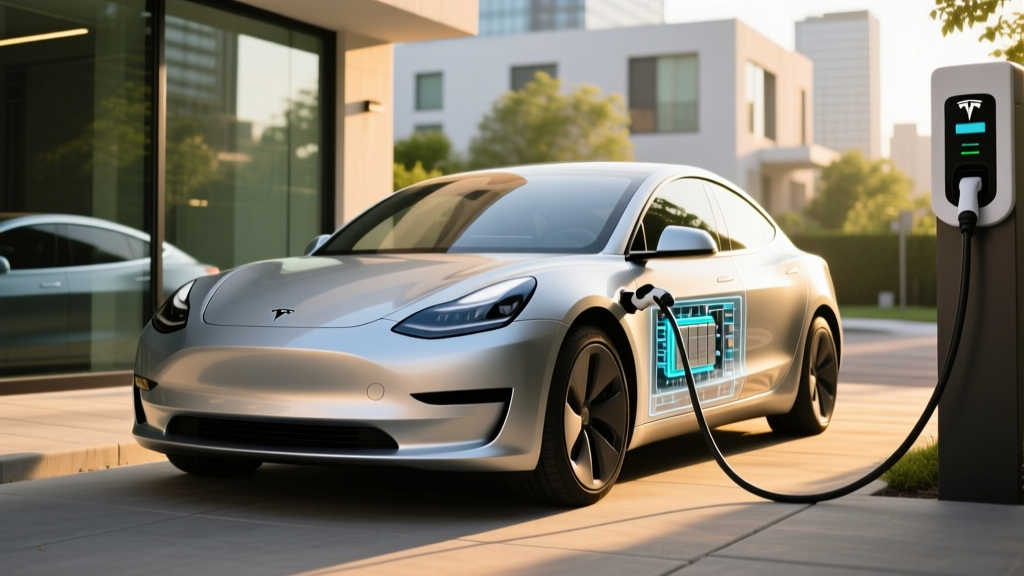
At home, an 11.5 kW Level 2 wall connector on a 60-amp circuit fully replenishes any Model 3 overnight. A Long Range RWD going from 20% to 90% will take roughly 7-8 hours — plug in at 10 PM, wake up to a full commute-ready car at 6 AM. Installation of a Tesla Wall Connector typically runs $500-$1,500 depending on panel proximity and whether a 200-amp service upgrade is needed (a licensed electrician should assess your panel).
July 2026 Lease Pricing and the §30D Tax Credit Question
Here's where Tesla Model 3 July lease deals get nuanced. Tesla operates its own leasing program directly, and lease terms are published on the configurator. Typical July 2026 lease structures look like this:
| Trim | Base MSRP | Typical 36-Mo/10k Lease | Money Factor | Residual % | Est. Monthly (before tax) |
|---|---|---|---|---|---|
| RWD | $38,990 | $38,990 | ~0.0025 (equiv. ~6% APR) | ~52% | $399-$449 |
| Long Range RWD | $42,490 | $42,490 | ~0.0025 | ~54% | $429-$479 |
| Long Range AWD | $47,490 | $47,490 | ~0.0025 | ~52% | $499-$549 |
| Performance | $52,990 | $52,990 | ~0.0025 | ~50% | $579-$629 |
Note: Tesla adjusts lease terms weekly. Due at signing typically includes first month's payment, acquisition fee (~$695), and registration. Down payment is optional and reduces monthly cost but is generally not recommended — if the car is totaled, that equity is lost.
Does the $7,500 Federal Tax Credit Apply to Leases?
This is the most misunderstood aspect of EV leasing in 2026. Under IRS §30D rules, the $7,500 federal tax credit applies to purchases, not leases. However, under the "commercial vehicle" loophole in §45W, the leasing company (in this case, Tesla's finance arm) may claim the credit and pass some or all of it through as a capitalized cost reduction. Whether Tesla actually does this varies by month and promotion.
- ✅ MSRP cap: Sedans must be ≤$55,000 (all Model 3 trims qualify)
- ✅ Buyer income cap: ≤$150,000 single / $225,000 HOH / $300,000 joint (AGI)
- ⚠️ Battery sourcing: Critical minerals and battery components must meet phased-in thresholds — check Tesla's current sourcing disclosures on the window sticker or IRS approved vehicles list
- ✅ Point-of-sale transfer: Eligible buyers can apply the credit as a down payment reduction at purchase
- ❌ Leases: §30D does not apply directly; any credit pass-through is at the lessor's discretion via §45W
Always consult a tax professional and verify current-year rules at irs.gov before committing.
For July 2026, reports indicate Tesla is passing through a portion of the commercial credit as a ~$5,000-$7,500 cap cost reduction on select Model 3 lease configurations, effectively lowering monthly payments by roughly $140-$210/month over 36 months. This is not guaranteed — configure the exact car on Tesla's site and check the lease estimate breakdown before ordering.
Who the Model 3 Suits Best — and Who Should Look Elsewhere
Ideal for:
- Daily commuters (20-60 miles round trip): The RWD trim at $38,990 is the sweet spot. LFP battery loves daily 100% charges, and 272 EPA miles means you'll use maybe 25-30% of the battery per day. Charge overnight on Level 2, wake up full.
- Tech-forward drivers: The 15.4-inch center screen handles everything — navigation, media, climate, even gaming while parked. Tesla's software ecosystem and OTA updates remain industry-leading.
- Solo drivers and couples: Front seats are comfortable for long hauls. The glass roof and minimalist interior create an airy feel. 23 cu ft of total cargo (trunk + frunk) handles groceries and luggage well.
- Road trippers (Long Range): 363 EPA miles plus access to the Supercharger network (now expanded to include NACS-equipped vehicles from other brands) makes the Long Range a legitimate cross-country cruiser.
Consider alternatives if:
- You need rear-seat space: 35.2 inches of rear legroom is tight for adults on long trips. The Hyundai Ioniq 6 and BMW i4 offer comparable range with slightly more rear comfort.
- You want physical controls: Everything — wipers, glovebox, mirrors — is buried in the touchscreen. No instrument cluster exists. This is a dealbreaker for some buyers.
- You need a hatchback or SUV: The Model 3 is a traditional sedan trunk. If you haul bulky items, the Model Y or a crossover like the Ioniq 5 is more practical.
- You want Apple CarPlay/Android Auto: Tesla does not support either. You're locked into Tesla's native infotainment.
Tesla Model 3 vs. Key Competitors: Is the Lease Worth It?
At the July 2026 lease price points, the Model 3 competes against several strong sedans:
| Vehicle | EPA Range | Starting MSRP | 10-80% DC Charge | MPGe (combined) | Key Advantage |
|---|---|---|---|---|---|
| Tesla Model 3 LR RWD | 363 mi | $42,490 | ~25 min (250 kW) | 134 | Range + Supercharger network |
| Hyundai Ioniq 6 SEL | 361 mi | $42,750 | ~18 min (350 kW) | 140 | Faster charging, physical buttons |
| BMW i4 eDrive40 | 307 mi | $57,900 | ~31 min (205 kW) | 109 | Build quality, CarPlay, luxury |
| Polestar 2 LRSM | 320 mi | $54,300 | ~28 min (205 kW) | 118 | Scandinavian design, Google OS |
The Model 3 Long Range RWD wins on raw range and efficiency (134 MPGe combined, bested only marginally by the Ioniq 6). The Ioniq 6 charges faster thanks to its 800V architecture (350 kW peak vs. Tesla's 400V/250 kW), but Tesla's Supercharger reliability still edges out third-party CCS networks in real-world road-trip consistency. The BMW i4 and Polestar 2 cost significantly more and offer less range, appealing mainly to buyers who prioritize build quality and traditional luxury over efficiency.
- Class-leading range (363 mi LR RWD)
- Supercharger network reliability
- LFP battery on RWD allows daily 100% charging
- Industry-best software and OTA updates
- Lowest efficiency cost per mile in class
- Strong safety ratings (IIHS Top Safety Pick+)
- No Apple CarPlay or Android Auto
- All controls via touchscreen — no physical buttons
- Tight rear legroom (35.2 in) for a mid-size sedan
- No instrument cluster; all info on center screen
- Lease credit pass-through not guaranteed
- Insurance costs above segment average
Driver Assistance: Autopilot and FSD (Supervised)
Tesla's Autopilot (standard) and Full Self-Driving Supervised ($8,000 option or $99/month) are SAE Level 2 driver-assistance systems. The driver must remain fully engaged, hands on or near the wheel, eyes on the road, and ready to take over instantly. These are not Level 4 autonomous systems like Waymo's driverless robotaxis. NHTSA continues to investigate Autopilot/FSD incidents — treat these features as convenience aids, not replacements for attentive driving.
Standard Autopilot includes Traffic-Aware Cruise Control and Autosteer (lane centering on marked highways). FSD (Supervised) adds automatic lane changes, navigate-on-autopilot for highway interchanges, traffic light and stop sign recognition, and enhanced parking features. In practice, FSD performs well on well-marked highways but can struggle with construction zones, faded lane markings, and complex urban intersections. The $99/month subscription is a smarter choice for leasers than the $8,000 upfront purchase, since you won't own the car long-term and the feature doesn't transfer.
Frequently Asked Questions
What is the real-world range of the Tesla Model 3?
The EPA rates the Long Range RWD at 363 miles, the Long Range AWD at 346 miles, the Performance at 315 miles, and the RWD at 272 miles. In real-world highway driving at 70 mph, expect 15-20% less than EPA (roughly 290-310 miles for the LR RWD). In cold weather below freezing, plan for a 20-30% reduction across all trims.
How fast does the Model 3 charge at home and on the road?
At home on a Level 2 (240V, 48-amp) charger, the Model 3 adds 37-44 miles of range per hour at 11.5 kW, fully charging overnight. On DC fast chargers, Long Range and Performance trims peak at 250 kW and hit 10-80% in approximately 25 minutes. The RWD model peaks at 170 kW with a similar 10-80% time due to its smaller battery. Always precondition the battery via navigation for optimal charge speeds.
Does the Tesla Model 3 qualify for the federal EV tax credit?
For purchases, yes — all 2026 Model 3 trims fall under the $55,000 sedan MSRP cap and qualify for up to $7,500 under IRS §30D, provided the buyer meets income limits ($150K single / $300K joint) and the vehicle meets battery sourcing requirements. For leases, the §30D credit does not apply directly to the lessee. However, Tesla may pass through a portion of the §45W commercial credit as a cap cost reduction — check the current lease terms on Tesla's configurator. Always verify at irs.gov and consult a tax professional.
Is it better to buy or lease the Model 3 in July 2026?
Buying makes sense if you qualify for the full $7,500 §30D credit, plan to keep the car 5+ years, and want to build equity. The RWD at $38,990 minus $7,500 (if eligible) nets to $31,490 — exceptional value for a 272-mile EV. Leasing makes sense if you prefer lower monthly payments, want to upgrade every 3 years, and Tesla is offering a meaningful cap cost reduction pass-through. Leasing also protects you from depreciation risk if EV market values shift.
What are the biggest drawbacks of the Model 3?
The primary complaints from owners: no Apple CarPlay/Android Auto (you must use Tesla's native apps), all vehicle controls routed through the touchscreen (including glovebox, mirror adjustment, and wiper speed), tight rear seat for tall adults, and the absence of a traditional instrument cluster. Insurance premiums also trend 15-25% higher than comparable gas sedans due to repair costs.
How does the Model 3's LFP battery differ from NMC?
The RWD trim uses an LFP (lithium iron phosphate) battery (~57.5 kWh), which is heavier and less energy-dense than the NMC (nickel manganese cobalt) batteries (~79 kWh) in Long Range and Performance trims. LFP's key advantage: you can — and should — charge it to 100% regularly without accelerated degradation. NMC batteries last longer when daily-charged to 80-90%, reserving 100% for road trips. LFP also has a longer cycle life and uses no cobalt, but provides less range per pound.