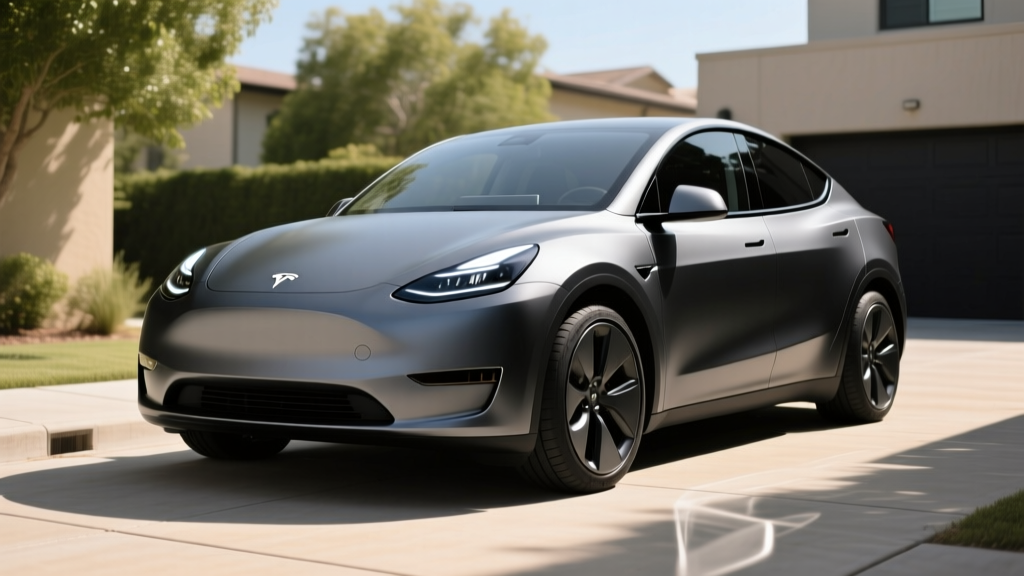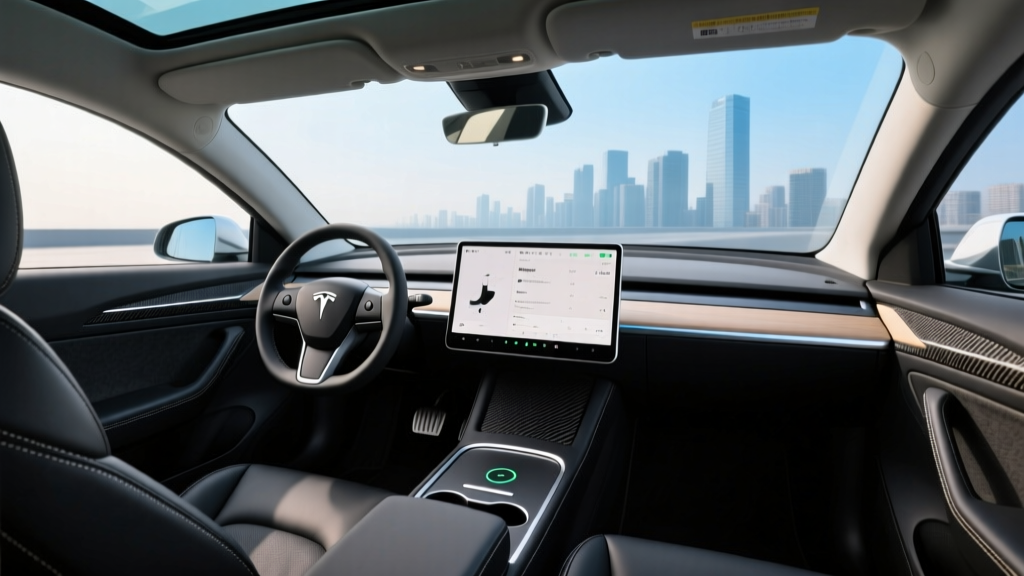
The refreshed Tesla Model 3 (internally dubbed "Highland" and now carrying into the 2026 model year) represents a significant pivot for the brand's entry-level sedan. While exterior updates are subtle, the cabin overhaul is where Tesla has focused its engineering budget. This review examines the Tesla Model 3 interior alongside the powertrain specs, charging realities, and ownership economics that matter most to buyers in 2026.
We've tested multiple trims, cross-referenced EPA data from fueleconomy.gov, and evaluated real-world charging behavior to give you an honest picture of what it's like to live with this car.
Quick Verdict: Who the Model 3 Is For
The 2026 Tesla Model 3 remains the default recommendation for tech-forward commuters and small families who want a premium EV sedan under $50,000. The interior is now genuinely quiet and well-built — a massive leap from pre-2024 models. However, the minimalist, screen-centric controls and firm ride mean it won't suit everyone. If you prioritize physical buttons, plush ride quality, or maximum rear-seat space, competitors like the Hyundai Ioniq 6 or BMW i4 deserve a look.
Tesla Model 3 Interior: What Changed and What It's Like
The most immediate impression of the updated Model 3 interior is silence. Tesla added acoustic glass on all four doors, additional sound-deadening material throughout the firewall and floor, and redesigned door seals. The result is a cabin that's noticeably quieter at highway speeds than the outgoing generation — rivaling luxury sedans costing $20,000 more.
Materials and Build Quality
Tesla has moved away from the glossy piano-black plastics that plagued earlier Model 3s. The dashboard now features a textured fabric trim (on base trims) or an open-pore wood/aluminum accent strip (on Long Range and Performance). Soft-touch materials cover the upper dash and door uppers. Panel gaps — historically a Tesla complaint — have improved substantially on vehicles built at Giga Texas and Giga Shanghai, though you may still find minor variance on early production batches.
The Screen-Centric Layout
Everything routes through the 15.4-inch center touchscreen. There is no instrument cluster behind the steering wheel, and no turn-signal stalk — signals are activated via buttons on the steering wheel itself. This is the single most polarizing aspect of the Model 3 interior. Some drivers adapt within a week; others never do. A secondary 8-inch rear touchscreen is now standard, allowing rear passengers to control climate, media, and view trip info.
Seating and Comfort
Front seats are ventilated on all trims (a welcome addition) and offer decent bolstering. The rear bench has been re-sculpted with a slightly more reclined backrest angle. Legroom remains tight for taller adults on long trips, but it's adequate for children or average-height passengers on commutes.
| Measurement | Model 3 (2026) | Hyundai Ioniq 6 | BMW i4 |
|---|---|---|---|
| Front Legroom | 42.7 in | 41.7 in | 41.5 in |
| Rear Legroom | 35.2 in | 35.7 in | 34.5 in |
| Front Headroom | 40.3 in | 40.2 in | 39.1 in |
| Cargo (Trunk + Frunk) | 23.0 cu ft + 3.1 cu ft | 11.2 cu ft (trunk only) | 16.6 cu ft (liftback) |
| Cargo w/ Seats Folded | 64.9 cu ft | N/A (sedan) | 47.0 cu ft |
The Model 3's combined trunk and frunk volume is genuinely useful — significantly more than the Ioniq 6's small trunk, and competitive with hatchback liftbacks when seats are folded.
Range, Battery, and Efficiency: The Numbers That Matter
The 2026 Model 3 is available in three primary configurations. Battery chemistry differs by trim, which has real implications for longevity and daily charging habits.
| Spec | RWD (Base) | Long Range AWD | Performance |
|---|---|---|---|
| EPA Range | 272 mi | 363 mi | 315 mi |
| Battery (Usable) | ~57.5 kWh | ~75 kWh | ~75 kWh |
| Chemistry | LFP (CATL) | NMC (Panasonic) | NMC (Panasonic) |
| Drivetrain | RWD, single motor | AWD, dual motor | AWD, dual motor |
| Horsepower | 271 hp | 346 hp | 510 hp |
| 0-60 mph | 5.8 sec | 4.2 sec | 2.9 sec |
| MPGe (Combined) | 132 MPGe | 129 MPGe | 116 MPGe |
| kWh/100 mi | 25 kWh | 26 kWh | 29 kWh |
| Base MSRP | $38,990 | $45,990 | $53,990 |
The EPA estimates are useful baselines, but real-world results vary significantly:
- Long Range AWD: EPA 363 mi. Expect ~310-330 mi on mixed highway driving at 70-75 mph. In cold weather (below 35°F), plan for 250-280 mi due to battery resistance and cabin heating draw.
- RWD (LFP): EPA 272 mi. Expect ~235-250 mi highway. Cold weather drops this to ~190-210 mi. LFP batteries also lose slightly more range in cold than NMC.
- Performance: EPA 315 mi. Aggressive driving or sustained high-speed highway runs cut this to ~240-260 mi.
Regenerative braking in city driving recovers meaningful energy — city range often matches or exceeds EPA figures in mild weather.
LFP vs. NMC: What Chemistry Means for You
The base RWD Model 3 uses a lithium iron phosphate (LFP) battery. LFP cells tolerate being charged to 100% daily without accelerated degradation — Tesla actually recommends 100% charges on LFP vehicles for accurate state-of-charge calibration. LFP also has a longer cycle life and avoids cobalt/nickel supply-chain concerns. The trade-off: lower energy density (hence shorter range) and slightly worse cold-weather performance.
The Long Range and Performance trims use nickel-manganese-cobalt (NMC) cells from Panasonic. These offer higher energy density (more range in the same physical pack) and better cold-weather behavior, but Tesla recommends daily charging to 80-90% to maximize longevity, reserving 100% for road trips.
Charging Speed: DC Fast Charge and Home Level 2
Charging speed is where the Model 3's 400-volt architecture shows its age compared to 800V competitors like the Ioniq 5/6 or Porsche Taycan. It's adequate, not class-leading.
| Charging Method | RWD (LFP) | Long Range / Performance |
|---|---|---|
| Max DC Fast Charge | 170 kW | 250 kW |
| 10-80% DC Time | ~25 min | ~22 min (peak), ~28 min sustained avg |
| Level 2 Home (11.5 kW / 48A) | ~30 mi/hr | ~44 mi/hr |
| Level 2 Home (7.7 kW / 32A) | ~20 mi/hr | ~30 mi/hr |
| Level 1 (120V, ~1.4 kW) | ~3-4 mi/hr | ~3-4 mi/hr |
| Connector | NACS (native Tesla) — Supercharger compatible; CCS adapters available | |
Charging curve reality check: The Long Range peaks at 250 kW only briefly — typically between 10-20% SoC. It then tapers progressively: ~170 kW through 40%, ~100 kW through 60%, and drops sharply above 80%. The "10-80% in 22 minutes" figure reflects this taper. Charging from 80-100% adds another 20+ minutes — plan accordingly on road trips and charge to 80% at each stop.
For home charging, a 48-amp Level 2 wall connector on a 60-amp circuit is the sweet spot, adding enough range overnight for virtually any commute. Installation costs typically range from $500 (simple run near panel) to $2,000+ (panel upgrade or long conduit run). Always get a quote from a licensed electrician.
Performance and Driving Dynamics
Even the base RWD Model 3 delivers brisk acceleration (0-60 in 5.8 seconds) that outpaces most gas-powered compact sedans. The Long Range is genuinely quick at 4.2 seconds, and the Performance trim's 2.9-second sprint is supercar territory.
The updated Model 3 rides on frequency-selective dampers that improve compliance over sharp bumps compared to the harsh pre-refresh ride. It's still firm — this is a sport-oriented sedan, not a luxury cruiser — but it no longer crashes over expansion joints. Steering is precise and well-weighted, and the low center of gravity keeps body roll minimal through corners.
All trims feature Tesla's heat pump as standard, which meaningfully improves cold-weather range and cabin heating efficiency compared to resistive heating.
Pricing, Tax Credits, and Ownership Cost
The Model 3's pricing positions it as a premium compact EV, but federal and state incentives can dramatically reduce effective cost.
| Trim | Base MSRP | §30D Credit Eligibility | Effective Price (Est.) |
|---|---|---|---|
| RWD | $38,990 | $7,500 (if sourcing rules met) | ~$31,490 |
| Long Range AWD | $45,990 | $7,500 (if sourcing rules met) | ~$38,490 |
| Performance | $53,990 | $7,500 (if sourcing rules met) | ~$46,490 |
Eligibility for the full $7,500 credit depends on multiple requirements that change annually:
- MSRP cap: Sedans must be under $55,000 (all Model 3 trims qualify).
- Buyer income cap: AGI must not exceed $150,000 (single), $225,000 (head of household), or $300,000 (joint).
- Battery sourcing: A percentage of critical minerals and battery components must be sourced from the US or FTA-partner countries. Tesla has worked to localize supply, but the exact qualifying percentage shifts yearly. Verify current-year eligibility at IRS.gov or via Tesla's point-of-sale transfer process.
- Point-of-sale transfer: As of 2024+, you can transfer the credit to the dealer at purchase, reducing the purchase price directly rather than waiting for a tax refund.
Consult a tax professional to confirm your personal eligibility. State incentives (California, Colorado, etc.) may stack on top.
Total Cost of Ownership
Electricity costs vary by region, but at a national average of $0.16/kWh and the Long Range's 26 kWh/100 mi efficiency, fueling costs roughly $4.16 per 100 miles — compared to ~$12-14 per 100 miles for a 30 MPG gas sedan at $3.50/gallon. Over five years and 75,000 miles, that's roughly $6,000-$8,000 in fuel savings. Maintenance is minimal (no oil changes, fewer brake replacements due to regen), though tire wear can be higher due to the car's weight and instant torque.
Tech, Autopilot, and Driver Assistance
Every Model 3 includes Tesla's basic Autopilot (lane centering + adaptive cruise control), which is a competent SAE Level 2 system. It requires continuous driver supervision — your hands must remain on the wheel, and the system monitors attention via the cabin camera.
Tesla's Autopilot and optional Full Self-Driving (Supervised) are SAE Level 2 driver-assist systems. The driver must remain fully engaged, monitor the road, and be ready to take over at any moment. These systems do not make the vehicle autonomous. Only Level 4 services like Waymo (available in select metro areas) operate without a human driver.
Full Self-Driving (Supervised) adds automatic lane changes, city-street navigation, traffic-light recognition, and parking assistance for an additional $8,000 (one-time purchase) or $99/month subscription as of 2026. It's impressive in well-mapped areas but remains a Level 2 system — expect occasional disengagements and erratic behavior in construction zones or adverse weather. For most buyers, the included Autopilot is sufficient for highway commuting.
The infotainment system is fast, responsive, and feature-rich: Netflix/YouTube streaming (while parked), a full web browser, Spotify/Apple Music integration, and over-the-air updates that regularly add features. However, there is no Apple CarPlay or Android Auto — a notable omission that frustrates some buyers.
Warranty Coverage
| Coverage | Term |
|---|---|
| Basic Vehicle | 4 years / 50,000 miles |
| Battery & Drive Unit (RWD) | 8 years / 100,000 miles |
| Battery & Drive Unit (LR/Perf) | 8 years / 120,000 miles |
| Battery Capacity Retention | Minimum 70% over warranty period |
Tesla's battery warranty guarantees that the pack will retain at least 70% of its original capacity during the warranty term. Real-world data from Tesla's fleet suggests most packs retain 85-90%+ after 100,000 miles, though LFP degradation curves differ from NMC (LFP degrades more slowly in the first few years but has a flatter curve overall). Out-of-warranty battery replacement costs range from $8,000-$16,000 depending on the pack — a figure to keep in mind for long-term ownership or high-mileage used purchases.
Pros and Cons
- Class-leading efficiency (25-29 kWh/100 mi)
- Supercharger network access (most reliable DC network)
- Excellent real-world range on Long Range trim
- Significantly improved cabin quietness and materials
- Strong performance across all trims
- Over-the-air updates add features over time
- Spacious trunk + frunk for the segment
- No Apple CarPlay / Android Auto
- Stalkless turn signals and screen-only controls take adaptation
- Firm ride quality (improved but still sport-oriented)
- Rear legroom is tight for tall adults
- 400V architecture limits peak DC charge speed vs 800V rivals
- FSD is expensive and still Level 2
- LFP base model has noticeably less range and cold-weather performance
Is the Model 3 Worth It vs. Competitors?
The Model 3 competes in a growing segment. Here's how it stacks up against key rivals:
- vs. Hyundai Ioniq 6: The Ioniq 6 offers 800V fast charging (~18 min 10-80%), Apple CarPlay, and a more conventional interior. But it has less cargo space, a smaller dealer network, and less Supercharger convenience. Choose the Ioniq 6 if charge speed and CarPlay matter most.
- vs. BMW i4: The i4 provides a more traditional luxury interior with physical controls and a plush ride, but costs $15,000+ more and has less range. Choose the i4 if cabin luxury and brand cachet outweigh value.
- vs. Polestar 2: The Polestar 2 has a distinctive Scandinavian design and Google-based infotainment, but trails on range, efficiency, and charging speed. Choose it for design differentiation.
For most buyers seeking the best combination of range, efficiency, charging infrastructure, and technology at this price point, the Model 3 Long Range remains the default pick — especially with the $7,500 credit bringing effective pricing close to $38,000.
Frequently Asked Questions
What is the real-world range of the Tesla Model 3?
The Long Range AWD achieves ~310-330 miles in mixed highway driving in mild weather. Cold weather (below 35°F) reduces this to ~250-280 miles. The base RWD (LFP) delivers ~235-250 miles highway in mild conditions, dropping to ~190-210 miles in cold weather. City driving with regenerative braking often matches or exceeds EPA estimates.
How fast does the Model 3 charge at home and on DC fast chargers?
On DC fast chargers, the Long Range peaks at 250 kW (10-80% in ~22-28 minutes accounting for taper), while the RWD peaks at 170 kW (~25 minutes 10-80%). At home on a 48-amp Level 2 charger, the Long Range adds ~44 miles of range per hour, and the RWD adds ~30 miles per hour. A full overnight charge easily covers any commute.
Does the Tesla Model 3 qualify for the $7,500 federal tax credit?
All Model 3 trims fall under the $55,000 MSRP cap for sedans. However, eligibility also depends on buyer income limits ($150K single / $300K joint), battery critical-mineral sourcing requirements that change yearly, and the vehicle being assembled in North America. Check current eligibility at IRS.gov and confirm with Tesla at point of sale, where the credit can be applied as a direct price reduction.
How much does a Tesla Model 3 cost after tax credits?
With the full $7,500 federal credit applied, the RWD drops to approximately $31,490, the Long Range to ~$38,490, and the Performance to ~$46,490. State incentives (up to $7,500 in Colorado, $2,000-$7,000 in California depending on income) may reduce costs further. Always verify current-year rules.
Is the Tesla Model 3 interior comfortable for daily driving?
The refreshed Model 3 interior is dramatically improved — quiet, well-built, and feature-rich. Front seats are ventilated and supportive. The main adaptation hurdle is the screen-only interface (no turn-signal stalks, no instrument cluster). Most drivers adjust within 1-2 weeks, but test-drive before committing if you're unsure. Rear seat space is adequate but not generous for tall adults.
What is the battery warranty and expected lifespan?
Tesla covers the battery for 8 years / 100,000 miles (RWD) or 8 years / 120,000 miles (Long Range/Performance), guaranteeing at least 70% capacity retention. Real-world fleet data suggests most packs retain 85-90%+ capacity at 100,000 miles. Out-of-warranty replacement runs $8,000-$16,000. Following Tesla's charging recommendations (100% OK for LFP, 80-90% daily for NMC) maximizes longevity.
Should I buy the RWD or Long Range?
Choose the RWD if your daily commute is under 80 miles round-trip, you can charge at home, you live in a mild climate, and you want the lowest possible price (under $32K after credit). Choose the Long Range if you take regular road trips, live in a cold climate, need AWD for snow, or simply want the range buffer to reduce charging stops and anxiety. For most buyers, the Long Range is the better long-term value.