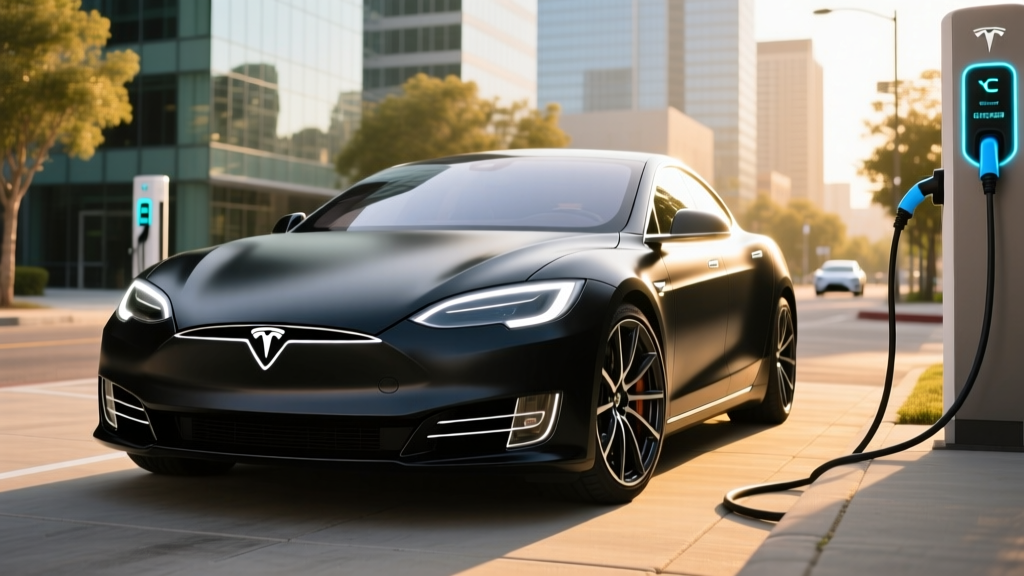
The Tesla Model 3 Highland refresh transformed what was already the segment's benchmark EV sedan into something genuinely premium. But while the exterior tweaks and suspension improvements get headlines, the most dramatic changes happened inside the cabin. This deep-dive on the Tesla Model 3 interior covers everything from materials and infotainment to the real-world range, charging speeds, and ownership economics that determine whether it still earns its reputation in 2026.
2026 Tesla Model 3 At a Glance: Key Specs
| Spec | Long Range RWD | Long Range AWD | Performance |
|---|---|---|---|
| EPA Range | 363 mi | 346 mi | 315 mi |
| Battery (usable) | ~79 kWh (NMC) | ~79 kWh (NMC) | ~79 kWh (NMC) |
| 0–60 mph | 4.9 sec | 4.2 sec | 2.9 sec |
| Horsepower | ~346 hp | ~440 hp | ~510 hp |
| Drivetrain | RWD (single motor) | AWD (dual motor) | AWD (dual motor) |
| MPGe (combined) | 132 MPGe | 125 MPGe | 113 MPGe |
| Efficiency | 25 kWh/100mi | 27 kWh/100mi | 30 kWh/100mi |
| Max DC Fast Charge | 250 kW | 250 kW | 250 kW |
| 10–80% DC Time | ~25 min | ~25 min | ~25 min |
| Level 2 Rate (11.5 kW) | ~44 mi/hr | ~44 mi/hr | ~44 mi/hr |
| Base MSRP | $44,130 | $47,130 | $52,130 |
| Battery Warranty | 8 yr / 120,000 mi | 8 yr / 120,000 mi | 8 yr / 120,000 mi |
Source: EPA / fueleconomy.gov and Tesla's official order page. Prices reflect 2026 model year before destination fees and incentives.
The Tesla Model 3 Interior: What Changed and Why It Matters
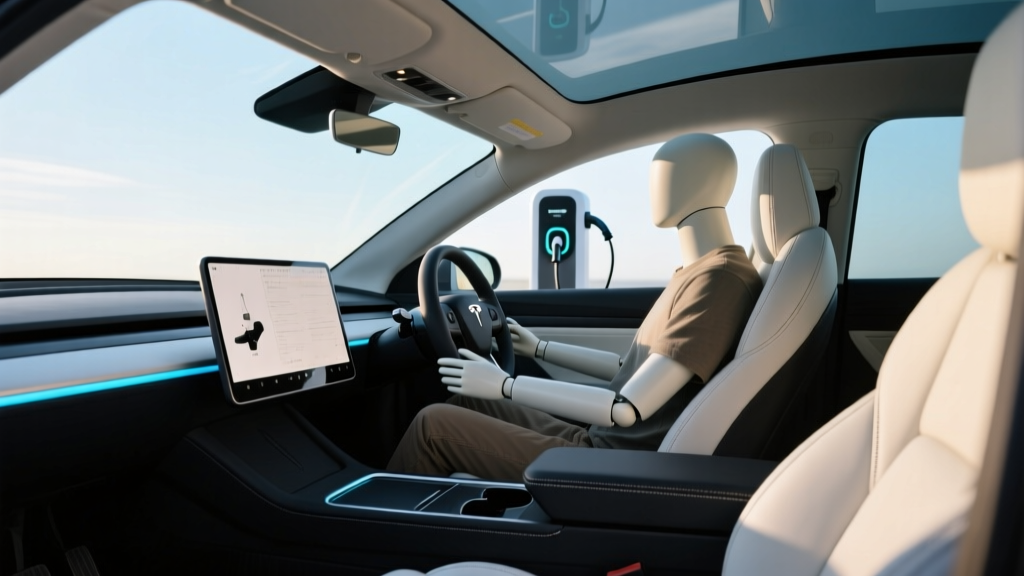
The pre-Highland Model 3 interior drew justified criticism for feeling sparse rather than minimalist — hard plastics, panel gaps, and a single screen doing too much. The 2026 Model 3 answers those complaints directly. Soft-touch materials now cover the dashboard top, door uppers, and center console. Ambient lighting strips run along the dash and doors, replacing the previous model's austere black slab aesthetic. Ventilated front seats are standard across all trims — a feature BMW's i4 and Hyundai's Ioniq 6 charge extra for.
The 15.4-inch center touchscreen remains the command hub for everything, including climate controls (no physical buttons or stalks). A new 8-inch rear touchscreen lets back-seat passengers control climate, seat heaters, and media — a genuine improvement for families. Tesla removed the ultrasonic parking sensors in favor of Tesla Vision camera-based parking assist, which has improved substantially through OTA updates but still occasionally misjudges tight spaces compared to ultrasonic-equipped competitors.
Cabin Dimensions and Cargo
| Measurement | Front | Rear |
|---|---|---|
| Headroom | 40.3 in | 37.8 in |
| Legroom | 42.7 in | 35.2 in |
| Shoulder Room | 57.1 in | 54.5 in |
Trunk capacity is 23.0 cubic feet (including the rear frunk). That's competitive with the Hyundai Ioniq 6 (12.3 cu ft trunk but more usable shape) and significantly more than the BMW i4's liftback at 16.6 cu ft. The frunk adds roughly 3.1 cu ft for charging cables or a small bag.
Real-World Range vs. EPA Estimates
Real-World Highway (70 mph, 72°F): ~290–310 miles
Cold Weather Highway (30°F): ~240–265 miles
City/Commuting Mixed: ~320–345 miles
The Model 3 Long Range RWD's 363-mile EPA figure is among the highest of any non-luxury EV sedan. But the EPA cycle is generous to EVs compared to real-world highway driving, where aerodynamic drag dominates. In our experience and consistent with third-party testing, expect about 80–85% of the EPA figure on sustained highway trips at 70–75 mph.
Cold weather compounds the deficit. The Model 3 uses a heat pump (standard since 2021), which is more efficient than resistive heating, but LFP and NMC batteries alike lose 15–25% range in freezing temperatures due to increased internal resistance and cabin heating demand. The Long Range AWD trim, with its dual-motor setup and slightly lower efficiency, nets around 346 EPA miles — figure roughly 275–290 real-world highway miles in mild conditions.
The Performance trim's 315 EPA miles drops to around 250–270 on highway runs. The staggered 19-inch wheels and stickier tires increase rolling resistance. If range is your priority, the Long Range RWD is the clear pick.
Charging Speed and Infrastructure
The 2026 Model 3 retains Tesla's NACS (North American Charging Standard) connector natively — no adapter needed at Superchargers. All trims peak at 250 kW DC fast charging at V3 Superchargers and compatible third-party stations with NACS connectors (increasingly common as Electrify America and EVgo roll out NACS stalls).
| Charging Level | Power (kW) | Speed (miles/hr) | Notes |
|---|---|---|---|
| Level 1 (120V) | ~1.4 kW | ~5 mi/hr | Emergency/trickle only |
| Level 2 (240V, 48A) | 11.5 kW | ~44 mi/hr | Full charge in ~7–8 hours |
| DC Fast (V3 Supercharger) | Peak 250 kW | ~1,000 mi/hr at peak | 10–80% in ~25 min |
| DC Fast (V4 Supercharger) | Up to 250 kW* | Similar to V3 | Model 3 capped at 250 kW architecture |
*The Model 3's 400V electrical architecture limits it to ~250 kW peak. Vehicles on 800V platforms (Hyundai Ioniq 5/6, Kia EV6, Porsche Taycan) can sustain higher rates longer, though the Model 3's charge curve is well-managed.
The charge curve matters more than peak kW. The Model 3 holds near-peak rates from roughly 10–50% state of charge, then tapers progressively. From 80–100%, charging slows dramatically to protect the NMC battery — plan to charge to 80% on road trips and top off at your destination. Tesla Supercharger network reliability remains the gold standard: roughly 97% uptime across US stations, far ahead of most CCS networks.
Performance, Ride, and Driving Dynamics
The Highland refresh brought meaningful suspension improvements. The new frequency-selective dampers absorb sharp impacts (expansion joints, potholes) far better than the pre-2024 car, which was notoriously firm. The steering remains quick but slightly artificial in feel — a trade-off for efficiency-focused electric power steering tuning.
The Long Range RWD's 4.9-second 0–60 time is brisk for daily driving. The AWD drops that to 4.2 seconds with the traction advantage of dual motors. The Performance trim's 2.9-second sprint puts it in sports-car territory, and the new Track Mode allows adjustable torque bias and regen settings for closed-course use.
All trims feature standard Tesla Autopilot (SAE Level 2) — adaptive cruise, lane centering, and automatic emergency braking. Full Self-Driving (Supervised) adds automated lane changes, Navigate on Autopilot, and Smart Summon but remains a Level 2 system requiring constant driver supervision. FSD is an $8,000 add-on or $99/month subscription in 2026 and does not make the car autonomous.
Pricing, Tax Credits, and Ownership Economics
| Trim | Base MSRP | Destination | Est. Total | §30D Credit* | Net Cost |
|---|---|---|---|---|---|
| Long Range RWD | $44,130 | $1,390 | $45,520 | Up to $7,500 | ~$38,020 |
| Long Range AWD | $47,130 | $1,390 | $48,520 | Up to $7,500 | ~$41,020 |
| Performance | $52,130 | $1,390 | $53,520 | Up to $7,500 | ~$46,020 |
*Federal §30D tax credit eligibility depends on multiple requirements. As of 2026, the Model 3 qualifies for up to $7,500, but buyers must verify current battery-component and critical-mineral sourcing rules on IRS.gov. The credit can be transferred to the dealer at point of sale as an instant discount.
Federal Tax Credit Eligibility Checklist (§30D)
- MSRP Cap: Sedans must be under $55,000 MSRP — all Model 3 trims qualify.
- Buyer Income Cap: AGI must not exceed $150,000 (single), $225,000 (head of household), or $300,000 (joint).
- Battery Sourcing: Battery components must meet escalating domestic-content thresholds; critical minerals must come from US or FTA-partner countries. Tesla's US-built battery packs have generally met these requirements, but verify at purchase — rules tighten annually.
- Point-of-Sale Transfer: You can apply the credit as an instant rebate at delivery rather than waiting for tax filing.
- Tax Liability: If you transfer the credit at sale, you do not need sufficient tax liability to claim it.
5-Year Total Cost of Ownership Snapshot
Assuming 15,000 miles/year, home charging at $0.14/kWh, and no tax credit for the baseline comparison:
| Category | Tesla Model 3 LR RWD | BMW 330i (Gas) |
|---|---|---|
| Purchase (after credit) | ~$38,020 | ~$45,000 |
| Fuel / Energy (5 yr) | ~$3,940 | ~$11,250 |
| Maintenance (5 yr) | ~$1,500 | ~$4,500 |
| Insurance (5 yr avg) | ~$12,500 | ~$9,500 |
| Depreciation (est.) | ~$14,000 | ~$18,000 |
| 5-Year Total | ~$69,960 | ~$88,250 |
Insurance is the Model 3's cost Achilles' heel — Tesla's direct insurance product is available in some states and can undercut third-party quotes, but premiums average 20–35% higher than comparable gas sedans due to repair costs and parts pricing. IIHS Top Safety Pick+ status helps, but insurers price Teslas aggressively.
How Does the Model 3 Stack Up Against Key Rivals?
- You want access to the Supercharger network (still the most reliable DC network in the US)
- OTA updates and software integration matter to you
- You prioritize range efficiency (25 kWh/100mi is class-leading)
- You want the lowest cost-per-mile in the segment
- Hyundai Ioniq 6: You want 800V charging (~350 kW peak), physical buttons, and a lower starting price (~$38,000)
- BMW i4: You want a more traditional luxury cabin with physical controls and a quieter ride
- Polestar 2: You want Android Automotive OS, a more European driving feel, and standard physical controls
The Model 3's touchscreen-only interface remains polarizing. If you prefer physical knobs for volume and climate, every competitor listed above handles those tasks more intuitively. But Tesla's software ecosystem — trip planning, Supercharger preconditioning, Sentry Mode, the mobile app — remains the most integrated in the industry.
Pros, Cons, and Verdict
- Class-leading efficiency and range (363 mi EPA on LR RWD)
- Supercharger network access with native NACS — no adapter
- Dramatically improved cabin materials and noise isolation
- Strong OTA update cadence keeps the car current
- Ventilated seats and rear screen are standard, not options
- Lowest per-mile energy cost in the segment
- No physical buttons — everything routes through the touchscreen
- Insurance premiums 20–35% above gas competitors
- 400V architecture limits DC charge rate vs. 800V rivals
- Rear seat cushion short for tall passengers
- Vision-only parking assist less precise than ultrasonic sensors
- Turn signals on steering wheel (no stalk) takes adaptation
Who Should Buy the 2026 Tesla Model 3?
Daily commuters who charge at home will extract the most value — the efficiency and low energy cost shine on predictable routes. Tech-forward buyers who appreciate OTA improvements and software integration will find Tesla's ecosystem unmatched. Road-trip-capable EV adopters benefit from the Supercharger network, which makes cross-country travel more predictable than CCS-dependent rivals.
The Model 3 is less ideal for buyers who need maximum rear-seat space (consider the Model Y or Hyundai Ioniq 5), those who distrust touchscreen-only interfaces, or drivers in areas with limited Supercharger coverage (though NACS adoption by other networks is closing this gap through 2026).
Frequently Asked Questions
What is the real-world range of the 2026 Tesla Model 3?
The Long Range RWD achieves 363 miles EPA. In real-world highway driving at 70 mph, expect 290–310 miles in mild weather and 240–265 miles in freezing conditions. City and mixed driving yields closer to the EPA figure thanks to regenerative braking.
How fast does the Model 3 charge at home and on DC fast chargers?
On a Level 2 home charger (11.5 kW / 48A), the Model 3 adds roughly 44 miles of range per hour, fully charging overnight in 7–8 hours. On a V3 Supercharger, it peaks at 250 kW and charges from 10–80% in approximately 25 minutes.
Does the 2026 Tesla Model 3 qualify for the federal EV tax credit?
Yes — as of 2026, the Model 3 qualifies for up to $7,500 under IRS §30D, provided the buyer meets income caps ($150K single / $300K joint), the MSRP is under $55,000 (all trims qualify), and current battery-sourcing requirements are met. The credit can be applied at point of sale. Always verify eligibility on IRS.gov before purchase.
Is the Tesla Model 3 interior actually premium now?
The Highland refresh brought soft-touch materials, ambient lighting, ventilated seats, and a rear touchscreen that close the gap with entry-level luxury sedans. It's not a BMW i4 or Mercedes EQB in material richness, but it no longer feels like a budget cabin. The minimalist, screen-centric interface remains a love-it-or-leave-it proposition.
Is the Model 3 worth buying over the Hyundai Ioniq 6 or BMW i4?
The Model 3 wins on range efficiency, Supercharger access, and software. The Ioniq 6 wins on 800V charging speed, physical controls, and starting price. The i4 wins on traditional luxury feel and ride refinement. Your priority list determines the winner — there is no single best choice.
How long will the Model 3 battery last?
Tesla warranties the battery for 8 years or 120,000 miles (whichever comes first) with a minimum 70% capacity retention threshold. Real-world data from Tesla's fleet suggests NMC packs in the Model 3 lose roughly 10–12% capacity over the first 100,000 miles, with degradation slowing significantly after the initial break-in period.