Which Tesla Model 3 Years Include Hardware 4?
If you're shopping for a Tesla Model 3 and care about the latest driver-assistance sensors, camera resolution, and computing power, the hardware generation matters. Tesla does not advertise hardware revisions the way automakers advertise trim levels, so buyers are often left guessing. Here's the definitive breakdown.
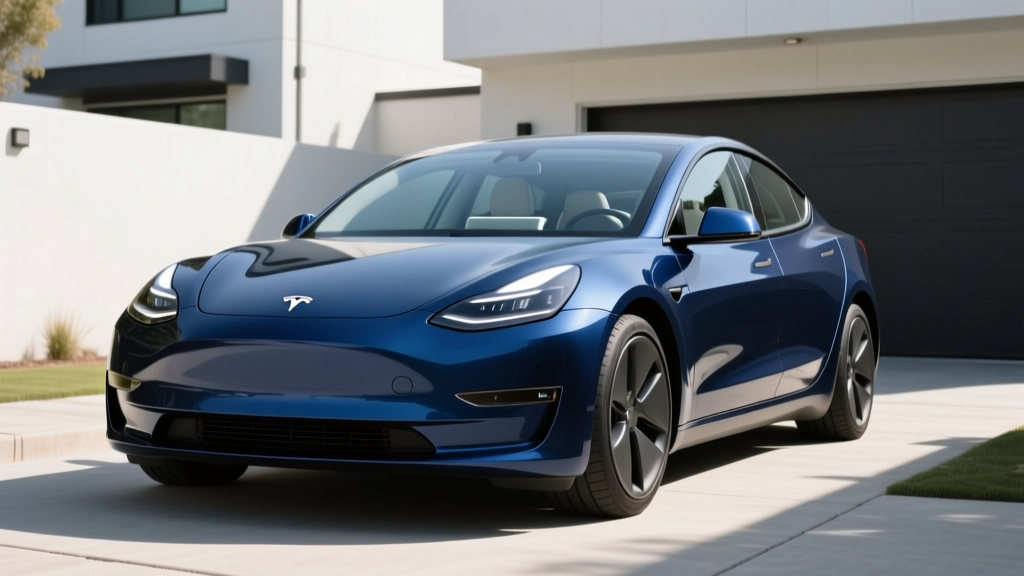
Hardware 4 (HW4) — sometimes called AI4 by Tesla — began appearing in the Model 3 starting with the Highland refresh in late 2023 (for the 2024 model year in North America). Every new Model 3 built from approximately mid-2023 onward carries HW4. If you are buying a 2024, 2025, or 2026 Tesla Model 3, it will have HW4 as standard equipment. Model 3 vehicles from 2023 and earlier (pre-Highland) use HW3 unless retrofitted.
- Higher-resolution cameras (up to 5 MP vs. 1.2 MP)
- Wider field-of-view front camera for better intersection awareness
- More powerful onboard inference computer (~2x processing throughput)
- Removal of ultrasonic sensors (USS) — vision-only parking assist
- Improved low-light and high-contrast image processing
For used-car shoppers: a 2023 Model 3 may have either HW3 or HW4 depending on its build date. The safest approach is to check the vehicle's About screen in Settings, which lists the Autopilot computer version. Vehicles built before roughly April 2023 will almost certainly have HW3.
2026 Tesla Model 3: Full Spec Breakdown
Below are the core specifications for the current 2026 Tesla Model 3 lineup, which carries HW4 across all trims.
| Spec | RWD (Base) | Long Range AWD | Performance |
|---|---|---|---|
| EPA Range | 272 mi | 341 mi | 315 mi |
| Battery (usable) | ~57.5 kWh (LFP) | ~75 kWh (NMC) | ~75 kWh (NMC) |
| Drivetrain | Rear-Wheel Drive | Dual-Motor AWD | Dual-Motor AWD |
| Horsepower | 271 hp | 346 hp | 510 hp |
| 0–60 mph | 5.8 sec | 4.2 sec | 2.9 sec |
| Max DC Charge Rate | 170 kW | 250 kW | 250 kW |
| 10–80% DC Time | ~25 min | ~18 min | ~18 min |
| Level 2 (11.5 kW) | ~44 mi/hr | ~44 mi/hr | ~44 mi/hr |
| MPGe (combined) | 132 MPGe | 130 MPGe | 121 MPGe |
| Base MSRP | $38,990 | $45,990 | $52,990 |
Sources: fueleconomy.gov, Tesla.com specifications.
Real-World Range: What the EPA Sticker Doesn't Tell You
- Mixed city/suburban driving (65°F): ~310–330 mi
- Sustained highway (75 mph, 65°F): ~260–285 mi
- Cold weather highway (30°F, cabin heat): ~220–250 mi
- Extreme cold (below 15°F, short trips): ~190–220 mi
The Model 3 Long Range's 341-mile EPA figure is among the best in its class, but real-world results depend heavily on speed, temperature, and terrain. Highway driving at 75+ mph increases aerodynamic drag substantially — expect a 15–20% reduction versus the EPA combined estimate. The Model 3's standard heat pump mitigates cold-weather losses better than resistive cabin heaters found in older EVs, but you'll still see a 25–35% range reduction in sustained sub-freezing conditions.
The base RWD model uses an LFP (lithium iron phosphate) battery. LFP chemistry has lower energy density — hence the smaller 57.5 kWh pack and shorter 272-mile range — but it offers a significant advantage: Tesla recommends regularly charging LFP packs to 100%, whereas NMC packs (Long Range and Performance) benefit from daily limits around 80% for long-term health. For a daily commuter who charges at home every night, the LFP RWD model is arguably more practical than its EPA number suggests.
Charging Speed: DC Fast Charge and Home Level 2
Charging speed is where the Model 3's 400-volt architecture shows its age compared to 800-volt rivals like the Hyundai Ioniq 5. Still, Tesla's Supercharger network reliability largely compensates.
| Charging Level | Power / Rate | What You Get |
|---|---|---|
| Level 1 (120V household) | ~1.4 kW | ~3–4 mi/hr |
| Level 2 (240V / 48A home) | 11.5 kW | ~44 mi/hr (full charge in ~7–8 hrs) |
| DC Fast Charge (RWD) | 170 kW peak | 10–80% in ~25 min |
| DC Fast Charge (LR / Perf) | 250 kW peak | 10–80% in ~18 min |
Charging-curve reality check: The 250 kW peak rate on Long Range and Performance trims only holds briefly — typically from about 10–30% state of charge. The rate tapers to roughly 150 kW by 50% and drops below 100 kW past 70%. Your average charging power across a 10–80% session is closer to 160–175 kW, not 250 kW. This is normal for all lithium-ion packs but worth understanding so you don't plan road-trip stops around peak numbers.
The Model 3 uses the NACS (North American Charging Standard) connector natively — the same connector now adopted by Ford, GM, Rivian, and most major automakers. At Tesla Superchargers, you simply plug in. For Electrify America or other CCS networks, you'll need a NACS-to-CCS adapter (Tesla sells one for ~$250).
Pricing, Trims, and Federal Tax Credit Eligibility
| Trim | Base MSRP | Est. After §30D Credit* | Destination |
|---|---|---|---|
| RWD | $38,990 | $31,490 | $1,390 |
| Long Range AWD | $45,990 | $38,490 | $1,390 |
| Performance | $52,990 | $45,490 | $1,390 |
*Assumes full $7,500 federal tax credit under IRS §30D. Eligibility depends on buyer income, vehicle MSRP caps, and battery-sourcing requirements.
§30D eligibility checklist for the 2026 Model 3:
- MSRP cap: Must be ≤ $55,000 for sedans — the RWD and Long Range qualify; the Performance trim at $52,990 base qualifies, but adding options that push MSRP above $55,000 disqualifies it.
- Buyer income cap: Modified AGI must not exceed $150,000 (single), $225,000 (head of household), or $300,000 (joint).
- Battery sourcing: Critical minerals and battery components must meet phased-in domestic-content thresholds. Tesla sources LFP cells from CATL (China) for the RWD trim, which may affect eligibility depending on current-year FEOC (Foreign Entity of Concern) rules. The Long Range uses Panasonic NMC cells built in Nevada, which generally satisfies sourcing requirements.
- Point-of-sale transfer: As of 2024, buyers can transfer the credit to the dealer at purchase, reducing the out-of-pocket price immediately rather than waiting for a tax refund.
Important caveat: IRS sourcing rules tighten annually. Always verify current-year eligibility on irs.gov or consult a tax professional before finalizing a purchase. The RWD trim's LFP battery sourcing is the most likely to face restrictions.
Interior, Cargo, and Technology
The Highland refresh brought meaningful interior improvements over the pre-2024 Model 3. Ventilated front seats, ambient lighting, rear-seat touchscreen, and substantially improved sound insulation make the 2024–2026 cabin a generation ahead of earlier cars.
Dimensions:
- Cargo volume: 23 cu ft (trunk + frunk combined)
- Rear legroom: 35.3 inches
- Front headroom: 40.3 inches
- Rear headroom: 37.8 inches
The 15.4-inch center touchscreen handles all infotainment, climate, and vehicle controls. There is no separate instrument cluster — speed and navigation info display on the left portion of the main screen. A rear 8-inch screen for back-seat passengers controls climate and media. The Model 3 supports Netflix, YouTube, and gaming while parked.
Driver-assistance hardware (HW4): The Model 3 comes standard with Tesla's Basic Autopilot (lane centering, adaptive cruise, automatic emergency braking). Full Self-Driving (Supervised) is an $8,000 option or $99/month subscription. FSD adds city-street navigation, traffic-light recognition, and automated lane changes. Per NHTSA's SAE framework, FSD remains a Level 2 system — the driver must remain attentive and keep hands available at all times. This is not autonomous driving.
Warranty and Long-Term Ownership
| Component | Coverage |
|---|---|
| Basic Vehicle | 4 years / 50,000 miles |
| Battery & Drive Unit (RWD) | 8 years / 100,000 miles |
| Battery & Drive Unit (LR / Perf) | 8 years / 120,000 miles |
| Battery Capacity Retention | ≥70% during warranty period |
Tesla's battery warranty guarantees the pack will retain at least 70% of its original capacity during the warranty term. In practice, Tesla's 2024 Impact Report showed the average Model 3/Y battery retained roughly 85% capacity at 150,000 miles. LFP packs in the RWD model tend to show slightly slower degradation curves, making the 100,000-mile warranty term less concerning for high-mileage commuters.
Insurance note: Model 3 insurance premiums tend to run 15–25% above comparable sedans due to repair costs and Tesla's aluminum/steel mixed body structure. Get quotes before purchasing — in some states, Tesla's own insurance product offers competitive rates based on real-time driving data.
Pros and Cons at a Glance
Pros
- Class-leading efficiency (132 MPGe combined on RWD)
- Supercharger network reliability remains the gold standard
- HW4 cameras provide the best Tesla vision system to date
- LFP battery on RWD allows daily 100% charging
- Heat pump standard for better cold-weather range
- Over-the-air updates continuously add features
Cons
- No physical instrument cluster or traditional stalks (turn signals on wheel)
- 400V architecture limits peak DC charge rate vs. 800V rivals
- Rear seat is tight for tall adults on long trips
- Vision-only parking assist (no ultrasonic sensors) can be imprecise
- FSD (Supervised) remains Level 2 — not self-driving
- LFP battery sourcing may affect §30D eligibility on RWD trim
Who Should Buy the 2026 Tesla Model 3?
Choose the Model 3 RWD if: You're a daily commuter with home charging, drive under 50 miles round-trip, and want the lowest entry price with LFP battery longevity. The ~$31,490 effective price (after credit) is hard to beat.
Choose the Model 3 Long Range AWD if: You take regular road trips, live in a cold-weather state, or need all-wheel drive. The 341-mile EPA range and 250 kW charging make it the most versatile trim.
Choose the Model 3 Performance if: You want 2.9-second 0–60 times and track capability, and you're willing to risk pushing past the $55,000 MSRP cap with options.
Look elsewhere if: You need spacious rear seating for adults (consider the Model Y or Hyundai Ioniq 5), want 800V ultra-fast charging (Ioniq 5, Kia EV6), or prefer a traditional instrument cluster and physical controls.
Frequently Asked Questions
What year did Tesla Model 3 switch to HW4?
The Model 3 received HW4 starting with the Highland refresh in mid-to-late 2023. All 2024, 2025, and 2026 Model 3 vehicles ship with HW4. Some late-build 2023 Highland models also have it, but pre-Highland 2023 cars use HW3.
Can I upgrade an older Model 3 from HW3 to HW4?
Tesla does not currently offer a retrofit program to upgrade HW3 to HW4. The camera suite, wiring harness, and compute unit are different enough that a field upgrade is impractical. If HW4 matters to you, buy a 2024 or newer Model 3.
Does HW4 make FSD safer or more capable?
HW4's higher-resolution cameras and improved compute provide better object detection, especially in low light and at complex intersections. However, FSD (Supervised) remains a Level 2 driver-assist system. The hardware is more capable, but the driver remains fully responsible.
Is the Model 3 RWD battery made in China?
The RWD trim uses LFP cells sourced from CATL, a Chinese manufacturer. Under evolving FEOC (Foreign Entity of Concern) rules, this may restrict §30D tax credit eligibility for the RWD trim in certain model years. The Long Range uses Panasonic NMC cells from the Nevada Gigafactory and generally qualifies. Check irs.gov for current-year rules.
How does the Model 3 compare to the Hyundai Ioniq 5 or BMW i4?
The Ioniq 5 offers 800V charging (10–80% in ~18 min at 350 kW chargers), a more spacious crossover interior, and a similar price range. The BMW i4 provides a more traditional luxury sedan experience with physical controls but at a higher starting price. The Model 3 wins on Supercharger network access, software ecosystem, and overall efficiency. Your choice depends on whether charging speed, interior space, or driving engagement matters most.