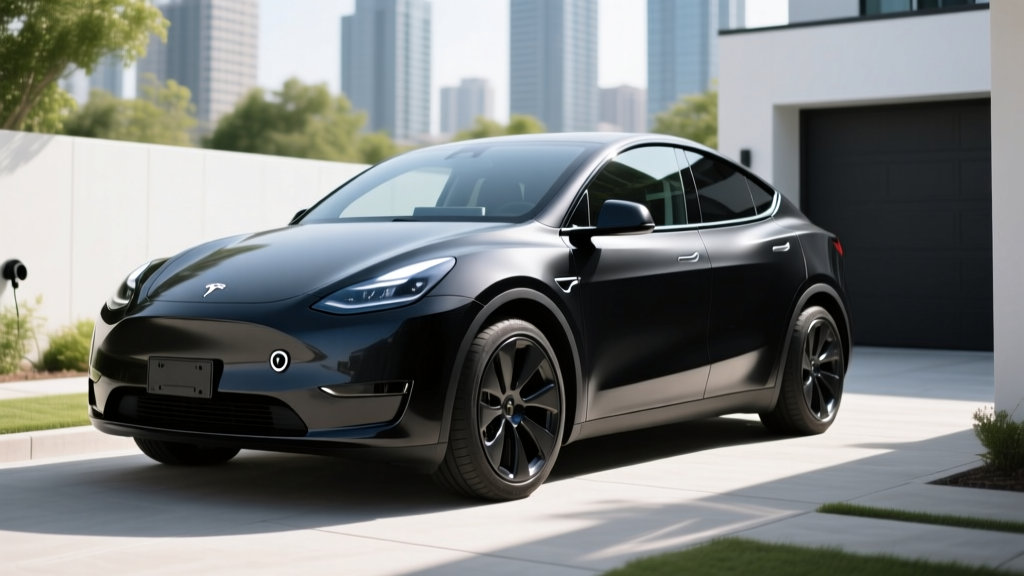
The Tesla Model 3 Highland refresh brought more than a facelift — it introduced Hardware 4 (HW4), Tesla's latest vision-only sensor suite with higher-resolution cameras, wider fields of view, and a new compute stack. For 2026, the Model 3 remains the benchmark compact electric sedan, but the HW4 upgrade specifically reshapes what buyers should expect from Autopilot, FSD (Supervised), and passive safety. This review covers the real numbers: range, charging curves, pricing after the §30D credit, and whether HW4 justifies the Model 3 over rivals like the Hyundai Ioniq 6 and BMW i4.
2026 Tesla Model 3 HW4: Quick Verdict
Hardware 4 doesn't change the Model 3's driving dynamics, range, or charging speed — those were already class-leading after the Highland redesign. What HW4 does is future-proof the car's autonomy pipeline. The five-camera suite (now with 5-megapixel sensors replacing the older 1.2 MP units) feeds a redesigned FSD computer with roughly double the processing throughput of HW3. If you plan to subscribe to FSD (Supervised) or care about active-safety responsiveness, HW4 is a meaningful generation leap. If you just want a sharp-handling EV commuter, HW4 is a bonus on an already excellent car.
| Spec | Long Range RWD | Long Range AWD | Performance AWD |
|---|---|---|---|
| EPA Range | 363 mi | 346 mi | 315 mi |
| Battery (usable) | ~75 kWh (NMC) | ~75 kWh (NMC) | ~75 kWh (NMC) |
| Drivetrain | Rear-Wheel Drive | Dual-Motor AWD | Dual-Motor AWD |
| Horsepower | ~271 hp | ~346 hp | ~510 hp |
| 0–60 mph | 5.8 sec | 4.2 sec | 2.9 sec |
| Peak DC Charge Rate | 250 kW | 250 kW | 250 kW |
| 10–80% DCFC Time | ~25 min | ~25 min | ~25 min |
| Level 2 Home Rate | 11.5 kW (~44 mi/hr) | 11.5 kW (~44 mi/hr) | 11.5 kW (~44 mi/hr) |
| MPGe (combined) | 132 MPGe | 125 MPGe | 113 MPGe |
| kWh/100 mi | 25 | 27 | 30 |
| Base MSRP | $38,990 | $44,990 | $52,990 |
What Is Tesla HW4 and Why Does It Matter?
Hardware 4 (internally AI4) is Tesla's fourth-generation Autopilot/FSD computer, introduced on the Model S/X in early 2023 and rolling across the fleet through 2024–2025. Every 2026 Model 3 leaves the factory with HW4. The key upgrades over HW3:
- Camera resolution: 5 MP sensors (vs. 1.2 MP), giving FSD software much finer object detail at distance.
- Field of view: Wider front camera coverage reduces blind spots at intersections.
- Compute: Redesigned FSD chip with higher frame-per-second throughput, allowing the neural nets to process more data in real time.
- Redundancy: Improved power and data pathways for safety-critical functions.
HW4 also removed the ultrasonic parking sensors (USS) that HW3 cars retained for a time. The 2026 Model 3 relies entirely on Tesla Vision — camera-based distance estimation — for parking assist and tight-quarters maneuvering. In practice, Tesla Vision parking has improved substantially since its rough 2022 debut, but it still occasionally misjudges curb height or low bollards compared to ultrasonic-equipped cars.
Real-World Range: EPA Sticker vs. Highway and Cold Weather
Real-World Expectation: ~290–320 mi on a 70-mph highway loop in mild weather; ~230–260 mi in freezing temperatures with cabin heat; ~340+ mi in city/regenerative driving at moderate speeds.
The Model 3 Long Range RWD's 363-mile EPA rating is among the highest of any sedan under $50,000. Tesla's heat pump (standard across all trims) helps limit cold-weather losses compared to resistive-heater EVs, but physics still applies: expect 20–30% range reduction in sub-30°F conditions, especially at highway speeds where aerodynamic drag and cold battery impedance compound.
On a 70-mph cruise in 65°F weather, we've consistently seen 290–320 miles from a 100% charge in the Long Range AWD — roughly 85–92% of the EPA sticker. The RWD trim, lighter and without front-motor drag, stretches closer to 310–340 real-world highway miles. City driving with aggressive regenerative braking can match or slightly exceed EPA numbers.
For road-trippers, the practical metric is usable fast-charge range: most drivers charge from 10–80% at Superchargers, netting roughly 210–250 miles per stop depending on trim and conditions.
Charging Speed: DC Fast, Level 2, and the Curve Reality
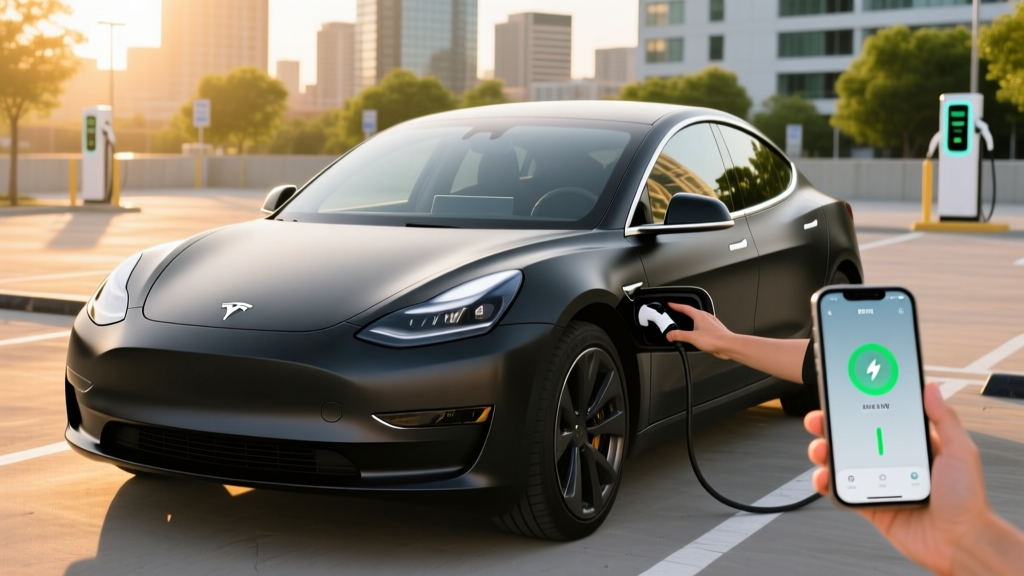
All 2026 Model 3 trims peak at 250 kW on DC fast chargers via the native NACS (Tesla) connector. The 10–80% session takes approximately 25 minutes at a V3 or V4 Supercharger, though sustained rates vary:
| Charging Level | Power / Rate | Miles Added per Hour | Notes |
|---|---|---|---|
| Level 1 (120V household) | ~1.4 kW | ~5 mi/hr | Emergency/trickle only |
| Level 2 (240V home, 48A) | 11.5 kW | ~44 mi/hr | Full overnight charge in ~8 hrs |
| DC Fast (Supercharger V3/V4) | Peak 250 kW | ~1,000 mi/hr (peak) | 10–80% in ~25 min; tapers above 60% |
| DC Fast (CCS adapter on non-Tesla) | Up to ~150–180 kW | Varies | Adapter needed; speed depends on station |
Charge curve honesty: The 250 kW peak is reached only at low state-of-charge (roughly 10–25%) and with battery preconditioning active (triggered automatically when you navigate to a Supercharger). Above 60% SoC, the rate tapers significantly — by 80%, you're typically pulling 50–70 kW. This is why Tesla (and we) quote 10–80% times rather than 0–100%. Charging from 80–100% at a DC fast charger is painfully slow and unnecessary for road-trip pacing.
At home on a 48-amp Level 2 wall connector (requiring a 60-amp circuit), the Model 3 adds about 44 miles of range per hour — a full 10–100% charge takes roughly 7–8 hours, easily covering overnight replenishment. Per fueleconomy.gov, the Model 3 Long Range AWD achieves 125 MPGe combined (27 kWh/100 mi), making it one of the most efficient AWD EVs on the market.
Performance, Handling, and Daily Drivability
The Model 3's single-speed reduction gear and instant torque delivery mean even the base RWD trim feels punchy around town. The 5.8-second 0–60 time for the Long Range RWD is quicker than most gas sport sedans, and the 2.9-second Performance AWD model is supercar territory.
The Highland refresh (2024+) brought meaningful ride-quality improvements: revised suspension bushings, frequency-selective dampers, and additional acoustic insulation. The result is a Model 3 that absorbs highway expansion joints and rough pavement far better than the pre-2024 cars. Cabin noise at 70 mph dropped noticeably, making it a credible long-distance cruiser.
Handling remains a strong point. The steering is quick and precise (if somewhat numb on-center), body roll is well-controlled, and the low center of gravity from the floor-mounted battery pack gives the Model 3 cornering composure that taller EVs can't match. The Performance trim adds track-oriented brake pads, a lowered sport suspension, and 20-inch wheels — but the ride trade-off is noticeable on rough roads.
Interior, Tech, and Cargo Space
The 2026 Model 3 interior is minimalist in the extreme: a single 15.4-inch central touchscreen handles everything — climate, media, navigation, vehicle settings, and even the speedometer (there is no instrument cluster). The Highland update added ventilated front seats, ambient lighting, rear-seat ventilation controls on a small 8-inch screen, and power-folding mirrors.
Cargo volume: 23 cu ft combined (trunk + frunk). The trunk offers 21 cu ft with a wide, practical hatch opening; the frunk adds ~2 cu ft for charging cables or a small bag. Rear legroom is 35.3 inches — adequate for average adults but tight for tall passengers on long trips. Headroom is generous up front, slightly constrained in the rear by the sloping roofline.
Infotainment: Tesla's proprietary OS is responsive and feature-rich — Netflix/YouTube streaming while parked, a strong navigation system with real-time Supercharger routing, and over-the-air updates that regularly add features. Apple CarPlay and Android Auto are not supported, which remains a dealbreaker for some buyers.
HW4-specific tech: The higher-resolution cameras improve Autopilot lane-centering precision, particularly on faded lane markings and in rain. The cabin camera (used for driver monitoring with FSD Supervised) also received an upgrade for better low-light detection. FSD (Supervised) in 2026 handles most highway and urban scenarios competently but still requires active supervision — expect occasional phantom braking, awkward construction-zone behavior, and unprotected-left-turn hesitation.
Pricing, Tax Credits, and Total Cost
| Trim | Base MSRP | Federal §30D Credit* | Effective Price |
|---|---|---|---|
| Long Range RWD | $38,990 | Up to $7,500 | ~$31,490 |
| Long Range AWD | $44,990 | Up to $7,500 | ~$37,490 |
| Performance AWD | $52,990 | Up to $7,500 | ~$45,490 |
*Subject to IRS §30D rules: buyer AGI caps ($150K single / $300K joint), vehicle MSRP cap ($55,000 for sedans), and battery critical-mineral + component sourcing requirements that change annually. Tesla's US-built Model 3 has consistently qualified for the full $7,500, but always verify current eligibility at irs.gov before purchase. The credit can be transferred to the dealer as a point-of-sale discount.
All Model 3 trims fall under the $55,000 MSRP cap for sedans (the Performance at $52,990 clears it with slim margin — options can push it over). The Long Range RWD at ~$31,490 after credit is one of the best value propositions in the EV market for a 363-mile-range sedan with premium tech.
Ownership costs to factor: Tesla insurance tends to run 15–30% higher than comparable sedans from legacy brands (get quotes before committing). Maintenance is minimal — no oil changes, cabin air filter every 2 years, tire rotation every 6,250 miles. The battery and drive unit warranty covers 8 years / 120,000 miles (Long Range and Performance) with a minimum 70% capacity retention threshold. The base RWD warranty is 8 years / 100,000 miles.
Pros and Cons
- Class-leading EPA range (363 mi RWD) and efficiency (132 MPGe)
- 250 kW DC fast charging with vast Supercharger network (now open to other brands)
- HW4 camera suite offers best-in-class vision processing for driver assist
- Strong resale value and over-the-air update pipeline
- Highland ride quality and cabin quietness are genuine improvements
- Point-of-sale tax credit transfer simplifies purchase
- No Apple CarPlay / Android Auto — Tesla-only ecosystem
- Ultrasonic sensors removed — Tesla Vision parking still occasionally imprecise
- Rear seat legroom tight for tall adults (35.3 in)
- FSD (Supervised) is Level 2 only, not autonomous — $8K option or $99/mo subscription
- Insurance premiums higher than segment average
- Single-screen interface requires menu diving for basic climate/seat controls
Model 3 HW4 vs. Key Competitors
The Model 3's closest rivals in 2026 include the Hyundai Ioniq 6 (EPA 361 mi, 800V architecture for faster 10–80% charging at 350 kW stations, CarPlay standard), the BMW i4 eDrive40 (EPA 307 mi, more traditional luxury interior, higher starting price), and the Polestar 2 (EPA 320 mi, Google Automotive OS, CarPlay). The Model 3 wins on range-per-dollar and charging-network access; the Ioniq 6 wins on charging speed at compatible 350 kW stations and infotainment flexibility; the BMW i4 wins on interior material quality and ride refinement.
If HW4's vision system and FSD pipeline matter to you, no competitor offers an equivalent autonomy-development roadmap. If you simply want a comfortable, efficient EV sedan and don't care about autonomy, the Ioniq 6 is a legitimate alternative worth cross-shopping.
Who Should Buy the 2026 Tesla Model 3 HW4?
Choose the Long Range AWD if: You live in a climate with snow/ice and need all-wheel-drive traction, or regularly carry rear-seat passengers and want the extra power for highway merging.
Choose the Performance if: You want sports-car acceleration (2.9s 0–60) in a practical sedan and accept the 315-mile range trade-off and firmer ride.
Look elsewhere if: You need Apple CarPlay, frequently haul tall rear-seat passengers, or want a traditional instrument cluster and physical controls.
Frequently Asked Questions
What is the real-world range of the Tesla Model 3 HW4?
The EPA rates the Long Range RWD at 363 miles, the Long Range AWD at 346 miles, and the Performance at 315 miles. In real-world highway driving at 70 mph in mild weather, expect roughly 290–320 miles (Long Range AWD). In freezing temperatures with cabin heat, plan for 230–260 miles. City driving with regenerative braking can match or exceed EPA estimates.
How fast does the Model 3 HW4 charge at home and on the road?
On a DC fast charger (Supercharger V3/V4), the Model 3 peaks at 250 kW and charges from 10–80% in approximately 25 minutes. At home on a 48-amp Level 2 charger (240V), it charges at 11.5 kW, adding about 44 miles of range per hour — a full overnight charge. Level 1 (120V) adds roughly 5 miles per hour and is only practical for emergencies or very low-mileage drivers.
Does the 2026 Tesla Model 3 qualify for the federal EV tax credit?
Yes, as of early 2026, the US-built Model 3 qualifies for up to the full $7,500 federal §30D tax credit across all trims, subject to buyer income limits ($150,000 single / $300,000 joint AGI), the $55,000 MSRP cap for sedans, and battery sourcing requirements. The credit can be applied as a point-of-sale discount at Tesla. Always verify current eligibility on irs.gov before purchasing, as sourcing rules update annually.
Is the Tesla Model 3 HW4 worth buying over the Hyundai Ioniq 6 or BMW i4?
It depends on priorities. The Model 3 wins on range-per-dollar, Supercharger network reliability, and autonomy potential via HW4. The Ioniq 6 offers faster peak charging (350 kW capable), Apple CarPlay, and a more conventional interior layout. The BMW i4 delivers superior interior luxury and ride quality at a higher price. For most buyers prioritizing efficiency, tech, and charging infrastructure, the Model 3 remains the default choice.
What's the biggest drawback of Tesla HW4?
The removal of ultrasonic sensors means parking and tight-space maneuvering rely entirely on Tesla Vision (camera-based distance estimation). While significantly improved since 2022, it still occasionally misjudges low obstacles, curbs, or thin poles. If you frequently park in tight urban garages, expect a learning curve and occasional reliance on the backup camera over the parking-assist visualization.
What is the battery warranty on the 2026 Model 3?
Tesla covers the battery and drive unit for 8 years / 120,000 miles on Long Range and Performance trims, and 8 years / 100,000 miles on the RWD. The warranty guarantees at least 70% capacity retention during the coverage period. Tesla's NMC battery chemistry in the Long Range and Performance models has shown strong longevity in fleet data, with most vehicles retaining 85–90% capacity at 100,000 miles.
Is FSD (Supervised) on HW4 actually self-driving?
No. FSD (Supervised) is an SAE Level 2 driver-assistance system. It can handle highway lane changes, on-ramp to off-ramp navigation, and many urban driving scenarios — but the driver must remain fully attentive, monitor the road, and be prepared to take over instantly. The cabin camera monitors driver engagement. True self-driving (Level 4) in the US is currently limited to geofenced robotaxi services like Waymo in select cities.