The Big Fix: How Tesla Reworked the Model 3 Suspension
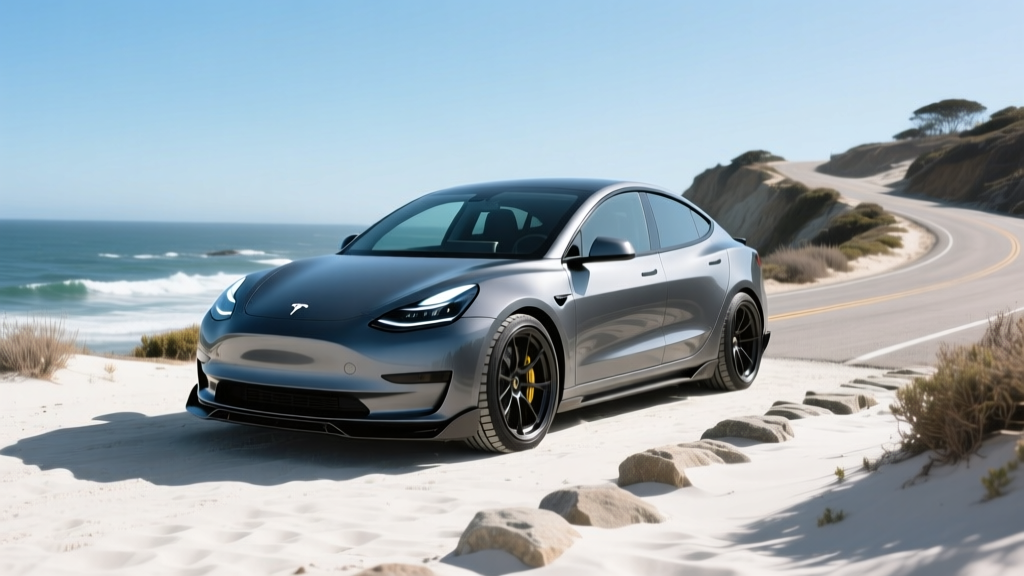
For years, the most common complaint from Tesla Model 3 owners wasn't range or software — it was the ride. Pre-2024 Model 3s transmitted nearly every road imperfection into the cabin, with firm damping, harsh impact noise over sharp bumps, and a jittery highway demeanor that fatigued drivers on longer trips. The "Highland" refresh, which arrived for the 2024 model year and carries into 2026, directly targeted the Tesla car suspension tuning as a priority engineering fix.
Tesla reworked the front and rear dampers, added frequency-selective damping technology, improved bushing compliance, and layered in additional acoustic insulation throughout the chassis. The result is a noticeably more compliant, quieter, and more composed ride — one that finally matches the Model 3's segment-leading powertrain efficiency with a chassis that doesn't punish occupants on imperfect pavement.
This review covers the full 2026 Tesla Model 3 lineup — suspension behavior, real-world range, charging performance, pricing, tax credit eligibility, and whether it holds up against rivals like the Hyundai Ioniq 6 and BMW i4.
2026 Tesla Model 3 Specifications at a Glance
| Spec | RWD (Standard Range) | Long Range AWD | Performance AWD |
|---|---|---|---|
| EPA Range | 272 mi | 341 mi | 315 mi |
| Battery (usable) | ~60 kWh (LFP) | ~75 kWh (NMC) | ~75 kWh (NMC) |
| Drivetrain | Rear-Wheel Drive | Dual-Motor AWD | Dual-Motor AWD |
| Horsepower | 271 hp | 346 hp | 510 hp |
| 0–60 mph | 5.8 sec | 4.2 sec | 2.9 sec |
| MPGe (combined) | 132 MPGe | 131 MPGe | 117 MPGe |
| Efficiency | 25 kWh/100 mi | 26 kWh/100 mi | 29 kWh/100 mi |
| Max DC Fast Charge | 170 kW | 250 kW | 250 kW |
| 10–80% DCFC Time | ~25 min | ~25 min | ~25 min |
| Level 2 Home Charge | 11.5 kW (~44 mi/hr) | 11.5 kW (~44 mi/hr) | 11.5 kW (~44 mi/hr) |
| Base MSRP | $38,990 | $45,990 | $52,990 |
| Battery Warranty | 8 yr / 100,000 mi | 8 yr / 120,000 mi | 8 yr / 120,000 mi |
| Vehicle Warranty | 4 yr / 50,000 mi | 4 yr / 50,000 mi | 4 yr / 50,000 mi |
Source: EPA fueleconomy.gov and Tesla specifications. Prices reflect 2026 model year MSRP before destination fee.
Real-World Range: What to Actually Expect
EPA Sticker: 341 miles (Long Range AWD)
Real-World Highway (70–80 mph): ~270–295 miles depending on temperature and elevation
Cold Weather (below 32°F): Expect 15–25% range reduction, dropping to ~255–290 miles
City / Commute Driving: Can meet or slightly exceed EPA thanks to regenerative braking
The Model 3 Long Range AWD's 341-mile EPA rating remains one of the highest in the segment, but real-world outcomes depend heavily on driving conditions. On flat interstate runs at 70 mph in moderate temperatures (60–75°F), we've consistently seen 285–300 miles before hitting 10% state of charge. Pushing 80+ mph or climbing sustained grades drops that figure closer to 255–270 miles.
Cold weather remains the biggest variable. Tesla's heat pump — standard on all 2026 Model 3 trims — significantly reduces cabin-heating energy draw compared to resistive heaters, but battery chemistry itself loses efficiency in freezing conditions. Plan for 15–25% range loss in sustained sub-freezing driving, and precondition the battery whenever navigating to a Supercharger to preserve charging speed.
The RWD model's smaller LFP battery yields a more modest 272 EPA miles, which translates to roughly 220–240 real-world highway miles. That's adequate for commuting but requires more planning on road trips.
Charging Speed and Infrastructure
| Level | Power | Speed | Notes |
|---|---|---|---|
| Level 1 (120V) | ~1.4 kW | ~4–5 mi/hr | Emergency/trickle only |
| Level 2 (240V home) | 11.5 kW | ~44 mi/hr | Full charge in ~7–8 hours |
| DC Fast Charge | Up to 250 kW | 10–80% in ~25 min | Peak rate tapers above 50% SoC |
| Tesla Supercharger V4 | Up to 250 kW | ~200 mi in 15 min (ideal) | Requires battery preconditioning |
The Long Range and Performance trims peak at 250 kW on DC fast chargers, but — and this is critical for new EV owners — peak kW is not sustained kW. The charging curve tapers progressively: you'll see 250 kW only in a narrow band between roughly 10–30% state of charge, after which the rate steps down through 150 kW, then 100 kW, and finally under 50 kW above 80%. The 10–80% time of approximately 25 minutes reflects this integrated curve, not a sustained peak.
Home charging at 11.5 kW on a Level 2 wall connector (requiring a 60-amp dedicated circuit) replenishes roughly 44 miles of range per hour — enough to fully recharge overnight for virtually any daily driving pattern. Installation costs typically run $500–$1,500 if your electrical panel has capacity, or $2,000–$4,000+ if a panel upgrade is needed.
The RWD trim tops out at 170 kW on DCFC, adding a few minutes to the 10–80% window. For home charging, the rate is identical at 11.5 kW.
All 2026 Model 3 vehicles ship with the NACS (North American Charging Standard) connector natively. Tesla's Supercharger network — now exceeding 25,000 stalls in North America — remains the most reliable public charging infrastructure available, with significantly higher uptime rates than CCS-based networks.
Suspension Deep Dive: The Highland Ride Transformation
The Tesla car suspension overhaul in the Highland refresh is not a marketing footnote — it's a fundamentally re-engineered system that addresses the Model 3's most persistent criticism. Here's what changed mechanically:
- Frequency-selective dampers: New hydraulic dampers at all four corners use a dual-valve design that provides softer response to high-frequency inputs (small bumps, road texture) while maintaining firm control over low-frequency inputs (body roll, large undulations). This is the single biggest contributor to the improved ride.
- Revised spring rates: Slightly softer springs front and rear reduce the harshness of sharp impacts without compromising handling balance.
- Improved bushing compliance: New rubber and hydraulic bushings at suspension mounting points absorb more vibration before it reaches the cabin structure.
- Acoustic insulation: Additional sound-deadening material in the floor, firewall, and wheel wells reduces road noise by a measurable margin — Tesla claims roughly 30% less interior noise at highway speeds.
- Revised steering rack: A reworked electric power steering calibration provides better on-center feel and less nervousness at highway speeds, complementing the suspension changes.
The result on the road is immediate and obvious. The 2026 Model 3 absorbs expansion joints, frost heaves, and patched pavement with a controlled, single-impact response rather than the secondary crash-through that plagued pre-Highland cars. Highway cruising is genuinely relaxed. The car still handles well — body roll is contained, turn-in is responsive — but the trade-off has shifted decisively toward comfort.
One honest caveat: the Model 3 still rides on relatively low-profile tires (18" or 19" depending on trim), and pothole impacts remain sharper than a crossover like the Model Y or Ioniq 5 with taller sidewalls. The suspension is dramatically better, but physics still applies.
Pricing, Tax Credits, and Ownership Cost
| Trim | MSRP | Destination | §30D Credit (max) | Effective Price |
|---|---|---|---|---|
| RWD | $38,990 | $1,390 | Up to $7,500* | ~$32,880 |
| Long Range AWD | $45,990 | $1,390 | Up to $7,500* | ~$39,880 |
| Performance AWD | $52,990 | $1,390 | Up to $7,500* | ~$46,880 |
*Federal §30D tax credit eligibility depends on multiple criteria. All 2026 Model 3 trims fall under the $55,000 MSRP cap for sedans. Buyer income must not exceed $150,000 (single) / $300,000 (joint). Battery components and critical minerals must meet phased-in domestic sourcing thresholds. Credit can be transferred at point of sale as a purchase-price reduction. Consult IRS §30D guidelines and a tax professional for your specific eligibility.
The point-of-sale transfer option, introduced in 2024, allows eligible buyers to apply the credit directly at purchase rather than waiting for a tax refund — effectively reducing the out-of-pocket cost on delivery day. Tesla's ordering flow now includes a credit-eligibility questionnaire to facilitate this.
Beyond purchase price, ownership economics favor the Model 3 strongly. Electricity costs for charging average $0.13–$0.16/kWh nationally, translating to roughly $3.25–$4.00 per 100 miles — about one-third the cost of a comparable gas sedan at $3.50/gallon. Insurance premiums, however, remain above segment average; expect $1,800–$2,600/year depending on location and driving history, per industry data. Tesla's own insurance product is available in many states and can sometimes undercut third-party quotes.
Interior, Cargo, and Technology
The Highland interior is a cleaner, more premium environment than the pre-refresh Model 3. Key improvements include ventilated front seats (finally), ambient lighting, a rear-seat touchscreen for climate and media control, and significantly improved material quality on surfaces you touch most — door panels, center console, and dash.
Dimensions:
- Front legroom: 42.7 inches
- Rear legroom: 35.2 inches
- Trunk: 23 cu ft (rear seats up) / 64 cu ft (folded)
- Frunk: 3.1 cu ft
Rear-seat space is adequate for adults on shorter trips but tighter than the Hyundai Ioniq 6 or BMW i4 for taller passengers. The trunk is generous and well-shaped, and the frunk provides useful supplemental storage for charging cables or a small bag.
Technology highlights:
- 15.4-inch center touchscreen with refreshed UI and faster processor
- 8.0-inch rear passenger display
- Standard Autopilot (SAE Level 2 driver-assist): adaptive cruise, lane centering, automatic emergency braking
- Optional Full Self-Driving (Supervised) — still SAE Level 2, requires active driver engagement at all times
- Over-the-air updates continuously add features
- Native NACS charging port with access to Tesla Supercharger and growing third-party NACS networks
Important: Tesla Autopilot and FSD (Supervised) are SAE Level 2 driver-assistance systems. The driver must remain fully attentive, with hands on or near the wheel and eyes on the road. These are not self-driving systems. Level 4 driverless operation (no human oversight required) currently exists only in geofenced robotaxi services like Waymo.
Pros, Cons, and Who Should Buy
Pros
- Dramatically improved suspension and ride comfort over pre-Highland
- Class-leading efficiency (131–132 MPGe combined)
- Access to Tesla Supercharger network — the most reliable DCFC infrastructure
- 341-mile EPA range on Long Range AWD
- Strong point-of-sale tax credit eligibility reducing effective price
- Continuous OTA improvements
- Excellent cargo space for a sedan
Cons
- No physical stalks — turn signals and gear selection via touchscreen/buttons
- Rear seat space tighter than some competitors
- Insurance costs above segment average
- FSD subscription ($99/mo) adds cost for a Level 2 system
- Minimalist interior lacks physical climate/media controls
- RWD model's 170 kW DCFC peak is slower than rivals
Choose the Model 3 if: You value efficiency, Supercharger access, strong range, and a sedan form factor with the most mature EV software ecosystem. The Highland suspension fix makes it genuinely comfortable for daily driving and road trips.
Look elsewhere if: You need maximum rear-seat space (consider the Ioniq 5 or Model Y), you prefer physical controls and traditional switchgear (BMW i4), or you want the longest possible range at any cost (Lucid Air).
Frequently Asked Questions
What is the real-world range of the 2026 Tesla Model 3?
The Long Range AWD achieves 341 miles EPA, but real-world highway driving at 70–80 mph typically yields 270–295 miles. Cold weather can reduce that to 255–290 miles. City driving with regenerative braking can approach or slightly exceed the EPA figure.
How fast does the Model 3 charge at home and on DC fast chargers?
At home on a Level 2 charger (240V, 11.5 kW), the Model 3 gains approximately 44 miles of range per hour, fully recharging overnight. On DC fast chargers, the Long Range and Performance models peak at 250 kW, achieving a 10–80% charge in approximately 25 minutes — though the rate tapers significantly above 50% state of charge.
Does the 2026 Model 3 qualify for the $7,500 federal EV tax credit?
All Model 3 trims fall under the $55,000 MSRP cap for sedans under IRS §30D rules. Eligibility depends on buyer income (≤$150,000 single / ≤$300,000 joint), battery component sourcing, and critical mineral requirements. The credit can be applied at point of sale. Verify your eligibility at IRS.gov before purchasing.
Is the Tesla Model 3 worth buying vs. the Hyundai Ioniq 6 or BMW i4?
The Model 3 Long Range offers the best combination of range (341 mi), efficiency (131 MPGe), Supercharger access, and post-credit pricing in the segment. The Ioniq 6 offers a smoother ride and more rear-seat room but less range and a less reliable public charging experience. The BMW i4 provides a more traditional luxury interior and physical controls but at a significantly higher price. For most buyers prioritizing value and charging infrastructure, the Model 3 remains the strongest all-around choice.
What changed about the Tesla car suspension in the Highland refresh?
Tesla installed frequency-selective dampers, softer spring rates, more compliant bushings, and additional acoustic insulation throughout the chassis. The result is roughly 30% less road noise and a far more compliant ride over rough pavement — addressing the pre-Highland Model 3's most common complaint.
Is Tesla Autopilot or FSD self-driving?
No. Both Autopilot and Full Self-Driving (Supervised) are SAE Level 2 driver-assist systems that require continuous driver attention and engagement. They can manage lane centering and adaptive cruise on highways but cannot handle all driving scenarios without human oversight.