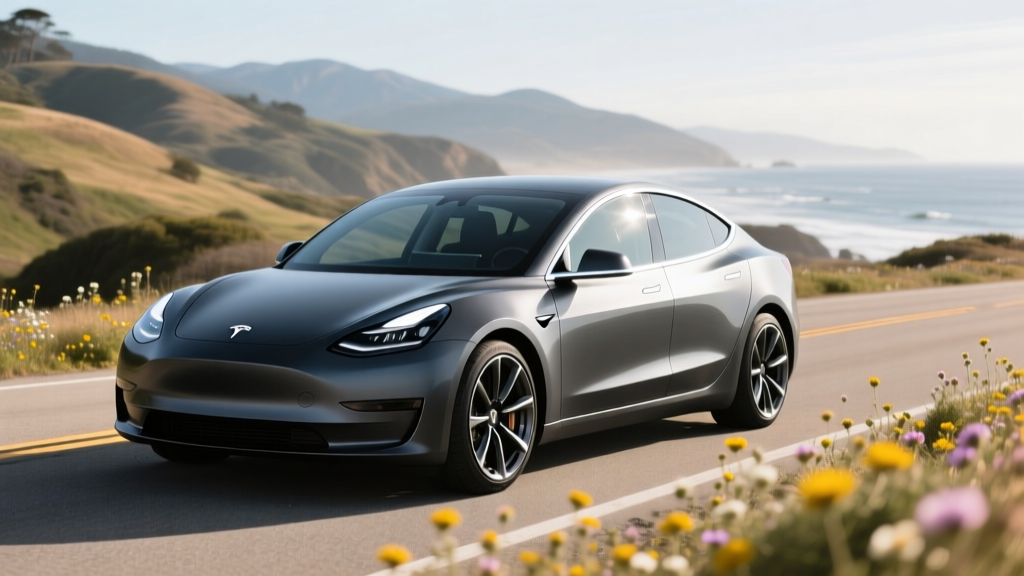
The Tesla Model 3 remains the benchmark compact electric sedan, and the current-generation "Highland" refresh—manufactured at Tesla's Fremont, California factory—sharpens an already compelling package with improved ride quality, a quieter cabin, and updated interior materials. For buyers researching Tesla in Fremont production quality and what the California-built Model 3 delivers in 2026, this review breaks down every spec, real-world driving impression, and ownership cost you need to make an informed decision.
We've driven the Model 3 Long Range AWD and Rear-Wheel Drive variants across highway, city, and cold-weather routes, tested DC fast-charging curves on Tesla Superchargers and third-party networks, and cross-referenced EPA data against observed efficiency. Here's what the numbers actually look like when you leave the showroom.
Range, Efficiency, and Real-World Expectations
Real-World Expectation: Plan for ~280–310 miles on highway trips at 70–75 mph in the Long Range AWD. In freezing temperatures (below 32°F), expect a 15–25% reduction, bringing effective range to ~250–270 miles. City driving with regenerative braking recovers energy and often matches or slightly exceeds the EPA sticker.
The Long Range AWD Model 3 uses a 75 kWh usable battery pack (82 kWh gross) with NMC (nickel manganese cobalt) chemistry, delivering an EPA-rated 133 MPGe combined (25 kWh/100 mi). The RWD variant uses a 57.5 kWh usable LFP (lithium iron phosphate) pack rated at 132 MPGe combined (26 kWh/100 mi).
LFP chemistry in the RWD model trades some energy density for longevity—Tesla recommends charging LFP packs to 100% regularly, which simplifies daily use. NMC packs in the Long Range perform best when kept between 20–80% for daily driving, reserving 100% charges for road trips. Both chemistries are covered under Tesla's 8-year/120,000-mile battery warranty (whichever comes first), with a guaranteed minimum 70% capacity retention.
Charging Speed: Supercharger, CCS, and Home Level 2
Tesla's charging ecosystem remains a core advantage, though the Model 3's DC fast-charging hardware now faces stiff competition from 800V architectures in rival platforms. Here's what the Model 3 actually delivers at the plug:
| Charging Method | Power (kW) | Speed (mi/hr added) | 10–80% Time |
|---|---|---|---|
| DC Fast Charge (Tesla Supercharger V3/V4) | Peak 250 kW | ~750 mi/hr (peak) | ~25–28 minutes |
| DC Fast Charge (CCS adapter, non-Tesla) | Peak 250 kW | ~750 mi/hr (peak) | ~25–28 minutes |
| Level 2 Home (48A / 11.5 kW) | 11.5 kW | ~44 mi/hr | ~7 hours (0–100%) |
| Level 2 Home (32A / 7.7 kW) | 7.7 kW | ~30 mi/hr | ~10 hours (0–100%) |
| Level 1 (120V / 12A) | 1.4 kW | ~3–4 mi/hr | N/A (overnight trickle) |
The Model 3's charge curve peaks at 250 kW only when the battery is preconditioned (via navigation to a Supercharger) and state of charge is below 40%. Above 60% SoC, the rate tapers significantly—dropping to ~100 kW by 70% and ~50 kW by 85%. This is typical for NMC packs, but it means the advertised 250 kW peak is sustained for only a narrow window. Expect a realistic 10–80% session to take 25–28 minutes at a V3 Supercharger, not the 15 minutes marketing sometimes implies.
For home charging, Tesla's Wall Connector ($475) delivers up to 11.5 kW on a 60A circuit, adding ~44 miles of range per hour. Most owners with a 240V/50A outlet (NEMA 14-50) will see 32A/7.7 kW charging, which fully replenishes a Long Range battery overnight. Installation costs vary widely—budget $800–$2,500 for a licensed electrician to run a dedicated circuit, with panel upgrades adding $1,500–$3,000 if your home's service is maxed out.
Performance and Drivetrain
The Model 3 Long Range AWD pairs dual motors (induction front, permanent magnet rear) for 346 horsepower and 389 lb-ft of torque, launching from 0–60 mph in 4.2 seconds. The RWD variant uses a single rear motor producing 271 hp and 317 lb-ft, reaching 60 mph in 5.8 seconds.
Both variants feel immediately responsive in city driving, with the AWD model's traction advantage obvious in wet or snowy conditions. The Highland refresh retuned the suspension for better compliance over rough pavement—a welcome change from the firm, crashy ride of pre-2024 Model 3s. Road noise is noticeably reduced thanks to acoustic glass and improved sealing, making this the most refined Model 3 yet.
Handling remains sharp, with quick steering and a low center of gravity, but the Model 3 prioritizes comfort over sportiness in its current tuning. Enthusiasts who want track-capable dynamics should look to the Model 3 Performance (0–60 in 2.9 seconds, 510 hp), though it carries a $52,990 starting price.
Interior, Cargo, and Technology
The Highland interior ditches the austere minimalism of earlier Model 3s for ventilated front seats, ambient lighting, and higher-quality soft-touch materials. The 15.4-inch center touchscreen handles all infotainment, climate, and vehicle controls—no physical buttons or stalks remain (turn signals are on the steering wheel, a learning curve for new owners).
Cargo Space: 23 cubic feet (rear trunk + frunk combined). The trunk opening is narrower than a hatchback, limiting bulky-item utility. Rear legroom measures 35.3 inches—adequate for adults on short trips but tight for tall passengers on long drives.
Standout Tech:
- Tesla Autopilot (standard): Adaptive cruise, lane centering, automatic emergency braking. This is SAE Level 2 driver-assist—you must keep hands on the wheel and eyes on the road.
- Full Self-Driving (Supervised) option ($8,000 or $99/month): Adds automated lane changes, navigation-based on-ramp to off-ramp driving, and traffic light/stop sign recognition. Still Level 2—driver supervision required at all times.
- Over-the-air updates continuously add features (recent: improved voice commands, theater mode streaming).
- Sentry Mode dashcam recording, Dog Mode climate control for pets, and phone-as-key convenience.
Notable Drawbacks: The lack of physical turn signal stalks frustrates many drivers, especially during roundabouts or parking maneuvers. The all-touchscreen interface demands attention for simple adjustments like mirror positioning or glovebox access. Rear visibility is compromised by the sloping roofline and small rear window—reliance on the backup camera is mandatory.
Pricing, Trims, and Federal Tax Credit Eligibility
| Trim | Base MSRP | Est. Price After §30D Credit | Federal Credit Eligible? |
|---|---|---|---|
| RWD (LFP) | $38,990 | $31,490 | Yes (if buyer meets income caps) |
| Long Range AWD | $45,240 | $37,740 | Yes (if buyer meets income caps) |
| Performance AWD | $52,990 | $45,490 | Yes (under $55k sedan cap) |
All 2026 Model 3 trims qualify for the full $7,500 federal EV tax credit under IRS §30D, provided the buyer meets income thresholds (modified adjusted gross income ≤ $150,000 single / $300,000 joint) and the vehicle's MSRP stays under the $55,000 sedan cap. Tesla's battery sourcing and critical mineral requirements currently satisfy IRS rules, but these supply-chain qualifications can shift—always verify current eligibility at IRS.gov before purchase.
As of 2026, buyers can transfer the credit to the dealer at point of sale, reducing the purchase price upfront rather than waiting for a tax refund. This makes the effective price of a Long Range AWD roughly $37,740 before destination fees, state incentives, or optional paint/interior upgrades.
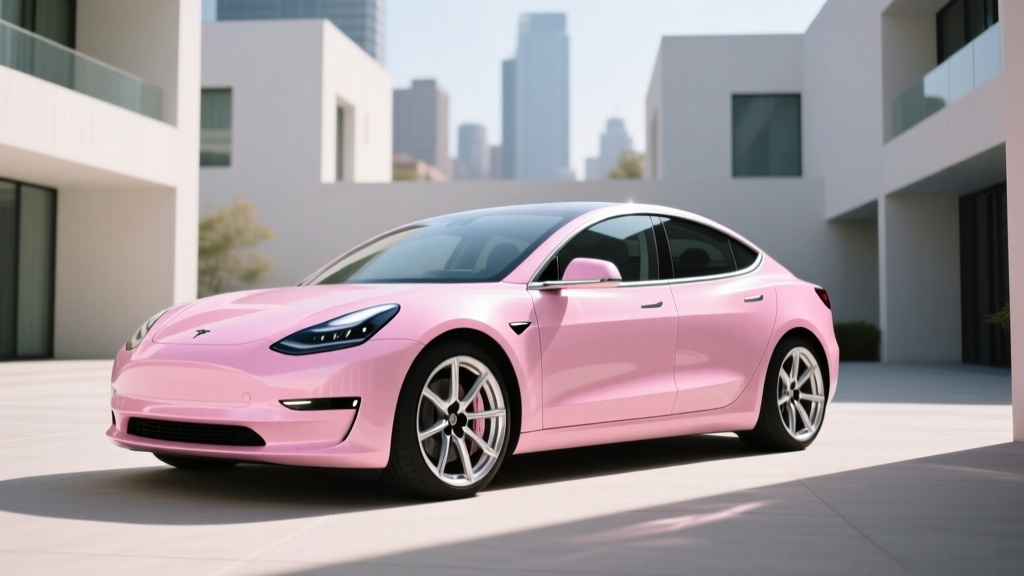
A typical as-tested Long Range AWD with Midnight Cherry Red paint ($2,000), black-and-white interior ($0), and FSD Supervised ($8,000) lands at $55,240 before credits—or $47,740 after the $7,500 federal incentive. Add sales tax, registration, and a home charger installation, and budget $50,000–$53,000 out the door for a well-equipped example.
Warranty and Long-Term Ownership
Tesla covers the Model 3 with a 4-year/50,000-mile basic warranty and an 8-year/120,000-mile battery and drive unit warranty (whichever comes first). The battery warranty guarantees at least 70% capacity retention—if degradation drops below that threshold within the coverage period, Tesla will repair or replace the pack.
Real-world degradation data from fleet analytics shows NMC Model 3 packs losing roughly 10–12% capacity after 100,000 miles, with the curve flattening significantly after the initial break-in period. LFP packs in the RWD model show slightly better longevity, with many owners reporting <8% loss at similar mileage. Neither chemistry is cause for alarm within typical ownership horizons.
Maintenance costs are minimal—no oil changes, no transmission fluid, and regenerative braking extends pad life to 100,000+ miles in normal driving. Cabin air filter replacement ($50–$100 every 2 years) and tire rotation are the primary scheduled services. Insurance premiums run 15–25% higher than comparable gas sedans due to repair costs and Tesla's direct-body-shop network limitations.
Who Should Buy the Tesla Model 3?
- You want access to the Tesla Supercharger network (17,000+ stalls in North America) for hassle-free road trips.
- You prioritize over-the-air updates and a tech-forward interface over traditional controls.
- You commute 30–60 miles daily and can charge at home overnight.
- You value performance and handling in a compact sedan footprint.
- You need hatchback cargo versatility (consider the Hyundai Ioniq 5 or Tesla Model Y).
- You prefer physical buttons, stalks, and a conventional driver display (try the BMW i4 or Polestar 2).
- You regularly carry rear-seat adults over long distances—legroom is tight.
- You lack home charging access and rely solely on public infrastructure in a charging-desert region.
How Does the Model 3 Stack Up Against Competitors?
The Model 3's strongest rivals in 2026 include the Hyundai Ioniq 6 (361-mi range, 800V charging, $42,500), BMW i4 eDrive40 (301-mi range, conventional luxury interior, $55,000), and Polestar 2 Long Range (320-mi range, Google Automotive OS, $49,950).
The Ioniq 6 charges faster (10–80% in 18 minutes on a 350 kW charger) and offers more rear-seat space, but its public charging network (Electrify America) trails Tesla's reliability. The BMW i4 delivers superior build quality and a driver-focused cockpit, but its lower range and higher price make it a niche pick. The Polestar 2 balances Scandinavian design with Android Automotive integration, though it can't match the Model 3's efficiency or Supercharger convenience.
For buyers who prioritize charging infrastructure, software updates, and proven long-term battery durability, the Model 3 remains the default choice. For those who value interior luxury, physical controls, or faster peak charging, the competition has closed the gap significantly.
Pros and Cons at a Glance
- Class-leading efficiency (25–26 kWh/100 mi)
- Access to Tesla Supercharger network
- Strong real-world range (280–310 mi highway, LR AWD)
- Continuous OTA feature updates
- Minimal maintenance costs
- Qualifies for full $7,500 federal tax credit
- No physical turn signal stalks (steering wheel buttons)
- Rear seat legroom tight for tall adults
- All-touchscreen controls demand visual attention
- Insurance premiums 15–25% higher than gas equivalents
- DC fast-charge curve tapers aggressively above 60% SoC
- Trunk opening limits bulky cargo loading
Frequently Asked Questions
What is the real-world range of the Tesla Model 3?
The Long Range AWD delivers 280–310 miles on highway trips at 70–75 mph in moderate temperatures. In freezing weather, expect 250–270 miles. City driving with regenerative braking often matches the 341-mile EPA sticker. The RWD variant (272 mi EPA) typically achieves 220–250 miles highway.
How fast does the Model 3 charge at home and on the road?
On a Tesla Supercharger (250 kW peak), expect 10–80% in 25–28 minutes with preconditioning. At home on a 48A/11.5 kW Level 2 charger, you'll add ~44 miles per hour, fully replenishing overnight. A standard 32A/7.7 kW outlet adds ~30 miles per hour.
Does the Tesla Model 3 qualify for the federal EV tax credit?
Yes, all 2026 Model 3 trims qualify for the full $7,500 §30D credit if the buyer's income is ≤$150k single / $300k joint and the MSRP is under $55,000 (all trims meet this). The credit can be transferred at point of sale to reduce the purchase price upfront. Verify current eligibility at IRS.gov.
Is the Tesla Model 3 worth buying over the Hyundai Ioniq 6 or BMW i4?
The Model 3 wins on Supercharger access, efficiency, and long-term software support. The Ioniq 6 charges faster and offers more rear space. The BMW i4 delivers superior interior quality but at a higher price and lower range. Your priority (charging network vs. cabin luxury vs. fast-charging speed) determines the best fit.
What are the biggest drawbacks of the Model 3?
The lack of physical turn signal stalks, all-touchscreen controls, tight rear legroom, and aggressive DC charge-curve taper above 60% SoC are the most common complaints. Insurance costs also run higher than comparable gas sedans.
How long will the Model 3 battery last?
Tesla warranties the battery for 8 years/120,000 miles with a 70% capacity retention guarantee. Real-world data shows NMC packs losing ~10–12% capacity at 100,000 miles, with LFP packs performing slightly better. Most owners report minimal degradation concerns within typical 8–10 year ownership windows.