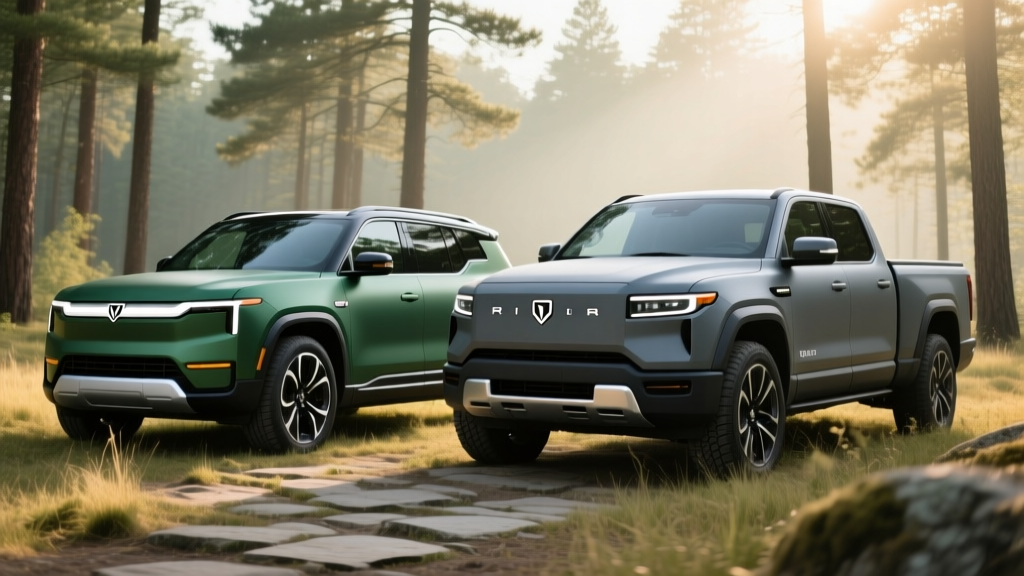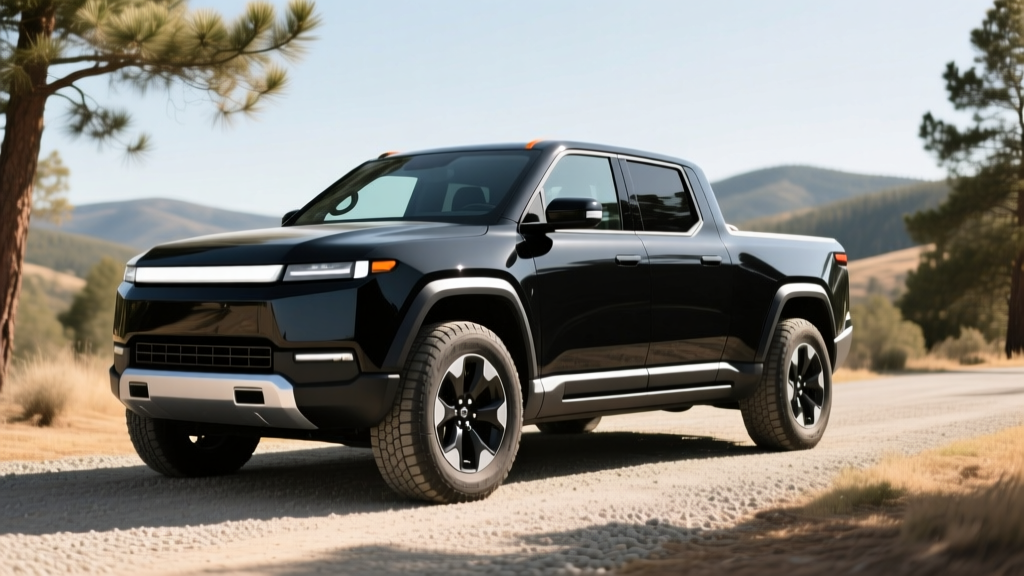
The Rivian R1T occupies a strange space in the electric pickup market. It's longer than a Toyota Tacoma but shorter than a Ford F-150, and that specific Rivian R1T length — 217.1 inches bumper to bumper — shapes everything about how this truck drives, parks, and hauls. If you've been searching for the R1T's exact dimensions and how they translate to real-world usability, this guide breaks down every critical measurement alongside the powertrain, charging, and pricing data you need before ordering.
Rivian R1T Exterior Dimensions: Where It Fits Among Trucks
The 2026 Rivian R1T rides on a 135.9-inch wheelbase with an overall length of 217.1 inches, a width of 81.8 inches (excluding mirrors), and a height of 73.0 inches on the standard air suspension setting. That places it squarely between traditional midsize and full-size pickups.
| Dimension | Rivian R1T | Ford F-150 Lightning | Toyota Tacoma (2024+) | Chevrolet Silverado EV |
|---|---|---|---|---|
| Overall Length | 217.1 in | 232.7 in | 213.0 in | 233.1 in |
| Wheelbase | 135.9 in | 145.5 in | 127.4 in | 145.7 in |
| Width (no mirrors) | 81.8 in | 79.9 in | 75.2 in | 81.3 in |
| Bed Length | 54.0 in (4 ft 6 in) | 66.0 in (5 ft 6 in) | 60.0 in (5 ft) | 72.0 in (6 ft) |
| Curb Weight (approx.) | ~6,800 lbs | ~6,200 lbs | ~4,440 lbs | ~8,600 lbs |
The R1T's 54-inch bed is its most debated dimension. It's short for a pickup, but Rivian compensates with the Gear Tunnel — a 17-cubic-foot lockable pass-through compartment behind the rear seats accessible from both sides. Combined with the 11-cubic-foot frunk, total enclosed cargo space reaches approximately 82 cubic feet with the bed included, which is competitive for gear-heavy owners who don't regularly haul sheet goods or lumber.
Range, Battery, and Real-World Efficiency
Rivian offers the R1T with multiple battery configurations for the 2026 model year. The Standard pack uses a ~92 kWh (usable) NMC (nickel manganese cobalt) lithium-ion battery, while the Large pack steps up to approximately 123 kWh usable, also NMC chemistry. Rivian previously offered a Max pack with over 140 kWh, extending range substantially for road-trip-focused buyers.
EPA Estimated: 270 miles (Standard Dual-Motor) | 352 miles (Large Dual-Motor) | 410+ miles (Max pack, where available)
Real-World Expectation: Plan on 230–250 highway miles from the Standard pack at 70–75 mph, and roughly 290–320 from the Large pack. In cold weather (below 30°F), reduce those figures by 15–25% due to battery resistance and cabin heating demands. The R1T's boxy aerodynamic profile and ~6,800-lb curb weight work against highway efficiency compared to sleeker EVs.
Efficiency lands around 73 MPGe combined (approximately 46 kWh/100 miles) for the Dual-Motor Standard configuration per fueleconomy.gov. That's thirstier than a Tesla Model Y or Hyundai Ioniq 5 but expected for a vehicle with this mass and frontal area. Owners doing mostly city and suburban driving with frequent regenerative braking opportunities will see better real-world results than the EPA sticker suggests.
Charging Speed: DC Fast, Level 2, and Home Setup
Charging speed is where R1T ownership either clicks or frustrates, depending on your expectations. The R1T supports DC fast charging at up to 225 kW on Large and Max pack configurations, with the Standard pack peaking around 200 kW. Rivian uses the NACS (North American Charging Standard) connector on current models, granting direct access to Tesla Supercharger stations via Rivian's native port — no adapter required on 2025+ builds.
| Charging Level | Power / Rate | Speed (Miles Added) | Notes |
|---|---|---|---|
| Level 1 (120V household) | ~1.4 kW | ~3–4 miles/hour | Emergency/trickle only; full charge takes days |
| Level 2 (240V home, 48A) | 11.5 kW | ~25–28 miles/hour | Overnight full charge in 10–14 hours depending on pack |
| DC Fast Charge (peak) | Up to 225 kW | ~140 miles in 20 min | 10–80% in ~28–33 min; curve tapers significantly above 80% |
The charge curve matters. The R1T holds near-peak charging rates between roughly 10% and 40% state of charge, then progressively tapers. A 10–80% session on a 250+ kW CCS/NACS station takes approximately 30 minutes with the Large pack. Charging from 80–100% on DC fast charging adds another 20+ minutes and is rarely worth the wait — plan your road trips around 10–80% stops for optimal throughput.
For home Level 2 charging, Rivian's Wall Connector delivers up to 11.5 kW on a 60-amp circuit (48 amps continuous). Most R1T owners with a Standard pack will wake up to a full battery after 9–10 hours. Large pack owners should budget 12–14 hours for a full 0–100% replenishment. A 200-amp electrical panel is usually sufficient, but older homes may require a panel upgrade — budget $1,500–$3,000 for that possibility on top of the $500–$1,200 typical installation cost for the charger circuit itself.
Performance and Drivetrain Breakdown
Every 2026 R1T comes with all-wheel drive. Rivian offers Dual-Motor, Performance Dual-Motor, and Tri-Motor configurations:
- Dual-Motor: 533 horsepower, 610 lb-ft torque — 0–60 mph in approximately 4.5 seconds
- Performance Dual-Motor: 665 horsepower, 829 lb-ft torque — 0–60 mph in approximately 3.5 seconds
- Tri-Motor: 850+ horsepower — 0–60 mph in under 3.0 seconds (limited availability, Max pack required)
The R1T's air suspension provides 6.7 to 14.9 inches of ground clearance depending on mode, making it genuinely capable off-road. Approach, departure, and breakover angles are competitive with body-on-frame midsize trucks when in All-Purpose or Off-Road ride height. Towing capacity maxes out at 11,000 pounds when properly equipped — but note that towing at maximum capacity will cut real-world range roughly in half, bringing a Large pack R1T down to approximately 150–170 miles between charges.
Rivian's Driver+ system is a Level 2 driver-assistance feature per SAE classification. It combines adaptive cruise control with lane centering on divided highways. The driver must keep hands on or near the wheel and remain fully attentive at all times. This is not autonomous driving — Rivian does not currently offer a Level 3 or Level 4 system.
Pricing, Trims, and Federal Tax Credit Eligibility
The 2026 Rivian R1T starts at approximately $69,900 for the Dual-Motor Standard pack base configuration and climbs to over $99,000 for a Tri-Motor with the Max pack and Adventure package. Here's a representative trim breakdown:
| Configuration | Base MSRP (approx.) | §30D Federal Credit Eligible? | Effective Price After Credit |
|---|---|---|---|
| Dual-Motor / Standard Pack | $69,900 | Varies — see rules below | From ~$62,400 (if eligible) |
| Dual-Motor / Large Pack | $75,900 | Varies | From ~$68,400 |
| Performance Dual-Motor / Large | $79,900 | Varies | From ~$72,400 |
| Tri-Motor / Max Pack | $99,000+ | Varies | From ~$91,500 |
Federal tax credit critical details (IRS §30D, current for 2026): The full $7,500 credit requires meeting all of the following criteria, which change periodically and should be verified at irs.gov:
- MSRP Cap: Pickup trucks must have an MSRP at or below $80,000 to qualify. This eliminates the Tri-Motor and some heavily optioned configurations.
- Buyer Income Cap: Modified adjusted gross income must not exceed $150,000 (single), $225,000 (head of household), or $300,000 (joint filers).
- Battery Component Sourcing: A percentage of battery components must be manufactured or assembled in North America, and critical minerals must meet sourcing thresholds. These thresholds tighten annually.
- Point-of-Sale Transfer: Eligible buyers can transfer the credit to the dealer at purchase for an immediate price reduction rather than waiting to claim it on their tax return.
Because battery sourcing rules shift and Rivian's supply chain evolves, always confirm current eligibility with your dealer and a tax professional before relying on the credit in your purchase math.
Interior Space, Technology, and Daily Livability
Inside, the R1T seats five with 41.0 inches of front legroom and 38.2 inches of rear legroom — comfortable for adults in both rows. The flat floor (no transmission tunnel) makes the rear middle seat genuinely usable. Cargo behind the rear seats is limited to the 17-cubic-foot Gear Tunnel, which is ideal for camping gear, tools, or groceries you want secured and out of the bed.
The 15.6-inch center touchscreen runs Rivian's proprietary infotainment software, which includes native navigation with route-based battery preconditioning for DC fast charging — the truck warms or cools the battery en route to a charger to optimize charge speed. Over-the-air updates have materially improved the system since launch, adding features like camp mode, pet mode, and enhanced regenerative braking profiles. Wireless Apple CarPlay and Android Auto are supported.
Standout features:
- Quad-motor option (Tri-Motor badging) with individual wheel torque vectoring
- Air suspension with automatic ride-height adjustment and kneeling mode for easy bed access
- Built-in air compressor in the bed for tire inflation
- Camp Kitchen accessory that slides into the Gear Tunnel
- Vehicle-to-load (V2L) capability via bed-mounted outlets (on equipped models)
Notable drawbacks:
- Short 54-inch bed limits utility for construction or long-cargo users
- No Apple CarPlay-native interface — Rivian's UI is mandatory as primary display
- Service center network still expanding; some owners face long waits for body repair
- High insurance premiums relative to conventional midsize trucks
Pros
- Best-in-class acceleration for a pickup
- Genuine off-road capability with air suspension
- NACS native — direct Supercharger access
- Innovative Gear Tunnel storage
- 11,000-lb towing capacity
- Strong OTA update track record
Cons
- 54-inch bed too short for many truck buyers
- Highway efficiency suffers vs. aerodynamic EVs
- Towing drastically cuts range (~50% loss)
- Limited service center footprint in rural areas
- Premium pricing; many trims exceed §30D MSRP cap
- Cold-weather range loss of 15–25%
Warranty and Long-Term Ownership
Rivian covers the R1T with a 5-year/60,000-mile limited vehicle warranty and an 8-year/120,000-mile battery and drive unit warranty. The battery warranty guarantees retention of at least 70% of original capacity during the coverage period — a fairly standard threshold in the EV industry. Rivian's NMC battery chemistry has shown moderate degradation in early fleet data, with most owners reporting roughly 5–8% capacity loss after 60,000 miles, though long-term data beyond 100,000 miles remains limited given the R1T's 2022 launch.
Maintenance costs are lower than a comparable gas truck — no oil changes, no transmission fluid, and regenerative braking significantly extends brake pad life. Expect to replace cabin air filters, wiper blades, and eventually tires (the R1T's weight and torque are hard on rubber; budget for tire replacement every 25,000–35,000 miles).
Who Should Buy the Rivian R1T?
- Choose the R1T if: You want an electric lifestyle truck for outdoor recreation, daily commuting with occasional towing, and value acceleration and tech over maximum bed length. The 217.1-inch R1T length fits most suburban garages (verify yours — you need roughly 18 feet 2 inches of depth clearance).
- Choose the Ford F-150 Lightning if: You need a full-size bed (66 inches), maximum interior rear-seat space, and a lower entry price. The Lightning is 15+ inches longer overall but offers more traditional truck utility.
- Choose the Chevrolet Silverado EV if: You prioritize maximum range (400+ miles available) and a full 6-foot bed, and don't mind the even larger footprint (233+ inches).
- Choose a PHEV truck (e.g., upcoming Ram 1500 Ramcharger) if: You tow frequently over long distances where charging infrastructure is sparse and can't afford the range penalty of battery-electric towing.
The R1T's 217.1-inch length is a deliberate compromise: big enough to feel substantial and tow seriously, compact enough to navigate trailheads and urban parking structures that would reject an F-150. If your truck use skews toward adventure and daily driving rather than job-site hauling, the R1T's dimensions are arguably ideal. If you regularly carry 4×8 sheets of plywood or tow a large camper cross-country, the short bed and range-under-load limitations will frustrate.
Frequently Asked Questions
What is the exact length of the Rivian R1T?
The 2026 Rivian R1T measures 217.1 inches (18 feet 1.1 inches) from bumper to bumper, with a 135.9-inch wheelbase. This makes it roughly 15.6 inches shorter than the Ford F-150 Lightning and about 4 inches longer than a crew-cab Toyota Tacoma.
Will the Rivian R1T fit in a standard garage?
Most modern two-car garages are 20–24 feet deep, so the R1T's 217.1-inch length (18.1 feet) will fit with room to spare. However, if your garage is an older 18-foot-deep design, clearance will be extremely tight — measure before ordering. The 81.8-inch width (wider with mirrors extended) also requires checking your garage door opening width.
What is the real-world range of the Rivian R1T?
The EPA rates the Dual-Motor Standard at 270 miles and the Large pack at 352 miles. In real-world highway driving at 70–75 mph, expect approximately 230–250 miles (Standard) and 290–320 miles (Large). Cold weather below freezing reduces these figures by 15–25%. Towing near the 11,000-lb maximum cuts range roughly in half.
How fast does the Rivian R1T charge at home and on the road?
At home on a Level 2 (240V, 48A) charger, the R1T adds approximately 25–28 miles of range per hour, reaching a full charge overnight in 10–14 hours depending on battery pack size. On DC fast chargers, the Large pack peaks at 225 kW, achieving a 10–80% charge in roughly 28–33 minutes. The charge curve tapers significantly above 80% SoC.
Does the Rivian R1T qualify for the $7,500 federal EV tax credit?
Eligibility depends on the specific configuration and your personal tax situation. R1T models with an MSRP at or below $80,000 (primarily Dual-Motor Standard and some Large pack trims) can qualify if the buyer meets income caps ($150K single / $300K joint) and the vehicle meets battery component and critical mineral sourcing requirements per IRS §30D rules. Always verify current eligibility at irs.gov and with a tax professional before purchasing.
Is the Rivian R1T worth buying over the Ford F-150 Lightning?
It depends on your priorities. The R1T offers superior acceleration, genuine off-road capability via air suspension, native NACS/Supercharger access, and a more compact footprint that's easier to park and trail. The F-150 Lightning offers a longer bed, more rear-seat room, a lower starting price, and a much larger dealer/service network. For adventure-oriented buyers who don't need a 5.5-foot bed, the R1T is the more compelling driver's truck. For traditional truck utility and fleet use, the Lightning remains the pragmatic choice.