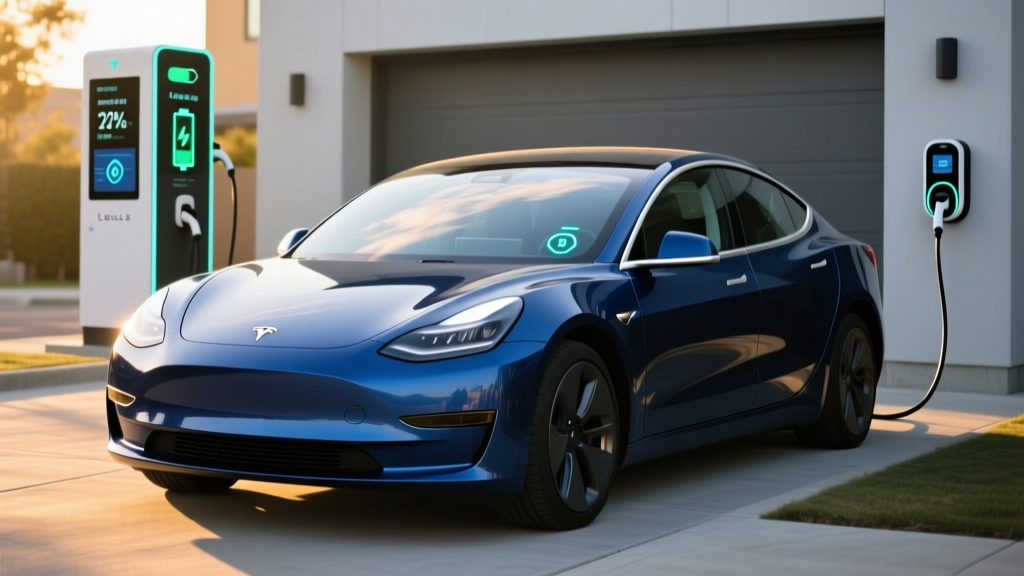
The 2026 Tesla Model 3 enters its third year of the "Highland" refresh with a notable software milestone: the integration of xAI's Grok conversational AI into the Tesla infotainment stack. Dubbed the Grok update for Tesla, this over-the-air addition layers natural-language voice control over navigation, climate, media, and vehicle settings — and it arrives just as the Model 3 faces its stiffest competition yet from the Hyundai Ioniq 6, BMW i4, and refreshed Polestar 2.
But software doesn't move the car. Below, we break down the 2026 Model 3's real-world range, charging curve, battery chemistry, pricing after federal tax credits, and whether Grok is enough to keep this EV segment benchmark on top.
2026 Tesla Model 3 Specs at a Glance
| Spec | Model 3 RWD | Model 3 Long Range AWD | Model 3 Performance |
|---|---|---|---|
| EPA Range | 272 mi | 341 mi | 315 mi |
| Battery (usable) | 60 kWh LFP | 82 kWh NMC | 82 kWh NMC |
| Drivetrain | Rear-Wheel Drive | Dual-Motor AWD | Dual-Motor AWD |
| Horsepower | 271 hp | 346 hp | 510 hp |
| 0–60 mph | 5.8 sec | 4.2 sec | 2.9 sec |
| Peak DC Charge Rate | 170 kW | 250 kW | 250 kW |
| 10–80% DC Time | ~25 min | ~18 min | ~18 min |
| Level 2 Rate (11.5 kW) | ~30 mi/hr | ~44 mi/hr | ~44 mi/hr |
| MPGe (combined) | 142 MPGe | 132 MPGe | 121 MPGe |
| Base MSRP | $38,990 | $45,990 | $52,990 |
Source: fueleconomy.gov and Tesla's 2026 spec sheets. Prices exclude destination.
Range and Efficiency: Real-World vs. EPA Sticker
EPA Estimate: 272 mi (RWD) / 341 mi (Long Range) / 315 mi (Performance)
Real-World Expectation: Plan for 230–250 mi highway in the RWD, 290–310 mi in the Long Range AWD, and 265–285 mi in the Performance. In sub-freezing temperatures, subtract 15–25% depending on cabin heat usage — Tesla's standard heat pump helps, but cold-weather highway driving remains the efficiency killer for all EVs.
The Long Range AWD's 341-mile EPA figure is genuinely useful for road trips: a Los Angeles–to–Las Vegas run (270 miles) is achievable at highway speeds with a small buffer, no charging required. The RWD's 272 miles is adequate for commuting but requires planning on trips over 200 miles. Efficiency on the Long Range sits at roughly 26 kWh/100 mi on the highway — competitive with the Ioniq 6's ~24 kWh/100 mi but slightly behind due to the Tesla's wider tires and less aggressive aero tuning in the Highland body.
Charging Speed: DC Fast, Level 2, and the Supercharger Advantage
| Charging Level | Power | Miles Added per Hour | Notes |
|---|---|---|---|
| Level 1 (120V) | ~1.4 kW | ~4 mi/hr | Emergency/trickle only |
| Level 2 (240V, 48A) | 11.5 kW | 30–44 mi/hr | Full charge overnight (~8–10 hr) |
| DC Fast (Supercharger V3) | Up to 250 kW | ~175 mi in 15 min (LR) | Peak rate; tapers above 60% SoC |
| DC Fast (Supercharger V4) | Up to 350 kW (cabinet) | Model 3 peaks at 250 kW | V4 cabinet capable, vehicle-limited |
The Model 3 Long Range and Performance peak at 250 kW on V3/V4 Superchargers. In practice, that peak holds from roughly 10–45% state of charge, then tapers — a typical 10–80% session takes about 18 minutes. The RWD's LFP battery can be charged to 100% regularly without degradation concerns (a key LFP advantage), but its 170 kW peak means a 10–80% session stretches to roughly 25 minutes.
Charging curve reality check: Marketing materials emphasize peak kW, but sustained rate matters more. The Model 3 Long Range averages approximately 150 kW across a 10–80% session — solid, though the Hyundai Ioniq 6 (with its 800V architecture and 350 kW peak) edges ahead at non-Tesla networks.
The Supercharger network remains Tesla's strongest ownership advantage. With NACS now adopted by Ford, GM, Rivian, and others in 2025–2026, Supercharger stalls are busier than they were — but reliability and plug-and-charge simplicity still outperform Electrify America and most third-party networks.
Performance and Driving Dynamics
The Performance trim's 2.9-second 0–60 mph time is supercar territory, but the more relevant daily metric is the Long Range AWD's 4.2-second sprint — quick enough for confident highway merging and passing. The RWD at 5.8 seconds feels adequate, not thrilling.
The Highland refresh (introduced for 2024) brought meaningful improvements: a quieter cabin with acoustic glass, retuned suspension that absorbs sharp impacts better than the pre-refresh car, and a steering feel that, while still numb, is more consistent. The Model 3 remains one of the better-handling EV sedans, though the BMW i4 offers more analog feedback for driving enthusiasts.
Interior, Cargo, and Tech — Including the Grok Update
The cabin is minimalist to a fault. A 15.4-inch central touchscreen handles nearly all controls — there are no physical buttons for climate or mirrors. Rear-seat legroom measures 35.3 inches (adequate for adults on shorter trips), and cargo space stands at 23 cu ft behind the rear seats plus a 3.1 cu ft frunk. That's less than the Hyundai Ioniq 6's 12.3 cu ft trunk (though the Ioniq lacks a frunk) and significantly less than a Model Y's 30 cu ft.
What the Grok Update for Tesla Actually Does
Arriving via OTA in late 2025 and expanding through 2026, the Grok integration adds xAI's large language model to the voice-command stack. In practice:
- Natural-language navigation: "Take me to the best Thai restaurant within 10 minutes that has a charger nearby" works — Grok cross-references Yelp-style data, navigation, and Supercharger locations.
- Vehicle control: "I'm cold" adjusts cabin temperature; "Set charging to 80% and precondition for 7 AM" handles multiple settings in one command.
- General queries: Grok answers trivia, news, and weather questions while parked (disabled while driving for safety).
Notable drawback: Grok requires a Premium Connectivity subscription ($12.99/month after the initial trial). It also occasionally takes 2–3 seconds to process complex queries — noticeable compared to instant physical buttons. This is a Level 2 driver-assist vehicle; FSD (Supervised) still requires full driver attention regardless of Grok's conversational capabilities.
Pricing, Trims, and Federal Tax Credit Eligibility
| Trim | Base MSRP | Est. After §30D Credit | Credit Eligibility |
|---|---|---|---|
| Model 3 RWD | $38,990 | ~$31,490 | Qualifies (MSRP < $55K, LFP battery sourcing compliant for 2026) |
| Model 3 Long Range AWD | $45,990 | ~$38,490 | Qualifies (MSRP < $55K, subject to buyer income cap) |
| Model 3 Performance | $52,990 | ~$45,490 | Qualifies (MSRP < $55K) |
IRS §30D eligibility caveats (2026 rules): The federal EV tax credit provides up to $7,500, but eligibility depends on multiple factors:
- MSRP cap: Sedans must be under $55,000 — all Model 3 trims qualify.
- Buyer income cap: AGI must not exceed $150,000 (single), $225,000 (head of household), or $300,000 (joint). Verify current limits at IRS.gov.
- Battery sourcing: Critical-mineral and battery-component requirements tighten annually. Tesla's LFP cells (CATL-sourced for RWD) and NMC cells (Panasonic-sourced for Long Range/Performance) have met 2026 thresholds, but always confirm at purchase — rules can shift mid-year.
- Point-of-sale transfer: As of 2024+, buyers can transfer the credit to the dealer at purchase, reducing the out-of-pocket price directly rather than waiting for a tax refund.
Consult a tax professional before relying on credit eligibility. State incentives (California's CVRP, Colorado's tax credit, etc.) stack on top but vary by jurisdiction.
Warranty and Long-Term Ownership
Tesla covers the Model 3 with:
- Vehicle limited warranty: 4 years / 50,000 miles
- Battery & drive unit warranty: 8 years / 100,000 miles (RWD) or 8 years / 120,000 miles (Long Range & Performance), with a guaranteed minimum 70% capacity retention
The LFP battery in the RWD is notable for longevity: LFP chemistry tolerates frequent 100% charging and typically shows slower degradation than NMC, making it a strong choice for high-mileage commuters who charge at home nightly. NMC owners should target 20–80% daily charging for optimal lifespan, reserving 100% for road trips.
How It Stacks Up: Model 3 vs. Key Rivals
The 2026 EV sedan segment is crowded. Here's where the Model 3 stands:
- vs. Hyundai Ioniq 6: The Ioniq 6 (361 mi SE range, 800V/350 kW charging) edges out the Model 3 Long Range on range and DC charge speed at non-Tesla chargers. The Model 3 wins on Supercharger access, performance, and now the Grok software layer.
- vs. BMW i4 eDrive40: The i4 offers superior build quality, a physical button layout, and sharper steering. It costs ~$10K more and offers less range (301 mi EPA). Choose the i4 if driving dynamics and interior luxury matter more than range-per-dollar.
- vs. Polestar 2: The refreshed Polestar 2 (320 mi, Google Automotive OS) is competitive on range and tech, but its CCS charging and smaller service network put it behind for road-trip-heavy buyers.
Pros, Cons, and Who Should Buy
Pros
- Best-in-class Supercharger network access
- 341-mile Long Range is road-trip viable
- Grok voice AI adds genuine utility over legacy voice commands
- LFP RWD option allows daily 100% charging with minimal degradation
- Strong performance across all trims
- OTA updates keep the car current years after purchase
Cons
- Minimalist interior polarizes — no physical buttons, no instrument cluster
- Cargo space (23 cu ft) trails crossover alternatives like Model Y
- Rear-seat comfort is acceptable, not generous
- Grok and Premium features require ongoing subscription costs
- FSD (Supervised) remains Level 2 — not autonomous, despite marketing
- Supercharger stalls increasingly crowded as NACS adoption spreads
Best for: Tech-forward commuters and road-trippers who value charging infrastructure and software innovation. The Long Range AWD is the sweet spot for most buyers. The RWD suits budget-conscious commuters with home charging. Skip the Model 3 if you need family-hauler cargo space (look at the Model Y or Ioniq 5) or prefer traditional luxury interiors (BMW i4).
Frequently Asked Questions
What is the real-world range of the 2026 Tesla Model 3?
Expect 290–310 highway miles from the Long Range AWD in moderate weather, dropping to 240–270 in freezing conditions. The RWD delivers roughly 230–250 highway miles in fair weather.
How fast does the Model 3 charge at home and on the road?
At home on a 48-amp Level 2 charger (11.5 kW), the Long Range adds about 44 miles per hour — a full overnight charge takes 8–10 hours. On a Supercharger, 10–80% takes approximately 18 minutes for the Long Range/Performance and 25 minutes for the RWD.
Does the 2026 Model 3 qualify for the $7,500 federal EV tax credit?
All three trims fall under the $55,000 sedan MSRP cap and have met 2026 battery-sourcing requirements. However, buyer income limits apply ($150K single / $300K joint AGI). Confirm eligibility at IRS.gov and with a tax professional before purchase.
Is the Grok update for Tesla available on all Model 3 vehicles?
Grok requires hardware 4.0 (standard on all 2024+ Model 3 Highland vehicles) and a Premium Connectivity subscription. Older Model 3 vehicles with HW3.0 do not receive Grok.
Is the Tesla Model 3 worth buying over the Hyundai Ioniq 6 or BMW i4?
If Supercharger access and software features (Grok, OTA updates) are priorities, yes. If you value 800V ultra-fast charging on any network, the Ioniq 6 wins. If interior quality and driving engagement matter most, the BMW i4 is the stronger choice — at a premium price.