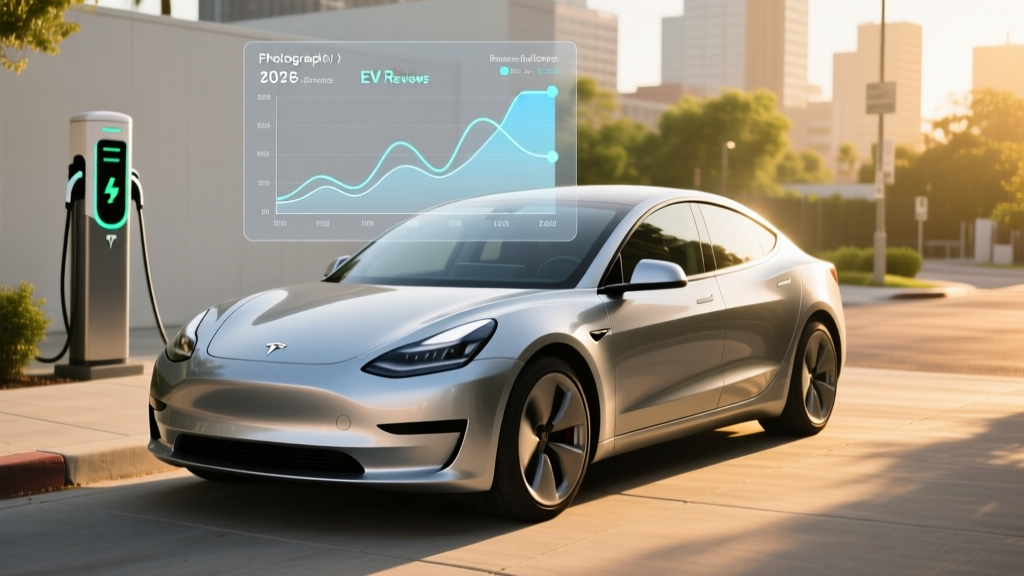
For data-driven EV buyers, the Tesla Model 3 energy graph is more than just a line on a screen—it's the ultimate truth-teller. While the EPA sticker provides a baseline, the onboard energy graph (accessible via the vehicle's touchscreen) reveals the granular reality of how driving style, terrain, and climate control impact range. In this 2026 profile, we decode the efficiency, charging, and ownership economics of the current Model 3 lineup.
2026 Tesla Model 3: Quick Specs & Energy Profile
| Spec | RWD (Standard Range) | Long Range AWD | Performance AWD |
|---|---|---|---|
| EPA Range | 272 miles | 363 miles | 315 miles |
| Battery Capacity | ~60 kWh (LFP) | ~82 kWh (NMC) | ~82 kWh (NMC) |
| Efficiency (MPGe) | 132 MPGe | 134 MPGe | 125 MPGe |
| 0-60 mph | 5.8 sec | 4.2 sec | 2.9 sec |
| Peak DC Charge | 170 kW | 250 kW | 250 kW |
| Base MSRP | $38,990 | $47,490 | $54,990 |
Decoding the Energy Graph: Real-World Range
EPA vs. The Energy Graph
Long Range AWD: EPA 363 miles. Real-World: Expect 310–330 miles at 70 mph on a flat highway. In freezing temps (below 32°F), the graph will show a 20–30% reduction due to battery heating and cabin demands.
RWD (LFP): EPA 272 miles. Real-World: LFP chemistry is more resilient to cold, but city/highway mixed driving typically yields 240–260 miles.
The Model 3 energy graph uses a "consumption over distance" metric (Wh/mi). A rated line on the graph represents ~240 Wh/mi for the Long Range. If your recent history shows 280 Wh/mi, the car will project a lower remaining range than the battery percentage suggests. This is why "rated" range and "projected" range often differ.
Charging Speed & Infrastructure
Tesla's Supercharger network remains the industry benchmark for reliability. The Model 3's charging curve is aggressive in the 10–50% range before tapering to protect the battery.
| Level | Power/Rate | Speed (Miles per Hour) |
|---|---|---|
| Level 1 (120V) | 1.4 kW | 3–5 mi/hr |
| Level 2 (Home 48A) | 11.5 kW | 44 mi/hr |
| DC Fast (V3 Supercharger) | 250 kW Peak | 10–80% in ~25 min |
Note: To achieve peak 250 kW speeds, the battery must be preconditioned via the onboard navigation routing to a charger.
IRS §30D Tax Credit Eligibility
As of 2026, the Model 3 qualifies for the federal tax credit, but eligibility is strict under IRS §30D rules:
- MSRP Cap: Must be under $55,000 (RWD and Long Range qualify; Performance often exceeds this).
- Income Cap: AGI must not exceed $150k (single) or $300k (joint).
- Sourcing: Battery components and critical minerals must meet North American sourcing thresholds.
Interior, Tech, and Driver Assist
The "Highland" refresh brought ventilated seats and ambient lighting, but the minimalist interior remains polarizing. All driver information—speed, range, and the energy graph—is centralized on the 15.4-inch touchscreen.
ADAS Warning: Autopilot and FSD (Supervised) are SAE Level 2 systems. They require active driver supervision and are not "self-driving."
Ownership: Warranty and Cargo
- Battery Warranty: 8 years / 100,000 miles (Long Range) or 120,000 miles (RWD) with 70% retention.
- Cargo: 23 cu ft (trunk) + 3.1 cu ft (frunk).
- Legroom: 42.3 inches (front) / 35.3 inches (rear).
Pros & Cons
Pros
- Best-in-class efficiency (Wh/mi)
- Access to Supercharger network
- High resale value and tech integration
Cons
- No physical instrument cluster
- Turn-signal stalks removed (Highland)
- Firm ride on 19-inch wheels
Who Should Buy the Model 3?
The Model 3 is the default choice for tech-centric commuters and road-trippers who prioritize charging speed and network reliability over traditional luxury finishes. If you need maximum range and can install a Level 2 charger at home, the Long Range AWD is the sweet spot.
FAQ
How do I read the Tesla energy graph?
The graph shows average consumption (Wh/mi) over the last 5, 15, or 30 miles. Staying below the "rated" line means you are beating EPA estimates.
Is the LFP battery better than NMC?
LFP (in the RWD) is heavier but can be charged to 100% daily without degradation concerns, making it ideal for commuters with home charging.