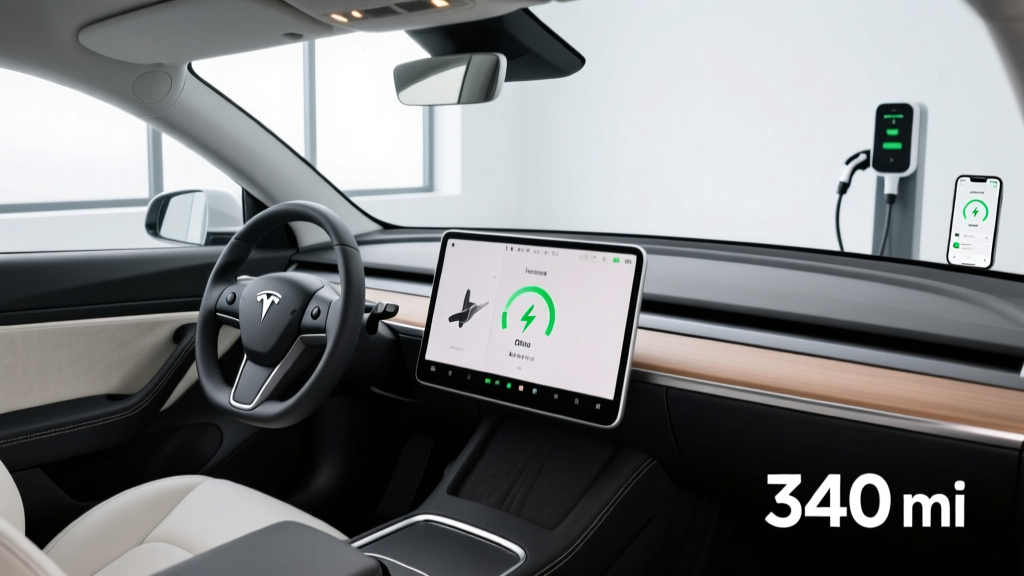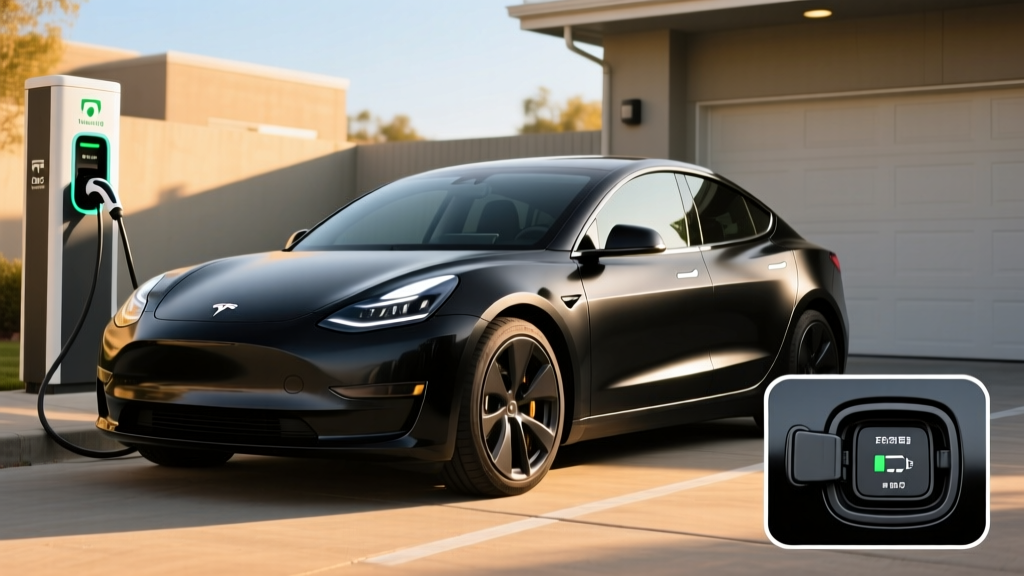
The Tesla Model 3 Dual Motor occupies a rare sweet spot in the EV market: all-weather all-wheel-drive capability, over 340 miles of EPA-rated range, and a sub-$50,000 starting price that still qualifies for the full federal tax credit. After spending time with the refreshed Highland-platform Model 3 Long Range AWD, we've logged highway miles, DC fast-charging sessions, and cold-weather commutes to give you the numbers that actually matter beyond the spec sheet.
This review covers the 2026 Model 3 Long Range Dual Motor — the volume AWD variant — with notes on the Performance trim where specs diverge. We'll break down real-world range versus the EPA sticker, charging-curve behavior you won't find in marketing materials, and exactly how the §30D tax credit applies this year.
Quick Verdict: Who the Model 3 Dual Motor Is For
The Dual Motor Model 3 is best suited for daily commuters and road-trip-capable households in four-season climates who want AWD traction without sacrificing range. It trades the crossover ride height of the Model Y for better efficiency and sharper handling. If you regularly carry four adults or need more than 23 cubic feet of cargo, the Model Y is the more practical garage mate. If you want a sport sedan that costs less to fuel than a Civic and charges faster than almost anything in its class, the Model 3 Dual Motor remains the benchmark.
Choose the Model 3 Dual Motor if: You prioritize range and charging speed, drive in rain or snow, and mostly carry one or two passengers.
Look elsewhere if: You need easy rear-seat access for child seats, maximum cargo volume, or a head-up display and traditional instrument cluster.
Range, Efficiency, and the Real-World Reality Check
The 2026 Tesla Model 3 Long Range AWD carries an EPA-estimated 346 miles of range on its 18-inch Aero wheels (19-inch Sport wheels drop that to approximately 315 miles). Efficiency is rated at 132 MPGe combined, which translates to roughly 25 kWh per 100 miles — among the most efficient AWD sedans in the segment.
EPA Range: 346 miles (18-inch wheels)
Real-World Expectation: Plan for 280–310 miles on highway road trips at 70–75 mph in mild weather. In freezing temperatures (below 32°F), expect a 15–25% reduction, bringing usable range to roughly 240–270 miles without preconditioning. City driving with regenerative braking can match or slightly exceed the EPA sticker.
These real-world numbers come from the physics of EV efficiency: aerodynamic drag dominates at highway speed, and lithium-ion cells lose throughput in cold temperatures. The Model 3's heat pump helps preserve range in winter compared to resistive heating systems, but no EV escapes cold-weather chemistry penalties. Preconditioning the battery while plugged in — a feature Tesla handles automatically when you set a departure time or navigate to a Supercharger — mitigates both range loss and charging-speed reduction.
Battery Chemistry and Capacity: What's Under the Floor
The Long Range Dual Motor uses an NMC (nickel manganese cobalt) battery pack with approximately 79 kWh of usable capacity (gross capacity is slightly higher, with a buffer to protect long-term health). NMC chemistry offers higher energy density than LFP (lithium iron phosphate), which is why the Long Range AWD achieves 346 miles in a relatively compact sedan platform.
The trade-off: NMC packs benefit from being charged to 80% for daily use and only topped to 100% before long trips. The base Model 3 RWD, by contrast, uses an LFP pack that Tesla recommends charging to 100% regularly. If you want set-and-forget daily charging without thinking about state-of-charge limits, the RWD with LFP has a convenience edge. If range and AWD are non-negotiable, NMC is the correct chemistry choice.
| Spec | Value |
|---|---|
| EPA Range (18" wheels) | 346 miles |
| Battery Usable Capacity | ~79 kWh (NMC) |
| Efficiency | 132 MPGe / 25 kWh/100 mi |
| Drivetrain | Dual Motor AWD |
| Horsepower | ~384 hp combined |
| 0–60 mph | 4.2 seconds |
| Top Speed | 125 mph |
| Max DC Fast Charge | 250 kW peak |
| 10–80% DC Charge Time | ~25 minutes |
| Level 2 Home Charge Rate | 11.5 kW (~44 mi/hr) |
| Cargo Volume | 23 cu ft (trunk + frunk) |
| Rear Legroom | 35.2 inches |
| Battery Warranty | 8 years / 120,000 miles |
| Base MSRP | $47,240 (before incentives) |
Charging Speed: DC Fast, Level 2, and the Curve
Tesla rates the Model 3 Long Range at a peak 250 kW on V3 Superchargers. In practice, the charging curve tells the real story. The pack ramps quickly to around 250 kW at low state of charge (10–20%), sustains strong throughput through roughly 50%, then tapers progressively. The 10–80% session takes approximately 25 minutes at a V3 Supercharger. Above 80%, charging slows dramatically — expect another 15–20 minutes just to go from 80% to 100%. This taper is normal for NMC chemistry and a reason to plan road-trip stops around the 10–80% window.
| Charging Level | Power | Miles Added per Hour | Notes |
|---|---|---|---|
| Level 1 (120V household) | ~1.4 kW | ~5 mi/hr | Emergency/trickle only |
| Level 2 (240V home, 48A) | 11.5 kW | ~44 mi/hr | Full overnight charge in ~8 hrs |
| DC Fast (V3 Supercharger) | 250 kW peak | ~1,000+ mi/hr (peak) | 10–80% in ~25 min |
| DC Fast (V4 Supercharger) | 250 kW peak* | Similar to V3 | *Model 3 architecture caps at ~250 kW |
For home charging, a Wall Connector on a 60-amp circuit delivers the full 11.5 kW (48 amps continuous). That's roughly 44 miles of range per hour of charging — enough to fully replenish overnight. Installation costs vary widely: expect $500–$1,500 if your electrical panel has capacity, or $2,000–$4,000+ if a panel upgrade is needed. Always have a licensed electrician assess your service before purchasing equipment.
One practical advantage: Tesla's NACS connector is now the de facto North American standard. The Model 3 charges natively at Superchargers without adapters, and an expanding list of third-party networks (Electrify America, EVgo) are adding NACS cables. For CCS-equipped public chargers, a simple NACS-to-CCS adapter (sold by Tesla and third parties) restores compatibility.
Performance and Driving Dynamics
The Dual Motor powertrain pairs a front induction motor with a rear permanent-magnet motor for a combined output of approximately 384 horsepower. The 0–60 mph sprint takes 4.2 seconds in the Long Range trim — quick enough to merge onto any highway with authority and genuinely fast by any sedan standard. The Performance variant drops that to roughly 2.9 seconds with track-oriented tuning, but at a price premium and slight range penalty.
Ride quality on the Highland refresh is noticeably improved over pre-2024 Model 3s. Tesla added frequency-selective dampers and additional acoustic glass, reducing cabin noise and smoothing out expansion joints. The steering remains quick and direct, though some drivers will note the absence of a traditional instrument cluster — all information routes through the 15.4-inch center touchscreen, including speed, navigation, and vehicle status. A secondary 8-inch rear touchscreen handles climate and entertainment for back-seat passengers.
Driver-Assist Level: Tesla Autopilot and Full Self-Driving (Supervised) are SAE Level 2 systems. They provide lane centering, adaptive cruise, and automated lane changes — but the driver must remain fully engaged, hands on or near the wheel, eyes on the road. This is not autonomous driving. Level 4 robotaxi service (no driver required) is currently only available through Waymo in select metro areas.
Pricing, Tax Credits, and Total Cost
The 2026 Model 3 Long Range AWD starts at a base MSRP of $47,240, including destination. Options like Ultra Red paint ($2,000), 19-inch wheels ($1,500), and FSD (Supervised) — now offered as a $99/month subscription or $8,000 outright — can push an as-tested price into the low-to-mid $50,000s.
| Item | Amount |
|---|---|
| Base MSRP (Long Range AWD) | $47,240 |
| As-Tested (typical options) | ~$50,740 |
| Federal §30D Tax Credit (max) | Up to $7,500 |
| Estimated Net Price (after credit) | ~$39,740 – $43,240 |
§30D Federal Tax Credit Eligibility Checklist (2026 Rules):
- MSRP Cap: Vehicle MSRP must be ≤ $55,000 for sedans (Model 3 qualifies)
- Buyer Income Cap: Modified AGI ≤ $150,000 (single) / $300,000 (joint) / $225,000 (head of household)
- Battery Sourcing: Critical minerals and battery components must meet phased-in domestic/free-trade-ally thresholds — Tesla's supply chain has largely met these requirements, but verify at purchase
- Point-of-Sale Transfer: You can transfer the credit to the dealer at purchase for an immediate price reduction (requires dealer registration and IRS compliance)
- Verification: Confirm eligibility at IRS.gov §30D page and with your tax professional before relying on the credit
On a five-year total-cost basis, the Model 3 Dual Motor benefits from minimal maintenance (no oil changes, reduced brake wear from regen), lower per-mile energy costs versus gasoline, and strong resale value. Insurance premiums tend to run higher than comparable gas sedans — expect 15–30% above a Toyota Camry — so factor that into your budget. According to fueleconomy.gov, the Model 3 Long Range AWD costs approximately $550 per year in electricity at 15,000 miles driven, versus $1,800+ for a comparable AWD gas sedan at current fuel prices.
Interior, Tech, and Cargo Practicality
The Highland interior is minimalist by design. Ventilated front seats, ambient lighting, and power-folding heated rear seats are standard on Long Range. The 15.4-inch touchscreen runs Tesla's latest software with responsive navigation, streaming apps, and over-the-air updates that add features post-purchase. There is no Apple CarPlay or Android Auto — Tesla's native infotainment is the only option, which is either a pro or a con depending on your ecosystem preference.
Cargo space totals 23 cubic feet split between the rear trunk (approximately 21 cu ft) and a front trunk (frunk, ~2 cu ft) suitable for charging cables and a small bag. Rear-seat legroom is 35.2 inches — adequate for adults on shorter trips but tighter than a Hyundai Ioniq 6 or BMW i4. The rear seat folds 60/40 for longer items, and the trunk opening is a conventional sedan lid rather than a hatchback, which limits loading bulky objects.
Warranty and Long-Term Ownership
Tesla covers the Model 3 Long Range battery and drive units for 8 years or 120,000 miles, whichever comes first, with a minimum 70% capacity retention threshold during that period. The limited vehicle warranty is 4 years / 50,000 miles. Based on long-term fleet data from sources like Tesla's Impact Report and independent owner tracking, NMC packs in the Model 3 typically show 5–10% degradation over the first 100,000 miles, with the rate of loss slowing significantly after the initial break-in period.
Replacement cost for an out-of-warranty Long Range battery is estimated at $12,000–$16,000 including labor, though most owners will never face this expense within the vehicle's practical lifespan.
Pros, Cons, and the Competitive Landscape
Pros
- 346-mile EPA range with AWD — class-leading efficiency
- 250 kW peak DC charging with mature Supercharger network
- 4.2-second 0–60 with composed handling
- Qualifies for full $7,500 federal tax credit (verify eligibility)
- Strong over-the-air update cadence adds features post-purchase
- Improved ride comfort and cabin quietness over pre-2024 models
Cons
- No Apple CarPlay / Android Auto
- Rear-seat space is tighter than key competitors
- All controls via touchscreen — no physical buttons or instrument cluster
- FSD (Supervised) remains a Level 2 system despite the name
- Insurance costs run higher than gas equivalents
- Trunk opening (sedan lid) limits cargo versatility vs hatchbacks
Against the Hyundai Ioniq 6, the Model 3 offers a more robust charging network and stronger performance, though the Ioniq 6 provides a more conventional interior with physical controls and a slightly roomier rear seat. The BMW i4 xDrive40 competes on driving refinement and build quality but starts at a higher price and offers less EPA range. The Polestar 2 long-range dual motor is a design-forward alternative with Google-based infotainment but trails on charging speed and efficiency.
Frequently Asked Questions
What is the real-world range of the Tesla Model 3 Dual Motor?
Expect 280–310 miles on highway road trips in mild weather, and 240–270 miles in freezing temperatures. City driving with regenerative braking can match or slightly exceed the 346-mile EPA estimate. Wheel choice matters: 19-inch Sport wheels reduce range by approximately 30 miles versus the standard 18-inch Aero wheels.
How fast does the Model 3 Dual Motor charge at home and on the road?
At home on a 240V Level 2 Wall Connector (48A), the Model 3 charges at 11.5 kW, adding about 44 miles of range per hour — a full charge overnight in roughly 8 hours. On a V3 Supercharger, it peaks at 250 kW and charges from 10–80% in approximately 25 minutes.
How much does the Model 3 Dual Motor cost after the federal tax credit?
The base MSRP is $47,240. If you meet all §30D requirements (income caps, MSRP cap of $55,000 for sedans, battery sourcing rules), you may qualify for up to $7,500 — bringing the effective price to approximately $39,740. The credit can be transferred to the dealer at point of sale for an immediate reduction. Always verify current eligibility on IRS.gov and with a tax professional.
Does the Tesla Model 3 Dual Motor qualify for the federal EV tax credit?
As of 2026, the Model 3 Long Range AWD qualifies for the full $7,500 §30D credit, provided the buyer meets income limits ($150K single / $300K joint), the vehicle MSRP stays under $55,000, and battery component/critical-mineral sourcing thresholds are met. Tesla's supply chain has generally satisfied these requirements, but rules can shift — confirm at the point of purchase.
Is the Model 3 Dual Motor worth buying over the Model Y or Ioniq 6?
If you prioritize driving dynamics, maximum range, and the lowest cost per mile, the Model 3 Dual Motor is the stronger pick. If you need a taller ride height, more rear cargo space, or easier child-seat installation, the Model Y is the practical alternative. The Ioniq 6 appeals to buyers who want physical controls, CarPlay, and a more traditional sedan cockpit. All three are strong — the right choice depends on your daily use case.
Is Tesla's Full Self-Driving actually self-driving?
No. FSD (Supervised) is an SAE Level 2 driver-assistance system. It handles lane centering, adaptive cruise, and some automated lane changes, but the driver must remain fully attentive and ready to take over at any moment. True driverless (Level 4) service is currently limited to Waymo robotaxis in select cities.